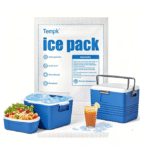
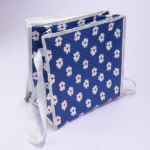
Medical ice box OEM cost should never be judged by unit price alone. A medical ice box is part packaging, part thermal barrier, and part logistics tool. Its real value comes from how well it protects temperature-sensitive products through loading, Transport, weiterleiten, and short-term storage. That is why the same keyword can lead to very different quotes. Some factories price a basic insulated shell. Others price a complete transport solution with a defined pack-out, stronger structure, and better process control.
The smartest buyers in 2026 are no longer asking only, “How much is the box?” They are asking, “What exactly is included, what performance target does this design support, and what might cost more later?” That shift leads to better decisions.
Dieser Artikel wird antworten:
- What drives medical ice box OEM cost most
- Wie Materialien, Isolierung, and structure change the number
- Why public cold-chain standards help buyers read quotes better
- How to compare supplier offers on a like-for-like basis
- Was 2026 sourcing trends mean for medical cold-box procurement
What is medical ice box OEM cost really paying for?
**Medical ice box OEM cost pays for thermal performance, Struktur, Wiederholbarkeit, and project risk control.** It is easy to think you are buying a plastic container. In Wirklichkeit, you are buying resistance to heat gain, protection from temperature drift, Stapelfestigkeit, production consistency, and often a factory’s ability to support sampling and improvement.
This is where many buyers go wrong. They compare a low bare-box price against a more complete quote and assume the cheaper offer is better. But the more expensive quote may include stronger wall construction, tighter lid sealing, better carton protection, more stable dimensions, or accessories that prevent rework later.
Core cost zones
| Cost zone | What is included | Why it changes the price |
|---|---|---|
| Struktur | Shell, Deckel, Scharniere, Riegel, Griffe | Better strength and finish require more material and control |
| Isolierung | Kernmaterial, Dicke, Dichte | Longer hold time usually needs better insulation design |
| Anpassung | Mold changes, Logo, Farbe, Einsätze | New development work creates one-time and recurring cost |
| Delivery readiness | Carton, Etiketten, QC, Inspektion | Export-ready execution reduces downstream problems |
Why standards and official guidance matter
WHO defines cold boxes as thermally insulated containers used to maintain the cold chain for vaccines. UNICEF’s procurement guidance adds useful buyer logic: cold boxes commonly span about 5 Zu 25 Liter; short-range versions start at 48 Stunden des kalten Lebens; long-range versions start at 96 Std.; and cold life is measured under a fixed hot ambient test until the warmest point first reaches +10°C. The same guidance also explains that repeated opening shortens effective hold time.
You may not be buying a vaccine box, but this framework is still valuable. It teaches you to ask the right questions: what size, what hold-time expectation, what coolant-pack method, what test condition, and what real-use assumption? Once you ask those questions, medical ice box OEM cost becomes much easier to interpret.
CDC guidance reinforces this performance-first mindset. Refrigerated vaccines generally need 2°C to 8°C storage, freezers are kept between -50°C and -15°C, and temperature monitoring devices are part of good control practice. That reminds buyers that a box is only one part of a protected temperature system. ([疾病控制和预防中心][1])
What drives cost up the fastest?
Three things usually move the quote the most: custom tooling, stronger thermal targets, and higher durability requirements.
A standard-mold box can be priced quickly. A custom box often needs tooling, sample revisions, and more engineering attention. A short local-delivery box can use a simpler design. A box intended for longer transport or harsher ambient conditions usually needs more careful insulation, tighter seals, and a better internal layout. A disposable-style project may accept lower structural strength, while a reusable program needs stronger hinges, better handles, and more consistent wall construction.
The most common cost escalators
- New mold or customized inner cavity
- Higher insulation density or thicker wall structure
- Added inserts, Trenner, or logger pockets
- Stronger cartons for export stacking
- Lower MOQ with the same development burden
- More inspection and replacement protection
How should you compare supplier quotes?
**The best way to compare medical ice box OEM cost is to standardize the RFQ.** If suppliers quote different assumptions, the numbers become meaningless. One supplier may quote the box only. Another may include coolant packs, carton printing, and better handle hardware. The cheaper line item may not be the better value.
Your RFQ should specify:
- Internal usable size
- Target payload type
- Insulation material or minimum thermal target
- Whether coolant packs are included
- Empty weight and pack-out weight
- Packaging requirement
- Sample policy, tooling fee, und Vorlaufzeit
A simple decision tool
- Choose standard design when speed, budget control, and low risk matter most
- Choose partial customization when branding or payload fit matters but tooling budget is limited
- Choose full customization only when the route, Produkt, or sales model truly requires it
What do public price references tell you?
UNICEF’s live supply catalogue is useful because it shows how widely cold-box pricing can vary when the performance target changes. On a single results page, some listed cold boxes are around USD 76.78, USD 84.91, USD 86.36, und USD 104.63, while others reach USD 646.71, USD 743.71, and even USD 2,393.00 for a long-term storage model. These are indicative procurement references rather than direct OEM factory offers, but they clearly show that size, cold life, and use case can move price dramatically. ([supply.unicef.org][2])
For B2B buyers, the lesson is simple: do not ask factories for “best price” without defining the box’s job first. A box designed for short local routes cannot be fairly compared with one intended for longer hold times or more demanding use.
What are the main 2026 Trends?
WHO’s guidance-and-tools page now highlights a Cold Chain Equipment Inventory and Gap Analysis Tool and an Immunization Supply Chain Sizing Tool from September 2025, along with a cold-chain equipment and dry-store temperature mapping tool from January 22, 2026. That shows a strong move toward inventory planning, route sizing, and temperature-mapping discipline. ([世界卫生组织][3])
This trend matters even in private-sector sourcing. Buyers increasingly want evidence, not slogans. They want to know how many boxes they truly need, how they should be packed, and how route conditions affect thermal risk. They also care more about reusability, packaging waste, and freight efficiency because total cost is under pressure everywhere.
Neueste Entwicklungen auf einen Blick
- More data-led buying: Planning tools and mapping methods are getting more attention
- More realistic validation: Buyers want route-aware performance, not only showroom samples
- More total-cost focus: Freight cube, reuse life, and damage rate matter more in negotiations
Practical advice you can use now
- If you are testing a new market: Start with an existing mold and keep decoration simple.
- If you ship temperature-sensitive goods often: Separate box cost from coolant-pack and monitoring cost.
- If you compare several factories: Force all of them to quote the same spec sheet.
> **Praktischer Fall:** A buyer rejected the lowest quotation because the lid seal and carton strength were too weak for repeated regional transport. The second quote was higher, but replacements dropped and handling became easier, making the project more stable overall.
FAQ
What is the safest first-step sourcing method?
Use a standard medical ice box design, validate it under your route conditions, then customize only where it improves actual performance.
Why do similar-looking boxes have very different OEM prices?
Because internal structure, Isolierung, Haltbarkeit, and included services can be very different even when the outside shape looks similar.
Should you use public catalogue prices as your target?
Use them only as a directional reference. Your OEM cost still depends on quantity, Anpassung, and the exact performance target. ([supply.unicef.org][2])
Summary and recommendation
Medical ice box OEM cost makes sense only when you connect it to function. WHO and UNICEF guidance show why capacity, cold life, and operating method matter. CDC guidance keeps monitoring and temperature discipline in view. Public procurement references show that price can move sharply when performance expectations rise.
The best buying move in 2026 is not chasing the cheapest box. It is defining the job clearly, standardizing the quote request, and choosing the supplier whose design logic matches your route and risk level.
Über Tempk
We focus on practical cold-chain packaging that balances thermal protection, manufacturability, and sourcing clarity. We believe buyers should understand what they are paying for and why that design choice matters in real logistics.
Your next step should be to define payload, Streckendauer, Öffnungshäufigkeit, and packaging format before requesting the final OEM quotation.