Keeping seafood fresh from catch to plate is a high stakes challenge. Fresh fish spoils quickly, and global studies estimate that about 35 % of seafood is wasted because of poor post harvest handling and cold chain failures. En même temps, the global cold chain market is booming – valued at about US$436 billion in 2025 with projections to exceed US$1.3 trillion by 2034. Whether you’re a fisher, processor, retailer or restaurateur, efficient tracking solutions are essential for protecting quality, complying with regulations and satisfying discerning consumers. This guide shows comment cold chain fresh seafood tracking solutions travail, Pourquoi ils comptent, and how you can apply them to safeguard your products and your reputation.
Understand why effective monitoring and traceability are critical for seafood, including challenges like spoilage, illegal fishing and mislabeling.
Compare modern tracking technologies, from data loggers and IoT sensors to RFID, GPS and blockchain, and understand their best uses.
Choose the right insulated packaging and refrigerants (PSE, PPE, VIP) basé sur la durée de l'expédition, durability and sustainability.
Implement an end to end traceability strategy, including compliance with FSMA 204, GDST standards and European regulations.
Explore emerging trends for 2025, such as AI driven analytics, solar powered refrigeration and blockchain enabled transparency.
Why Is Cold Chain Fresh Seafood Tracking Critical?
Core Reasons
Seafood is extremely perishable. Without timely chilling, microbial growth accelerates and quality declines. The Food and Agriculture Organization (FAO) warns that roughly 35 % of seafood is wasted globally due to inefficient post harvest handling and cold chain failures. Temperature excursions during transport or storage often cause entire consignments to be rejected, leading to lost sales, insurance claims and damage to brand reputation.
Cold chain breakdowns erode trust and revenue. When shipments spoil because of delayed detection, businesses face costly recalls, legal liabilities and reputational harm. In a supply chain where seafood often travels thousands of miles and crosses several borders, maintaining continuous control is essential.
Traceability prevents fraud and illegal fishing. Studies show that nearly one in three seafood products may be mislabeled, while illegal, unreported and unregulated (IUU) fishing accounts for roughly 20 % of global wild caught fish and costs the economy up to US$36.4 billion annually. Robust tracking deters fraud, ensures product authenticity and supports sustainable fishing.
Regulations demand transparency. Global standards such as Hazard Analysis and Critical Control Point (HACCP), the Food Safety Modernization Act (FSMA) and European Fisheries Control regulations require documented temperature control and traceability. Automated monitoring simplifies compliance and reduces risk of penalties.
Deeper Insights: Challenges in Seafood Supply Chains
Seafood supply chains involve several stages – from catching on vessels to processing, rangement froid, distribution and retail display. Each stage introduces unique risks:
| Scène | Key Challenges | Ce que cela signifie pour vous |
| Onboard handling | Fish must be chilled immediately after catching to prevent microbial growth. | Ensuring rapid icing or onboard chilling systems protects quality from the start. |
| Landing & pre processing | Delays at the dock can accelerate spoilage. | Coordination with processing facilities reduces wait times and maintains temperatures. |
| Cold storage warehousing | Improper stacking or airflow creates “hot pockets”. | Sensors help identify uneven cooling and adjust pallet arrangement. |
| Transport réfrigéré | Trucks need pre chilling, correct airflow and real time temperature tracking. | Pre chill vehicles and use sensors to avoid warm starts and maintain consistent temperatures. |
| Retail display | Display counters must hold sub 2 °C conditions for shelf life and safety. | Continuous monitoring ensures your display cases stay within safe limits. |
These challenges underscore the need for integrated solutions that combine robust packaging with real time monitoring. Manual logs and siloed systems often delay detection of problems and lead to human error. Adopting digital tracking tools creates a unified data flow across vessels, entrepôts, transportation and retail.
Astuces et conseils pratiques
Cartographiez votre chaîne d'approvisionnement: List each stage – catch, landing, traitement, stockage, transport, display – and identify potential points of temperature variation or delay.
Prioritize training: Ensure crews, drivers and warehouse staff know how to handle seafood, read sensor data and respond to alerts. Resistance to digital adoption is common among small operations; regular training builds confidence and accountability.
Use unique identifiers: Assign batch numbers, QR codes or RFID tags to each catch or processing lot. This links the fish to its origin and enables quick isolation of problem batches during recalls.
Exemple de cas: UN 2024 study from CJ Logistics America demonstrated how a new cold storage facility near Kansas City integrated IoT monitoring and AI to reduce energy consumption and prevent temperature excursions. By pairing reusable EPP cooler boxes with smart sensors, the facility maintained precise temperatures and met regulatory standards.
What Technologies Power Cold Chain Seafood Tracking?
Aperçu
Modern cold chain tracking relies on a combination of sensors, communication networks and data platforms. Each technology plays a specific role, and understanding their strengths helps you build a solution tailored to your needs.
Bûcherons de données: Affordable Historical Records
Data loggers are small, battery powered devices that continuously record temperature and humidity inside cold storage units, vehicles or packages. They store data internally and often require manual retrieval after delivery. Their main advantages are abordabilité, ease of deployment and reliability, making them suitable for short distance shipments or regulatory audits. Cependant, they lack real time alerts – by the time the log is read, spoilage may have already occurred.
Capteurs sans fil basés sur l'IoT: Visibilité en temps réel
Internet des objets (IoT) sensors transmit temperature and location data to cloud platforms via Wi Fi, réseaux cellulaires ou LoRaWAN. These sensors provide remote accessibility and continuous tracking, eliminating manual data collection and ensuring immediate alerts when thresholds are breached. Predictive algorithms analyze trends to forecast equipment failures and optimize routes. The downside is higher cost and reliance on network connectivity.
Capteurs de température RFID: Automatic Checkpoints
Radio frequency identification (RFID) sensors embed temperature sensors within tags attached to pallets or packages. RFID readers automatically scan these tags as shipments pass through checkpoints, streamlining inventory management and reducing human error. They are ideal for high volume warehouses and distribution centres. Limitations include limited signal range and potential interference from metal surfaces or liquids.
Trackers basés sur GPS: Combining Location and Temperature
GPS trackers integrate location and temperature monitoring, providing real time visibility into shipments on the move. Alerts are sent if a vehicle deviates from its route or if the cargo experiences temperature fluctuations. GPS trackers support route optimization and cargo security but require a stable power source and incur data transmission costs.
BLE Sensors: Short Range, Low Power Monitoring
Bluetooth basse consommation (BLE) sensors offer cost effective temperature tracking pour de courtes distances, such as warehouses and retail storage. They transmit data to nearby smartphones or gateways and consume minimal power. Cependant, their limited range (30–100 m) makes them unsuitable for long haul shipments unless coupled with cloud gateways.
Conteneurs réfrigérés intelligents (Réfrigérateurs): Self Regulating Solutions
Smart reefers are insulated shipping containers equipped with automated cooling systems and sensors. Ils self regulate internal temperature and provide real time monitoring. Reefers are ideal for long distance or high volume shipments but are energy intensive and expensive.
Cloud Platforms & Analytique
Cloud based platforms aggregate data from IoT sensors, Étiquettes RFID et traceurs GPS, offering a centralized dashboard for analytics and compliance. Intelligence artificielle (IA) tools analyze sensor data to predict equipment failures and optimize routes. StartUs Insights reports that the cold chain industry filed over 2,800 patents and added 26,800 employees recently, reflecting rapid innovation.
Chaîne de blocs: Immutable Records for Trust
Traditional paper-based traceability systems are prone to errors and fraud. Blockchain technology creates tamper proof digital ledgers that record every custody change from catch to consumption. By decentralizing information, blockchain ensures transparency and prevents manipulation of data. It enables origin tracking, chain of custody verification and secure documentation of sustainability certifications. Blockchain also reduces waste and deters illegal fishing by making it harder to insert illicit products into the supply chain.
Comparison of Tracking Technologies
| Technologie | Real Time? | Coût & Complexité | Meilleur cas d'utilisation | Emporter |
| Enregistreurs de données | Non; data retrieved post transit | Faible | Historical records and audits | Verify compliance; cannot prevent spoilage during transit. |
| Capteurs IoT + GPS | Oui | Moyen à élevé | Longs voyages; expéditions de grande valeur | Provide continuous alerts, location data and route optimization. |
| Capteurs RFID | Semi real time; scanned at checkpoints | Moyen | Warehouses and distribution hubs | Automate scanning and inventory; require infrastructure. |
| Capteurs BLE | Oui, within short range | Faible | Retail and local deliveries | Faible puissance; portée limitée; good for last mile monitoring. |
| Réfrigérateurs intelligents | Oui | Haut | Ocean freight; large volumes | Self contained cooling; energy intensive but necessary for extended transit. |
Astuces et conseils pratiques
Combiner les technologies: Use data loggers for historical records and IoT sensors or GPS trackers for real time monitoring. This layered approach ensures both compliance and proactive intervention.
Choose sensors based on shipment length: For same day deliveries or short range distribution, BLE or RFID sensors paired with EPP boxes are affordable and effective. For multi day cross country shipments, invest in IoT sensors with GSM connectivity and pre chilled vehicles.
Plan for connectivity: Ensure network coverage along your routes. LoRaWAN offers long range, low power connectivity in rural areas; cellular or satellite may be needed for ocean freight.
Exemple de cas: An exporter shipping frozen seafood across the country uses EPP or VIP cooler boxes, dry ice and IoT sensors with GSM connectivity. They pre chill trucks, calculate refrigerant weight based on product weight and ambient conditions, and use AI enabled route planning to schedule stops for dry ice replenishment. Le résultat: reduced spoilage and insurance claims.
How to Choose Insulated Packaging and Cooling Solutions
Understanding Packaging Materials
Not all cooler boxes are created equal. The insulation material affects thermal performance, durabilité, coût et durabilité. Common options include Expanded Polystyrene (PSE), Polypropylène expansé (PPE) and Vacuum Insulated Panels (VIP). Each has strengths and trade offs.
| Matériel | Performance d'isolation | Durabilité & Réutilisation | Avantage réel |
| Mousse EPS | Good for short trips (≤24h) | Moderate durability; souvent à usage unique | Lightweight and inexpensive; ideal for local deliveries or sample shipments. |
| Mousse Epp | Very good; retains cold 48–72 h | Durabilité élevée; réutilisable 100+ fois | Strong insulation and sustainability; à propos 20 % mieux than EPS. |
| Paper/Fiber | Good for up to 48 h | Moderate durability; single or limited reuse | Écologique et recyclable en bordure de rue; good for sustainable packaging strategies. |
| VIP | Excellent; highest R value | Moderate to high durability; réutilisable | Premium solution for long, high value shipments requiring precise temperature control. |
| Insulated liners | Isolation modérée; depends on outer carton | Single or limited use | Flexible and cost effective for last mile deliveries. |
Passif vs. Active Cooling
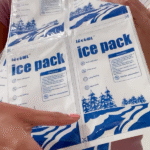
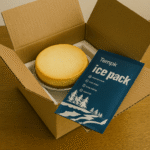
Passive cooling relies on insulation and refrigerants such as gel packs, glace carbonique ou matériaux à changement de phase. Gel packs keep products at 0–10 °C for up to 72 heures, while dry ice maintains frozen goods at –18 °C for up to 48 heures. Passive systems are simple, portable and require no electricity, but they depend on proper loading and careful calculation of refrigerant quantity.
Active cooling uses powered refrigeration units, from portable electric coolers to smart reefer containers. Active systems provide longer duration control and require power (vehicle battery, grid or solar). They are ideal for extended journeys or large shipments but entail higher costs and maintenance.
Design Features That Matter
High quality cooler boxes incorporate features beyond insulation:
Manipulation facile: Two way fork/pallet entry and recessed stacking features facilitate safe loading and minimize damage.
Robust construction: Polyethylene outer shells with polyurethane insulation can offer up to R28 insulation.
Tight seals: One piece rubber latches minimize temperature spikes during transit.
Reusable components: Replaceable wear pads and easy clean surfaces enable hygiene and durability.
Practical Selection Guide
Assess trip length: Use EPS for short local deliveries (<24 h). For cross country or export journeys (48–72 h), invest in EPP or VIP boxes.
Match refrigerant to product: Gel packs for chilled seafood, dry ice for frozen fish, and phase change materials for precision ranges.
Pre chill boxes and trucks: Always cool your equipment to the desired temperature before loading.
Choisissez des emballages réutilisables: Reusable EPP boxes reduce waste, achieve 20 % meilleure isolation and survive over 100 trips.
Scénario: A restaurant receiving same day deliveries uses EPP cooler boxes with gel packs and adds BLE or RFID sensors. Drivers check conditions via mobile apps and ensure display counters stay below 2 °C.
How to Implement End to End Traceability
Cadres réglementaires
End to end traceability requires compliance with multiple regulations and standards:
FSMA 204 (Food Safety Modernization Act – Food Traceability Rule): Les États-Unis. Food and Drug Administration (FDA) final rule requires businesses to maintain records with Éléments de données clés (KDE) for Critical Tracking Events (CTE) and provide information to the FDA within 24 heures. Foods on the Food Traceability List (FTL) – which includes finfish, crustaceans and molluscan shellfish – must comply. The original compliance date was January 20 2026, but the FDA has proposed extending it to July 20 2028.
Global Dialogue on Seafood Traceability (GDST): GDST provides interoperability standards so that traceability systems “speak the same language” across borders. Indonesia recently committed to align its national system with GDST, demonstrating the importance of international harmonization.
European Fisheries Control Regulation: Europe’s rules mandate vessel tracking, electronic catch reporting and phased digital traceability for fresh and frozen seafood. These regulations apply to both domestic and imported products.
HACCP & HACCP based Seafood HACCP: Hazard Analysis and Critical Control Point requirements emphasize identifying hazards and implementing controls along the seafood supply chain.
Building a Traceability System: Key Steps
Start with Accurate Catch Documentation: Record date, temps, fishing method, species and location at the moment of harvest. Delay or estimation opens the door to error or fraud.
Use Unique Identifiers for Each Batch: Assign batch numbers, QR codes or RFID tags to every catch or processing lot. When splitting or merging batches during reprocessing, create sub batch numbers and maintain parent–child relationships.
Standardize Data Formats: Adopt shared frameworks like GS1 standards for product coding and GS1 Electronic Data Exchange. Use shared digital templates and consistent naming conventions to ensure data flows across supply chain participants.
Implement Real Time Tracking: Deploy GPS, IoT sensors and blockchain to monitor location and temperature, and store immutable records. Blockchain provides tamper proof records and enhances consumer transparency.
Educate & Collaborate: Train fishermen, processeurs, distributors and retailers. Use role based dashboards and SOP checklists. Encourage partnerships with government agencies and NGOs, which often provide tools and funding to support compliance.
Automate Reporting: IoT platforms can generate HACCP, FSMA and GFSI compliance reports automatically, eliminating manual paperwork and reducing human error.
Benefits of End to End Traceability
Faster recalls and fewer illnesses: Maintaining KDEs and CTEs allows authorities to identify contamination sources and remove affected products quickly.
Enhanced brand trust: Customers and retailers gain confidence when they can verify where seafood was caught and how it was handled.
Market access & conformité: Meeting FSMA 204, GDST and European requirements ensures your products can enter key export markets.
Deterrence of fraud & IUU: Traceable records discourage mislabeling, fraudulent substitution and illegal fishing.
Exemple de cas: A processor uses QR codes to allow buyers to scan a fish’s journey. Dans les entrepôts, RFID tags automate temperature and movement tracking. This transparency reduces delays, improves accuracy and enables targeted recalls.
2025 Trends and Developments in Seafood Cold Chain
Croissance & Market Projections
The cold chain sector is expanding quickly. Recherche prioritaire estimates that the market will grow from 436,30 milliards de dollars américains en 2025 to US$1,359.78 billion by 2034 (13.46 % TCAC). Aperçus de StartUs forecasts growth from US$454.48 billion in 2025 to US$776.01 billion in 2029. Regional dynamics show Asia–Pacific leading with roughly 14.3 % TCAC, while Latin America invests in renewable energy and IoT monitoring. Matériel (capteurs, boîtes, frigorifiques) holds over 76 % du marché du suivi de la chaîne du froid.
Le seafood traceability software market est également en plein essor. It reached US$705 million in 2024 and is projected to surge to US$1.84 billion by 2033. This growth reflects increasing digital mandates across more than 80 countries and growing pressure to prove product authenticity.
Innovations technologiques
IA & Analyse prédictive: AI analyzes sensor data to forecast equipment failures, predict transit delays and optimize routes. This reduces spoilage and operational costs.
Ambient IoT & Battery Free Sensors: Emerging Ambient IoT tags harvest energy from radio waves and provide low cost, battery free monitoring. They enable real time visibility for high volume goods like seafood and reduce maintenance requirements.
Adoption de la blockchain: More companies are piloting blockchain systems to create tamper proof records and enable consumer level transparency. Combined with smart contracts, blockchain can automate compliance and payments.
Solar Powered Cold Chain: Rising electricity prices are driving adoption of solar powered refrigeration and energy efficient warehouses. Aux États-Unis, commercial solar rates range from 3.2–15,5 centimes par kWh, compared with an average utility rate of 13.1 centimes par kWh dans 2024. Solar power reduces operating costs and carbon footprint.
Cybersecurity Focus: Governments emphasize securing IoT systems to protect data integrity. Companies must invest in secure networks, encryption and compliance with Good Distribution Practices (PIB) et les normes ISO.
Marché & Mises à jour réglementaires
Compliance Extensions: The FDA proposes extending the Food Traceability Rule compliance date to Juillet 20 2028, giving the industry more time to implement record keeping systems.
European Digital Traceability: Europe mandates vessel tracking, electronic catch reporting and phased digital traceability for seafood. Similar updates are underway in the United States, Chile and Japan.
Innovation Boom: The cold chain industry filed sur 2,800 patents and added 26,800 employees in the past year, reflecting rapid technological advancement and job growth.
Insistance au marché
Regional differences influence investments:
Asie-Pacifique: Highest growth rate (~14.3 %), driven by expanding middle class demand and export markets.
l'Amérique latine: Growing exports of fresh produce and seafood lead to investments in renewable energy and IoT monitoring.
Europe: Aging cold storage infrastructure spurs modernization and sustainability efforts.
États-Unis: Focus on cybersecurity and compliance with FSMA 204 and National Cybersecurity Strategy.
Questions fréquemment posées (FAQ)
- What is IoT cold chain monitoring?It’s a system that uses connected sensors to track temperature, humidité et localisation en temps réel. Instant alerts allow quick corrective action before products degrade.
- Why is smart cold chain management important for seafood?Smart systems ensure freshness, reduce waste and maintain food safety during transport, storage and retail display. They also automate compliance and build consumer trust.
- How does IoT reduce seafood spoilage?IoT sends instant alerts when temperatures breach safe limits, enabling swift action. Predictive analytics can forecast equipment failures and schedule maintenance.
- Can IoT help with compliance reporting?Oui. Automated platforms generate HACCP, FSMA and GFSI reports instantly, ensuring audit readiness and reducing manual paperwork.
- What’s the difference between EPP and EPS cooler boxes?EPP offers roughly 20 % meilleure isolationthan EPS and can be reused more than 100 fois. EPS is cheaper and suitable for short trips but usually single use.
- Qu’est-ce que la FSMA ? 204 and how does it apply to seafood?FSMA 204 requires recordkeeping of Key Data Elements at Critical Tracking Events for foods on the Food Traceability List – including finfish, crustaceans and molluscan shellfish. Information must be provided to the FDA within 24 hours and compliance may be required by July 20 2028.
- How common is seafood mislabeling?Studies show that up to 20–30 % of seafood products are mislabeled, with substitution of species or false origins. Robust traceability helps prevent mislabeling and fraud.
- What technologies help prevent illegal fishing?Traceability tools (Codes QR, RFID, GPS and blockchain) track seafood from catch to consumer, making it harder to introduce products from illegal, unreported or unregulated (IUU) pêche.
- How do I choose the right refrigerant?Use gel packs for chilled seafood (0–10 °C), dry ice for frozen seafood (–18 °C) and phase change materials for precise temperature ranges. The quantity should match product weight, transit duration and ambient temperatures.
- Can small businesses afford these technologies?Oui. Start with affordable data loggers and EPS/EPP boxes, then scale to IoT sensors and blockchain as your business grows. Many governments and NGOs offer grants and technical assistance to support digital adoption.
Conclusion & Recommandations
Principaux à retenir
Le contrôle de la température n’est pas négociable: Fish spoils quickly; 35 % of seafood is lost due to cold chain failures. Continuous monitoring and insulated packaging safeguard quality.
Reusable EPP or VIP boxes matter: EPP foam provides 20 % meilleure isolation than EPS and can be reused over 100 fois. VIPs offer the best performance for high value shipments.
Integrate monitoring technologies: Combining IoT sensors, GPS trackers and AI analytics provides real time visibility, predictive maintenance and automated compliance.
Implement end to end traceability: Accurate documentation, unique identifiers, standardized data formats and blockchain protect your products and support compliance with FSMA 204, GDST and European regulations.
Gardez une longueur d'avance 2025 tendances: Rapid market growth, innovation boom and tightening regulations require proactive investment in technology and sustainability.
Plan d'action
Assess Your Operations: Use a self assessment tool to map your supply chain stages, identify risks and prioritize improvements.
Select Appropriate Packaging: Choose EPS for local deliveries, EPP or VIP for longer or repeat shipments. Pre chill boxes and calculate refrigerant load.
Implement Monitoring: Start with data loggers for historical records. Add IoT sensors and GPS trackers for real time visibility, linking them to a cloud platform for analytics and compliance.
Digitize Traceability: Adopt GS1 standards, assign batch identifiers and integrate blockchain or digital platforms to ensure data consistency and consumer transparency.
Train and Collaborate: Provide role based training and dashboards; work with supply chain partners to share data and standardize practices.
Review Regulations Regularly: Monitor updates to FSMA 204, European rules and national cybersecurity strategies. Engage with industry groups and traceability initiatives to remain compliant.
À propos du tempk
Tempk is a research driven company specializing in emballage réutilisable pour la chaîne du froid et monitoring technology. We develop durable EPP foam cooler boxes that deliver isolation supérieure and withstand more than 100 trips. Nos produits incluent des packs de gel, packs de glace sec, insulated liners and smart monitoring systems. By combining high performance packaging with IoT enabled sensors and cloud platforms, we help customers maintain temperature integrity, réduire les déchets et assurer la conformité. With decades of experience in cold chain logistics, we are committed to innovative, eco friendly solutions that protect your products and the planet.
Contactez-nous: For personalized advice on optimizing your seafood supply chain, speak with Tempk’s specialists. We’ll help you select the right cooler boxes, refrigerants and monitoring technologies to safeguard your perishable goods and build consumer trust.