How to Choose a Cheap EPP Transport Box Distributor for Cold Chain Logistics
Introdução
Finding a cheap EPP transport box distributor can feel like navigating a maze. You want to keep your products at the right temperature, minimise costs, and choose a supplier you can trust. Polipropileno expandido (PPE) transport boxes are renowned for being strong, lightweight and thermally insulating. In this guide you’ll learn why EPP is an excellent material for cold chain logistics, how to evaluate distributors based on quality and price, and what trends in 2025 mean for your business. No final, you’ll know exactly how to select a distributor who balances affordability with performance.
Este artigo responderá:
Why choose a cheap EPP transport box distributor? – learn the benefits of EPP’s strength, insulation and recyclability.
How do affordable EPP distributors ensure quality? – discover the manufacturing standards and certifications that matter.
What factors affect the price of EPP transport boxes? – explore how material density, design features and order quantity influence cost.
How can you evaluate and partner with a distributor? – get a checklist for sourcing, vetting and negotiating with suppliers.
Quais são as últimas tendências em 2025 for EPP transport box distribution? – entender o crescimento do mercado, iniciativas de sustentabilidade e mudanças regulatórias.
Perguntas frequentes – find quick answers to common queries about EPP boxes, maintenance and procurement.
Why choose a cheap EPP transport box distributor?
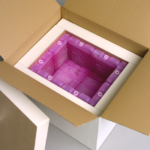
Expanded polypropylene is robust, lightweight and insulating. EPP boxes combine a high strength to weight ratio with excellent impact resistance and insulation. This means the boxes protect sensitive goods without adding unnecessary weight to your shipment. Because EPP is recyclable and reusable, investing in these containers can reduce long term costs and environmental impact.
EPP boxes outperform traditional plastics and foam. Compared to standard plastic containers, EPP packaging weighs only about a quarter yet still offers great stability. The material’s slight elasticity provides shock absorption and prevents damage. It also resists moisture and temperature fluctuations, making it ideal for cold chain logistics.
Reusability offers a clear cost advantage. Because EPP boxes can be washed and reused many times, you won’t need to buy disposable packaging for every shipment. Their long life means a higher upfront cost can be offset by lower per use expenses over time. Working with a cheap distributor helps you obtain high quality boxes at a lower price, further improving your return on investment.
Understanding EPP’s key properties
EPP packaging stands out for several reasons. The table below summarises its core characteristics and how each one benefits your cold chain operations.
| Propriedade | EPP Packaging | Other Materials | Practical Value to You |
| Peso | Approximately one quarter the weight of standard plastic packaging | Traditional plastic and metal containers are heavier | Lower transportation costs and easier handling reduce labour and fuel expenses |
| Load Bearing | Exceptional load bearing capacity and packing stability | EPS or cardboard may deform under weight | Protects heavy goods without the risk of collapse |
| Absorção de choque | High impact energy absorption and slight elasticity | Rigid materials offer little shock mitigation | Reduces damage to fragile goods and improves product quality |
| Desempenho térmico | Excellent insulation and minimal water absorption | Some foams lose insulating ability when wet | Maintains temperature during transit, crucial for food and pharmaceuticals |
| Reutilização | Reutilizável e reciclável, with long service life | Many single use materials contribute to waste | Lowers per use cost and supports sustainability goals |
Dicas e sugestões práticas
Match EPP density to your cargo. Higher density EPP offers greater load bearing capacity, making it ideal for heavy or sharp items. Lower density options are cheaper and sufficient for lighter loads.
Inspect cleaning procedures. Ensure your distributor provides cleaning guidelines. Proper sanitation preserves the insulating properties and prevents contamination.
Evaluate lifetime cost, não apenas preço. Even if one distributor offers a cheaper price per box, consider how often boxes will need replacement. Long lasting EPP boxes may reduce your overall costs.
Exemplo do mundo real: A regional meal kit company switched from single use styrofoam containers to reusable EPP boxes. The boxes’ low weight reduced freight costs by 20%, while durability cut packaging waste by 75%. After a year, the company saved more than USD 30,000 and improved customer satisfaction by delivering food at consistent temperatures.
How do affordable EPP distributors ensure quality?
Quality depends on material, design and certification. Nem todas as caixas EPP são criadas iguais. Reliable distributors use virgin or high grade recycled polypropylene beads and adhere to strict molding processes that ensure consistent density and wall thickness. Look for distributors who offer product certifications such as ISO 9001 ou ISO 14001 and comply with food and pharmaceutical safety standards.
Check manufacturing standards and testing. EPP boxes should undergo shock, drop and thermal cycling tests to validate their performance. An honest distributor will share test data demonstrating that their boxes maintain structural integrity and insulation across temperatures from −30 °C to +80 °C. Ask whether their boxes are certified for use with eutectic plates or gel packs.
Assess recyclability and sustainability practices. Since EPP is recyclable, responsible distributors offer take back programmes or partner with recycling facilities. Ensure your supplier provides guidance on end of life recycling and participates in environmental initiatives.
What to look for when auditing a distributor
| Audit Element | Por que isso importa | O que perguntar |
| Material sourcing | High quality beads lead to consistent density and insulation | Request details on virgin vs recycled content, supplier credentials |
| Controle de qualidade | Testing ensures boxes can handle shocks and temperature swings | Ask for test reports on compression, drop and thermal cycles |
| Certificações | Compliance with international standards signals reliability | Check for ISO certifications and regulatory approvals for food/pharma use |
| Sustainability programmes | Reusability and recycling reduce your environmental impact | Look for take back schemes, recycled content and ESG reporting |
| Suporte ao cliente | Training and after sales service help your team use boxes effectively | Ask about cleaning instructions, replacement policies and technical assistance |
Dicas e sugestões práticas
Tour the facility virtually or in person. Seeing the production process builds confidence and reveals quality control practices.
Request a sample box. Evaluate weight, sturdiness and insulation before placing a large order.
Ask for references. Speak with existing customers in your industry to confirm reliability and service levels.
Caso real: When a pharmaceutical distributor sourced EPP boxes from an unverified supplier, they found variations in wall thickness that compromised insulation. After switching to a certified distributor, the boxes maintained consistent temperatures, reducing product loss during transport.
What factors affect the price of EPP transport boxes?
Material density and quality. Higher density EPP requires more material, increasing cost but improving load capacity. Lower densities reduce price but may not suit heavy goods. The choice depends on your cargo weight and desired service life.
Design complexity. Basic EPP boxes with standard lids cost less than custom solutions with partitions, eutectic plate holders or integrated sensors. Consider whether extras like hinges, ergonomic handles or tamper evident seals justify the added cost.
Order quantity and mould setup. EPP boxes are produced using moulds. Large orders spread the tooling costs over more units, lowering price per box. Small orders may incur a mould fee. When working with a distributor, negotiate to share mould costs or choose standard sizes to avoid custom tooling.
Shipping and duty. Boxes manufactured close to your location reduce freight costs and carbon footprint. If importing, factor in duties, taxes and currency fluctuations.
Cost reduction strategies
Bundle accessories with your order. Purchasing eutectic plates or gel packs alongside boxes may secure discounts.
Opt for standard sizes. Unless your goods have unique dimensions, choosing standard box sizes avoids expensive custom moulds.
Consider a subscription or lease model. Some distributors offer leasing programs where you pay a monthly fee instead of a lump sum, spreading costs and including maintenance.
Cenário prático: A start up exporting frozen seafood negotiated with a distributor to co own the mould for their preferred box size. This reduced the unit price by 15% and ensured exclusive access to the box design.
How to evaluate and partner with a cheap EPP transport box distributor
Defina seus requisitos. Identify the products you will ship, their temperature range, weight and transit duration. Consider whether you need boxes that operate between −30 °C and +80 °C or if a narrower range suffices.
Research potential distributors. Use industry directories, trade shows and online forums to compile a shortlist. Check for distributors with experience in your industry (comida, produtos farmacêuticos, Biotech, e commerce etc.) and request product catalogues.
Compare quality and price. Gather quotes, sample boxes and test data. Evaluate not only the unit price but also shipping costs, minimum order quantities and lead times. Use the audit checklist above to assess quality.
Negotiate terms. Discuss payment terms, discounts for volume or long term agreements, and service conditions like training or technical support. Consider including clauses for performance guarantees or replacements if boxes fail to meet specifications.
Build a long term partnership. A cheap EPP transport box distributor can become a strategic partner. Work together to forecast demand, plan for new product launches and keep up with evolving regulations.
User friendly evaluation checklist
Establish your requirements. List product dimensions, peso, temperature range and transit time.
Shortlist distributors. Identify at least three suppliers specialising in your industry.
Request samples and data. Obtain sample boxes and ask for test reports.
Perform cost analysis. Compare unit price, envio, tooling and hidden fees.
Check sustainability. Ask about recycling programmes and ESG policies.
Negotiate. Seek volume discounts, co development of moulds and service agreements.
Review and decide. Involve stakeholders from procurement, quality and operations to choose the best partner.
Caso em questão: A national grocery chain used this checklist to evaluate four potential distributors. After comparing quality and service, they selected a supplier offering robust EPP boxes and a recycling programme, salvando 12% on packaging costs while improving sustainability.
2025 latest trends in EPP transport box distribution
Reusable cold chain packaging is growing rapidly. According to market analysts, the cold chain packaging market size stands at USD 32.29 bilhão em 2025 e está projetado para atingir USD 48.93 bilhão por 2030, expandindo em um 8.67 % Cagr. Growth is driven by rising biologics volumes, atendimento de alimentos para comércio eletrônico e iniciativas globais de vacinas. This surge increases demand for reliable and reusable EPP containers.
Sustainability and ESG goals shape procurement. Ambiental, social e governança (Esg) targets are pushing companies toward reusable and bio based packaging materials. EPP’s recyclability and long service life align with these goals, making it a preferred choice for businesses seeking to reduce waste and carbon footprint. Distributors offering take back programmes and recycled content are well positioned to capture market share.
Regulations are getting stricter. Regulatory frameworks such as the US Food and Drug Administration’s 21 Cfr 600.15 and the European Union’s Packaging and Packaging Waste Regulation require validated thermal packaging solutions. Distributors must ensure their EPP boxes comply with these standards and provide documentation for audits.
Integration of smart technology. Real time IoT monitoring of temperature and location is becoming mainstream in cold chain logistics. Some distributors now embed RFID tags or sensors into EPP boxes, allowing shippers to track conditions and intervene if deviations occur. While this raises upfront costs, it reduces product loss and enhances compliance.
Hybrid materials and innovative designs. Research into hybrid materials that combine EPS with polyethylene or polypropylene has produced boxes with lower density and improved chemical resistance. No entanto, EPP remains popular due to its robustness and ability to withstand repeated impacts without losing functionality.
Visão geral dos últimos desenvolvimentos
Crescimento de soluções reutilizáveis: Companies are shifting from single use EPS to reusable EPP containers. This trend is expected to accelerate as the cold chain packaging market approaches USD 89.84 bilhão por 2034.
Advanced cooling methods: Distributors pair EPP boxes with eutectic plates or gel packs to maintain temperatures from −30 °C to +80 °C, extending shipping durations without active refrigeration.
Focus on last mile delivery: High quality EPP thermoboxes are engineered for last mile deliveries, ensuring an unbroken cold chain from warehouse to door.
Industry diversification: EPP boxes are not just for food. Eles servem produtos farmacêuticos, Biotech, electronics and e commerce sectors, broadening the distributor market.
Insights de mercado: North America currently dominates the cold chain packaging market, driven by demand from the pharmaceutical sector. Europe holds a major share but Asia Pacific is growing rapidly. Material segmentation shows expanded polystyrene still leading, yet the shift toward reusable, recyclable EPP solutions is notable. Pressão regulatória, consumer demand for sustainability and technology integration all point to continued growth and innovation.
Common questions about EPP transport boxes
Q1: Are EPP transport boxes safe for pharmaceuticals and vaccines?
Sim. EPP provides strong insulation, protecting temperature sensitive items like vaccines and medicines. When combined with eutectic plates or gel packs, EPP boxes maintain stable temperatures between −30 °C and +80 °C. Ensure your distributor complies with pharmaceutical regulations and provides necessary documentation.
Q2: How do EPP boxes compare to EPS or Styrofoam?
EPP is more durable and reusable than expanded polystyrene (EPS). It absorbs shocks and resists repeated impacts. EPP boxes are also lighter and provide better thermal insulation. While EPS may have a lower upfront cost, EPP’s longer service life reduces long term expenses.
Q3: How long can EPP boxes maintain temperature?
Duration depends on the box design, wall thickness and cooling medium. Quality EPP boxes can maintain temperature for 24–72 hours when used with suitable eutectic plates or gel packs. Always verify performance data from your distributor.
Q4: Can EPP boxes be customised?
Sim. Distributors can tailor EPP transport boxes with partitions, inserções, eutectic plate holders or sensor integration. Custom designs cost more but optimise space and performance. Consider your specific needs and budget.
Q5: How do I clean and maintain EPP boxes?
EPP boxes are water resistant and can be rinsed with mild detergent. Avoid harsh chemicals that may degrade the material. Ensure boxes are completely dry before reuse to preserve insulating properties. Check hinges, seals and handles regularly and replace damaged parts.
Resumo e recomendações
Takeaways -chave: EPP transport boxes provide a powerful combination of strength, thermal insulation and light weight. Their reusability and recyclability make them a sustainable choice. Working with a cheap EPP transport box distributor lets you access these benefits without breaking your budget. To select the right partner, define your requirements, audit potential suppliers, compare quality and price, and negotiate long term partnerships. Acompanhar 2025 trends—ESG goals, regulatory changes and smart technologies—to stay competitive and compliant.
PRÓXIMOS PASSOS: Start by assessing your cold chain needs and making a shortlist of distributors. Request samples and test reports to evaluate quality. Consider the lifecycle cost of EPP boxes and how they align with your sustainability goals. Finalmente, partner with a distributor who offers robust products, transparent pricing, e forte suporte ao cliente. Ao seguir estes passos, you’ll secure affordable, reliable packaging that protects your goods and supports your business growth.
Sobre Tempk
No Tempk, we specialise in temperature controlled packaging solutions. Our EPP transport boxes are designed for durability, excellent insulation and easy handling. We prioritise sustainability—our boxes are reusable and recyclable, ajudando você a reduzir custos e impacto ambiental. Com foco na inovação, we integrate smart features like eutectic plate holders and sensor compatibility to meet the evolving needs of cold chain logistics. Our team of experts is ready to help you select the right solution for your products and ensure regulatory compliance.
Chamado à ação: Ready to improve your cold chain operations? Contate os especialistas da Tempk today to discuss your requirements, request samples and receive a tailored quote. We’re here to support your business with affordable, high performance EPP transport boxes.