Atualizado: Agosto 13, 2025. If you use dry ice packs for shipping chocolate, this guide shows how to keep product firm, glossy, and compliant—without freezing it. You’ll learn a hybrid packout that buffers the product at 15–18 °C, the right dry‑ice amount for 24–72 h lanes, e o 2025 acceptance rules that stop rejections at tender. (This guide consolidates and elevates your three drafts.)
-
When to use dry ice packs for shipping chocolate on hot lanes without causing bloom
-
Como embalar e etiquetar a compliant hybrid shipper (passo a passo)
-
Quanta gelo seco you actually need for 24–72 h routes (estimador rápido)
-
Which coolant to choose—dry ice vs gel vs 15–25 °C PCM—for your lane
-
O que mudou em 2025 (IATA checklist, Clareza do USPS, new chocolate research)
When should you use dry ice packs for shipping chocolate?
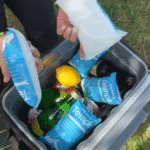
Use a hybrid approach—gel or 15–20 °C PCM around the chocolate, plus a small dry‑ice layer on top—to add headroom against heat without freezing. Carriers themselves advise gel packs for “cold” and dry ice for “frozen,” so a hybrid protects chocolate quality while avoiding brittle texture.
Por que funciona: Dry ice absorbs a lot of heat as it sublimes (~571kJ/kg, per NIST), so a small amount keeps your gels effective through the hottest part of day 1, while the PCM/gel maintains a gentle “cool” micro‑climate around the bars.
Hybrid packout with 15–20 °C PCM—when does it help?
PCMs targeted at 15–25 ° C. are common now and qualified to ISTA thermal profiles. They buffer temperature swings that cause sugar/fat bloom and reduce over‑cooling risk next to dry ice. Choose solutions qualified against ISTA 7E/7D profiles for realistic hot/cold cycles.
| Escolha do refrigerante | Melhor para | Regra geral | O que isso significa para você |
|---|---|---|---|
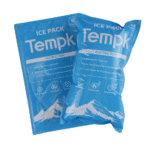
| Pacotes de gel (0 ° C PCM) | Manter legal, não congelado | Size gels to payload; overnight lanes | Lowest bloom risk; simple compliance. |
| Gelo seco (E 1845) | Extreme heat / congelado | Adicionar pequeno camada superior; ventilação & rótulo | Big heat headroom; requires Class 9 label + E 1845. |
| 15–25 °C PCM | Stable room‑temp band | Belt around product | Dampens spikes, protects gloss & foto. |
Dicas práticas que você pode usar hoje
-
Navio de seg Para evitar que o fim de semana esteja; many chocolatiers do exactly this.
-
Dimensione corretamente o remetente to reduce void space; reflective liners help on 24–48 h lanes.
-
Keep RH low and avoid cold‑shock to prevent bloom; target 12–18 °C and <50–60% RH.
Caso real: Moving to a hybrid (15 °C PCM belt + small top dry‑ice layer) and Mon–Wed dispatch cut summer melt claims sharply on a 34 °C lane, keeping in‑transit temps 14–18 °C.
How many dry ice packs for shipping chocolate do you need?
Resposta curta: Start small—5–15% of payload weight em gelo seco on top only, separated by a rigid barrier. Let gels/PCM do the main work while dry ice covers ambient spikes. Aumentar +5% para >35 °C lanes; reduce −5% para rotas suaves.
Por que isso funciona: Dry ice has very high latent heat (~571kJ/kg) and each pound releases ~250 L of CO₂ gas—powerful cooling, but you must let gas escape.
Quick 24–72 h estimator (copiar/colar)
Use a data logger to validate and tune by ±15–25% on your worst route before scaling.
How to pack dry ice packs for shipping chocolate safely (e em conformidade)
Passo a passo:
-
Condition components. Freeze gels; stage PCMs per spec; pré-resfriar o expedidor.
-
Wrap product, controlar a umidade. Bag chocolate; add light void fill; keep RH low to avoid sugar bloom.
-
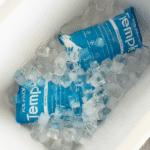
Build the “gel/PCM cocoon.” Surround chocolate with gels/15–20 °C PCMs.
-
Insert a rigid barrier. Foam board/card to block the −78.5 °C plume.
-
Add dry ice on top only. Never touch product; garantir a ventilação (49 CFR173.217).
-
Marca & rótulo. E 1845, rede seca kg, Classe9 diamante; siga o 2025 Lista de verificação de aceitação da IATA (PI954) at tender.
-
Pick service & expedição. Overnight where possible; evite esperas no fim de semana.
Dry ice packs for shipping chocolate vs gel packs vs PCM—which is right?
-
Dry ice packs for shipping chocolate: adds powerful heat margin; deve ventilação e etiqueta; aim to prevent freezing, not cause it.
-
Pacotes de gel (0 ° c): simplest for “cool” deliveries; carriers recommend them for non‑frozen perishables.
-
15–25 °C PCM: stabilizes quality (gloss, foto) and dampens spikes; now widely available and qualified to ISTA thermal profiles.
Bloom guardrails: Store and ship near 12–18 ° C. no <50–60% RH to reduce sugar/fat bloom; avoid temperature cycling.
Operadora & regulatory rules for dry ice packs for shipping chocolate (2025)
-
Aqui está o PI954 (ar): E 1845 (Dióxido de carbono, sólido), embalagem ventilada, marca Peso líquido (kg). ≤200kg/pacote; use o 2025 Lista de verificação de aceitação. (Operator variations may be stricter.)
-
USPS (ar doméstico): dry ice allowed with Instruções de embalagem 9a; common limit ≤5lb por correio; proibido internacionalmente.
-
PONTO 49CFR173.217 (NÓS. chão): pacote must permit gas release; Sem recipientes herméticos.
-
FedEx/UPS practice: correto Classe9 rótulo + E 1845 com kg net; some UPS routes impose lower limits than IATA—confirm.
-
Exposure safety: CO₂ TWA 5,000 ppm; DEFINIR 30,000 ppm—ship in ventilated spaces; never seal dry ice in confined volumes.
2025 trends in dry ice packs for shipping chocolate
Heat‑resistant chocolate: New peer‑reviewed work shows curing protocols and additives can keep structure at 33–55 °C, but flavor/appearance still benefit from controlled shipping.
Aceitação padronizada: Aqui está 2025 Lista de verificação de aceitação streamlines counter checks for dry‑ice consignments with non‑DG payloads like confections.
Adoção de PCM: Broader 15–25 °C PCM portfolios and ISTA‑qualified shippers make ambient buffering mainstream for confections.
Operational discipline: More brands ship Mon–Wed e adicione warm‑weather surcharges to fund gels/liners in hot months.
Perguntas frequentes
Will dry ice ruin chocolate?
Not if you separar isto. Keep a gel/PCM cocoon around the product and place a small dry‑ice layer on top with a rigid spacer; avoid direct contact and cold shock.
How cold should chocolate be in transit?
Objetivo para 15–18 ° C. (59–65 °F) com RH <50–60% to protect gloss and snap and reduce bloom.
How much dry ice for 24–48 h?
Comece em 5–15% of payload weight, then validate with a temp logger and adjust by lane (+/−15–25%).
Quais rótulos são necessários?
Marca E 1845 e Peso da rede de gelo seco (kg) e aplique o Classe9 diamante; siga o IATA 2025 Lista de verificação de aceitação.
Posso enviar gelo seco pelo USPS?
Yes for domestic air up to 5 Libra sob PI9AA; sem correio internacional. A embalagem deve liberar CO₂.
Is dry ice hazardous in sealed boxes?
Sim. Each pound can release ~250 L de CO₂; a ventilação é obrigatória.
Resumo & Recomendações
Resumindo: Dry ice packs for shipping chocolate work best in a híbrido pacote. Let gels/PCMs hold the product zone; use a pequeno, ventilado dry‑ice layer on top for heat spikes; label and mark per IATA/USPS/DOT. Enviar rápido, validar com um registrador, and avoid weekends.
PRÓXIMOS PASSOS (your quick plan):
-
Pilot one hot lane this week with the estimator above and a logger.
-
Switch to Mon–Wed dispatch for summer.
-
Add a 15–20 °C PCM belt to your current dry‑ice packout.
-
Marca E 1845 + net kg and keep vent paths open (49 CFR173.217).
Sobre Tempk
Nós projetamos simples, tested packouts for complex lanes. Our engineers blend dry ice, 15–20 °C PCMs, and premium insulation to hit your quality target with fewer claims, and we bring Aqui está o PI954 / USPS PI 9A readiness to every project. Reserve um free lane simulation and we’ll tailor a compliant packout to your routes and budget.