Última atualização: Janeiro 14, 2026
Escolher um fabricante biotecnológico de inserção de gelo em gel não é uma compra de commodity. You’re selecting a partner that helps you hold a tight temperature lane, evitar vazamentos, and stay audit-ready. Many biologics and vaccines require refrigerated storage around 2–8°C (36–46°F), and guidance warns that freezing can permanently damage some liquid vaccines. This guide gives you a practical 2026 playbook to source, teste, and scale gel ice inserts without the “sample looks great, production drifts” problem.
What you’ll get from this guide
How to define your temperature lane with your gel ice insert biotech manufacturer (2–8 ° C., congelado, or CRT)
How to reduce freeze-risk in refrigerated shipments using smarter conditioning and pack-outs
A copy-paste spec sheet for lot-traceable gel ice insert manufacturing
A simple qualification plan using thermal profiles and repeatable tests
A durability test routine for leakproof seams and real handling
UM 2026 trend snapshot and an action plan you can run this month
What does a gel ice insert biotech manufacturer actually make?
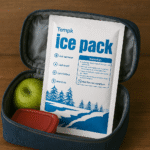
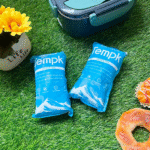
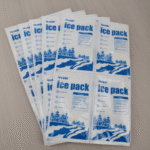
A gel ice insert biotech manufacturer makes sealed coolant “inserções” that fit inside insulated shippers. Inserts are not generic ice packs. They are shaped to match shipper cavities, side walls, tampas, or corner channels. That shape is what helps you avoid hot spots and cold spikes.
In biotech shipping, “desempenho” means the insert behaves predictably after conditioning. It also means the insert stays sealed after reuse cycles. If either fails, your system fails.
The three performance layers you must control
A gel ice insert biotech manufacturer controls three layers that drive outcomes:
Thermal behavior: how cold it starts and how fast it warms.
Geometry and mass: how it fits and how much cooling capacity it provides.
Contenção: film structure and seam strength that prevent leaks.
| Camada | O que pode dar errado | O que isso significa para você |
|---|---|---|
| Thermal behavior | overcooling or short hold time | excursions and product risk |
| Geometria + massa | uneven gradients | corner failures and re-testing |
| Contenção | micro-leaks after cycling | dano, reivindicações, lost trust |
Dicas práticas e recomendações
Ask your gel ice insert biotech manufacturer for mass tolerance, not only average mass.
Require production-intent samples made on the real sealing line.
Treat inserts as part of a system: inserir + remetente + condicionamento + empacotar.
Padrão do mundo real: Most “unexpected” failures come from small drift in mass, condicionamento, or seam quality.
Which temperature lane should your gel ice insert biotech manufacturer support?
Your lane decides everything: gel behavior, conditioning method, and pack-out strategy. If you skip this step, you’ll overbuy the wrong insert.
For refrigerated vaccines, CDC guidance repeatedly references maintaining refrigerator temperatures between 2°C and 8°C (36°F and 46°F). USP labeling language also describes “store in a refrigerator” as 2°C to 8°C. If your product is “CRT,” USP describes controlled room temperature labeling around 20°C to 25°C, with permitted excursions between 15°C and 30°C.
Refrigerator vs CRT vs frozen: define your lane first
| Faixa | Typical label language | Common operational risk | O que você otimiza |
|---|---|---|---|
| Refrigerado | 2–8 ° C. | freezing hotspots | gentle cold + espaçamento |
| CRT | 20–25ºC | overheating | buffering + isolamento |
| Congelado | específico do produto | descongelando | capacidade + active control |
Dicas práticas e recomendações
Don’t use vague words like “ambient.” Use a temperature range. USP notes ranges are clearer than vague labels in practice.
Share your lane and route time with the gel ice insert biotech manufacturer before you request a quote.
Se você enviar por via aérea, IATA notes common vaccine lanes include 2–8°C or -20°C, depending on product needs.
Regra simples: Your gel ice insert biotech manufacturer can’t design “corretamente” until your lane is explicit.
How do you prevent freezing damage in 2–8°C shipments?
Freeze-risk is the expensive surprise in refrigerated lanes. Many teams add “more cold” to be safe. That can create a cold contact zone that drops below safe limits, even if the average looks fine.
CDC warns that liquid vaccines containing an aluminum adjuvant can permanently lose potency when exposed to freezing temperatures, and it explicitly says “Não congele” for these cases. ICH stability guidance also encourages stress studies to understand whether accidental exposures during transportation are harmful.
Freeze-risk triggers (and how to remove them)
| Freeze-risk trigger | O que causa isso | Fix you can implement |
|---|---|---|
| Insert conditioned too cold | freezer conditioning for a 2–8°C lane | use staged conditioning and SOP control |
| Direct insert-to-payload contact | tight cavities, no buffer | add spacer or redesign pack-out |
| Inserts concentrated on one side | “easy pack-out” habits | distribute symmetrically |
| Only one sensor | false confidence | place sensors at corners and center |
Dicas práticas e recomendações
Put conditioning in writing. Treat it like a manufacturing step.
Design pack-outs for no direct cold contact to the most sensitive payload zones.
Validar “worst case,” not the best-looking scenario.
Verificação da realidade: A shipper can pass average temperature and still fail due to one frozen corner.
How to write a spec sheet for your gel ice insert biotech manufacturer
A spec sheet prevents silent substitutions and protects your qualification results. EU GDP guidance states that critical steps and significant changes should be justified and, where relevant, validado. If your insert drifts, your validated shipper drifts too.
Keep your spec measurable, simples, and easy to inspect.
Spec sheet template (copiar/colar)
| Item de especificação | Seu alvo | Acceptance check | O que isso significa para você |
|---|---|---|---|
| Insert dimensions | ___ mm × ___ mm | medir 10 PCs | ajustar + repeatable pack-out |
| Gel mass | ___ g ± ___ g | pesar 10 PCs | predictable thermal capacity |
| Etiqueta da pista | 2–8 / CRT / congelado | label match | prevents wrong formula |
| Film structure | barreira / multicamadas | material declaration | vazar + odor control |
| Seam design | bordas reforçadas | seam inspection | durability over cycles |
| Lot coding | unidade + Carton | photo proof | fast traceability |
| Conditioning SOP | passo a passo | signed SOP | repeatable results |
Why gel mass tolerance is a “hidden qualification lever”
Even small mass drift changes hold time and gradients. It also changes whether your pilot results repeat.
| Mass drift | What you see in shipments | What it costs you |
|---|---|---|
| Too low | short hold time | warm excursions |
| Too high | stronger early cold | freezing risk |
| Unstable | inconsistent results | re-testing and delays |
Dicas práticas e recomendações
Adicionar “no substitution without approval” for film and gel.
Require a change notification window before any process changes.
Mantenha um “golden sample” insert to compare against future lots.
Good suppliers like specs. Specs reduce arguments and prevent expensive rework.
Em biotecnologia, traceability is not a luxury. It is your fastest path to containment and root cause.
WHO model guidance for time- and temperature-sensitive products includes expectations around calibration and verification of monitoring devices, including calibrating against a traceable reference standard at least annually (unless justified otherwise). WHO’s monitoring supplement also emphasizes that monitoring devices provide a history of temperature exposure and that SOPs/SLAs should specify device use and how data is collected and stored.
EU GDP also says vehicles and equipment should be suitable and equipped to prevent exposure to conditions that could affect product quality.
QC checkpoints that prevent real-world failures
| Ponto de verificação de controle de qualidade | What you request | O que isso impede |
|---|---|---|
| Incoming film check | grossura + barrier spec | weak seams and punctures |
| In-process sealing logs | batch parameters recorded | seam drift |
| Mass sampling | every batch sampling plan | thermal drift |
| Leak inspection | random pressure or soak check | micro-leaks in field |
| Lot traceability | unit/carton lot code | slow investigations |
Dicas práticas e recomendações
Require a one-page QC workflow you can store in your supplier file.
Ask how they handle nonconforming lots (retrabalhar, scrap, substituir).
Make calibration and traceable references part of the program.
A simple test: Ask for last month’s QC records. The response tells you maturity immediately.
How to qualify thermal performance with your gel ice insert biotech manufacturer?
Qualification is not “one big test.” It is a repeatable process. You define the lane, stress it realistically, then lock what worked.
ISTA describes 7E profiles as “the new standard” for thermal transport testing, developed from real-world transport data, and notes lane data gathered across 82 different lanes. That matters because you want profiles that reflect real shipping, not assumptions.
ICH Q5C also explains that biologics often need precisely defined storage temperatures, and it suggests stress studies to understand whether transportation exposures are deleterious.
Qualification workflow (simples, repetível, escalável)
Define lane acceptance criteria and route duration.
Choose shipper + insert set + pack-out layout.
Place sensors at corners and the payload center.
Run profile testing and identify gradients.
Adjust pack-out and conditioning until stable.
Repeat on a second lot to confirm repeatability.
| Etapa | What you document | Por que isso importa para você |
|---|---|---|
| Lane criteria | faixa de temperatura + duração | prevents scope creep |
| Pacote | insert positions + espaçamento | controls gradients |
| Condicionamento | start temperature and time | repeatable results |
| Resultados | pass/fail by sensor point | catches hotspots |
| Trancar | final spec and SOP | evita deriva |
Ferramenta de decisão interativa: “Are you under-testing or over-testing?”
Dê a si mesmo 1 point for each “yes.”
Do you have a written conditioning SOP?
Do you test corner temperatures, não apenas médias?
Do you repeat qualification on a second batch?
Do you log pack-out photos and weights?
Do you have change control with your manufacturer?
0–2 points: You’re likely under-testing.
3–4 pontos: You’re in the safe middle.
5 pontos: You’re building repeatability, not just results.
Meta: Fewer surprises later, not more tests now.
How to run durability tests for leakproof gel ice inserts?
Thermal success is useless if inserts leak. Leaks damage cartons, rótulos, and payload protection. WHO guidance emphasizes monitoring and documentation across transport and distribution to show compliance. EU GDP also highlights suitable equipment and controlled processes.
Durability testing should mimic what actually happens: ciclismo, gotas, and compression in packed shippers.
Durability test plan you can run in 7 dias
Freeze-thaw cycle 10 vezes.
Drop test from handling height on each face.
Compression test inside a fully packed shipper.
Seam inspection after every stage.
Record defect type and location.
| Teste | O que você verifica | Sinal de passagem | O que isso significa para você |
|---|---|---|---|
| Freeze-thaw | seam whitening, inchaço | no change | long-term reliability |
| Drop test | corner splits | no leak | handling resilience |
| Compressão | micro-leaks | dry seams | stacking safety |
| Visual check | tacky spots, bulging | nenhum | early warning |
Dicas práticas e recomendações
Round corners if corner splits appear.
Reinforce seals if micro-leaks appear after compression.
Retain reference samples from each lot for comparisons.
Small habit, big win: Photos of every pack-out catch mistakes faster than spreadsheets.
How do you set monitoring expectations for biotech shipments?
Even the best inserts can’t save a weak process. Monitoring closes the loop.
CDC’s vaccine toolkit stresses that you must measure and monitor temperatures with a temperature monitoring device, and it recommends checking/recording min and max temperatures during setup and daily operation. WHO’s monitoring supplement emphasizes that evidence is supplied by recording devices that provide a history of exposure and that SOPs should specify device types and data handling.
Monitoring setup checklist
| Monitoring item | What to define | O que isso significa para você |
|---|---|---|
| Tipo de dispositivo | registrador / indicator / probe | evidence quality |
| Colocação | near payload hotspots | accurate risk detection |
| Interval | frequent logging | better root cause clarity |
| Data flow | who reviews and when | faster decisions |
| Calibração | traceable references | audit readiness |
Dicas práticas e recomendações
Loggers are more useful when you already know what you’ll do with the data.
Define excursion decision rules before the first shipment leaves.
Treat monitoring as part of quality, not as a “nice-to-have.”
If you can’t explain your excursion process in one page, it won’t work under stress.
2026 trends for gel ice insert biotech manufacturer programs
Em 2026, buyers are moving from “buy inserts” para “qualify systems.” That shift changes what you should demand from a gel ice insert biotech manufacturer.
Visão geral da tendência (what’s new in practice)
More lane-specific designs: fewer “one insert for everything” programas.
More profile-based testing: ISTA 7E style thinking is rising because it is data-driven.
More audit packs: suppliers prepare QC and traceability documentation upfront.
More freeze-risk focus: teams are designing against overcooling, not only overheating.
More sustainability pressure: reuse cycles and right-sized packaging are becoming part of procurement.
Instantâneo do progresso mais recente
Better SOP discipline around conditioning and pack-outs.
Stronger emphasis on calibrated monitoring and evidence trails.
Increased demand for repeatability across lots, not only passing once.
Perguntas frequentes
Pergunta 1: What is a gel ice insert biotech manufacturer?
A gel ice insert biotech manufacturer produces sealed coolant inserts designed to fit insulated shippers and support stable temperature lanes during transport.
Pergunta 2: Why is 2–8°C such a common refrigerated target?
CDC vaccine guidance describes maintaining refrigerator temperatures between 2°C and 8°C (36°F and 46°F) for many vaccines, and USP labeling language also uses 2–8°C for refrigerator storage statements.
Pergunta 3: What is the biggest hidden risk in refrigerated lanes?
Freezing hotspots. CDC notes freezing can permanently reduce potency for some liquid vaccines with aluminum adjuvants.
Pergunta 4: What testing standard should I start with?
Start with a realistic profile approach and repeatability. ISTA describes 7E profiles as a newer thermal transport testing standard developed from real-world lane data.
Pergunta 5: What documents should a gel ice insert biotech manufacturer provide?
No mínimo: material specs, QC records, codificação de lote, calibration approach, and written change control. WHO guidance emphasizes calibration and documented monitoring evidence.
Pergunta 6: How do I avoid “sample good, production different”?
Use production-intent samples, lock tolerances, and require change notification and approval before any material or process changes.
Pergunta 7: Do I need monitoring devices if packaging is qualified?
Sim, if your quality system requires evidence and excursion decisions. WHO monitoring guidance highlights recorded temperature history as evidence during transport.
Pergunta 8: How often should monitoring devices be calibrated?
WHO model guidance describes calibrating temperature monitoring devices at least annually, unless otherwise justified, against a traceable reference standard.
Resumo e recomendações
A gel ice insert biotech manufacturer should be selected using a system, not a gut feeling. Primeiro, define your lane (2–8 ° C., CRT, ou congelado) and your route risk. Then lock a measurable spec sheet with mass tolerance, film structure, desenho de costura, and lot coding. Validate freeze-risk prevention, not only hold time. Build a qualification plan that is realistic and repeatable, and pilot on at least two lots before scaling. EU GDP emphasizes validating critical steps and using suitable equipment to protect product integrity, and WHO guidance reinforces calibrated monitoring and documentary evidence.
PRÓXIMOS PASSOS (a 7-day action plan)
Write lane criteria and route assumptions (tempo + risco ambiental).
Send the spec sheet template to your gel ice insert biotech manufacturer shortlist.
Test production-intent samples for freeze-thaw, derrubar, and compression durability.
Run a pilot with corner sensors, documented pack-outs, and a locked conditioning SOP.
Scale only after a second lot matches the first lot’s results.
Sobre Tempk
E tempk, we build temperature-control packaging solutions for cold chain programs, including gel ice inserts designed for insulated shippers. We focus on repeatable manufacturing controls, durable sealing, and spec-driven qualification support. We can also help you structure conditioning SOPs, pack-out templates, and a pilot dashboard so your gel ice insert biotech manufacturer program scales with fewer surprises.
Chamado à ação: Share your target lane, shipper dimensions, duração da rota, and freeze sensitivity. We’ll suggest a spec framework and a qualification checklist you can apply immediately.