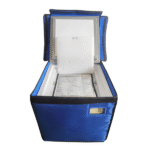
How Do You Choose the Right Ice Box Company in 2026?
Choosing an ice box company em 2026 is not about buying a “box.” It is about buying estabilidade de temperatura, menos reclamações, and predictable delivery outcomes. A single temperature excursion can damage food quality or reduce product effectiveness. The right partner helps you hold temperature through delays, hot docks, e manuseio rude. This guide gives you a practical checklist, a decision tool, and pilot steps you can use immediately.
Este artigo irá ajudá-lo a responder:
How to choose an ice box company para sua pista, duração, and risk level
Como um ice box company thermal testing report should look in plain English
How to pick materials like Caixa isolada EPP e Remetente VIP sem adivinhação
Como construir um reusable ice box company program isso realmente funciona
How to reduce spoilage, reenvio, and total landed cost with better pack-outs
What Should an Ice Box Company Deliver in 2026?
Um moderno ice box company should deliver repeatable cold performance, not just materials. You should see clear specs, pack-out instructions, and proof that performance holds under lane-like conditions. Em termos simples, you want a “recipe” that works every time, not a one-time demo. If a supplier only talks about insulation numbers without lane context, treat it as a risk.
Um forte ice box company also supports operations. They help you reduce packing errors, simplify SKUs, and design for real handling abuse. That support often matters more than a small unit price difference.
Ice box company deliverables you can verify
| Entregável | O que inclui | What you can check | O que isso significa para você |
| Performance spec | Banda de temperatura + duração | Clear pass/fail rules | Fewer debates later |
| Test evidence | Térmico + handling results | Perfil + relatório resumido | Fewer surprises in peak season |
| Pack-out SOP | Passos + fotos | Operator repeatability | Lower labor mistakes |
| QC controls | Cheques + Critérios de aceitação | Registros + lot traceability | Stable performance at scale |
| Controle de mudanças | Notice rules for changes | Written policy | Lower validation risk |
Dicas práticas que você pode usar hoje
Se você enviar semanalmente: Pergunte ao seu ice box company for a “repeatability plan” across production lots.
If you ship high value: Require a written change-control policy before you sign pricing.
If you ship in summer heat: Demand a delay scenario in the test plan, not just ideal lab curves.
Exemplo do mundo real: One operator reduced spoilage complaints after standardizing a single pack-out and training steps.
How to Choose an Ice Box Company for Your Shipping Lane?
To choose an ice box company, start with your lane reality, not a catalog. Write down transit time, worst-case delays, and how the shipment is handled. Then match packaging to the lane, não o contrário. This keeps your decision grounded in outcomes you can measure. It also helps you avoid overpacking “just in case.”
Um confiável ice box company should ask you questions first. If they jump straight to a quote, they may be guessing. Your lane data is what turns packaging into risk control.
A 60-second lane-fit self test (interativo)
Score yourself from 0 para 2 para cada item, then total 0–10:
Lane clarity: Do you know worst-case transit + Horário de permanência? (0–2)
Banda de temperatura: Is your target range written and agreed internally? (0–2)
Failure cost: Do you know refund + reship impact per failure? (0–2)
Handling reality: Drops, empilhamento, hot docks—are these mapped? (0–2)
Plano piloto: Do you have a 2–4 week pilot window defined? (0–2)
How to read your score
8–10: You are ready to shortlist an ice box company com confiança.
5–7: You can shortlist, but expect more pilot iterations.
0–4: Fix lane inputs first, or your results will be noisy and expensive.
Ferramenta de decisão: pick the best-fit ice box company (0–20)
Score each supplier from 0 para 2 per question:
Evidência: Lane-matched time-in-range data?
Pack-outs: Both cost-lean and safety-lean pack-outs available?
QC: Lot traceability and documented checks?
Escala: Can they grow volume without spec drift?
Apoiar: Direct access to a packaging engineer?
Treinamento: Pack-out steps with photos and labels?
Clareza: Stable lead times, Quantidade mínima, and pricing tiers?
Peak season: Contingency planning for surges?
Sustentabilidade: Reutilizar, repairs, or waste reduction with proof?
Simplificação: Can they reduce SKUs and packing time?
Interpretação
16–20: Strong long-term ice box company candidate
11–15: Promising, but run a tighter pilot and add controls
0–10: High risk for critical lanes
Which Materials Should Your Ice Box Company Offer?
Um capaz ice box company should offer more than one insulation toolkit. No single material wins for every lane, orçamento, and sustainability target. Your goal is to match material choice to risk and total cost. Their goal is to explain tradeoffs without pushing a one-size-fits-all answer.
Think of insulation like a jacket. A thin jacket works for a short walk. A better jacket works when wind, tempo, and delays increase.
Buyer-friendly material comparison
| Material | Melhor para | Cuidados | O que isso significa para você |
| EPS | Low-cost one-way | Frágil, volumoso, waste pressure | Lowest upfront cost |
| Caixa isolada EPP | Reutilizar + manuseio brusco | Higher initial price | Menor custo por viagem |
| PU | Paredes finas + força | Process consistency matters | Better space efficiency |
| Remetente VIP | Longa duração + small size | Damage sensitivity | Maximum hold time |
Dicas e conselhos práticos
If you ship parcel: Prioritize corner strength and drop survival, not insulation alone.
If you plan reuse: Choose surfaces that clean easily and resist water pickup.
Se você enviar alimentos congelados: Pergunte ao seu ice box company for frozen food shipping about melt budgets and delay margin.
Exemplo do mundo real: Some shippers moved from one-way foam to reusable builds to reduce breakage and leaks.
How Do You Verify Ice Box Company Thermal Testing?
If an ice box company cannot show test evidence, you are buying a story. You want tempo dentro do intervalo Resultados, which means how long your payload stays inside the required band. This metric is buyer-friendly because it maps directly to shelf life and risk. It also makes two offers easy to compare.
Thermal testing is only half the story. Handling can crush corners, pop seals, and destroy real performance. Ask for a handling plan that matches your distribution risks.
Plain-English “test report decoder” (0–10)
Score each ice box company relatório:
Recognized thermal method is named (0–2)
Pass/fail criteria are written clearly (0–2)
Payload is defined (massa, preencher, temperatura inicial) (0–2)
Pack-out diagram and component list are included (0–2)
Real-lane pilot plan is included (0–2)
8–10: Strong evidence. 5–7: Usable but confirm gaps. 0–4: Alto risco.
What good evidence looks like (mesa rápida)
| Evidence item | Minimum you should request | Melhorar | What it protects |
| Thermal result | Time-in-range summary | Add delay scenario | Integridade do produto |
| Perfil | Summer or winter | Verão + inverno | Peak season risk |
| Pacote | Diagrama + Bom | Fotos + rótulos | Repetibilidade |
| Logger plan | Regra de posicionamento | Multiple locations | Hidden hot spots |
| Manuseio | Basic drop | Derrubar + pilha + vibração | Seal and corner failure |
Can an Ice Box Company Cut Total Landed Cost?
Sim, if they think beyond unit price. A smart ice box company helps you reduce total landed cost across freight, trabalho, dano, reenvio, and service time. Unit price is visible, but reship cost is painful. One failure can cost more than dozens of shippers. That is why performance data is a cost lever, not a “nice to have.”
Cost often hides in complexity. Too many SKUs and too many pack-out variations create errors. The best savings usually come from simplification first, then negotiation.
Where cost hides (and what to measure)
| Gerador de custos | O que você mede | What to improve with the ice box company | O que você ganha |
| Frete | Peso DIM + zone | Smaller outer size | Lower shipping spend |
| Trabalho | Pack time per order | Fewer steps + melhor ajuste | Faster throughput |
| Reivindicações | Reembolso + reship rate | Better evidence + margem | Fewer losses |
| Inventory | SKU count | Inserções modulares | Less storage cost |
Quick ROI math (simples, usable)
Reuse cost per cycle = (shipper cost ÷ expected cycles) + limpeza + return shipping + loss allowance
Savings per shipment = disposable cost − reuse cost per cycle
Break-even shipments = upfront program cost ÷ savings per shipment
Dicas e conselhos práticos
Ask for a cost-lean pack-out that still passes your worst lane.
Reduce SKU count before you push pricing harder.
Downsize outer dimensions when you can, because freight scales fast.
Exemplo do mundo real: Some brands cut cost by reducing DIM weight while holding the same time-in-range.
How to Run a Pilot With an Ice Box Company
Treat the pilot like a mini-launch, not a sample test. You want to prove performance, process fit, and supply readiness. A serious ice box company assigns an engineer, not only a sales contact. They document outcomes clearly and lock specs before scale. This is how you avoid “works in the lab, fails in the warehouse.”
Define pass/fail before you start. De outra forma, results become a debate instead of a decision.
A simple 7-step pilot plan (Howto)
Defina sua pista: tempo de trânsito, habitar, and handling steps.
Define your temperature band and failure threshold.
Set payload rules: massa, temperatura inicial, and constraints.
Choose two pack-outs: cost-lean e safety-lean.
Test in real conditions, including one delay scenario.
Review failure modes with the ice box company e iterar.
Lock spec, treinamento, and change control before scaling.
Pilot success criteria checklist (interativo)
Time-in-range passes your written rule
Damage rate stays below your threshold
Pack time stays within your labor goal
Multiple operators can repeat the pack-out
Materials and fit are consistent across samples
Exemplo do mundo real: Some pilots fail only during dwell time, not during transit.
Ice Box Company Compliance Checklist for Food and Pharma
Compliance is not only about regulations. It is also about documentation, rastreabilidade, e controle de mudança. Um credível ice box company should show what touches product, how materials are controlled, and how changes are communicated. This matters most for food contact, healthcare shipments, and cross-border lanes. If your shipment uses dry ice, labeling and safe venting rules also matter.
Packaging policies also shift over time. Some regions restrict certain foam formats or certain chemical groups in packaging. Your safest move is to require a compliance packet and update cadence.
Compliance packet checklist to request
| Documento | O que cobre | Por que isso importa |
| Material declaration | Resin/foam type + additives policy | Reduces restricted substance risk |
| Food-contact statement | What touches food and evidence basis | Lowers liability risk |
| Orientação de limpeza | Para sistemas reutilizáveis | Reduces odor and cross-contamination |
| Dry ice shipping checklist | UN1845 weight + marcações + ventilação | Avoids carrier rejection |
| Change-control plan | Notification rules for changes | Protects validated pack-outs |
Dicas e conselhos práticos
If you ship premium food, ask how the ice box company prevents odor pickup and stains.
If you ship pharma, require change control because small swaps can break validation.
If you ship air, request a dry ice acceptance checklist and label template.
2026 Ice Box Company Trends That Buyers Should Watch
Em 2026, buyers expect system thinking, not isolated parts. More teams want packaging that is qualified, modular, and easier to operate. They also want better visibility into temperature and handling outcomes. This pushes every ice box company to upgrade engineering and documentation. Sustainability is also moving from marketing to measurement, especially for reuse programs.
The biggest change is comparability. Buyers want apples-to-apples evaluation across vendors. That means clearer evidence, clearer specs, and fewer hidden assumptions.
Visão geral do progresso mais recente (o que isso significa para você)
More lane-specific qualification: Proof for summer peaks and delay scenarios is becoming standard.
Higher demand for reusables: Programs expand where returns are controllable and cleanable.
Pack-out simplification: Fewer steps reduce operator error during peak season.
Dimensional efficiency: Tighter designs help reduce freight spend.
Stronger traceability: Lot tracking and change control reduce performance drift risk.
Ice Box Company FAQs
Q1: What is the first thing to ask an ice box company?
Ask for lane-matched time-in-range results with clear pass/fail criteria. If they cannot define payload and rules, pausa.
Q2: How long should a professional ice box hold temperature?
Most systems target 24–72 hours, depending on lane, isolamento, and coolant. Match the design to your worst-case delay.
Q3: What is the biggest red flag in an ice box company quote?
Missing documentation. If QC controls and change control are unclear, performance drift becomes your problem later.
Q4: How do I choose an ice box company for frozen food shipping?
Start with your required frozen range and worst-case time. Then ask for a safety-lean pack-out and handling proof.
Q5: Are reusable systems always cheaper in 2026?
Nem sempre. Reuse wins when returns, limpeza, and loss controls are realistic. Ask for a break-even model.
Q6: Should I keep many box sizes for flexibility?
Geralmente não. Fewer sizes with modular inserts often reduce errors and inventory costs.
Resumo: Your Ice Box Company Action Plan
Choosing an ice box company em 2026 is a business decision, not a packaging detail. Focus on lane-matched time-in-range evidence, pacotes repetíveis, and documented QC controls. Use a pilot to expose failure modes like dwell time, corner crush, and sealing drift. Then lock the spec and require change control before you scale. This approach protects product, confiança na marca, and margin.
Próximo passo (CTA): Shortlist 2–3 suppliers this month and run a worst-lane pilot. Use the scorecard above to rank each ice box company with the same criteria. If you want faster progress, standardize one pilot lane and iterate pack-outs weekly.
Sobre Tempk
Tempk is a cold chain packaging team focused on reliable temperature-controlled shipping. We support systems like EPP insulated boxes and VIP shipper designs, plus pack-out guidance that warehouse teams can follow. Our approach emphasizes documented testing, repeatable packing steps, and quality controls that hold up at scale. If you share your lane, faixa de temperatura alvo, and ship method, we can help you outline a pilot-ready plan.