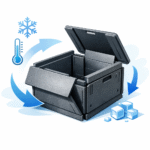
Compra ice boxes wholesale em 2026 não se trata apenas de obter um preço unitário baixo. Você está investindo em confiabilidade com temperatura controlada para cada remessa. The right box protects your goods, lowers claims, and improves efficiency. This guide answers the key question “what should an ice box cost at wholesale?” by looking beyond the sticker price. You’ll learn what drives cost, how materials and sizes affect value, and how wider cold chain trends influence pricing.
Key pricing factors: Understand how material, insulation quality and box size shape wholesale cost and long term value.
Custo versus. value comparison: Learn why cost per shipment matters more than unit price and how to estimate it.
Material choices: Explore the pros and cons of EPS, EPP and PU foam so you can choose the right insulation for your lane.
Tendências de mercado: See how global cold chain growth and sustainability trends in 2026 influence ice box design and price
Dicas práticas: Get actionable advice for different shipping scenarios—seafood, produtos farmacêuticos, e commerce—and learn how to avoid hidden costs.
What factors influence ice box wholesale price in 2026?
Resposta direta: The wholesale price of an ice box depends on the material de isolamento, size and customization, durabilidade, and whether the box is intended for one way or repeated use. Material is the most influential driver: basic EPS foam boxes cost less but provide limited insulation, while high performance PU foam or VIP hybrids command a premium due to superior thermal retention. Larger boxes require more materials and thicker insulation, raising cost. Durability and reusability also affect price; heavy duty boxes designed for dozens of trips have higher up front costs but lower cost per shipment. Finalmente, additional features such as drainage, ergonomic handles or temperature loggers increase price.
Explicação expandida
Pricing ice boxes for wholesale involves looking beyond unit cost. Custo total de propriedade includes the purchase price, the number of reuse cycles, coolant and labor costs, and potential risk of spoilage. Tempk’s commercial price guide explains that material choices such as EPS, EPP and PU foams offer different insulation efficiencies and durability, directly impacting performance and price. Larger boxes or specialized designs cost more because they use more raw material. Durability is another key variable: a box built to withstand frequent reuse may cost more up front but provides better long term value.
High density EPP and PU foams deliver better thermal retention and structural resilience than EPS. While an EPS box might suffice for a short one way shipment at around US$20 por unidade, a premium reusable PU foam box can cost US$100 or more, yet lower the cost per trip by lasting 50–100 cycles. Additional features such as reinforced ribs, moisture barriers and molded handles provide better protection but add to the price. Buyers should therefore compare not only the initial price but also the custo por entrega bem-sucedida, accounting for durability, insulation and reuse.
Comparação de materiais: EPS vs.. PPE vs.. PU
| Material Type | Eficiência de isolamento | Durabilidade | Casos de uso típicos | Nível de custo | O que isso significa para você |
| EPS (Poliestireno Expandido) | Baixo a médio | Baixo | Short one way trips | Baixo | Lowest initial cost but prone to cracking; best for single use shipments. |
| PPE (Polipropileno Expandido) | Alto | Alto | Reutilizável, medium term shipping | Médio | Tough and resilient—ideal for return loops and rough handling. |
| PU (Poliuretano) or VIP hybrids | Muito alto | Alto | Long duration or sensitive goods (produtos farmacêuticos, Biologics) | Alto | Offers excellent thermal retention with thinner walls but commands higher prices. |
Conclusão importante: Choose material based on lane length and handling. EPS is cost effective for one way routes; EPP balances cost and durability for return loops; PU or VIP hybrids are best for long exposure or high value payloads.
Size and payload: How capacity affects price
The size of an ice box directly impacts both insulation cost e payload capacity. Larger boxes use more insulation and stronger materials to carry heavy loads, increasing their price. The following table summarizes how different size categories influence cost and use:
| Tamanho da caixa | Insulation Cost | Carga Típica | Uso típico | O que isso significa para você |
| Pequeno | Mais baixo | Lightweight samples or small orders | Viagens curtas (24–48 h) | Lower up front cost but higher cost per trip due to limited capacity. |
| Médio (essencial) | Médio | General industrial payloads | Standard lanes (24–72 h) | Balanced cost and utility; fits 60–80 % de remessas, maximizing pallet density. |
| Grande (XL) | Mais alto | Large or consolidated loads | Long distances (48–96 h) | High up front cost but lower cost per trip because fewer boxes are needed. |
When choosing a size, considere o hold time target, payload type and how well the box stacks on a pallet. Properly matching box size to your shipments reduces empty space and lowers freight costs.
Dicas e conselhos práticos
Seafood shipping: Umidade, odor and impact stresses require a tough box with drainage channels, washable surfaces and strong ribs. Choosing a durable EPP or PU box with proper sealing reduces damage and claims.
Produtos farmacêuticos: Sensitive medicines and vaccines need boxes with high thermal retention; PU foam or VIP hybrids are preferred. Incorporate data loggers to validate hold times.
Comércio eletrônico & kits de refeições: Standardize on three sizes (pequeno, essencial, XL) to simplify packing and reduce pick errors. Reusable EPP boxes offer a good balance of cost and durability for frequent deliveries.
Short one way routes: Cost effective EPS foam boxes may work when payloads are low value or shipping cycles are brief. No entanto, evaluate the total cost per shipment including the risk of spoilage.
Loops de retorno: Investing in EPP boxes pays off when you recover packaging; they last longer and withstand repeated handling.
Caso real: A frozen seafood shipper cut damage claims by switching to a tougher insulated box with standardized gel pack placement and liner, demonstrating how quality and process consistency reduce costs over time.
How to compare ice box wholesale cost and long term value?
Resposta direta
Unit price alone doesn’t reveal whether an ice box is a good deal. To make a smart wholesale decision, avaliar custo por viagem: divide the purchase price by the number of reuse cycles, then add the cost of coolant, labor and shipping. Factor in risk costs such as product spoilage or returns. This formula—Cost per Trip = (Box Price ÷ Reuse Cycles) + Coolant Cost + Custo de envio + Risk Costs—helps you compare boxes with different price tags and durability.
Explicação expandida
High performance boxes may seem expensive at first glance, yet when they survive 50–100 reuse cycles the cost per shipment often beats cheaper alternatives that fail early. Por exemplo, um $100 PU Box usado 100 times costs only $1 por viagem; um $20 Caixa de eps used once costs $20 por viagem. Reusability is especially important as sustainability regulations phase out single use EPS in many jurisdictions. The formula also includes hidden costs: if a box lacks adequate insulation, extra coolant is needed, adding weight and cost. Poor durability raises labor costs due to frequent replacements.
To ensure you achieve consistent performance, follow a validation and testing process. Tempk recommends locking in one lane, validating one pack out with data loggers and then reordering the same validated spec. This reduces variability and improves repeatability. Build a quality inspection checklist to catch defects early and avoid last minute surprises.
Cost comparison by key factors
| Gerador de custos | Low Cost Option | Premium Option | O que isso significa para você |
| Isolamento | Thin walls with basic EPS foam | Espesso, dense foam or VIP hybrids | Premium insulation costs more but extends hold time and reduces coolant requirements. |
| Material | Basic EPS foam | Durable EPP or PU | EPP/PU materials cost more but withstand repeated handling. |
| Tamanho | Pequeno, low capacity | Grande, customizable sizes | Larger boxes reduce the number of shipments but increase up front costs. |
| Reutilização | Uso único | Returnable, long lifespan | Reusable boxes offer better ROI for high volume operations. |
Conselhos práticos para diferentes cenários
Small businesses with irregular shipments: Start with medium sized EPS boxes to control up front cost. Validate one pack out and gradually upgrade to EPP once volumes justify reuse.
Pharma distributors: Invest in PU or VIP boxes with validated hold times. Use data loggers and consider modular inserts to accommodate different payloads.
Exportadores de frutos do mar: Choose EPP boxes with strong lids and drainage. Test three high stacks and seal integrity.
Meal kit services: Standardize on three sizes to streamline packing. Reusable boxes reduce waste and align with sustainability goals.
New market entrants: Use the cost per trip formula to negotiate with suppliers. Ask for lifecycle cost models and factor in return logistics.
What are the latest trends in ice box design and pricing in 2026?
Visão geral da tendência
The ice box market is evolving alongside the broader cold chain industry. De acordo com Insights de Mercado Futuro, o ice boxes market está avaliado em USD 5.7 bilhão em 2025 e está projetado para atingir USD 9.4 bilhão por 2035, registrando um 5.1 % Cagr. Inflatable coolers lead the product segment with 34.2 % Quota de mercado, while metal coolers dominate material type with 47.6 % participação na receita. The camping segment accounts for 38.9 % da receita do mercado, reflecting growing outdoor activities.
O global cooler box market—a broader category of portable insulated containers—was valued at USD 6.15 bilhão em 2024 e está projetado para atingir USD 14.28 bilhão por 2032, crescendo em 11.23 % Cagr. América do Norte realizada 41.3 % of the cooler box market in 2024. Market drivers include rising outdoor lifestyles, growth in food delivery and mobile cold chain logistics, and the convergence of premium features like battery powered refrigeration. Environmental regulations are phasing out low cost EPS disposable coolers, prompting a shift toward reusable EPP and recyclable materials.
Últimos desenvolvimentos para assistir
Projetos híbridos: Manufacturers are combining materials (por exemplo, PU with vacuum panels) to deliver better insulation without excessive weight.
Soluções sustentáveis: Reusable boxes made from EPP or recyclable materials are gaining popularity as EPS bans spread. Bio based phase change materials and recyclable insulation reduce environmental impact.
Modular units: Adjustable inserts and modular sizes allow one box to serve multiple payloads, reducing inventory and improving pallet density.
Resfriamento ativo: Electrified coolers with compressors or battery assisted refrigeration meet the needs of last mile delivery fleets and medical transport.
Embalagem inteligente: IoT sensors and temperature loggers provide real time monitoring, helping companies validate performance and comply with regulations.
Insights de mercado
Cold chain growth directly impacts ice box pricing. O mercado global da cadeia de frio was estimated at USD 371.08 bilhão em 2025 e está projetado para atingir USD 1,611.0 bilhão por 2033, exibindo um 20.5 % Cagr. A América do Norte detinha mais de 33 % deste mercado em 2025, while the storage segment accounted for 51.8 % de receita. Such rapid expansion fuels demand for durable, high performance ice boxes. No US cold chain logistics market, valor USD 91.14 bilhão em 2025 and forecast to USD 109.77 bilhão por 2030, growth is driven by temperature sensitive pharmaceuticals, e grocery adoption and energy efficient warehousing. This pushes shippers to upgrade packaging and invest in boxes capable of handling shorter delivery windows and multi temperature loads.
O mercado de embalagens da cadeia de frio—which includes insulated boxes, cold packs and pallet shippers—was valued at USD 34.08 bilhão em 2025 e está projetado para crescer até USD 95.31 bilhão por 2034, alcançar um 12.15 % Cagr. A América do Norte foi responsável 36 % deste mercado em 2024. This indicates strong demand for innovative packaging solutions and hints at rising material costs and technology integration that influence ice box pricing.
How does the broader cold chain market influence ice box pricing?
Market context
Ice boxes exist within a rapidly expanding cold chain ecosystem. Crescimento em produtos farmacêuticos, Biologics, fresh foods and e commerce requires packaging that maintains temperatures across longer distances and stricter regulatory environments. Key factors include:
Surge in temperature sensitive drugs: The US cold chain logistics market is propelled by temperature sensitive pharmaceuticals and vaccines, which require ultra low temperature storage (abaixo de –70 °C). Hospitals and carriers are retrofitting facilities with vacuum insulated panels and redundant power—technologies that are also entering high end ice box design.
E grocery and meal kit adoption: Rapid online grocery growth shortens delivery windows and requires multi temperature routing. Carriers adopt electric refrigerated vans and micro fulfillment centres. Ice boxes used in last mile segments must support simultaneous frozen, chilled and ambient goods and may include active cooling or hybrid insulation.
Sustainability regulations: EPS bans and recycling mandates push manufacturers toward durable, caixas reutilizáveis. Sustainability efforts—like recyclable insulation and reusable containers—drive R&D costs but eventually lower long term expenses through reduced waste.
Capital investment and innovation: Venture capital and private equity are pouring funds into cold chain packaging startups. Innovations include smart sensors, subscription-based rental models and bio based materials. These raise the performance bar for ice boxes and can lead to price variations depending on technology integration.
Implications for buyers
The rapid growth of the cold chain market means that buyers should expect wider price ranges e faster innovation cycles. While new materials and smart features increase up front prices, they can improve hold times, reduce spoilage and help meet regulatory requirements. Align your purchase with the trajectory of your market: if you handle pharmaceuticals or high value perishable foods, investing in advanced boxes may be essential. Por outro lado, if you operate short, low risk lanes, standard EPS or basic EPP boxes may suffice. Stay informed about regulatory changes and technology trends to ensure your packaging remains compliant and cost effective.
Perguntas frequentes
Q1: How much do ice boxes cost wholesale in 2026?
Wholesale ice box prices vary widely based on material, size and durability. Single use EPS foam boxes can cost as little as $20 por unidade, whereas heavy duty reusable boxes made from PU foam or VIP hybrids can exceed $100 por unidade. Mid range reusable EPP boxes often fall between $40 e $70.
Q2: Should I prioritize cost or performance when buying wholesale?
Focar em cost per successful shipment rather than the cheapest unit price. Investing in better insulation and durable materials lowers spoilage and replacement costs over time. A more expensive box may offer better ROI when reused for many cycles.
Q3: What is the typical MOQ for ice box wholesale orders?
Minimum order quantities depend on the supplier and box type. On general wholesale marketplaces, orders for mid size coolers often start at a few pieces (por exemplo, two pieces for a heavy duty insulated cooler priced at $315–320). Menor, promotional ice boxes might require hundreds of pieces (por exemplo, 10 L custom logo coolers priced around $5.99–6.99 require a minimum order of 100 pedaços). Larger industrial boxes—such as 1000 L coolers priced $380–412—may require orders of 20 pedaços ou mais.
Q4: Are reusable ice boxes worth the higher cost?
Sim. Reusable boxes made from EPP or PU foam last longer and reduce the cost per shipment. They are also more sustainable as single use EPS is increasingly restricted by regulations. When reused frequently, the higher initial price is offset by fewer replacements and lower spoilage.
Q5: How do I compare prices between suppliers?
Request lifecycle cost models and sample boxes. Calculate cost per trip using the formula above. Consider material quality, espessura de isolamento, ease of packing, supplier reliability and warranty support. For specialized goods, validate the box with a pilot test before committing to large orders.
Resumo & Recomendações
Em 2026, ice box wholesale price is shaped by material, qualidade de isolamento, size and reusability. Basic EPS foam boxes offer low up front costs but limited durability, while EPP balances cost and longevity. PU foam or VIP hybrids deliver high thermal retention at premium prices. Tamanho é importante: medium boxes usually provide the best balance of cost and payload, while large boxes lower cost per trip for bulk loads. To compare offers, use the cost per trip formula, consider hidden costs (extra coolant, trabalho, quebra), and validate performance through pilot testing. Market trends—such as rapid cold chain growth, sustainability regulations and active cooling technologies—are pushing buyers toward reusable, high performance solutions.
Plano de ação:
Defina sua pista: Evaluate payload size, transit time and handling conditions.
Choose material wisely: Use EPS only for short, one way lanes; select EPP for return loops; opt for PU/VIP when high thermal performance is crucial.
Optimize sizes: Standardize on three sizes to streamline packing and negotiate better pricing tiers.
Calculate cost per trip: Use the formula to estimate total cost, including reuse cycles and hidden costs.
Pilotar e validar: Test boxes with data loggers before large purchases to ensure hold times and durability meet your needs.
Fique atualizado: Monitor cold chain market trends, sustainability regulations and emerging technologies to make forward looking purchasing decisions.
Sobre Tempk
Tempk is a leading manufacturer of high performance cold chain packaging solutions. We specialize in insulated ice boxes, pacotes de gel, e recipientes reutilizáveis designed to protect food and pharmaceuticals during transit. Our boxes feature durable materials, excellent temperature retention and long service life. We prioritize sustainable designs and rigorous quality control, ensuring our products deliver reliable performance and low total cost of ownership.
Chamado à ação: Pronto para otimizar sua cadeia de frio? Reach out to our experts for a custom quote and see how Tempk can reduce your per shipment costs while boosting product quality.