Fornecedor de tijolos de gelo: Como você qualifica o parceiro certo em 2026?
You pick an ice brick supplier to protect product quality, not to buy “frozen plastic.” If your ice brick supplier vazamentos, cartons get soaked, labels fail, and claims rise fast. If your ice brick supplier can’t prove performance, your packout becomes guesswork. Em 2026, the winners use a simple rule: prove the full packout, then scale it.
Este artigo vai te ajudar:
Choose an ice brick supplier with packout validation for your real lanes
Comparar water vs gel vs PCM with clear “best fit” rules
Vet a leak-proof reusable ice bricks supplier using simple checks
Build a fast RFQ and pilot plan for a bulk ice brick supplier
Use a decision tool to match your operation to the right ice brick supplier modelo
How do you define what you need from an ice brick supplier?
Um forte ice brick supplier starts with your lane facts, not a price list. Your lane decides everything: faixa alvo, duração, ambient swings, and handling transfers. When you define these first, you can qualify an ice brick supplier sem adivinhar.
Think of it like fueling a truck fleet. Cheap fuel is not a win if engines fail. A cheap ice brick supplier is the same story if claims and re-ships spike.
Your “lane card” template (copiar/colar)
Faixa de temperatura alvo:
Total duration (door close → door open):
Pior caso de exposição ambiental (doca quente, cold tarmac, etc.):
Handling transfers (contar + roughness):
Tipo de remetente + dimensões internas:
Payload type + massa:
Brick conditioning (freezer setpoint + horas):
Single-use or reusable loop:
Top pain today (vazamentos, caixas molhadas, warm edges, rupturas de estoque):
| Lane input you define | Exemplo A | Exemplo B | What it changes for you |
| Temperature intent | 0–4 ° C. | 2–8 ° C. | Drives fill type and freeze risk |
| Duração | 24-48h | 48-72h | Drives total cold capacity needed |
| Manuseio | luz | duro | Drives shell strength and seam design |
| Reutilizar | uso único | return loop | Drives cycle durability and cleaning rules |
Dicas práticas que você pode usar agora
If your freezer is tight: pick sizes that freeze fully, not just bigger bricks.
Se atrasos acontecerem: design for worst-case dwell, not the “average day.”
If you reuse: require cycle durability proof from your ice brick supplier.
Exemplo do mundo real: A food shipper reduced claims after switching from one large brick to two smaller bricks that froze fully and packed faster.
What should you ask an ice brick supplier on the first call?
The first call tells you if an ice brick supplier is a partner or a catalog seller. You want clear answers on tolerances, leak screening, packout support, and capacity. Se o ice brick supplier only talks about “hours of cooling,” treat that as a red flag.
First-call questions that reveal real capability
| Buyer question | O que isso revela | Como é “bom” | Seu benefício prático |
| “What ranges do you design for?” | Lane fit | Clear targets like 0–4°C or 2–8°C | Less trial and error |
| “Do you support packout validation?” | Proof of performance | Repeatable test summaries | Menos surpresas |
| “What are your size tolerances?” | Consistência | Apertado, written tolerances | Embalagem mais rápida |
| “How do you test for leaks?” | Confiabilidade | Defined method + sampling plan | Entregas mais limpas |
| “What happens if a lot fails?” | Disciplina | Quarentena + replacement process | Recuperação mais rápida |
| “Can you scale volume quickly?” | Continuidade | Capacity plan + safety stock | Menos rupturas |
Dicas práticas que você pode usar agora
Ask for examples: A mature ice brick supplier can show a sample spec sheet and lot label format.
Ask about “no-change” control: Silent changes cause “mystery failures.”
Ask about peak season: Reliability matters most when volume spikes.
Exemplo do mundo real: A meal delivery brand cut refunds after its ice brick supplier validated summer and winter packouts separately.
What types of ice bricks should an ice brick supplier offer in 2026?
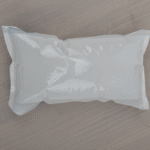
Um capaz ice brick supplier offers more than one “cold block.” Different products need different cooling behavior. Water-based bricks cool hard near 0°C. Gel bricks often handle cleaner and pack faster. PCM Bricks (materiais de mudança de fase) can hold near a chosen temperature to reduce freeze risk.
Water vs gel vs PCM: que se adapta à sua pista?
| Brick type | Comportamento típico | Melhor para | Seu benefício prático |
| Water-based rigid brick | strong cold near 0°C | short chilled lanes | baixo custo, simple freezing |
| Gel ice brick | manuseio mais limpo, less slosh | kits de refeições, comércio eletrônico | fewer mess complaints |
| PCM Brick | holds near target setpoint | 2–8°C “no-freeze” lanes | lower freeze risk |
| Sub-zero refrigerant | supports frozen lanes | alimentos congelados | longer sub-zero holding |
Dicas práticas que você pode usar agora
Se você enviar 2–8°C: pergunte ao seu ice brick supplier about controlled-range options.
Se você envia frutos do mar: prioritize shell strength and leak resistance over “extra cold.”
If you ship chocolate: reduce overcooling at contact points with better placement rules.
Exemplo do mundo real: A specialty food brand improved quality after its ice brick supplier switched to a controlled-range approach for warm-weather lanes.
Why is packout validation the most important ice brick supplier capability?
Because the ice brick supplier is only one part of the system. Seu isolamento, carton size, massa de carga útil, brick placement, and ambient profile decide success. A single “brick cooling time” statement is not enough. Packout validation means you test the full box setup with sensors under defined profiles.
If you rely on cold integrity, validation is your insurance. It reduces risk and can cut overpacking. Overpacking often creates cold spots that damage sensitive items.
What should a packout validation report include?
| Item de validação | O que isso prova | O que solicitar | Seu benefício prático |
| Intervalo de destino + pass rules | clear success criteria | stated limits and pass/fail | fewer debates later |
| Perfil ambiente | worst-case stress | hot and mild profiles | seasonal confidence |
| Sensor map | where failures hide | essencial + cantos + lid seam | fewer hidden hot spots |
| Repeat runs | repetibilidade | multiple runs per setup | less “luck-based” results |
| Plain-language summary | transparência | what failed and why | faster improvement |
Dicas práticas que você pode usar agora
Validate the worst day: seu ice brick supplier should not test “average weather.”
Measure contact points: freezing damage often happens where bricks touch payload.
Run repeats: 3 runs beats 1 “perfect run” every time.
Exemplo do mundo real: A clinic network reduced incident investigations after its ice brick supplier placed sensors near the lid seam and fixed a staging hot spot.
How do you check ice brick supplier quality without being a lab?
You can catch most issues with simple incoming checks. You don’t need fancy equipment to spot leaks, size drift, or weak seams. Um disciplinado ice brick supplier supports these checks with lot traceability and consistent specs.
Simple incoming inspection checklist (fast and effective)
Visual seam check: cantos, bonés, weld line
Press test: run fingers along the seam to find weak spots
Dimension check: measure 5–10 samples for consistency
Weight check: spot-check fill consistency
Freeze-thaw spot test: freeze → thaw → inspect for cracks or seepage
| Verificação de controle de qualidade | O que pode dar errado | O que você faz | Seu benefício prático |
| Costuras | split edges | visual + press | menos vazamentos |
| Tamanho | packing gaps | measure samples | embalagem mais rápida |
| Fill consistency | resfriamento irregular | spot-check weight | more stable temps |
| Shell durability | cracks in cold | freeze-thaw test | better reuse life |
Dicas práticas que você pode usar agora
If cartons arrive wet: don’t assume condensation—ask your ice brick supplier for lot-level leak review.
If packing slows: tighten tolerances so bricks stack cleanly.
If bricks crack often: confirm shell material and cold-impact checks.
Exemplo do mundo real: A distributor cut damage claims after adding a basic seam check and working with its ice brick supplier to stabilize weld settings.
How do you choose an ice brick supplier for food delivery and seafood?
Food lanes are judged by the customer experience. Your customer cares if the box is soggy, bagunçado, ou quente. Um bom ice brick supplier helps you keep cartons dry enough to handle, scan, and deliver.
Seafood adds extra stress. The lane is wet, duro, and sensitive to leaks. Seu ice brick supplier must control seam strength and shell toughness.
Food delivery self-assessment: are your bricks helping or hurting?
Responder Sim ou Não:
Do bricks stay intact after freezing with no seam swelling?
Do cartons arrive dry enough to scan and handle easily?
Do you avoid overcooling items that should not freeze?
Do packers follow one simple placement rule under pressure?
Do you adjust packouts separately for summer and winter?
| If you struggle with… | Causa provável | What to change with your ice brick supplier | Seu benefício prático |
| Caixas molhadas | leaks or heavy condensation | costuras mais fortes + barrier layers | menos retornos |
| Warm edges | placement gaps | placement guidance + validação | better consistency |
| Frozen-sensitive items | bricks too cold | controlled-range options | less damage risk |
| Slow packing | too many SKUs | standardize 2–4 sizes | fewer pick errors |
Dicas práticas que você pode usar agora
If customers complain about leaks: require leak screening and clear acceptance criteria from your ice brick supplier.
Se você mochila demais: run a “minimum bricks” validation to cut weight.
If delivery time varies: add buffer with better insulation, not just more bricks.
Exemplo do mundo real: A meal kit operator reduced complaints after simplifying placement rules and switching to a cleaner-handling design from its ice brick supplier.
How do you choose an ice brick supplier for pharma and 2–8°C shipping?
Pharma lanes need repeatability and documentation. A too-cold excursion can be as damaging as a warm one. That’s why your ice brick supplier must support controlled cooling, rastreabilidade, and clear validation summaries.
If your lane is audited, you also need change control. When a deviation happens, you want fast answers. A mature ice brick supplier can provide them without delay.
What documentation should you expect from an ice brick supplier?
Spec sheet with tolerances and conditioning instructions
Lot labeling guidance and traceability format
Basic quality control outline and defect handling process
Fill material SDS (especially for gel or PCM)
Written change notification policy
| Pharma need | Supplier support | O que solicitar | Seu benefício prático |
| Repetibilidade | stable process control | batch consistency approach | desempenho previsível |
| Rastreabilidade | lot tracking | códigos de lote + registros | investigações mais rápidas |
| Validação | test evidence | packout summary + método | easier qualification |
| Risk control | resfriamento controlado | PCM options + orientação | lower freeze risk |
Dicas práticas que você pode usar agora
Validate hot and cool profiles: seu ice brick supplier should help test both.
Measure contact points: cold spots often happen at brick-payload touch points.
Standardize lane packets: keep one validation packet per lane for speed.
Exemplo do mundo real: A healthcare distributor reduced follow-ups after its ice brick supplier standardized lot labels and validation summaries.
How do you compare ice brick supplier pricing without getting trapped?
The cheapest ice brick supplier is often not the lowest-cost option. True cost includes leakage loss, replacement shipments, labor time, and missed ship days. Compare suppliers on outcomes, not just unit price.
A simple “total cost” view you can use
| Fator de custo | Fornecedor A | Fornecedor B | O que isso significa para você |
| Unit price | mais baixo | mais alto | only matters if quality is stable |
| Defect expectation | unclear | defined | predicts claim risk |
| Replacement policy | lento | rápido | protects revenue continuity |
| Tempo de espera | longo | curto | protects ship days |
| Método de embalagem | básico | protective | reduces micro-cracks |
Mini calculadora (quick estimate)
Failure cost per 1,000 tijolos = (leak rate × claims cost) + (stockout days × missed margin) + (extra labor minutes × labor rate)
Você não precisa de matemática perfeita. You need consistent comparisons.
Dicas práticas que você pode usar agora
Standardize your RFQ: ask every ice brick supplier to quote the same SKU and terms.
Ask about replacement speed: fast replacement is real value in peak season.
Compare by lane outcome: fewer claims is measurable savings.
Exemplo do mundo real: A retailer paid slightly more per brick but saved more by cutting re-shipments.
What logistics support should a bulk ice brick supplier provide?
A bulk-ready ice brick supplier supports real operations: remessas divididas, multi-warehouse delivery, and pallet stability. Poor pallet builds can create micro-cracks that later become leaks.
What to demand from a bulk ice brick supplier
Consistent pallet pattern and wrap method
Dividers or separation when bricks can impact each other
Carton labeling with lot and date
Stacking limits and load guidance
Buffer stock or peak season allocation plan
| Logistics feature | Better practice | Erro comum | O que isso significa para você |
| Pallet stability | consistent patterns | random stacking | less damage in transit |
| Carton protection | dividers when needed | loose bricks | fewer micro-cracks |
| Clareza da etiqueta | muito + data | no trace info | faster receiving |
| Peak readiness | reserved capacity | “first come, first served” | fewer summer stockouts |
Dicas práticas que você pode usar agora
If hubs are rough: require stronger cartons and dividers from your ice brick supplier.
If you store long-term: ask about packaging humidity protection.
Se você envia internacionalmente: confirm export packaging expectations early.
Exemplo do mundo real: A shipper reduced in-warehouse leakage after switching to pallet patterns that avoided compression damage.
How do you run a pilot program with an ice brick supplier?
A pilot is the fastest truth test. You must test your real shipper, your real payload, and your real freezer process. A lab number alone won’t predict field performance. Keep the pilot simple so your team can execute it.
A practical 5-step pilot plan
Pick your highest-risk lane and season window.
Use one consistent packout and placement pattern.
Record freezer setpoint and conditioning hours.
Inspect cartons for wetness, crush, and seam failures.
Review logger data (or damage/complaint KPIs if you don’t use sensors).
| Pilot checkpoint | O que você verifica | How to judge | O que isso significa para você |
| Freezer readiness | fully frozen bricks | no soft cores | tempo de espera previsível |
| Handling durability | drops and stacking | no cracks or seepage | lower leak risk |
| Box condition | wetness and crush | dry and stable | better delivery experience |
| Execution speed | packout build time | consistent under 60 segundos | fewer errors at scale |
Dicas práticas que você pode usar agora
Control one variable at a time: don’t change box and brick in the same test.
If you don’t use sensors: track wet-carton rate as a KPI.
If the pilot wins: lock SKU specs in writing with the ice brick supplier.
Exemplo do mundo real: A cold food brand solved “mystery wet cartons” by piloting two shell options and selecting the tougher one.
Ferramenta de decisão: Which ice brick supplier profile fits you best?
Use this with procurement, QA, e operações. It takes minutes and prevents weeks of debate.
Etapa 1: choose your shipping rhythm
Daily shipping → you need local stock and fast replenishment
Weekly shipping → you can plan deliveries and hold buffer inventory
Project shipping → factory-direct can work with longer lead times
Etapa 2: choose your risk tolerance
Low tolerance → pharma, premium food, strict penalties
Medium tolerance → standard chilled lanes with some variability
Higher tolerance → short, local lanes with easy recovery
Etapa 3: match the ice brick supplier model
Diário + low tolerance → hybrid ice brick supplier with local inventory + proof testing
Semanalmente + medium tolerance → regional ice brick supplier with stable SKUs
Project + planned volume → factory-direct ice brick supplier with customization
Self-assessment: are you ready to switch ice brick supplier?
Count your “Yes” answers:
You know your target temperature band and exposure time.
You have written conditioning instructions per SKU.
You can track lots and dates at receiving.
You know your top three failure modes today.
You have a pilot lane that represents your highest risk.
You have a replacement plan if a lot fails.
You have standardized placement rules inside the shipper.
Guia de pontuação:
0–3: high risk → tighten process first
4–5: medium → run a controlled pilot
6–7: strong → scale with a scorecard
2026 tendências: What’s changing in ice brick supplier sourcing?
Em 2026, ice brick supplier selection is becoming evidence-driven. Os compradores querem provas, não promessas. Teams are also standardizing “lane-based SKUs,” instead of using one brick everywhere.
Instantâneo do progresso mais recente
Durability focus: tougher shells and stronger seams for heavy rotation
Controlled-range adoption: more PCM use for “no-freeze” refrigerated lanes
Documentation expectations: more demand for traceability and change control
Operational simplicity: fewer SKUs and simpler placement rules to cut errors
Reuse strategy: more reusable programs where return loops are realistic
Your best move in 2026 is to treat your ice brick supplier as part of your temperature-control system, not a commodity vendor.
Perguntas frequentes
Q1: What is the fastest way to vet an ice brick supplier?
Run a pilot on your highest-risk lane. Track leaks, caixas molhadas, and consistency.
Q2: What makes an ice brick supplier “reliable” for cold chain?
Consistent dimensions, defined leak screening, lot traceability, and packout validation evidence.
Q3: Do I need a PCM option from my ice brick supplier for 2–8°C?
If freeze risk is real, controlled-range cooling can help. Validate in your full packout.
Q4: Why do cartons get wet even if bricks don’t leak?
Condensation can soak cartons. Add barrier layers and reduce humid staging time.
Q5: How many SKUs should I source from one ice brick supplier?
Start with 2–4 sizes that cover your main lanes. Too many SKUs increase mistakes.
Q6: How do I compare two ice brick supplier quotes fairly?
Standardize SKU, embalagem, and delivery terms. Then compare lead time and replacement policy.
Q7: What causes most failures in the field?
Cold drops, seam weakness, and brick-to-brick impact inside cartons are common causes.
P8: Can an ice brick supplier help reduce shipping cost?
Sim. Right-sized validation can cut brick count and weight while staying in range.
Resumo e recomendações
Um forte ice brick supplier protects you with leak-proof quality, consistent sizing, and validated packouts that match your lanes. Start by defining your lane card, then shortlist two supplier models and run a controlled pilot. Use simple incoming inspections to catch defects early. Em 2026, the smartest teams standardize a small SKU set and manage the ice brick supplier with outcomes, not assumptions.
Próximo passo (CTA): Audit your current bricks this week for leaks, size variation, and wet-carton rate. Then run one worst-case pilot lane with your top ice brick supplier candidate and lock the winning spec in writing.
Sobre Tempk
E tempk, we support cold chain teams that need predictable cooling performance at scale. We focus on consistent manufacturing, controle de vazamento, and practical packout support that fits real operations. Nosso objetivo é simples: menos vazamentos, menos caixas molhadas, and more repeatable temperature outcomes.
Ação: Compartilhe sua faixa de temperatura desejada, Duração da remessa, and shipper size. We’ll outline an ice brick approach you can pilot on your highest-risk lane.