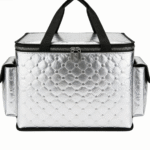
insulated plastic tote supplier for biotech supply is now a strategic packaging choice for teams that care about quality, conformidade, e custo total. You need a design that protects the payload, fits the route, supports clean handling, and still makes sense financially after the first shipment. The best suppliers understand that balance and build around it.
This optimized article combines buyer guidance, material logic, compliance thinking, e 2026 market reality into one practical playbook. You will see how to define the right spec, compare suppliers, reduce failure risk, and create a more sustainable packaging program without adding complexity that your team cannot maintain.
What this article will help you answer:
What the ideal insulated plastic tote should deliver in your operation
How material, estrutura, validação, and supplier support fit together
Which compliance and lifecycle questions separate low-risk suppliers from risky ones
How to build a stronger 2026 sourcing plan with better ROI and less waste
What Should the Ideal Insulated Plastic Tote Deliver?
The ideal solution combines protection, usabilidade, e repetibilidade. If you are evaluating insulated plastic tote supplier for biotech supply, you should expect the design to support consistent thermal buffering, modular payload layouts, supply continuity, and easy receiving without forcing extra labor or risky workarounds. That means the box has to fit the route, a carga útil, the people who touch it, and the quality system that approves it.
Many packaging decisions fail because buyers separate these needs. Operations wants speed. Quality wants control. Procurement wants value. Sustainability wants reuse. A better specification brings those goals together instead of choosing one at the expense of the others. For biotech supply, that usually starts with a clear fit brief and a supplier who can translate that brief into a design logic you can understand.
Build Around the Highest-Risk Step First
Do not start with the easiest moment in the route. Start with the place where your process is most exposed. That may be a hot loading dock, a wet washdown area, a customs delay, an unstable pallet stack, or a rushed receiving window. If the box design can reduce risk there, it usually creates value across the rest of the flow as well. This approach produces more useful specifications than copying what another site uses.
| Critical requirement | Que bom parece | O que validar | O que isso significa para você |
|---|---|---|---|
| Thermal Hold Profile | Stable internal conditions across your target route profile | Evidence that it supports biotech supply under real operating conditions | protects route quality without overpacking |
| Insert Flexibility | One outer tote can support multiple SKUs or payload kits | Evidence that it supports biotech supply under real operating conditions | lets one platform serve many biotech SKUs |
| Latch And Lid Fit | Reliable closure that reduces handling mistakes | Evidence that it supports biotech supply under real operating conditions | makes opening and resealing more reliable |
| Capacidade de limpeza | Quick to wash, inspecionar, and dry between cycles | Evidence that it supports biotech supply under real operating conditions | supports faster release for the next trip |
Dicas práticas e recomendações
Start with the failure point: design to control the hardest part of the workflow first.
Keep operator actions visible: the right box makes correct packing, encerramento, and inspection easy to repeat.
Use a written fit brief: the brief is the bridge between departments and suppliers.
Exemplo do mundo real: A biotech campus standardized courier and internal shuttle moves around one insulated plastic tote platform. The supplier provided interchangeable inserts and spare components. Packing errors fell, receiving teams recognized every shipment format, and the site reduced the number of emergency one-off packaging purchases.
How Do Material, Estrutura, and Validation Work Together?
A box performs well when design choices reinforce each other. Material choice affects durability, chemical or moisture tolerance, e capacidade de limpeza. Structure affects load, empilhamento, encerramento, and handling behavior. Validation confirms whether those choices work in the environment you actually run.
Na prática, you want the supplier to explain this relationship in plain language. insulated shell construction, modular inserts, smooth interiors for cleaning, and barcode-ready exterior panels. You also want test logic that matches your risk profile. In healthcare and biotech, that may lean toward temperature-control and documentation. Na comida, chemical, or agricultural use, it may lean harder toward hygiene, compatibility, estrutura, and repeated-use behavior.
Ask for Evidence That Matches the Claim
If the supplier promises thermal stability, ask how it was checked. If the selling point is reuse, ask how cycle life is defined. If the box is sold as hygienic, ask what features reduce trapped residue and speed drying. Claims become useful only when they are paired with the right form of evidence. That evidence does not always need to be complex, but it should be relevant to your operation.
| Alegar | Evidence that helps | Weak signal | Por que isso importa para você |
|---|---|---|---|
| Thermal or environmental control | Route or condition-based validation | Generic brochure claims | Supports confidence in real use |
| Durabilidade | Pilha, impacto, or cycle data | Only resin name is shared | Predicts replacement and failure risk |
| Capacidade de limpeza | Hygienic design review and field wash feedback | No discussion of drying or residue | Affects labor and hygiene outcomes |
| Consistência | Defined specs and change control | No revision history | Protects approved performance |
Dicas práticas e recomendações
Match test depth to risk: high-value or regulated flows deserve stronger evidence.
Review the entire system: the outer box must work with inserts, rótulos, paletes, and handling routines.
Watch for silent design changes: approval without change control can invalidate earlier confidence.
Optimization rule: The strongest design is not the most complicated one. It is the one with the clearest reason for every feature you pay for.
How Do You Select the Right Supplier and Total-Cost Model?
Good suppliers reduce uncertainty, not only lead time. They help you define the right product, document the right evidence, and launch with fewer surprises. That matters because the real cost of packaging is created across the cycle: embalagem, moving, inspecting, limpeza, armazenando, and replacing.
To compare suppliers well, use a simple weighted scorecard. Compare suppliers on route validation support, spare-part service, insert ecosystem, delivery responsiveness, and documentation strength. Add another category for lead-time reliability and one for post-launch support. This keeps the conversation balanced between product fit and supply execution. It also helps you show internal stakeholders why the best-value choice may not be the cheapest quote on day one.
Use a Quick Supplier Scorecard
Give each category a weight based on risk. Por exemplo, a vaccine shipper may weight thermal validation more heavily, while a wet seafood crate may weight drainage and washdown more heavily. A chemical program may weight compatibility and labeling more heavily. The point is not mathematical perfection. The point is forcing clear comparison on the factors that actually change outcomes.
| Scorecard category | Suggested weight | O que procurar | Por que isso importa para você |
|---|---|---|---|
| Application fit | 25% | Clear design logic for your workflow | Prevents category-level buying mistakes |
| Validation and documentation | 25% | Relevant evidence and spec control | Supports approval and confidence |
| Operational usability | 25% | Embalagem, limpeza, empilhamento, and receiving ease | Reduces hidden labor cost |
| Supply and service support | 25% | Lead times, peças de reposição, and issue response | Protects rollout and long-term stability |
Dicas práticas e recomendações
Pilot the top candidate: a short live test often reveals more than a long meeting.
Invite receiving and cleaning teams into the review: they see problems earlier than procurement alone.
Track six-month outcomes: dano, trabalho, turnaround time, and asset loss tell you whether the choice was right.
Best-practice note: A supplier relationship gets stronger when both sides can explain success in the same language: menos falhas, manuseio mais rápido, and clearer control.
What Does a Strong 2026 Packaging Strategy Look Like?
Um forte 2026 strategy links packaging performance with resilience and lifecycle value. Healthcare cold-chain investments published in 2025 e 2026 keep pointing toward more specialized, traceable packaging for biologics, Diagnóstico, and high-value lab materials. Buyers are responding by looking beyond one-off purchases and toward packaging systems that scale, support traceability, and fit sustainability expectations without adding fragile complexity.
Insulated reusable totes can lower recurring packaging waste, but their strongest business case usually comes from standardization, embalagem mais rápida, and fewer temperature incidents. This is where market and technical logic meet. A reusable or custom design is only better when your team can control it. That is why the most valuable packaging projects in 2026 are disciplined projects: clear routes, defined inspection rules, practical return loops, and supplier support that continues after delivery.
Turn Trends Into a Simple Action Plan
Use market pressure to improve how you buy. Update your specification, define the evidence you need, and choose suppliers who can support operating discipline rather than just shipment volume. When the packaging system is visible and controlled, sustentabilidade, conformidade, and cost are more likely to move in the same direction. When the system is vague, they usually pull against one another.
| 2026 priority | Recommended action | Erro comum | Benefício prático |
|---|---|---|---|
| Rastreabilidade | Padronize rótulos, IDs, and scan points | Treating IDs as an afterthought | Faster investigation and receiving |
| Resiliência | Validate the highest-risk route condition | Testing only ideal conditions | Better performance under disruption |
| Reutilizar | Define inspection and return rules early | Launching a loop without accountability | Stronger lifecycle economics |
| Supplier partnership | Review post-launch support before approval | Focusing only on first quote | Lower long-term operational risk |
Dicas práticas e recomendações
Keep the plan operational: every strategy item should connect to a field action your team can actually follow.
Use one owner for the packaging program: accountability improves speed and consistency.
Review data after launch: good packaging strategy is adjusted through evidence, not assumptions.
2026 realidade: The companies getting the best results are not buying more packaging. They are buying clearer systems.
2026 Developments and Trends in Biotech Supply
Em 2026, market direction matters almost as much as product specification. Healthcare cold-chain investments published in 2025 e 2026 keep pointing toward more specialized, traceable packaging for biologics, Diagnóstico, and high-value lab materials. Buyers are reacting by asking tougher questions about validation, lifecycle value, and operational fit. That is why insulated plastic totes are increasingly evaluated as part of a broader packaging system rather than as simple containers.
Último progresso em um olhar
Tendência: Biotech sites want totes that work in both last-mile courier legs and internal campus replenishment loops.
Tendência: Suppliers are being asked for more modular inserts, barcode support, and lifecycle service rather than just product supply.
Tendência: Digital tracking and auditability are becoming part of tote selection, especially where high-value reagents or samples move daily.
From a buyer perspective, the important shift is this: packaging decisions are moving closer to quality, operações, and sustainability teams. Insulated reusable totes can lower recurring packaging waste, but their strongest business case usually comes from standardization, embalagem mais rápida, and fewer temperature incidents. Ao mesmo tempo, official and quasi-official frameworks from IATA and GDP concepts for controlled transport, institutional quality systems, chain-of-custody requirements keep pushing companies toward documented control instead of informal practice. If you source now, expect more requests for proof, rastreabilidade, and lifecycle logic.
Perguntas frequentes
What should you ask before buying insulated plastic tote supplier for biotech supply?
Start with payload, route conditions, método de limpeza, label needs, and expected cycle life. Then ask the supplier how the design addresses those points in a specific, testable way. That keeps the discussion focused on fit instead of generic claims.
Which material works best for biotech supply?
There is no universal winner. HDPE and PP are common because they balance durability, facilidade de limpeza, and manufacturability, but the best choice depends on chemistry, temperature exposure, impact risk, and hygiene needs. Ask for material logic, not only a resin name.
When do you need validation or test data for insulated plastic totes?
You need evidence whenever product quality, conformidade, or safe handling could be affected by packaging performance. For some buyers that means thermal or route testing. For others it means load, washdown, compatibility, or traceability checks.
Can reusable insulated plastic totes really lower total cost?
Sim, but only when the operating loop is controlled. Reuse works best when you can inspect, limpar, relabel, and recover assets without chaos. If the return system is weak, the cost benefit disappears quickly.
What documents should a serious supplier provide?
No mínimo, ask for product specifications, material information, quality controls, cleaning guidance where relevant, and any application-specific validation records. In regulated or high-risk flows, you may also need route, temperatura, or compatibility support.
How often should you inspect a insulated plastic tote?
Inspect it at receiving, before reuse, and after any event that could damage the structure or compromise labeling and closure. The exact interval depends on risk, but routine visual inspection should be part of the workflow, not an occasional task.
Why are buyers asking more about sustainability in 2026?
Because waste, material efficiency, and packaging policy pressure are now business issues. Buyers want systems that reduce avoidable disposal, support reuse where practical, and still meet quality and compliance needs without extra operational complexity.
Resumo e recomendações
A best-in-class insulated plastic tote is built around real operating conditions, not generic category language. It combines the right material logic, the right geometry, the right validation evidence, and a support model that helps your team use it consistently. That is the standard worth buying against in 2026.
Take the most practical path forward: define the route, a carga útil, the handling method, and the cleaning or return loop, then compare suppliers with those facts in hand. If a supplier can turn that brief into a clear recommendation, useful evidence, and a realistic rollout plan, you are looking at a stronger long-term partner.
Sobre Tempk
Tempk focuses on cold-chain and reusable packaging solutions built around real operations. We work on the fit between product sensitivity, handling conditions, route design, and repeatable packaging performance. Our strength is not only in product range, but in translating application needs into practical specifications that teams can actually run every day.
For projects involving biotech supply, we can help you think through structure, insulation or venting logic, labeling space, facilidade de limpeza, and reusable-loop design. If you share your payload details, route profile, target temperature window, handling method, and annual volume, we can help you narrow the right packaging direction and the right level of customization.