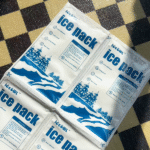
Fornecedor de caixa de gelo para vacinas: Como escolher em 2026?
UM vaccine ice box provider is not just selling an insulated box. You are choosing the system that keeps vaccines effective when roads are rough, flights are late, and teams are tired. Most refrigerator-stored vaccines must stay between 2°C and 8°C, and some products can be damaged by freezing. Em 2026, the safest approach is simple: escolha um vaccine ice box provider that can prove performance in hours, não slogans.
Neste guia, você aprenderá:
Como um WHO PQS vaccine ice box provider differs from a generic supplier
Como usar hot-ambient hold time (often tested in very warm conditions) for route planning
How to reduce freezing risk with conditioned packs and freeze-prevention options
Que vaccine ice box provider with data logger pocket should support in monitoring
A 10-minute decision tool to shortlist a vaccine ice box provider rápido
Why does a vaccine ice box provider matter for potency?
UM vaccine ice box provider directly affects vaccine potency and compliance. Vaccine damage is usually invisible. You may not see a problem until an audit, a complaint, or a coverage gap. That is why you should treat a vaccine ice box provider like a safety partner.
In real transport, the “perfect lane” rarely happens. Customs inspections, tráfego, quedas de energia, and repeated lid openings are normal. A qualified vaccine ice box provider designs the box, the coolant plan, and the packing steps to absorb those shocks.
What makes vaccine transport different from food logistics?
Food spoilage can be obvious. Vaccine potency loss is not. That single difference raises your risk level.
| Transport type | Tolerância à temperatura | Failure visibility | O que isso significa para você |
| Comida fresca | Wider | Visible | You can often spot problems |
| Alimentos congelados | Moderado | Visible | Quality issues show quickly |
| Vacinas | Narrow | Invisible | You need proof and monitoring |
Dicas práticas e recomendações
If your lane includes delays: Demand extra buffer hours from your vaccine ice box provider.
If staff turnover is high: Choose packing steps that feel “hard to do wrong.”
If audits are common: Require documentation as part of the base offer.
Exemplo prático: One regional program reduced temperature-excursion waste after switching to a provider with longer hold time and simpler loading steps.
What performance should your vaccine ice box provider prove?
Em 2026, a credible vaccine ice box provider sells measurable performance. You want three things in writing: hours in range, suposições, e repetibilidade. If a quote says “keeps cold for a long time,” you cannot plan routes.
Pergunte ao seu vaccine ice box provider to state performance using a hot-ambient metric (por exemplo, the hours the pack-out stays in range in high heat). Then ask the provider to list the assumptions behind that number.
The five proof items you should request in writing
Model name and configuration (caixa + pacotes + divisores)
Hold time in hours under stated ambient heat
Pack type and conditioning steps (what you must do before packing)
Opening frequency assumption (how often the lid is opened)
A monitoring workflow (min/max checks or a data logger routine)
Provider comparison table (simples, pronto para tomar decisões)
| Evaluation factor | Basic offer | Qualified offer | Your real-world impact |
| Tempo de espera | “24–36h” (unclear conditions) | “72–120h” (conditions stated) | Buffer for delays |
| Materiais | Fragile foam | Durable reusable polymer | Menos rachaduras, menos vazamentos |
| Evidência | Marketing claims | Test assumptions + Resultados | Preparação para auditoria |
| Usabilidade | Many steps | Fewer steps, clear diagram | Less human error |
| Monitoring support | “Check temp” | Defined workflow + bolso | Fewer missed excursions |
Dicas práticas e recomendações
If a provider avoids numbers: Pause. You need hours, não adjetivos.
If two quotes look similar: Check pack assumptions. They may not match.
If your lane runs hot: Compare only hot-ambient performance.
Exemplo prático: Two vendors offered similar prices, but only one stated hours in range and a clear conditioning method.
How to verify a WHO PQS vaccine ice box provider without stress?
If you buy for immunization programs, you will often see WHO PQS language in tenders. You do not need to become a standards expert. You only need a short checklist that forces clarity.
Um forte WHO PQS vaccine ice box provider can point to the performance category that fits your use case (por exemplo, cold boxes and carriers in the E004 family). The goal is not paperwork. The goal is consistent field performance.
“E004” in plain language
Think of E004 as a family label for vaccine carriers and cold boxes used in immunization supply systems. Quando um WHO PQS vaccine ice box provider references the correct category, it reduces guesswork. It also helps you compare like with like.
Verification checklist (perguntar, don’t assume)
| Verification step | What you ask your provider | What you should see | What it protects you from |
| Category match | “Which PQS category applies?” | A clear category reference | Vague performance claims |
| Heat performance | “Hours in range in hot ambient?” | Horas + suposições | Overpromised duration |
| Pack-out method | “Show the packing diagram.” | Diagrama + passos | Freezing and hot spots |
| Monitoring plan | “How do we document excursions?” | A simple workflow | No proof during audits |
Dicas práticas e recomendações
If they won’t share assumptions: Treat the offer as high risk.
If they share only lab numbers: Ask how opening frequency was handled.
If accessories are extra: Make total cost explicit before you compare.
Exemplo prático: A team simplified route planning after choosing a provider that published hot-ambient hours with clear assumptions.
How long should a vaccine ice box provider keep 2–8°C stable?
You should buy for reality, not the shortest route on the map. Even local deliveries can face traffic or vehicle breakdowns. For most networks, these are practical targets:
Local or regional routes: planejar para 48 hours minimum buffer
Remote or international routes: planejar para 72–120 horas buffer
Frequent-opening outreach: plan for stability under opening stress, not only closed-lid tests
Um bom vaccine ice box provider will help you match hold time to your lane profile. If you over-buy, you may add weight and cost. If you under-buy, you risk potency.
Use “opening frequency” as your hidden duration driver
Every lid opening trades cold air for warm air. Two teams can use the same box and get different results. Seu vaccine ice box provider should state the opening assumption so you can plan training and workflow.
| Caso de uso | Typical need | Provider direction | O que confirmar |
| Outreach session | ~6–12 hours | Vaccine carrier focus | Opening assumption + diagram |
| Entrega de última milha | ~12–48 hours | Carrier or small cold box | Hot-ambient hours + buffer |
| Depot transfer | 24–96 horas | Cold box focus | Durabilidade + spares plan |
| Long holding | Vários dias | Long-hold class options | Procedimentos + monitoramento |
Dicas práticas e recomendações
If you open often: Treat rated cold life as optimistic.
If you deliver in summer heat: Add buffer hours and reduce lid time.
Se você envia internacionalmente: Assume one overnight delay will happen.
Exemplo prático: Two outreach teams used the same box. The team that opened less stayed in range longer.
How do materials (EPP vs EPS) change provider reliability?
Material choice is where many “cheap” solutions fail. UM vaccine ice box provider can show great test data, but field damage can destroy insulation fast. If the box cracks, gaps form. Then cold life drops.
A simple rule helps: fragile materials work in calm lanes. Durable materials work in real lanes.
EPS vs EPP explained in simple terms
EPS (espuma): baixo custo, but cracks easily and deforms under impact
PPE (polipropileno expandido): mais forte, reutilizável, and impact-resistant
If you expect rough handling, EPP-based designs usually reduce breakage. A durable vaccine ice box provider will also design seals, dobradiças, and corners for repeated use.
Reuse can improve safety (not just sustainability)
Reusable systems are built for repeated stress. That often means thicker walls, better seals, and more consistent performance. Na prática, that reduces surprise failures.
| Material + projeto | Typical durability | Typical consistency | O que isso significa para você |
| Single-use foam | Baixo | Variável | Maior risco de quebra |
| Reusable polymer | Alto | More repeatable | Lower excursion risk |
| Projetos híbridos | Médio-alto | Depends on build | Balance of cost and strength |
Dicas práticas e recomendações
If you reuse: Ask about cleaning, inspeção, and replacement parts.
Se você exportar: Ask about stacking and impact resistance.
If weight matters: Compare payload-to-performance, not only volume.
Exemplo prático: A district reduced box damage after moving from fragile foam to reusable polymer designs.
How can a vaccine ice box provider help you prevent freezing?
Heat is not the only threat. Freezing can quietly damage freeze-sensitive vaccines. This often happens when teams use fully frozen packs “to be safe.” That instinct can backfire.
A responsible vaccine ice box provider designs for freeze prevention with three layers: the right packs, the right placement, and the right workflow.
Freeze prevention, passo a passo (the human-friendly version)
Pacotes de condições so they are cold but not “rock hard.”
Separate packs from vials using dividers or air gaps.
Standardize the pack-out with a diagram you can follow fast.
Freeze-risk control table
| Freezing risk source | What your provider should deliver | What you do in the field | Seu benefício prático |
| Packs too cold | Clear conditioning steps | Follow a timer-based routine | Fewer silent freeze events |
| Contato direto | Divisores + placement rules | Keep vials off pack surfaces | Less potency loss risk |
| Staff variation | Options for high-risk lanes | Use safer designs in outreach | More consistent outcomes |
Dicas práticas e recomendações
Outreach days: Use a repeatable conditioning routine every time.
Mixed vaccine types: Keep freeze-sensitive products away from pack edges.
Climas quentes: Do not “over-freeze” packs to compensate for heat.
Exemplo prático: A clinic reduced freeze alarms after switching from fully frozen packs to a consistent conditioning routine.
What monitoring workflow should your vaccine ice box provider support?
Monitoring is how you turn “we think it was fine” into “we can prove it.” But monitoring only works if it fits daily reality. Um moderno vaccine ice box provider should design monitoring into the box and the workflow.
No mínimo, seu vaccine ice box provider should support one of these paths:
Path A: Min/max thermometer checks with a simple paper log
Path B: A small data logger that records the full trip
Path C: Ambos, for high-risk lanes and audits
Keep monitoring “small enough to do every day”
If the process is too heavy, people skip it. Pergunte ao seu vaccine ice box provider for a one-page routine that answers: who checks, quando, and what happens if it’s out of range?
| Monitoring element | Minimum standard | Better standard | What it changes for you |
| Intervalo de destino | 2°C–8°C defined | Excursion thresholds defined | Faster decisions |
| Recording | Simple form | Downloadable log | Auditorias mais fáceis |
| Response | “Hold and label” rule | Prewritten escalation steps | Less panic, menos erros |
Dicas práticas e recomendações
Viagens curtas: A min/max check can still catch issues.
Rotas de alto risco: Use a logger so you can review the full trace.
Treinamento: Run one mock excursion so staff feel confident.
Exemplo prático: A team adopted a “hold and label” rule and reduced accidental use after excursions.
How to compare quotes apples-to-apples with a one-lane brief?
Most procurement mistakes come from mismatched assumptions. Um vaccine ice box provider may quote a pack-out with conditioned packs. Another may assume fully frozen packs. The price and performance will not be comparable.
A one-lane brief forces fairness. It also makes your negotiation faster.
Your one-lane brief (copy this into a document)
Banda de temperatura: 2° C - 8 ° C. (or your specific band)
Tempo de rota: ___ horas (include your delay buffer)
Calor ambiente: typical and worst-case
Openings: how many times you open, e quanto tempo
Staff reality: training level, time pressure, turnover
Monitoramento: mínimo/máximo, registrador, ou ambos
Quote line items that must be stated
| Quote line item | Must be stated | Por que isso importa | Your leverage |
| Tempo de espera | Horas + condições | Route fit | Ask for more buffer |
| Pack assumptions | Tipo de pacote + condicionamento | Freeze control | Remove hidden risk |
| Configuração | Diagrama + acessórios | Real usability | Prevent add-on surprises |
| Monitoramento | Dispositivo + fluxo de trabalho | Proof in audits | Reduce paperwork load |
Dicas práticas e recomendações
Tenders: Require the same lane brief across bidders.
Local buys: Still demand a diagram and hours in range.
Orçamento 文章constraints: Improve process discipline, not only hardware.
Exemplo prático: A buyer avoided a “cheap” option after the lane brief revealed unrealistic pack assumptions.
Ferramenta de decisão: score a vaccine ice box provider in 10 minutos
Use this tool in a meeting. No spreadsheet is required. It helps you shortlist a vaccine ice box provider based on proof, not confidence.
Etapa 1: Pick your operating profile
Profile A (Outreach): 6–12 horas, abertura frequente
Profile B (Última milha): 12–48 horas, moderate opening
Profile C (Transfer): 24–96 horas, low opening
Profile D (Espera longa): multi-day holding, low opening
Etapa 2: Score each vaccine ice box provider (0–2 points each)
Give 0 if missing, 1 if partial, 2 if clear and proven.
Hot-ambient hours in range are stated (horas + condições).
Pack type and conditioning steps are documented and practical.
Freezing risk is addressed for freeze-sensitive vaccines.
Monitoring workflow is provided (min/max or logger plan).
Documentation is audit-ready (testes, suposições, configuração).
Interpretação
8–10: Forte vaccine ice box provider shortlist
5–7: Usable, but needs clarification
0–4: High risk for real-world lanes
Autoverificação: are you set up to succeed with the provider?
Tick what is true:
You can condition packs the same way every time.
You can limit lid opening during transport.
You have a simple monitoring record process.
You know what to do during excursions.
If you tick 0–1, Escolha um vaccine ice box provider that reduces steps and adds freeze-risk protection.
2026 tendências: what’s changing in vaccine ice box providers?
As of January 2026, selection is shifting from “box specs” to “system reliability.” Buyers are demanding fewer assumptions, clearer hot-ambient metrics, and workflows that work for busy teams. Reusable systems are also growing because they reduce damage and improve repeatability.
Latest developments that matter to you
Longer hold-time expectations: multi-day designs are becoming common
More freeze-risk controls: better dividers and safer pack-outs
Monitoramento por padrão: bolsos, mounts, and simple routines included
Audit-ready documentation: test assumptions packaged with the offer
Insight de mercado (linguagem simples)
When supply chains are imperfect, you win by building buffer. O melhor vaccine ice box provider sells you predictable outcomes under stress, not best-case performance in the lab.
Perguntas frequentes
Q1: Do vaccines always need 2°C to 8°C during transport?
Most refrigerator-stored vaccines are transported at 2°C–8°C. Seu vaccine ice box provider should keep you in range through delays and openings.
Q2: Can freezing really damage vaccines?
Sim. Some vaccines are freeze-sensitive. Treat freezing risk as seriously as heat risk, especially in outreach and last-mile delivery.
Q3: What does “hot-ambient hold time” actually mean?
It is the number of hours a pack-out stays in range when the outside air is very warm. It helps you plan lanes realistically.
Q4: Is a reusable vaccine ice box always better?
Muitas vezes, sim. Reusable designs tend to be tougher and more repeatable. But you still need a simple pack-out and monitoring routine.
Q5: What is the fastest way to shortlist a provider?
Use the 10-minute score tool above. Focus on hours in range, pack assumptions, freeze control, and monitoring workflow.
Resumo e recomendações
UM vaccine ice box provider is a safety decision. Start by defining your lane and worst-case delays. Then compare providers using the same assumptions, with hours in range stated clearly. Control freezing risk with conditioned packs, correct placement, and safer designs when needed. Add a monitoring workflow that your team can follow every day.
O que você deve fazer a seguir (CTA)
Create a one-page lane brief for your riskiest route.
Shortlist three candidates using the score tool.
Run a two-week pilot and review monitoring results.
Scale the vaccine ice box provider that delivers stable outcomes and simple training.
Sobre Tempk
Tempk specializes in temperature-controlled packaging for vaccine and pharmaceutical transport. We design reusable vaccine ice boxes focused on stable temperature control, materiais duráveis, and practical handling. Our approach emphasizes clear pack-out steps, monitoring-friendly features, and documentation that supports audits without slowing teams down.
Próximo passo: Share your route duration, calor ambiente, and opening pattern. We’ll help you translate that reality into a practical packaging plan.