Apropriado vaccine storage and cold chain practices are the backbone of immunization programs. Sem controle de temperatura consistente, vacinas perdem potência, wasting money and putting public health at risk. This comprehensive guide answers your questions about vaccine storage and cold chain management in 2025, from temperature ranges and equipment choices to monitoring, transport and emerging innovations. It reflects the latest guidelines and market trends and uses plain language to help you protect every dose.
What is a vaccine cold chain and why is it essential? — understand how uninterrupted temperature control preserves vaccine efficacy.
Which temperatures are safe for vaccines? — learn the ranges for refrigerated, frozen and ultra cold vaccines and why deviations matter.
How do you choose storage equipment? — compare refrigerators, freezers and ultra cold units and see why dorm style fridges are a bad idea.
How should you monitor and record temperatures? — discover the role of digital data loggers (DDLs), standard operating procedures and staff training.
O que há de novo 2025? — explore innovations like blockchain, Sensores de IoT, solar powered units and portable cryogenic freezers that are transforming vaccine cold chain logistics.
What Is the Vaccine Cold Chain and Why Does It Matter?
The vaccine cold chain is the network of refrigerators, freezers, insulated containers and monitoring devices that keep vaccines within safe temperature limits from manufacture to administration. Maintaining this chain preserves potency; vaccines that are too warm can lose up to 20 % of their effectiveness in just an hour, while freezing aluminium containing vaccines causes clumping and irreversible damage. Health care professionals must manage inventory accurately, use reliable equipment and employ trained staff to ensure every dose remains effective. Poor cold chain management leads to waste—studies estimate as many as 35 % of vaccines are compromised by temperature mishandling—and risks outbreaks of vaccine preventable diseases.
Maintaining Potency: Faixas de temperatura recomendadas
Vaccines are biological products that lose potency outside their prescribed ranges. Different categories require different conditions:
| Categoria de vacina | Faixa de temperatura | Exemplo de vacinas | Significado |
| Refrigerado | 2 °C–8 °C (36 °F – 46 °F) | Gripe, DTaP, HPV, MMR e a maioria das vacinas de rotina | A faixa mais comum; maintaining around 5 °C minimizes fluctuations. |
| Congelado | –50 °C – –15 °C (–58 °F – 5 °F) | Varicela, mpox (Jynneos), some COVID 19 formulations | Obrigatório para vacinas vivas atenuadas; exposure to warmer temperatures can compromise viral components. |
| Ultra frio | –90 °C – –60 °C (–130 °F – –76 °F) | Vacinas de mRNA como Pfizer – BioNTech Comirnaty | Necessário para armazenamento de longo prazo; some vials may be thawed and kept at 2 °C–8 °C for up to 10 semanas. |
These ranges must be respected at all times. Overheating degrades proteins and lipids, while freezing forms ice crystals that damage vaccine structure. Even a brief excursion above 8 °C may reduce potency by 20 %. When storing vaccines, keep them in their original boxes to protect from light and arrange by expiration date for “first expiring, first out” rotation.
Selecting the Right Vaccine Storage Equipment
Choosing appropriate storage units is critical. Construído especificamente, pharmaceutical grade refrigerators and freezers provide the most consistent temperatures. These units feature electronic thermostats, alarms and interior fans and are designed to maintain uniform temperatures even during frequent door openings. When pharmaceutical units are unavailable, standalone household refrigerators or freezers can be used, mas combination refrigerator/freezers are not recommended, and dorm style units with a single exterior door should never be used because they pose a significant risk of freezing vaccines. Each storage unit should have enough capacity to accommodate peak inventory without overcrowding; vaccines should be stored in the middle of shelves, away from walls and the door where temperature fluctuations are greatest. Avoid storing vaccines in vegetable bins or alongside staff lunches.
Practical Tips for Organising Vaccine Storage
Defina os termostatos na faixa intermediária: Adjust refrigerators to approximately 5 °C and freezers to around –25ºC to minimize fluctuations.
Keep air circulating: Avoid overcrowding and place water bottles on shelves to help stabilise temperatures.
Etiqueta claramente: Designar prateleiras para vacinas refrigeradas e congeladas; não armazene diluentes ou alimentos em unidades de vacina.
Girar estoque: Store vaccines in original packaging, organise by expiry date and remove expired doses promptly.
Use backup equipment: Maintain a back up refrigerator or freezer and ensure power supplies have surge protection or an uninterruptible power supply.
Caso do mundo real: Em 2024, a clinic in New York avoided wasting more than $20 000 worth of vaccines when a freezer failed. Staff executed their emergency plan to transfer inventory to a calibrated backup unit that maintained 2 °C–8 °C. This example underscores the value of preparedness and redundant storage.
Monitoring and Digital Data Loggers
Continuous temperature monitoring is the heart of vaccine cold chain management. The CDC recommends recording minimum and maximum temperatures at least twice daily and using registradores de dados digitais (DDLs) para monitorar temperaturas continuamente. Every storage unit should be equipped with a DDL that records temperatures at least every 30 minutos, has a buffered probe, alarme fora de alcance, low battery indicator, display of current and min/max temperatures and an uncertainty of ±0.5 °C. Data should be downloaded and reviewed at least every two weeks or whenever an excursion occurs. Facilities must retain records for at least three years.
Why Digital Data Loggers Matter
Vaccines are fragile, and even small temperature deviations can render them ineffective. DDLs provide continuous monitoring that manual checks cannot match. Os recursos a serem procurados incluem:
High precision and calibration: Devices should offer ±0.1 °C accuracy and be calibrated at key temperatures such as 2 °C e 8 °C.
Sondas tamponadas: Glycol filled probes mimic the thermal response of vaccines, preventing false alarms caused by brief door openings.
Alertas em tempo real: Visual and audible alarms alert staff as soon as temperatures deviate.
Cloud connectivity: Remote access and cloud storage allow staff to review data, receive alerts and generate audit reports from anywhere.
Hot swappable calibration: Alguns dispositivos, like the 2025 EL USB VACX, offer on site calibration without downtime.
| DDL feature | Por que isso importa | Beneficiar |
| Sonda tamponada | Mede a temperatura do líquido em vez do ar, refletindo a verdadeira temperatura da vacina | Avoids false alarms when doors open; prevents unnecessary transfers |
| Alarme fora de alcance | Alerta a equipe imediatamente quando as temperaturas divergem | Permite ação corretiva rápida para salvar vacinas |
| Intervalo de registro programável | Permite gravar pelo menos a cada 30 minutos | Fornece histórico detalhado de temperatura para auditorias |
| Glycol simulation | Simulates vaccine thermal response to minimize false alarms | Improves accuracy in real world conditions |
| Integração na nuvem | Enables remote access, graphing and reporting | Simplifies audits and supports regulatory compliance |
Developing Standard Operating Procedures and Training
Monitoring alone is insufficient without clear procedures and trained personnel. Each facility should develop Standard Operating Procedures (POPS) cobrindo armazenamento e manuseio de rotina, Monitoramento de temperatura, respostas de emergência e documentação. SOPs must be reviewed annually by a designated vaccine coordinator and updated whenever guidelines change. Staff should record min/max temperatures at the start of each workday and, if a device does not display min/max readings, check temperatures at least twice daily. O treinamento é crítico: all staff handling vaccines should receive orientation and annual refresher courses. Scenario based emergency drills prepare teams to respond to power outages, equipment failures or natural disasters.
Transport and Distribution: Protecting Vaccines On the Move
The cold chain extends beyond storage rooms. Vaccines must remain within their temperature ranges during transport from manufacturers to clinics. Logistics providers use recipientes isolados, refrigerantes e registradores de dados to maintain cold chain integrity. De acordo com pesquisas de mercado, o global mercado de logística da cadeia de frio de vacinas foi avaliado em USD 3.5 bilhão em 2024 e tem previsão de atingir USD 5.9 bilhão por 2034, crescendo em um 5.3 % Cagr. Demand is driven by mRNA vaccines, advances in packaging technologies and growing awareness of health & wellness.
Choosing Packaging and Refrigerants
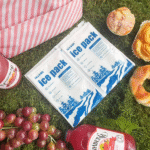
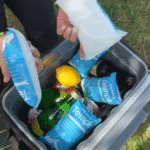
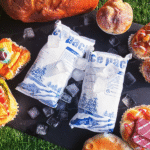
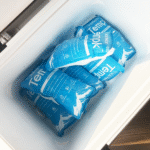
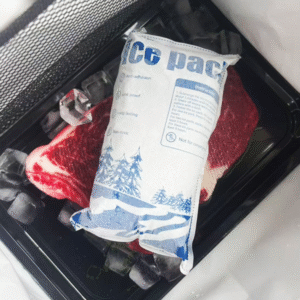
Different temperature ranges require different packaging methods. Dry ice provides temperatures around –78 °C and is suited for frozen or ultra cold shipments; gel packs and phase change materials maintain 2 °C–8 °C para vacinas refrigeradas; liquid nitrogen enables cryogenic conditions below –150 °C for specialized cell therapies. The InsightAce report notes that packaging methods in the cold chain logistics market include gelo seco, liquid nitrogen and gel packs. Use validated containers and pack out designs that match the required temperature range, and consider shipping durations and external conditions. Always include a calibrated DDL inside the shipment and choose shipping routes that minimize transit times.
IoT Sensors and AI Driven Logistics
Modern vaccine logistics increasingly rely on connected sensors and analytics. Sensores inteligentes habilitados para IoT collect and share data on temperature, umidade e localização em tempo real. Quando os sensores detectam níveis de temperatura inseguros, they automatically alert users through text, email or mobile apps. Many devices also provide GPS tracking, allowing visibility across the supply chain and enabling rapid intervention if deviations occur. Coupling IoT sensors with inteligência artificial improves route planning; AI algorithms use real time traffic and weather data to optimize routes, reducing transit time and minimizing the risk of temperature excursions. Predictive analytics identify patterns and trigger alerts before excursions happen. These technologies strengthen supply chain resilience and help meet regulatory requirements.
Innovations Shaping the 2025 Cadeia de frio da vacina
Beyond basic monitoring and transport, 2025 brings transformative technologies that enhance transparency, sustentabilidade e eficiência:
Blockchain para rastreabilidade ponta a ponta: Os livros-razão distribuídos registram todas as transações na cadeia de suprimentos, criando um registro de temperatura à prova de violação, location and hand off events. This transparency eliminates data manipulation and ensures regulatory compliance across stakeholders.
Armazenamento refrigerado movido a energia solar: Off grid solar units provide reliable refrigeration in areas with unstable electricity. Em 2024, commercial electricity cost an average of 13.10 centavos por quilowatt-hora, enquanto as taxas solares variaram de 3.2 para 15.5 centavos por kWh. Solar cold storage reduces energy costs and extends cold chain coverage to rural areas.
Sensores inteligentes habilitados para IoT: Wireless sensors offer real time temperature and location data, send alerts upon excursions and reduce operational risks. Combinado com GPS, eles permitem visibilidade completa da origem ao destino.
Otimização de rotas com tecnologia de IA: Artificial intelligence analyses traffic and weather patterns to select routes that maintain temperature stability. Predictive analytics identify potential excursions before they happen.
Congeladores criogênicos portáteis: New compact freezers maintain temperatures as low as –80 °C to –150 °C, enabling the safe transport of cell and gene therapies and ultra cold vaccines. Integrated real time tracking and alerts ensure compliance.
Embalagem sustentável: As empresas estão adotando contêineres isolados recicláveis, envoltórios térmicos biodegradáveis e compressas frias reutilizáveis para reduzir o impacto ambiental. Sustainable solutions protect vaccines while aligning with corporate ESG commitments.
2025 Últimos Desenvolvimentos e Tendências
The cold chain industry is experiencing rapid growth and heightened regulatory scrutiny. Os principais desenvolvimentos incluem:
Accelerating market expansion: The global cold chain market is expected to grow from USD 418.81 bilhão em 2025 para USD 1,416.67 bilhão por 2034, representando um 14.5 % taxa composta de crescimento anual. A América do Norte detém cerca de 36 % de receitas e continua a investir em tecnologias energeticamente eficientes.
Rising demand for mRNA and biologic vaccines: The ongoing rollout of mRNA boosters and cell therapies necessitates ultra cold storage and robust monitoring, driving investment in cryogenic equipment.
Stricter compliance requirements: Regulatory bodies such as the CDC, WHO and EU GDP mandate continuous temperature monitoring, manutenção de registros detalhados e calibração regular. Facilities must demonstrate data integrity and readiness for audits.
Emergence of connected cold chains: Integration of IoT sensors, AI and blockchain fosters end to end visibility, enabling proactive intervention and improving patient safety.
Foco na sustentabilidade: Governments and companies are prioritizing renewable energy and recyclable materials to reduce the environmental footprint of cold chain operations.
Insights de mercado: Growth and Investment Drivers
O setor da cadeia de frio apoia as indústrias alimentar e farmacêutica, but vaccines represent a particularly high stakes segment. De acordo com a Pesquisa de Precedência, o mercado global da cadeia de frio está projetado para crescer em 14.5 % Cagr de 2025 para 2034. Enquanto isso, the dedicated mercado de logística da cadeia de frio de vacinas—covering storage, packaging and transportation—will expand from USD 3.5 bilhão em 2024 para USD 5.9 bilhão por 2034. Factors driving growth include:
Aumento da produção de vacinas: Demand for mRNA boosters, varicella and other live vaccines necessitates more cold chain capacity.
Inovações tecnológicas: Sensores de IoT, blockchain e IA melhoram a eficiência e reduzem o desperdício.
Expandindo o acesso aos cuidados de saúde: Rural immunisation programs and global disease eradication initiatives require reliable cold storage in remote areas, spurring investment in solar powered and portable solutions.
Conformidade regulatória: Stricter guidelines for temperature monitoring, documentação e segurança obrigam as instalações a atualizar equipamentos e sistemas.
Perguntas frequentes
Q1: Por quanto tempo as vacinas de mRNA podem ser armazenadas em temperaturas de geladeira?
Depois de descongelar, some mRNA vaccines such as the Pfizer–BioNTech Comirnaty may be kept at 2 °C–8 °C para até 10 semanas. Always check the manufacturer’s guidelines and monitor temperatures continuously.
Q2: O que devo fazer se uma vacina for exposta a temperaturas acima 8 °C?
Qualquer excursão de temperatura pode degradar a potência. Coloque imediatamente em quarentena as vacinas afetadas, rotule-os como “não use,” and contact the manufacturer or immunisation program for guidance. Studies show that even a one hour exposure above 8 °C may reduce vaccine effectiveness by até 20 %.
Q3: Can I store vaccines in a household refrigerator?
Household refrigerators may be used if pharmaceutical grade units are unavailable, mas combination units and dorm style fridges are not acceptable. Vaccines should be stored in the middle of shelves away from walls and the door.
Q4: Com que frequência devo registrar as temperaturas?
O CDC recomenda verificar e documentar as temperaturas mínimas e máximas pelo menos duas vezes ao dia e download de dados de registradores digitais a cada duas semanas ou após qualquer excursão. Se o seu registrador exibir leituras mínimas/máximas, registre-os no início de cada dia de trabalho.
Q5: O que um plano de emergência para cadeia de frio deve incluir?
A robust plan should cover backup power sources, locais de armazenamento alternativos, contêineres de transporte e informações de contato de emergência. Realize exercícios regulares e garanta que todos os funcionários conheçam as etapas para transferir vacinas com segurança durante cortes de energia ou falhas de equipamento.
Resumo e recomendações
Takeaways -chave: Keeping vaccines potent in 2025 requires strict adherence to temperature ranges (2 °C–8 °C for most vaccines, –50 °C– –15 °C for live attenuated vaccines and –90 °C– –60 °C for mRNA formulations). Use purpose built storage units, avoid overcrowding and maintain clear labelling. Implement calibrated digital data loggers and record temperatures at least twice daily. Desenvolva POPs, train staff regularly and prepare for emergencies. Embrace innovations like IoT sensors, AI route optimisation and solar powered freezers to enhance efficiency and sustainability.
Orientação de ação: Start by auditing your current storage units and replacing any combination or dorm style refrigerators. Invest in high precision DDLs with glycol buffered probes and cloud connectivity. Write or update SOPs covering routine handling, procedimentos de monitoramento e emergência, and schedule regular drills. Explore emerging technologies—IoT sensors, AI enabled route optimisation and portable cryogenic freezers—to future proof your cold chain. For tailored recommendations, consult cold chain specialists or contact us at Tempk.
Sobre Tempk
A Tempk é líder inovadora em soluções de cadeia de frio para saúde e ciências biológicas. Projetamos e fabricamos refrigeradores de qualidade farmacêutica, freezers, recipientes isolados e sistemas de monitoramento de temperatura de última geração. Nossos produtos apresentam isolamento avançado, registradores de dados digitais com conectividade em nuvem e opções para integração de energia solar. Estamos comprometidos com a sustentabilidade e oferecemos embalagens reutilizáveis e envoltórios térmicos biodegradáveis para reduzir o impacto ambiental. Com um R dedicado&Equipe D e rigorosos padrões de qualidade, we help you deliver vaccines safely and efficiently.
Precisar de ajuda? Contact our specialists for a customised cold chain assessment and discover how Tempk’s solutions can safeguard your vaccines and support compliance.