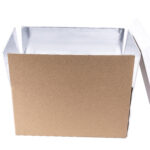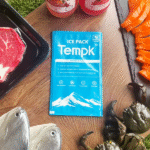
Se você envia produtos frios, uma caixa isolada reciclável é uma das maneiras mais rápidas de reduzir o desperdício de espuma sem arriscar a qualidade do produto. When it’s packed correctly, many lanes can stay in the 2–8°C “zona segura” por 24 a 48 horas, and some can reach 72 hours with validation. Em 2026, o “verde” part also matters more—because regulations and customers increasingly expect packaging that’s recyclable in real life, not just on a label.
Este guia irá ajudá-lo:
Choose a recyclable insulated box for food delivery that reduces melt, vazamentos, and complaints
Use recyclable insulated packaging for pharmaceuticals without guessing on compliance
Learn how to recycle insulated shipping boxes with clear, simple steps
Compare recyclable insulated box vs EPS cooler on cost, desempenho, e descarte
Build a repeatable packout you can train in minutes (não horas)
A recyclable insulated box is only “reciclável” if your customer (or receiving team) can separate, sort, and recycle the main parts quickly. If recycling takes ten steps, it won’t happen. Your goal is a pack that feels obvious: “remove this, recycle that.”
Think of recyclability as a real-world checklist:
Collection: does it get picked up (curbside or accepted locally)?
Sorting: can facilities separate it without special effort?
End markets: is it actually processed into new material?
Recyclability checkpoint table (use this during sourcing)
| Componente | Escolher | Avoid | O que isso significa para você |
|---|---|---|---|
| Expedidor externo | Plain corrugated carton | Plastic-coated or waxed surfaces | Higher recycling success, menos disputas |
| Isolamento | Fiber, polpa moldada, paper panels, separable mono-material | Foam glued to walls | Less “trash by default” resultados |
| Forro | Peel-out, dobrado, or tuck-in liner | Permanent multi-layer laminate | Faster separation and better recycling behavior |
| Tape/labels | Mínimo, easy to remove | Heavy plastic tape everywhere | Cleaner fiber stream and fewer sorting failures |
| Refrigerantes | Clearly labeled gel/PCM packs | Unlabeled “mystery gel” | Fewer customer questions and support tickets |
The 60-second “busy person” teste (interativo)
Hand an unopened shipper to someone outside your team. Ask them to recycle it in under 60 seconds without searching online.
Passar: they separate parts correctly and confidently
Borderline: they hesitate, ask questions, or tear components apart
Fail: they throw it away because it’s confusing
Por que isso importa: the best recyclable insulated box is the one that gets recycled when people are in a hurry.
How does a recyclable insulated box keep products cold on the move?
A recyclable insulated box doesn’t “make cold.” It slows warming. Picture a winter jacket: it traps still air so outside heat moves in more slowly.
Your hold time is driven by five basics:
Outside temperature (summer porch time is brutal)
Tamanho da caixa (bigger air volume warms faster)
Product starting temperature (warm product burns your cold budget)
Refrigerant type and mass (gel vs PCM vs dry ice)
Packout quality (voids, lacunas, bad placement create hot corners)
Common insulation approaches (e o que eles significam para você)
| Insulation approach | Materiais típicos | Benefício prático | Melhor ajuste |
|---|---|---|---|
| Air-trapping fiber structures | Molded pulp, paper fiber | Simple recycling story + amortecimento | Entrega de alimentos, D2C lanes |
| Dense fitted panels | Paper panels, molded forms | Fewer gaps, temperaturas mais estáveis | 2–8°C pharma lanes |
| Separable mono-material inserts | PP-based designs | Durável, desempenho repetível | Reuse programs or controlled returns |
| Híbrido “separate easily” sistemas | Carton + removable liner | Better moisture control | Mixed season, mixed products |
Practical temperature stability tips (you can apply today)
Pre-condition product to target temperature before packing
Block airflow by filling void space (o ar vazio aquece rapidamente)
Center the payload so it’s not touching the outside walls
Place refrigerant where heat enters (often top and sides)
Train one standard layout so packouts don’t drift by person or shift
Padrão do mundo real: when a shipper arrives “mostly cold” but not compliant, the fix is often packout discipline, not thicker insulation.
Recyclable insulated box vs EPS foam cooler vs reusables: que vence?
There’s no universal winner. The right choice depends on whether you control returns, how your customers dispose of packaging, and how strict your temperature risk is.
Comparação rápida (desempenho + operações)
| Fator | Recyclable insulated box | Cooler de espuma EPS | Reusable shipper |
|---|---|---|---|
| Customer disposal experience | Usually simpler | Often frustrating | Misturado (must return) |
| Reverse logistics needed | Não | Não | Sim |
| Armazenamento em armazém | Often ships flat / modular | Volumoso | Moderado |
| Comportamento de umidade | Needs liner planning | Naturally water resistant | Depends on design |
| Compliance risk (labeling/claims) | Can be managed with clarity | Increasing scrutiny | Strong if controlled loop |
| Melhor ajuste | D2C, mixed returns, brand focus | Lowest-cost insulation | B2B closed-loop lanes |
Ferramenta de decisão: pick your lane in 3 minutos (interativo)
Answer these:
Hold time needed: 0- 24 horas / 24-48h / 48-72h
Intervalo de destino: 2–8 ° C. / 15–25ºC / congelado
Worst season: verão / inverno / ambos
Last-mile risk: baixo / médio / alto (porch time, failed delivery)
Disposal reality: forte / misturado / fraco
Simple rule of thumb (not lab math):
If you ship 48–72h, treat it as high risk until you have lane data.
If disposal habits are mixed, favor fiber-first designs with obvious steps.
| Perfil da pista | Suggested recyclable insulated box style | Estratégia de refrigeração | O que isso significa para você |
|---|---|---|---|
| Local 0–24h chilled | Thin fiber liner | Small gel packs | Custo mais baixo + simplest recycling story |
| Regional 24–48h chilled | Medium fiber/panel fit | Pacotes de gel + tight packout | Best balance of performance + simplicity |
| 48–72h chilled | Validated higher-performance system | PCM or layered gel | Needs validation + tighter SOP |
| Congelado | Isolado + gelo seco ou PCM | Dry ice or frozen PCM | More complexity, maior risco |
How to build a standard packout SOP (and why it matters more than box specs)
A recyclable insulated box is only as good as the packout. If every shift packs differently, you’ll see inconsistent temperatures and customer complaints.
Packout SOP template (adapt to your operation)
| Etapa | Ação | Por que isso importa |
|---|---|---|
| 1 | Pre-chill product to target temp | Warm product burns your cold budget |
| 2 | Assemble box + forro | Liner controls moisture and separation |
| 3 | Place bottom coolant (se necessário) | Protects from floor heat |
| 4 | Center product with buffer | Avoid wall contact and freeze risk |
| 5 | Fill voids with dunnage | Empty air warms fast |
| 6 | Place top coolant | Heat enters from top and sides |
| 7 | Close liner, then box | Seal the cold zone |
| 8 | Add disposal panel or label | Tells customer what to do |
Training tip: photo-based SOPs
Take photos of each step. Print them on a laminated card at the pack station. New hires can follow along in minutes.
Rotulagem, conformidade, e o que “reciclável” really means in 2026
Recyclable claims are under more scrutiny. If you say “reciclável” but the box ends up in landfill, you risk complaints, retorna, and regulatory attention.
Key regulations and guidance (linguagem simples)
Califórnia SB 343: This law is designed to restrict “reciclável” labeling unless materials are collected and processed at scale in real systems.
US marketing guidance: the FTC’s Green Guides (16 Parte cfr 260) outline how to avoid deceptive environmental claims and how to qualify claims properly.
Momento EPR: packaging EPR programs have expanded across seven states (as of late 2025), which can change reporting, tarifas, and packaging design incentives.
Simples, defensible labeling steps (do this even if you’re not “regulamentado”)
Write disposal instructions by component (caixa / isolamento / forro / refrigerante)
Avoid absolute claims like “100% recyclable everywhere” unless you can prove it
Keep a documentation folder: specs, supplier declarations, and test notes
Put instructions where the action happens: inside the top flap
Observação: this is practical guidance, não é aconselhamento jurídico. Your safest move is “clear steps + component-level truth.”
2026 trends shaping recyclable insulated box design
Em 2026, the best recyclable insulated box designs look simpler, but perform better because they’re built for real behavior:
Latest progress you’ll see most often
Fiber-first insulation at scale: molded pulp and paper fiber options are easier to explain and sort
Peel-out liners and low-tack bonds: separation becomes fast and satisfying
Smarter refrigerant pairing: more teams use PCM when freeze risk is high
Embalagem “UX” projeto: big inside-the-lid panels reduce confusion at unboxing
Data-driven right-sizing: packouts tuned to lane profiles reduce cost and variability
Insight de mercado (linguagem simples)
“Sustentável” is no longer a slogan. Buyers want simplicity, prova, e repetibilidade. The recyclable insulated box that wins is the one your busiest worker can pack correctly on a Monday morning.
Common questions about a recyclable insulated box
Q1: Can a recyclable insulated box replace foam coolers completely? Often yes for short to mid lanes, especially 0–48 hours. The key is right-sizing and a repeatable packout. Por 48–72 horas, validate first with temperature loggers before you scale.
Q2: Are recyclable insulated boxes more expensive? Unit price can be slightly higher, but total cost may drop. When you factor disposal friction, espaço de armazenamento, reclamações de clientes, and reship risk, a recyclable insulated box often comes out ahead.
Q3: How long can a recyclable insulated box hold 2–8°C? Many systems can support 24–48 hours when product is pre-chilled and coolant mass is sized for the worst season. Longer holds are possible, but should be proven on your actual lanes.
Q4: How do I prevent freezing in a recyclable insulated box? Avoid direct ice contact. Add a buffer layer and consider PCM packs tuned near your target range. Think of PCM as “ice that resists getting too cold.”
Q5: What is the biggest mistake when switching to a recyclable insulated box? Changing the box but keeping the old packout. Fiber-based systems often need tighter fit, melhor preenchimento de vazios, and consistent placement to avoid hot corners.
Q6: How to recycle insulated shipping boxes if the insulation is wet? Let it dry if possible. Recycle clean fiber parts, but discard insulation that is soaked, food-stained, or contaminated with gel. Better liners reduce this problem.
Resumo e recomendações
A recyclable insulated box helps you protect cold shipments while reducing waste and disposal friction. The biggest wins come from simple separation, right-sizing, and a repeatable packout SOP. If you test with temperature loggers in the worst season and standardize what works, you reduce refunds, deviations, and customer confusion—without overbuilding packaging.
Seu próximo passo (limpar CTA)
Pick one high-volume lane and run a one-week validation:
lock one box size
lock one packout SOP with photos
add a simple inside-the-lid disposal panel Then expand to the next lane with the same method.
Sobre Tempk
E tempk, we build cold-chain packaging that works in real operations, not just in perfect conditions. We help you choose a recyclable insulated box that matches your lane time, season risk, and disposal reality. We also support packout standardization and validation planning, so your team can ship confidently while reducing packaging waste.
Chamado à ação: Share your target temperature range, Tempo de espera (24/48/72h), and shipping region—and we’ll suggest a practical starting packout to test.