حلول المبادئ التوجيهية للمأكولات البحرية الطازجة لسلسلة التبريد?
إذا قمت بالشحن, محل, or sell seafood, cold chain fresh seafood guidelines solutions are how you protect texture, رائحة, and margin. Aim to keep chilled fish near melting-ice conditions (عن 0-4 درجة مئوية / 32-39 درجة فهرنهايت) and avoid warm exposure beyond common safety “time-out” rules. One weak handoff can trigger soft flesh, sour odor, and wet boxes. This guide gives you a repeatable SOP: temperature targets, التحكم في التسرب, fast checks, and monitoring you can run daily.
يجيب هذا الدليل:
-
كيف cold chain fresh seafood guidelines solutions reduce spoilage in last-mile delivery
-
ال ideal temperature for fresh seafood transport you can train in one day
-
A simple rule for how long can fresh seafood stay above 40°F
-
ال ice and drainage requirements for fish transport that stop “wet box” claims
-
عملي histamine control plan for tuna and mahi-mahi الممرات
-
A 2025-ready monitoring checklist that helps you prove performance
Why do cold chain fresh seafood guidelines solutions fail in real operations?
Cold chain fresh seafood guidelines solutions fail when temperature, ماء, and handling are treated as “someone else’s problem.” Seafood is high moisture and high protein, so small drift becomes fast quality loss. Most failures are not mysterious. They repeat in the same three places: التدريج الدافئ, meltwater contact, and rough handoffs.
في الممارسة العملية, think “clock + sponge.” Heat makes the clock run faster. Meltwater makes the sponge absorb off-odors and texture damage.
| نقطة الفشل | ماذا يحدث | ما تراه | ماذا يعني لك |
|---|---|---|---|
| انحراف درجة الحرارة | تلف أسرع ومخاطر السلامة | Soft texture, sour odor | Refunds and trust loss |
| Meltwater leakage | Labels and cartons fail | Wet boxes, البقع | Carrier claims and reships |
| التلوث المتبادل | Odors and risks transfer | Mixed odors, messy exterior | Higher compliance and brand risk |
نصائح عملية يمكنك التقديم اليوم
-
Dock-to-box time: treat every warm minute as “quality debt.”
-
Design for meltwater: assume ice melts and build barriers and drainage.
-
Assign ownership: one person owns temp checks; one owns pack-out checks.
مثال عملي: A shipper cut “wet box” photos by adding a secondary leak barrier and upgrading the outer carton strength.
What temperature targets fit cold chain fresh seafood guidelines solutions?
Cold chain fresh seafood guidelines solutions work best when you pick one target range and design everything to hold it. For chilled seafood, many operations train “near ice” targets to slow spoilage without freezing. للمأكولات البحرية المجمدة, the goal is “stay frozen” through every handoff, with minimal thaw–refreeze cycling.
If your team argues about targets, simplify the message: chilled stays near ice, frozen stays frozen, live stays alive and not overheated.
Ideal temperature for fresh seafood transport (lane-ready targets)
| نوع المنتج | هدف بسيط | What usually holds it | ماذا يعني لك |
|---|---|---|---|
| الأسماك الطازجة (iced/chilled) | Near 0°C / 32° f | اتصال الجليد + الصرف | مدة صلاحية أطول, firmer texture |
| المأكولات البحرية المبردة (retail cold) | ≥4 درجة مئوية / 40° f | تبريد + التعامل السريع | Safer buffer when ice is limited |
| المأكولات البحرية المجمدة | ≤–18°C / 0° f | Freezer/reefer + stable loading | Prevents quality loss from partial thaw |
| المحار الحي | رائع, لا تجمد | Cool air + التحكم في الرطوبة | Higher survival and fewer dead losses |
نصائح عملية يمكنك التقديم اليوم
-
ابدأ بالبرد: packing warm seafood into a cold shipper is a losing fight.
-
Avoid direct freezing contact: separate product from aggressive cold sources.
-
Standardize staging: pre-chill product and packaging in the same zone.
مثال عملي: A distributor improved arrival quality by reducing “warm staging” time, without changing materials.
How do cold chain fresh seafood guidelines solutions control warm time above 40°F?
Cold chain fresh seafood guidelines solutions control time as tightly as temperature, because warm minutes stack up fast. Many food-safety training rules use a practical threshold around 40° f / 4درجة مئوية for refrigeration and warn against extended time in the “danger zone.” Your SOP should translate that into a simple exposure budget your team can follow under pressure.
Ten minutes here plus fifteen minutes there becomes lost shelf life. The fix is designing fewer waiting steps and tighter handoffs.
A time–temperature exposure budget you can audit
| خطوة | Warm-time limit (مثال) | How to measure | معنى بالنسبة لك |
|---|---|---|---|
| الاستلام | 10-20 دقيقة | Door-open timestamps | عدد أقل من المسامير الدافئة |
| Processing/packing | 30-60 دقيقة | Line start/end logs | More shelf life left |
| تحميل | 15– 30 دقيقة | Dock scan times | عدد أقل من "دفء الغموض" |
| الميل الأخير | Minimize stops | طريق + delivery events | شكاوى أقل |
نصائح عملية يمكنك التقديم اليوم
-
Start a visible timer when seafood leaves cold storage.
-
Remove double-handling: each transfer adds minutes and heat.
-
Write exception rules: if the budget is exceeded, hold or escalate fast.
مثال عملي: A processor gained freshness by deleting one staging step and enforcing a 30-minute max at the pack table.
Which packaging layers make cold chain fresh seafood guidelines solutions reliable?
Cold chain fresh seafood guidelines solutions work as a layered system, not a single material choice. If you upgrade insulation but ignore leaks, you still fail. If you add absorbent pads but ignore crush risk, you still fail.
A reliable seafood pack-out typically uses five layers:
-
Primary containment: food-grade bag or sealed tray
-
Leak barrier: secondary liner or sealed overbag
-
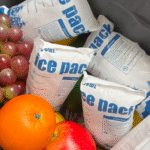
مصدر بارد: الجليد, هلام, or hybrid approach
-
العزل: foam shipper or insulated liner
-
Outer protection: strong carton + تسميات واضحة
Leak control that actually reduces “wet box” claims
| Leak method | قوة | ضعف | ماذا يعني لك |
|---|---|---|---|
| Double bagging | بسيطة وموثوقة | Adds labor | Fewer wet-box failures |
| Sealed liner | Strong barrier | Needs consistent sealing | Better scale consistency |
| Absorbent pads | Reduces free liquid | Can saturate | Use as backup, not the only fix |
نصائح عملية يمكنك التقديم اليوم
-
Make the secondary barrier mandatory for iced seafood.
-
Add a divider layer between cold source and product.
-
الحجم الصحيح للمربع to reduce movement and crushing.
مثال عملي: A brand reduced crushed fillets by switching to snug-fit dividers, without changing insulation.
Ice vs gel vs hybrid: which cold chain fresh seafood guidelines solutions should you use?
Cold chain fresh seafood guidelines solutions often succeed with ice, but only when drainage and containment are designed as non-negotiable. Gel packs reduce leak risk, but sizing mistakes cause warm arrivals. Hybrid systems can stabilize both temperature and cleanliness, especially on 2–3 day lanes.
Use one decision tool, then standardize one recipe per SKU. Consistency beats improvisation.
A 60-second pack-out decision tool (تفاعلي)
Answer these quickly:
-
وقت العبور: 0- 24 ساعة / 24-48 ساعة / 48–72h
-
Handoff risk: قليل / واسطة / عالي
-
Leak tolerance: قليل (premium retail) / واسطة / عالي
-
Product form: جميع / فيليه / المحار / mixed box
Quick match:
-
48–72h OR high handoff risk: هجين + عزل أقوى
-
24–48h with low leak tolerance: Gel-forward + secondary barrier
-
0- 24 ساعة: Ice-forward + strong leak design (fast and simple)
| Pack-out type | الأفضل ل | المراقبين | معنى بالنسبة لك |
|---|---|---|---|
| Ice-forward | في نفس اليوم, بين عشية وضحاها | المياه الذائبة | Strong “freshness feel” |
| Gel-forward | Premium unboxing | Under-sizing | Cleaner delivery |
| هجين | 2–3 day routes | More steps | أعلى الاستقرار |
نصائح عملية يمكنك التقديم اليوم
-
Don’t under-pack cold source: small savings become big losses.
-
Don’t over-pack: too much can crush product or overcool edges.
-
Create SKU cards: one recipe per box size and species group.
مثال عملي: A shipper cut errors by standardizing two recipes: “Fillet Box” and “Shellfish Box.”
How should your receiving checklist support cold chain fresh seafood guidelines solutions?
Cold chain fresh seafood guidelines solutions win or lose at receiving, because that’s where problems enter and good product gets damaged by slow checks. You need a checklist that takes minutes. You also need a clear accept/hold/reject rule, so staff do not guess.
The 2-minute seafood receiving checklist (للطباعة)
-
درجة حرارة: quick probe in the coldest spot (between packs).
-
Ice condition: solid ice coverage for chilled fish lanes.
-
المياه الذائبة: no soaking; drainage is present and working.
-
سلامة التعبئة والتغليف: no tears, تسرب, or crushed corners.
-
الأوراق + معرفات: lot labels match and are readable.
Live shellfish receiving temperature checklist
Live shellfish often need checks that are fast and consistent:
-
درجة حرارة المنتج: ≤10°C / 50° f (common operational limit)
-
Vehicle/container air: ≤7.2°C / 45° f (common operational limit)
| Receiving item | ما تحققه | إشارة المرور | معنى بالنسبة لك |
|---|---|---|---|
| Chilled fish | Core temp + ice coverage | Near ice conditions | Better shelf life |
| المأكولات البحرية المجمدة | الصلبة المجمدة | No soft spots | Protects texture |
| المحار الحي | منتج + air temp | Within limits | Higher survival |
نصائح عملية يمكنك التقديم اليوم
-
Pre-stage tools: probes, قفازات, labels ready before arrival.
-
Use “hold and review” stickers for borderline lots.
-
Reject wet-bottom cartons if leaks are your top complaint.
مثال عملي: A retailer reduced waste by rejecting deliveries with poor ice coverage and enforcing a fast temperature check.
What HACCP-style controls strengthen cold chain fresh seafood guidelines solutions?
Cold chain fresh seafood guidelines solutions become easier when your SOP follows HACCP-style logic: حدود, يراقب, الإجراءات التصحيحية, والسجلات. If you operate as a seafood processor in some jurisdictions, written plans and records may be required. Even if you are not, the structure reduces disputes and prevents repeat failures.
Keep it plain: define what “good” looks like, measure it, and act fast when it’s not good.
Histamine control plan for tuna and mahi-mahi lanes (simple version)
Histamine-risk species can look fine but become unsafe after temperature abuse. The best control is strict time–temperature discipline.
| Control point | What you monitor | Simple signal | معنى بالنسبة لك |
|---|---|---|---|
| الاستلام | Internal temp + حالة | Meets your cold target | Fewer high-risk lots |
| يعالج | Time out of refrigeration | Exceeds warm-time budget | Prevents invisible risk |
| Storage/transport | Cooler stability | Drift beyond limit | Stops repeat failures |
نصائح عملية يمكنك التقديم اليوم
-
Prioritize high-risk lots first at receiving and processing.
-
Pre-write corrective actions: “If X, then do Y within Z minutes.”
-
Sign records weekly: discipline improves when leaders sign.
مثال عملي: A distributor reduced exposure by scheduling tuna receiving in the first delivery slot.
How do you monitor and prove cold chain fresh seafood guidelines solutions work?
Cold chain fresh seafood guidelines solutions improve faster when you can prove what happened, not just guess. Monitoring builds customer confidence and makes complaints solvable. ابدأ صغيرًا: measure what drives decisions, ثم قم بالتوسيع.
Minimum viable monitoring:
-
Product temperature spot checks at pack-out
-
الطوابع الزمنية (يختار, علية, تسليم)
-
Packaging version code (so you can compare outcomes)
-
Complaint reason codes (رائحة, تسريب, دافيء, ضرر)
The Cold Chain Readiness Score (interactive self-test)
أضف نقاطك:
-
وقت العبور: نفس اليوم (1) / في اليوم التالي (3) / 2+ أيام (5)
-
الحرارة المحيطة: قليل (1) / واسطة (3) / عالي (5)
-
نوع المنتج: المجمدة (1) / الأسماك المبردة (3) / live shellfish (5)
-
وضع التسليم: reefer (1) / مختلط (3) / non-reefer last mile (5)
-
Customer promise: حجم كبير (1) / بيع بالتجزئة (3) / premium DTC (5)
دليل النتيجة:
-
5-10: basic controls + strict receiving checks
-
11-18: عزل أكثر سمكا + logger on key lanes
-
19-25: الحزم المستندة إلى الممرات + real-time alerts on worst routes
| Monitoring item | Tool level | تكرار | معنى بالنسبة لك |
|---|---|---|---|
| Pack-out temp check | Probe | لكل دفعة | الإنذار المبكر |
| الطوابع الزمنية | Scan or manual | Every order | Root-cause clarity |
| Packaging version | Label code | Every order | Controlled testing |
نصائح عملية يمكنك التقديم اليوم
-
Fix your worst lane first: hottest route teaches you fastest.
-
Place sensors near product, not ice: ice can hide the truth.
-
Track door-open time: many spikes happen at loading.
مثال عملي: A shipper found the staging area was hotter than the truck, and solved excursions by changing flow.
2025 أحدث التطورات والاتجاهات
في 2025, cold chain fresh seafood guidelines solutions are shifting from “best effort” to “measurable control.” Customer expectations are higher, and photos of leaks or damage spread fast. The winners standardize pack-outs, التحقق من صحة عن طريق الممر, and improve with weekly feedback loops.
أحدث لقطة التقدم
-
Lane-based recipes: fewer variants, أخطاء أقل, اتساق أفضل.
-
العبوات الأنظف: drainage-first designs and stronger secondary barriers.
-
Smarter right-sizing: مساحة فارغة أقل, حركة أقل, عدد أقل من العناصر المسحوقة.
-
Superchilling pilots: some operators use controlled subzero ranges (على سبيل المثال, around –0.5 to –2°C) on validated lanes.
-
Proof culture: more temperature logging to reduce disputes and speed corrective action.
واقع السوق: "بارد, ينظف, documented” has become a competitive advantage, ليس فقط الامتثال.
الأسئلة المتداولة
س 1: What is the ideal temperature for fresh seafood transport?
A practical target is chilled fish near melting-ice conditions, with fast handoffs and minimal warm staging. Use one lane target and train it clearly.
Q2: How long can fresh seafood stay above 40°F?
استخدم قاعدة بسيطة: minimize time above 40°F, and set a warm-time budget for receiving, التعبئة, والميل الأخير. If you exceed it, hold and decide fast.
س 3: How do I reduce wet box complaints quickly?
Add a secondary leak barrier, enforce sealing consistency, and include absorbent backup. Design your SOP assuming meltwater will happen.
س 4: Ice or gel packs—what’s better for my lane?
Ice is strong for “near-ice” targets but needs drainage control. Gel is cleaner but must be sized correctly. Hybrid often wins for 2–3 day lanes.
س 5: What should I do differently for live shellfish?
Use quick receiving checks (product and air temperature), avoid soaking in meltwater, and keep conditions cool without freezing.
س6: Do I need sensors to improve?
ليس في البداية. Start with strict receiving checks, الطوابع الزمنية, and packaging version codes. Add loggers on your hottest lanes as you scale.
ملخص وتوصيات
Cold chain fresh seafood guidelines solutions work when you control three outcomes: البرد المستقر, dry handling, and simple proof. Keep chilled seafood near ice targets, reduce warm staging with a time budget, and design packaging as a layered system. استخدم 3 الشيكات (بارد, تسريب, هزة) to prevent the most common failures. Review complaints weekly by lane, then update one recipe at a time.
CTA: If you share your transit window, seafood type (فيليه, جميع, المحار, يعيش), و delivery model (B2B أو DTC), you can turn these cold chain fresh seafood guidelines solutions into three printable pack-out workcards: ضوء, متوازن, High Protection.
حول Tempk
و Tempk, we support temperature-controlled packaging programs built for real logistics pressure. We help teams turn cold chain fresh seafood guidelines solutions into repeatable SOPs that reduce leaks, stabilize temperature, and improve unboxing cleanliness. We focus on lane-based pack-out design, practical monitoring, and measurable outcomes your team can maintain daily.
الخطوة التالية: Request a lane review, and we’ll map a simple packaging + monitoring checklist your team can implement immediately.