هذه المقالة سوف تساعدك:
Choose an EPP foam box that matches your lane time and delay buffer
Right-size an EPP foam box to reduce dimensional weight and “empty air”
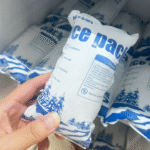
Pick gel packs or PCM for an EPP foam box without freezing risk
Run a reusable EPP foam box program with clean inspection and cost-per-trip math
Why does an EPP foam box perform better on real routes?
An EPP foam box performs better because it combines insulation with toughness, so your packout stays consistent trip after trip. When lids fit the same way every time, temperature results become easier to repeat. That repeatability is what turns cold chain packaging into a scalable process.
بعبارات واضحة, think of an EPP foam box like a high-quality thermos that can survive drops. It slows heat leak while staying resilient during stacking, اهتزاز, and rushed handoffs.
EPP foam box insulation numbers that actually matter
The two most useful levers are seal quality and wall thickness. Testing summaries often describe thermal conductivity for EPP around 35–65 mW/(m*K) depending on density. A simple way to think about heat leak is the U-value framing: U = λ / ر (conductivity divided by thickness).
| ما تغيره | ماذا يحدث | ماذا تشاهد | ماذا يعني لك |
|---|---|---|---|
| أفضل ختم الغطاء | Less heat leak at the rim | Lid fit “paper pull” test | More predictable hold time |
| جدران أكثر سمكا | Lower heat flow through walls | Dimensional weight | More time buffer for delays |
| Higher density EPP | More toughness, slightly faster heat leak | معدل الضرر | Fewer cracked corners and rebuys |
نصائح عملية يمكنك استخدامها على الفور
Start with the seal: a loose lid can erase the value of thicker walls.
Reduce headspace first: less empty air usually beats “just add more coolant.”
Match density to handling: rough parcel lanes often need tougher EPP grades.
مثال حقيقي: Many teams see more repeatable temperatures after standardizing lid fit checks and packing maps for each EPP foam box type.
How do you size an EPP foam box for lane time and dimensional weight?
The right EPP foam box is the smallest box that fits payload, سائل التبريد, and safe spacing. Bigger can look safer, but extra air volume becomes extra heat load and extra freight cost. If you right-size, you often reduce both excursion risk and cost-per-shipment.
Start with your “worst normal day.” Add realistic delays, then design the packout to survive that window. This is how you stop building packaging for fantasy routes.
A sizing checklist you can follow in 10 دقائق
| Sizing factor | What to record | خطأ شائع | ماذا يعني لك |
|---|---|---|---|
| أبعاد الحمولة | Outer dimensions with secondary pack | Measuring only the product | Boxes arrive and don’t fit |
| Coolant footprint | Gel/PCM size, عدد, and placement | No space for buffers | Freeze risk or warm drift |
| وقت الطريق + المخزن المؤقت | وقت العبور + realistic delays | Designing for best-case | Late-stage excursions rise |
نصائح وتوصيات عملية
Right-size aggressively: choose the smallest EPP foam box that still allows safe coolant spacing.
Protect “lid time”: long open time in warm rooms steals hold time fast.
Design for packing speed: a layout that packs in minutes beats a “perfect” layout that packs slowly.
مثال حقيقي: Right-sizing an EPP foam box often cuts “empty air” and lowers freight costs without changing the payload.
حزم هلام مقابل PCM: what coolant works best in an EPP foam box?
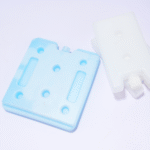
Gel packs are simple and affordable, while PCM gives tighter temperature control when your range is narrow. بي سي إم (مواد تغيير المرحلة) “holds” a target temperature while it changes phase, so it can reduce swings in 2 to 8°C shipping.
Your biggest risk is not the coolant type. It is cold surfaces touching the payload. A small buffer layer can prevent local freezing even when the average temperature looks fine.
Packout layouts that reduce freezing risk
| Layout choice | What goes where | خطر التجميد | ماذا يعني لك |
|---|---|---|---|
| الاتصال المباشر | Coolant touches payload | عالي | Fast packing, risky for sensitive items |
| Buffered contact | Buffer layer between coolant and payload | Medium to low | Safer with minimal complexity |
| Zoned layout | Coolant zones + air gap + المخازن المؤقتة | قليل | Most consistent for long lanes |
Practical tips you can implement this week
Temper your coolants: use timed steps, لا تخمين, before packing an EPP foam box.
أضف طبقة عازلة: الأكمام, إدراج, or spacers prevent cold shock.
Standardize seasonal rules: define a “summer count” and “winter count” per EPP foam box.
مثال حقيقي: Switching from direct-contact to buffered layouts often reduces cold shocks in specialty food shipments.
How do you validate an EPP foam box packout so results repeat?
Validation proves your EPP foam box works as a system: صندوق, سائل التبريد, خطوات التعبئة, طريقة الإغلاق, and handling time. If any step changes, performance changes. That is why “good materials” still fail when the process drifts.
You do not need to overcomplicate validation. You need clean evidence, consistent sensors, and a repeatable packing method.
A validation plan you can repeat for any lane
| Validation step | ماذا تفعل | What you document | ماذا يعني لك |
|---|---|---|---|
| Define lane profile | Map time, touchpoints, worst delays | Lane profile sheet | You stop designing for best-case routes |
| Build test packouts | Create 2–3 variants | Pack maps + صور | You compare options without arguments |
| Run summer/winter tests | Simulate extremes and delays | Temperature graphs | You gain confidence before scaling |
Practical tips for smoother validation
Place sensors near the payload: empty space can hide risk.
Record packing time: lid-open time is a real variable.
Lock your SOP: once validated, control changes like coolant suppliers or box size.
How do you run a reusable EPP foam box program without cost creep?
A reusable EPP foam box program wins when you control returns, تنظيف, تقتيش, and losses. Many industrial programs report an EPP foam box can handle 100–300 shipping cycles, but your process determines the real number.
Treat reuse like a library. If you do not track check-outs and returns, inventory disappears. When losses rise, the program stops being “sustainable” and starts being expensive.
Cleaning and inspection that stays fast
| نقطة تفتيش | What you look for | Simple test | ماذا يعني لك |
|---|---|---|---|
| Lid seal | Gaps, warping, loose seating | Paper pull around rim | Prevents slow temperature drift |
| زوايا | الشقوق, crushed areas | Flex corner gently | Predicts next-trip failures |
| نظافة | بقايا, رائحة, رُطُوبَة | يمسح + smell test | Reduces complaints and risk |
Quick cost-per-trip calculator (نسخ/لصق)
Cost per successful shipment =
صندوق + سائل التبريد + إدراج
+ Packing labor (minutes × rate)
+ الشحن (actual or dimensional)
+ Return + تنظيف (إذا كانت قابلة لإعادة الاستخدام)
+ Expected loss (payload value × excursion probability)
You can also compare “real” reuse math with a simple cost-per-trip view. Here’s a quick example structure often used in programs:
Purchase: $30, expected trips: 20 → $1.50 لكل رحلة
Reverse logistics: $0.60 لكل رحلة
تنظيف: $0.20 لكل رحلة
Estimated total: $2.30 لكل رحلة
Practical tips for reuse that actually works
Add a simple ID: labels or scannable tags improve return discipline.
Set a retire rule: define “pass or retire” criteria so performance stays predictable.
Train 15-second inspections: speed keeps throughput healthy.
مثال حقيقي: Many teams improve returns after adding basic tracking and clear retire rules for every EPP foam box.
أداة القرار التفاعلية: is your EPP foam box packout ship-ready?
This quick check helps you spot weak points before they turn into claims or product loss. It is designed for warehouse reality, not conference-room theory.
10-question readiness quiz (نتيجة: Yes = 2, Partly = 1, No = 0)
Do you have a lane time estimate plus a realistic delay buffer?
Do you have a defined temperature range for the product and lane?
Are coolants conditioned with timed steps, لا تخمين?
Do you prevent coolant from touching the payload directly?
Do you have a summer configuration and a winter configuration?
Do you limit how long the EPP foam box stays open during packing?
Do you run periodic temperature checks on key lanes?
Do packers get training refreshers on the EPP foam box SOP?
Do you use change control for box size, coolant type, and suppliers?
| مجموع النقاط | مستوى المخاطر | ما يجب عليك فعله بعد ذلك |
|---|---|---|
| 0-7 | عالي | Fix SOP basics before scaling volume |
| 8-14 | واسطة | Validate and tighten the weakest steps |
| 15-20 | قليل | Scale with monitoring and quarterly review |
2026 الاتجاهات: what’s changing in EPP foam box programs?
في 2026, the biggest shift is toward standardization, بيانات, and circular programs you can prove. Buyers care less about claims and more about evidence: validated lanes, tracked cycles, and controlled change.
Here’s what you will see more often:
Recycled-content EPP options: more procurement teams ask for recycled grades.
EPD-driven purchasing: Environmental Product Declarations make footprint comparisons easier.
Smarter return loops: scannable IDs and deposits reduce lost EPP foam box inventory.
Hybrid insulation: liners or secondary insulation extend hold time without huge size jumps.
Faster visual SOPs: packing maps and short training videos replace long documents.
الأسئلة المتداولة
س 1: How long can an EPP foam box keep products cold?
Many EPP foam box setups hold chilled temperatures for 24–72 hours, depending on insulation thickness, سائل التبريد, والحرارة المحيطة. The fastest way to know is one lane test with a logger placed near the payload.
Q2: Is an EPP foam box better than EPS for reusable shipping?
في كثير من الأحيان نعم. EPP is commonly chosen when repeated handling, الآثار, and reuse matter. If you cannot get returns, EPS may still win on purchase price.
س 3: How do I prevent freezing inside an EPP foam box?
Avoid direct coolant-to-payload contact, temper the coolant, and add a buffer layer. Validate with sensors near the product, not only in air gaps.
س 4: What matters more: thicker walls or more coolant?
Start with lid seal and right-sizing, then adjust wall thickness, then adjust coolant mass. More coolant in an oversized box can still fail late in the route.
س6: What is the biggest operational risk in an EPP foam box program?
Return loss and packing variation. If boxes do not come back, cost rises quickly. إذا كان الحزمون يرتجلون, performance becomes unpredictable.
الملخص والخطوات التالية
An EPP foam box is the right choice when you need repeatable temperature control and rugged handling in one package. You get the best results when you right-size the box, buffer the payload from cold surfaces, and validate the packout like a system. Then you lock a simple SOP and manage reuse with tracking and fast inspections.
حول Tempk
و Tempk, we design cold chain packaging programs for lanes where temperature stability and handling durability both matter. We help you select the right EPP foam box format, سمك الجدار, and packout pattern based on your lane risk and workflow. تركيزنا عملي: measurable performance, reuse readiness, and documentation that your team can actually follow.
الخطوة التالية: Share your lane time, target temperature range, payload outer dimensions, and return constraints, and we’ll help you map a starting EPP foam box specification and validation plan.