Selecting an insulated bag factory used to be a straightforward sourcing task. في 2026, it is a supply-chain decision. The right factory must do more than cut fabric and add insulation. It must help you control quality, scale custom designs, support colder or cleaner use cases, and answer growing questions about traceability, الاستدامة, and chemistry. If you choose well, you get a bag program that is easier to launch and easier to defend internally. If you choose badly, you get rework, التناقض, and operational friction.
هذه المقالة سوف تساعدك على الإجابة:
- What separates a serious OEM insulated bag factory from a weak one
- Which production and QA steps actually affect real bag performance
- How to evaluate thermal, ضد للماء, and durability claims properly
- Why traceability, الاستدامة, and chemical transparency now matter more
- How to shortlist a factory for long-term cold-chain cooperation
What should an insulated bag factory be able to do beyond sewing?
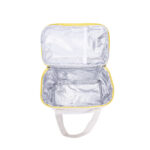
A strong insulated bag factory should be able to translate a shipping problem into a production system. That means understanding the end use, recommending the right wall structure, controlling sample-to-bulk consistency, and discussing validation without hiding behind vague marketing phrases.
على سبيل المثال, a food-delivery tote, a pharmacy handoff pouch, and a reusable corporate cooler bag may all look similar from a distance. But the best factory knows that route length, تردد الافتتاح, coolant placement, طريقة التنظيف, and material disclosure can all change the right design choice.
Minimum capabilities buyers should expect
- Defined material-selection logic
- Sample development with revision feedback
- In-process and final inspection controls
- Ability to explain test methods clearly
- Capacity planning that matches seasonal demand
- Willingness to discuss both strengths and limits
How does insulated bag production really affect performance?
Performance is built step by step. The wall structure must be assembled correctly. Cutting must stay within tolerance. Corners and zipper lines must hold shape. Liners must not wrinkle, peel, or trap contamination. Handles must survive the real payload weight, not only a showroom sample.
That is why a good factory should be able to walk you through incoming inspection, cutting accuracy, assembly sequencing, seam control, final inspection, and lot identification. The technical story does not need to sound complicated, but it should sound specific.
Process checkpoints that matter most
Which test methods should buyers ask about?
For shell performance, waterproof language needs support. AATCC TM22 is relevant for water repellency or surface wetting resistance. AATCC TM127 is more relevant when you want to understand resistance to water penetration under hydrostatic pressure. If your bag is promoted for outdoor delivery, rider use, or condensation-heavy conditions, those references can help separate real testing from generic claims. (AATCC)
For thermal comparison, standardized environmental thinking is equally important. ISTA says Standard 7E uses heat and cold profiles developed from real-world transport data, which makes it a useful benchmark mindset when comparing thermal packaging solutions. Even if your bag is not an insulated parcel shipper, the principle is the same: ask what profile, حمولة, and opening behavior were assumed. (الرابطة الدولية للنقل الآمن)
The five best testing questions
- What ambient profile did you use?
- Was the product tested empty, partly loaded, or fully loaded?
- What coolant type and conditioning method were used?
- How were openings simulated?
- Did you test after repeated use or only on new samples?
Why does cold-chain application knowledge matter at the factory level?
Because insulated bags do not work alone. WHO defines passive systems as insulated enclosures using pre-conditioned coolant such as gel packs, PCMS, أو الجليد الجاف. In healthcare and pharma distribution, من, ema, and IATA guidance all reinforce the importance of controlled handling and documented transport practices. A factory that understands only bag construction but not route logic may produce a neat sample that fails in real distribution. (世界卫生组织)
The same idea applies in food. FDA’s traceability framework, built around key data elements and critical tracking events for covered foods, encourages more standardized packaging and labeling systems, even though FDA has stated it intends not to enforce the rule before July 20, 2028. Buyers who align bag design with cleaner packout and clearer identification now will have an easier path later. GS1’s traceability standards reinforce the value of better efficiency, أمان, and visibility across supply chains. (نحن. إدارة الغذاء والدواء)
How are sustainability and chemistry changing factory selection?
This is one of the biggest 2026 التغييرات. The EU Packaging and Packaging Waste Regulation entered into force in February 2025 and aims to reduce packaging waste and lower use of primary raw materials. Buyers now ask more often whether a bag can be reused credibly, not just whether it contains “eco” language. (بيئة)
EPA’s framing of sustainable food management adds a useful operational lens: better product protection can reduce wasted food and its life-cycle impacts. That means a better bag can support sustainability not only through its materials, but also through better temperature control and fewer damaged shipments. (وكالة حماية البيئة الأمريكية)
Chemical transparency matters too. EPA notes PFAS use in textile manufacturing and observed PFAS in some textile-mill wastewater discharges, while EPA’s 2024 CERCLA rule designated PFOA and PFOS as hazardous substances. So the factory should be ready to explain how water or stain resistance is achieved and what disclosure it can provide for your market. (وكالة حماية البيئة الأمريكية)
Sustainability and compliance checklist
- Ask whether the bag is realistically reusable in your route model
- Request material descriptions for shell, بطانة, and insulation layers
- Clarify which environmental or chemical claims are self-declared and which are documented
- Prefer designs that clean quickly and reduce replacement frequency
- Consider pouch or bag standardization to support lower waste and better traceability
How should you compare factories side by side?
Do not compare factories on price alone. Compare them on explanation quality, sample revision quality, process transparency, and how well they understand your application. The right factory feels easier to work with even before production starts.
A practical approach is to score each candidate on six points: product understanding, test clarity, sample speed, quality-system confidence, material transparency, and communication speed. The factory with the best total cost outcome is often not the one with the lowest quote.
Factory comparison matrix
الأسئلة المتداولة
What is the biggest mistake when choosing an insulated bag factory?
Approving a good-looking sample without verifying how the factory will keep that sample consistent in bulk production.
Do I need a factory that understands cold-chain applications?
نعم, especially for enterprise food, صيدلية, or medical-adjacent use. Manufacturing skill alone is not enough.
Should I ask for waterproof test references?
نعم. It is one of the fastest ways to assess how seriously the factory treats technical claims.
Can a small factory still be a good partner?
نعم, if process control and communication are strong. Size matters less than consistency and fit.
Why is material transparency becoming a sourcing issue?
Because sustainability rules and PFAS scrutiny have pushed chemistry and recyclability into normal procurement discussions.
ملخص وتوصية
The best insulated bag factory in 2026 is one that combines production discipline, application understanding, test clarity, and material transparency. You want a factory that can explain how the bag is made, how it is validated, where it is likely to fail, and how it will be improved before scale-up.
Build a short factory scorecard, run a sample pilot, and choose the partner that makes your team feel more certain, not merely more optimistic.
حول Tempk
Tempk says it was established in 2011, operates from Shanghai with multiple factories in China, and provides insulated bags, takeaway backpacks, بطانات الصندوق, PCM-related cold-storage materials, and broader cold-chain packaging support. Tempk also publishes certificate, جودة, and environmental pages that may help buyers who want a factory partner able to discuss both product manufacturing and cold-chain application context. (Tempk)