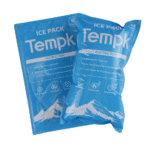
Choosing the best ice box meat delivery manufacturer is not about finding the cheapest cooler box. It is about finding the supplier that can protect meat quality, support safe delivery, simplify warehouse packing, and control your total shipping cost over time. في 2026, that decision matters even more because direct-to-consumer delivery is judged by one simple question: did the product arrive cold, ينظف, and confidence-inspiring?
Public food-safety guidance gives you a useful baseline. Perishable shipped food should arrive frozen, partially frozen with ice crystals visible, or at least refrigerator-cold at 40°F or below, and insulated packaging with dry ice or frozen gel packs remains a standard control for safe shipping. That means the packaging system has to do real work, not just look protective. ([FoodSafety.gov][2])([FoodSafety.gov][2])le will answer:
- What separates an average ice box meat delivery manufacturer from a strong long-term supply partner
- Which thermal, structural, and operational factors matter most before you compare price
- How food safety guidance should shape your packaging decisions
- What a better 2026 sourcing checklist looks like for meat-delivery brands
Why is the wrong manufacturer more expensive than the wrong quote?
**Because failure costs more than packaging.** If your box underperforms, the damage shows up in refunds, إعادة الشحن, شكاوى العملاء, customer-service time, and brand trust loss. A weak supplier can also increase freight cost by using a box that is too large, ثقيلة جدا, or too complex to pack efficiently.
That is why expert buyers start with the real shipping job. They ask what temperature range must be protected, how long the route actually takes, how much delay risk exists after delivery, and what receiving behavior the consumer is likely to follow. Packaging should be designed around those realities. A generic quote sheet cannot answer them.
What does a strong manufacturer understand?
A strong manufacturer understands that meat delivery is a system. It includes insulation, سائل التبريد, كتلة المنتج, empty air space, غطاء مناسب, outer-carton protection, loading method, مدة الطريق, and customer receiving time. When one of those pieces is weak, the whole system becomes less dependable.
| Decision Area | Weak Supplier Behavior | Strong Supplier Behavior | Your Real Gain |
|---|---|---|---|
| Quotation | Sells by box only | Asks about route and product | تناسب أفضل |
| Thermal logic | Uses vague hold-time claims | Defines test conditions clearly | Lower spoilage risk |
| Pack-out design | Leaves loading to you | Recommends loading method | اتساق أفضل |
| Scaling | Focuses on sample only | Explains production control | مفاجآت أقل |
نصائح عملية
- For first-time cold-chain buyers: Start by describing your route, product state, and order profile.
- For growing DTC brands: Compare landed cost, not unit price alone.
- For high-claim lanes: Review receiving delay and pack-out simplicity before adding more coolant.
> **مثال:** A slightly higher-priced box can save money if it cuts reships, claim handling, and overpacking.
How should food safety shape your packaging selection?
**Food safety should define the minimum acceptable outcome.** Public guidance says perishable food shipped to consumers should arrive frozen, partially frozen, or at least 40°F or below. It also emphasizes fast refrigeration or freezing after receipt and warns consumers not to eat perishable food that arrives above 40°F. ([FoodSafety.gov][2])([FoodSafety.gov][2])because your packaging is part of the safety chain. It must protect product through transit and through the small but important gap before the customer stores it. That is why the best ice box meat delivery manufacturer designs for route variability and doorstep delay, not just ideal courier performance.
What should you ask about safety margin?
Ask how the system performs when the route runs late, when the parcel sits after delivery, and when outside temperatures rise. Ask what arrival condition the supplier expects at the end of the window. Ask whether the test used real product weight or an artificial setup. These questions turn safety from a slogan into an engineering discussion.
| Safety Question | لماذا يهم | Better Buying Outcome |
|---|---|---|
| What arrival condition is targeted? | Defines performance goal | Clearer approval criteria |
| How was the test built? | Shows realism | More trustworthy results |
| What margin exists for delay? | Handles last-mile variability | عدد أقل من الإخفاقات الموسمية |
| What receiving steps are assumed? | Matches consumer reality | Better customer experience |
نصائح عملية
- For warm weather deliveries: Build extra protection around the receiving gap.
- For premium subscriptions: Include clear cold-storage instructions in the box.
- For mixed chilled and frozen items: Split programs when needed instead of forcing one compromise design.
> **مثال:** A package that survives carrier transit but fails during doorstep waiting is still a failed package.
What technical features should matter most in 2026?
**You should care most about right-sized insulation, stable structure, and easy execution.** The old approach was often to add more material and more coolant. The smarter 2026 approach is to match box size, cavity volume, coolant type, and route length more precisely. That often improves both performance and freight efficiency.
Operational usability is equally important. A box that requires too many parts, too many choices, or too much operator judgment creates inconsistency. في الممارسة العملية, a simpler pack-out often improves real thermal outcomes because the team executes it correctly every time.
Which design features deserve close review?
Look at lid seal, inner fit, wall consistency, bottom support, وتكرار الحزمة. Ask how the box behaves under full load and normal handling. Ask whether the cavity is sized to reduce wasted air. Ask whether the outer carton supports or undermines the insulated insert.
| ميزة | ما تبدو جيدة مثل | Why You Benefit |
|---|---|---|
| غطاء مناسب | Tight and repeatable | اكتساب حرارة أقل |
| Cavity sizing | Close to payload profile | Better efficiency |
| Bottom strength | Stable under load | Fewer damage events |
| Pack-out logic | Clear and repeatable | تدريب أسرع |
نصائح عملية
- For frozen meat assortments: Use product mass as part of your thermal strategy.
- For chilled deliveries: Reduce empty headspace where possible.
- For multi-SKU operations: Create a small menu of validated pack-outs, not endless ad hoc loading.
> **مثال:** Many packaging failures come from inconsistent loading, not from a complete lack of insulation.
Why do testing and production control matter more than marketing claims?
**Because a strong sample is not the same as a strong supply program.** A real sourcing decision should check whether the supplier can repeat the approved result at volume. That requires raw-material control, dimensional consistency, clear QC points, and the discipline to keep performance stable across repeat orders.
You should also insist on a route-based pilot. Test with your actual meat, your actual coolant, your actual outer packaging, and a time window that matches reality. Review not only temperature but box condition, تسرب, ease of unpacking, and the receiving experience.
What should be in your approval process?
Use a short but disciplined sequence: technical discussion, sample review, route test, operational pack-out trial, receiving check, and repeat-order control review. This gives you a much stronger decision than buying from photos or a price sheet.
| Approval Step | غاية | قيمة |
|---|---|---|
| Technical review | Confirms design fit | Prevents wrong shortlist |
| Sample check | Reviews construction quality | Early defect screening |
| Route pilot | Tests real shipment logic | Best performance proof |
| QC review | Checks repeatability | Better scale confidence |
نصائح عملية
- For new suppliers: Never approve on appearance alone.
- For larger POs: Confirm scale-readiness before rollout.
- For high-growth brands: Keep test records by season and route family.
> **مثال:** The best supplier is the one that can explain how the tenth thousand box will behave, not only the first sample.
2026 development and trends for meat-delivery insulated packaging
في 2026, the strongest direction is clear: safer arrival, smaller waste, and better route fit. Public food-safety guidance still centers on cold arrival condition and rapid storage after receipt, while packaging buyers increasingly want dimensional efficiency, simplified pack-outs, and more thoughtful material choices. ([FoodSafety.gov][2])
That means the best ice box meat delivery manufacturer is no longer just a box maker. It is a partner in cold-chain execution. The supplier should help you reduce failure risk without forcing unnecessary bulk, تعقيد, or material waste into every shipment.
أحدث التطورات في لمحة
- Safety-first design: Arrival condition and receiving simplicity remain the core outcome.
- التعبئة والتغليف بالحجم المناسب: More brands want less wasted air and less dimensional penalty.
- Practical sustainability: Buyers want more responsible packaging choices that still protect meat reliably.
The commercial insight is simple. Brands no longer want to choose between performance and practicality. They want both. That is why the market is rewarding manufacturers who understand freight, تنفيذ, and real consumer behavior together.
الأسئلة المتداولة
What is the best way to compare an ice box meat delivery manufacturer?
Compare route fit, test quality, pack-out simplicity, and production consistency before you compare box price.
Does public guidance require shipped meat to arrive cold?
نعم. Public guidance says perishable shipped food should arrive frozen, partially frozen, or at least 40°F or below. ([FoodSafety.gov][2])
Should I use one packaging system for every order?
عادة لا. Different product states and route lengths often need different validated pack-outs.
How can I reduce claims fastest?
Run a real pilot, simplify loading, review box fit, and measure arrival condition before adding more coolant.
Summary and recommendation
The best ice box meat delivery manufacturer in 2026 is the one that combines thermal reliability, structural stability, route-fit thinking, and production repeatability. Safe arrival remains the baseline. وراء ذلك, the winning supplier helps you lower spoilage risk, control freight cost, and make your pack-out easier to execute every day.
Your next step should be to build a short technical brief, test a small supplier shortlist with real routes, and approve only the system that performs in practice. That is how you choose with confidence.
حول Tempk
Tempk develops temperature-controlled packaging for cold-chain applications with a focus on thermal logic, usable pack-outs, and dependable repeat production. We believe the best packaging decisions come from real route data, clear testing, and practical system design.
If you are reviewing manufacturers now, begin with a route-based sample plan and a packaging checklist built around your true shipping conditions.