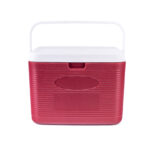
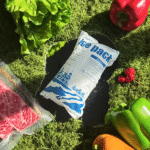
An insulated bag industrial solution in 2026 must do more than keep products cold. It must fit your route, survive repeated handling, support documentation, and make sense in a reusable packaging strategy. That is why the best buying decision comes from balancing thermal performance, material logic, compliance context, and total trip cost rather than comparing quotes alone.
هذه المقالة سوف تساعدك على الإجابة:
- What an insulated bag industrial product must do in real operations
- Which materials and thermal systems give the best results for different routes
- How current compliance and transport standards shape qualification
- Why reusability, يراقب, and supplier repeatability matter more in 2026
- How to build a smarter supplier selection checklist
What should an insulated bag industrial product really accomplish?
The best insulated bag industrial product protects temperature, improves workflow, and reduces failure points. That means the design must match your product band, وقت الطريق, payload geometry, and user behavior. A bag that looks premium but loads poorly or fails at the base will cost more than a simpler design that works consistently.
For most industrial buyers, the right bag delivers three things at once: الاستقرار الحراري, daily usability, and repeatability at scale. Those three outcomes matter whether you move food, عينات, الأدوية, factory materials, or specialty components.
The first decision: define the route before the bag
- Before you ask for a quote, يُعرِّف:
- Product temperature target
- مدة العبور
- التعرض المحيطي
- Opening frequency
- Payload mass and shape
- Cleaning and reuse expectation
- If you skip those six points, you will compare samples without comparing real performance.
How do materials and thermal systems affect your result?
Good insulation is necessary, but system design matters more than layer count. Heat enters through surfaces, الإغلاق, طبقات, and air gaps. That is why bag geometry, عبوة, and closure design matter almost as much as the insulation core itself.
Foam-based systems remain the standard for many industrial applications because they balance cost, وزن, and manufacturing ease. PCMs help when you need tighter control around a target band. VIP-enhanced systems make sense when you need long hold time in limited space, but the cost and puncture risk must be justified.
Phase change materials store thermal energy during the phase-change process and can deliver strong latent heat performance, but research reviews show that pure PCM systems need stabilization because leakage, cycling issues, and phase separation can reduce reliability. DOE materials work also shows why premium insulation attracts attention: VIP concepts can deliver much stronger insulation than conventional foam, though they remain more expensive and sensitive to damage. (بعد الاجتماع الوزاري)
Material selection guide
- نصائح عملية للمشترين
- Use standard foam builds first unless your route clearly needs more.
- Add PCM when band control matters more than lowest price.
- Only use VIP logic where space or hold time justifies the premium.
- Match liner chemistry to cleaning method so hygiene does not destroy bag life.
مثال عملي: A site-transfer program improved from inconsistent chilled performance to stable delivery by changing coolant strategy and closure geometry rather than doubling insulation thickness. The better result came from system design, not bulk.
Which standards and compliance signals matter in 2026?
An insulated bag industrial project should be qualified in the context of the product you move. للولايات المتحدة. الخدمات اللوجستية الغذائية, FDA’s FSMA sanitary transportation rule covers vehicles, transportation equipment, العمليات, السجلات, تمرين, and waivers for motor and rail movement. For medicinal products in Europe, GDP guidance sets expectations for appropriate storage and distribution quality. In air pharma logistics, IATA’s Temperature Control Regulations cover packaging, امتثال, التعامل, والتوثيق, while CEIV Pharma extends quality expectations into audits, mapping, معايرة, بنية تحتية, والتدريب. (نحن. إدارة الغذاء والدواء)
Thermal qualification language has also become clearer. ISTA says 7E is the current standard for thermal transport testing, and its older 7D procedure was sunset long ago. That matters because buyers increasingly want a recognized framework for comparing thermal packaging performance instead of relying on generic sample claims. (الرابطة الدولية للنقل الآمن)
WHO’s current guidance adds another useful lesson: temperature mapping and temperature monitoring are integral to appropriate storage conditions for pharmaceuticals, and its 2025 device guidance limits older cold chain monitor cards to international dry-ice shipments rather than in-country use. بعبارات بسيطة, the market is moving from “indicator thinking” toward “mapped and logged process thinking.” (世界卫生组织)
Compliance-minded buyer checklist
- Define acceptance temperature range and excursion rule
- Qualify the bag with real payload and realistic route profile
- Lock the approved packout and conditioning method
- Train users on loading, closing, and handling steps
- Revalidate after major material or supplier changes
How should you evaluate suppliers and manufacturing quality?
A good supplier does more than make a good sample. A good supplier protects repeatability. That means material verification, inline inspection, retained sample control, pilot-run discipline, and clear change-management practices.
في 2026, buyers also look harder at quality systems. ISO states that ISO 9001 remains a globally recognized quality management framework, and ISO also says ISO 14001:2026 is in final production steps and expected to replace ISO 14001:2015 before the end of April 2026. That makes environmental management maturity more relevant in supplier discussions, especially for buyers with sustainability targets. (国际标准化组织)
What to ask a supplier
- نصيحة عملية
- Approve construction specs in writing, not by memory.
- Ask for a pilot lot before full release.
- Review packaging and freight compression plans early.
- Choose a factory that can discuss use-case logic, not only sewing details.
مثال عملي: One buyer changed suppliers after learning the cheaper factory could not control foam density variation or retained-sample traceability. The initial quote looked better, but the long-term risk did not.
Why are reusability and sustainability now part of the buying decision?
في أوروبا, the Packaging and Packaging Waste Regulation entered into force on 11 فبراير 2025 and applies from 12 أغسطس 2026. That does not ban industrial insulated bags, but it does push companies to justify packaging choices more clearly and think harder about reduction, إعادة الاستخدام, and material logic. (يورو-ليكس)
في نفس الوقت, life-cycle assessment research on food cold chain systems found that reusable VIP packaging outperformed disposable EPS systems across all evaluated environmental categories. That study does not automatically rank every bag design, but it reinforces a broader market direction: repeated-use systems deserve lifecycle comparison, not only first-cost comparison. (科学直达)
2026 market direction
- Buyers want cost per successful trip, not only cost per unit
- Simpler and more reusable structures are easier to defend internally
- Monitoring-ready designs are gaining preference
- Smaller buyers increasingly want “pharma-grade discipline” in documentation and process
- 2026 latest insulated bag industrial developments and trends
The category is becoming smarter, not just thicker. Better products now combine route-specific design, better conditioning logic, clearer qualification, and simpler reuse strategies. Smaller operators are also becoming more sophisticated as quality frameworks and cold-chain expectations spread beyond the largest enterprises. IATA notes that CEIV Pharma is now accessible to SMEs, which is a useful signal that high-quality cold-chain practice is no longer reserved for very large organizations. (الاتحاد الدولي للنقل الجوي)
أحدث التطورات في لمحة
ISTA 7E remains the current thermal transport test reference for insulated shipping container evaluation. (الرابطة الدولية للنقل الآمن)
WHO guidance is reinforcing mapping and logger-based monitoring over simpler indicator-only approaches. (世界卫生组织)
EU packaging policy is increasing pressure for reuse and defensible material choices ahead of August 2026 طلب. (يورو-ليكس)
Supplier quality discussions increasingly include environmental management maturity as ISO 14001:2026 approaches publication. (国际标准化组织)
الأسئلة المتداولة
What makes an insulated bag industrial product different from a normal cooler bag?
Industrial products are built for repeated handling, heavier loads, cleaner process control, and more predictable temperature protection. They are usually part of an operating system, not a one-off purchase.
Do I need PCM for every insulated bag industrial project?
لا. Use PCM when you need a narrow temperature band or more stable control. For many routine industrial lanes, good foam design and correct packout are enough.
Should I ask for ISTA 7E testing?
If your product risk or customer expectations justify structured thermal qualification, نعم. It creates a stronger basis for comparison than general marketing claims. (الرابطة الدولية للنقل الآمن)
How should I compare cost?
Compare by successful trip, expected service life, تأثير العمل, معدل الضرر, and waste handling, not just by first unit price.
ملخص وتوصيات
The best insulated bag industrial choice in 2026 is the one that matches your route, supports your process, and holds up under repeat use. Good decisions come from clear route definition, appropriate material selection, realistic testing, supplier repeatability, and a practical view of reuse and documentation.
Your next step should be to build one concise requirement sheet: product temperature band, وقت الطريق, التعرض المحيطي, payload shape, reuse target, طريقة التنظيف, and monitoring expectation. With that one document, you will be able to compare suppliers more accurately and move faster toward a validated solution.
حول Tempk
و Tempk, we focus on practical cold chain packaging that works in real routes and scales in real production. We care about usability, التكرار, and the balance between thermal performance and cost.
If you are reviewing an existing insulated bag industrial design, start with one lane and one failure point. That focused review usually reveals the fastest and most profitable upgrade path.