El futuro de la logística sanitaria está aquí. A medida que los productos biológicos y las terapias avanzadas se generalizan y los reguladores exigen una trazabilidad total, Envío exprés con cadena de frío para suministros médicos. ya no es opcional: es tu salvavidas. Hay mucho en juego: las excursiones de temperatura destruyen la potencia, desencadenar retiradas del mercado y poner en peligro la seguridad del paciente. En 2025 El mercado mundial de la cadena de frío farmacéutica alcanzó aproximadamente 10.040 millones de dólares y el mercado de envases se valoró en 28.900 millones de dólares., subrayando la escala y la urgencia. Esta guía utiliza un lenguaje sencillo y ejemplos reales para ayudarle a navegar por el cumplimiento., mantener la integridad de la temperatura y administrar medicamentos rápidamente, de forma segura y sostenible.
Esta guía te ayudará:
Comprenda por qué el envío exprés con cadena de frío es fundamental en 2025, incluido el aumento de las terapias biológicas y de ARNm y por qué incluso breves variaciones de temperatura pueden arruinar un lote completo.
Prepárese para el cumplimiento de DSCSA aprendiendo las 2025 plazos para los fabricantes, mayoristas y dispensadores.
Elija tecnologías de empaquetado y monitoreo adecuadas: contenedores pasivos y activos, Materiales de cambio de fase y rastreadores de IoT para mantener rangos de temperatura estrictos..
Optimice la entrega de última milla y el envío el mismo día a través del micro cumplimiento, análisis predictivo, drones y asociaciones 4PL/5PL.
Manténgase por delante de 2025 tendencias como el packaging sostenible, Logística impulsada por IA y nuevas proyecciones de crecimiento del mercado.
Por qué es importante el envío exprés con cadena de frío en 2025
El auge de los biológicos y las terapias avanzadas
Los productos biológicos y de terapia celular y génica representan ahora aproximadamente 30 % del pipeline farmacéutico. Estas moléculas complejas requieren un estricto control de la temperatura para preservar su potencia.. Por ejemplo, Las vacunas de ARNm deben mantenerse entre −70 °C y −80 °C; la exposición fuera del +2 °C a +8 La ventana de °C puede invalidar un lote completo. A medida que se expanden terapias como los medicamentos GLP 1 y los anticuerpos monoclonales, El envío exprés garantiza que los productos ultrafríos y refrigerados lleguen a los pacientes de forma rápida y segura..
Seguridad del paciente y riesgos económicos
Arriba a 20 % de los envíos de productos farmacéuticos sensibles a la temperatura se ven comprometidos cada año debido a fallas logísticas, causando alrededor de 35 mil millones de dólares en pérdidas. Más allá de los dólares, Los medicamentos degradados ponen en peligro a los pacientes y erosionan la confianza.. La logística de la cadena de frío representa aproximadamente 23 % de los presupuestos de transporte farmacéutico, entonces cada grado importa. La entrega urgente reduce el tiempo de tránsito, Limita la exposición a las condiciones ambientales y evita el deterioro..
| Rango de temperatura | Clasificación de almacenamiento | Productos de ejemplo | Por que importa |
| 20 °C-25 °C (15–Excursiones de 30 °C) | Temperatura ambiente/ambiente controlada | Tabletas de molécula pequeña, líquidos orales | Evitar el calor y la humedad mantiene la estabilidad: excursiones anteriores 30 °C riesgo de pérdida de potencia. |
| 8 °C-15 °C | Almacenamiento fresco | Gotas para los ojos, probióticos | Muchos productos biológicos toleran condiciones “frías” pero no deben congelarse.. |
| 2 °C-8 °C | Refrigerado | Vacunas, insulina, anticuerpos monoclonales | La cadena de frío farmacéutica más común; excursiones más allá +8 °C o menos +2 °C puede hacer que los productos sean ineficaces. |
| −20 °C ±5 °C | Almacenamiento en el congelador | Productos farmacéuticos congelados, reactivos | Requiere embalaje aislado y paquetes de gel o hielo seco.. |
| −70 °C a −80 °C | Ultrafrío/criogénico | Vacunas de ARNm, celúla & terapias génicas | La logística criogénica con hielo seco o nitrógeno líquido garantiza la viabilidad pero exige contenedores especializados. |
Presión regulatoria: DSCSA y buenas prácticas de distribución
En los Estados Unidos, la Ley de Seguridad de la Cadena de Suministro de Medicamentos (DSCSA) exige la serialización completa y la trazabilidad electrónica en toda la cadena de suministro farmacéutico. Después de un período de estabilización en 2024, Los fabricantes y reenvasadores tuvieron que cumplir en mayo. 27 2025, mayoristas hasta agosto 27 2025, y dispensadores con 26 o más empleados para noviembre 27 2025; Los dispensadores pequeños tienen hasta noviembre. 27 2026. El incumplimiento puede paralizar los envíos y dar lugar a multas o incautaciones de productos.. Buenas prácticas de distribución (PIB) requieren además sistemas validados, Monitoreo continuo de temperatura y personal capacitado.. En otras regiones, marcos como el PIB de la UE, USP <1079>/<659>, Regulaciones de control de temperatura de la IATA y 21 Parte CFR 11 imponer estándares similares.
Plazos de DSCSA de un vistazo
| Socio comercial | Fecha límite de cumplimiento de DSCSA | Requisitos clave |
| Fabricantes & reenvasadores | Puede 27 2025 | Intercambie datos serializados y verifique identificadores de productos electrónicamente utilizando códigos de barras 2D y estándares EPCIS.. |
| Distribuidores mayoristas | Ago 27 2025 | Recibir e intercambiar datos EPCIS serializados con fabricantes; verificar productos sospechosos y poner en cuarentena las discrepancias. |
| Dispensadores (≥ 26 empleados) | Nov 27 2025 | Aceptar datos serializados, verificar paquetes y mantener sistemas para el seguimiento de productos. |
| Pequeños dispensadores (≤ 25 empleados) | Nov 27 2026 | Exento hasta 2026 pero se le anima a prepararse temprano. |
El mercado de la cadena de frío: crecimiento y oportunidades
El mercado farmacéutico de cadena de frío aumentó de 8.850 millones de dólares en 2024 a 10.040 millones de dólares en 2025 y se prevé que alcance los 18.200 millones de dólares en 2030. Mientras tanto, El mercado de envases de cadena de frío para productos farmacéuticos aumentará desde 28.900 millones de dólares en 2025 a 75 mil millones de dólares 2032. Las inversiones en envío urgente resiliente abren nuevos mercados, reducir las retiradas del mercado y fortalecer la fidelidad del cliente.
Mantener la integridad de la temperatura durante el envío exprés
Embalaje paso a paso & mejores prácticas de envío
Productos de preacondicionamiento y refrigerantes. Congele o enfríe previamente el producto y combine el material de cambio de fase. (PCM) a la banda de temperatura requerida (p.ej., 2–8 ° C, −20 °C o −70 °C). El preacondicionamiento reduce la carga de enfriamiento de los paquetes de gel o hielo seco..
Envolver y proteger. Envuelva los artículos individuales en plástico o séllelos al vacío para evitar la contaminación cruzada.. Utilice material absorbente debajo del producto y divisores de cartón para mantener las zonas frías..
Sello, etiquetar y aislar. Cierre la nevera aislada de forma segura, llene los huecos con plástico de burbujas y etiquete el envío claramente (“Mantener refrigerado” o “Mantener congelado”). Incluya etiquetas de peligro de hielo seco cuando sea necesario..
Programe inteligentemente. Enviar a principios de la semana para evitar retrasos en el fin de semana. Elija servicios exprés de un día para otro o de dos días y comparta información de seguimiento con los destinatarios.
Requiere firma y seguro.. Para envíos de alto valor, compre un seguro adicional y solicite una firma en el momento de la entrega para garantizar que haya alguien disponible para recibir el paquete.
Incluir documentación. Adjunte documentos DSCSA, Certificados de análisis u otros documentos reglamentarios en una bolsa a prueba de humedad.. Utilice un registrador de temperatura habilitado para IoT para monitorear en tiempo real y mantener registros digitales para auditorías.
Tecnologías de envasado pasivas versus activas
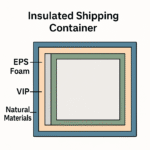
Soluciones pasivas (VIP y PCM). Paneles aislados al vacío (VIP) Utilice paneles de sílice evacuados con conductividad térmica ultrabaja. (~5 mW/m·K), entregando tiempos de espera de 7–10 días, 2–3 veces más que los refrigeradores de poliestireno expandido. Los PCM están ajustados a bandas de temperatura específicas y mantienen temperaturas estables sin congelar productos.. Se prevé que los transportistas VIP reutilizables crezcan de 4.970 millones de dólares en 2025 a 9.130 millones de dólares EE.UU. 2034.
Contenedores activos. Las unidades alimentadas por batería o por compresor, como MedStow Micro, proporcionan 72 horas de servicio a través de −20 °C a +25 °C y son reutilizables. Los contenedores de paletas RelEye de Envirotainer utilizan refrigeración activa con 18 sensores y mantener entre 4 y 30 °C durante un máximo de 170 horas. Pegasus ULD de Sonoco ThermoSafe es un dispositivo de carga unitaria pasiva clasificado para 300 horas a 2-8°C. Las soluciones activas ofrecen control preciso y datos en tiempo real, pero conllevan mayores costos de alquiler o compra..
| Tecnología | Rango de temperatura | Tiempo de espera aproximado | Beneficios clave | Compensaciones |
| Transportista pasivo VIP | 2–8 ° C, −20°C, −70°C | 7–10 días | Fijación ultralarga, ligero, reutilizable, necesidades mínimas de energía | Mayor costo; Los paneles frágiles requieren un manejo cuidadoso. |
| Material de cambio de fase (PCM) | sintonizable (2–8 ° C, −20°C, −70°C) | 24–96 h | Temperatura estable sin congelación; personalizable a la carga útil | Requiere preacondicionamiento; puede necesitar combinaciones para viajes largos |
| Contenedor frigorífico activo (MedStow, RelEye) | −20°C a +25 °C | 72–170 horas | Control preciso de la temperatura; sensores integrados; reutilizable | Alto costo; requiere logística de carga/energía |
| Congelador criogénico (Criopuerto Express HV3) | −150°C | Arriba a 300 h | Mantiene temperaturas ultrabajas para terapias celulares y genéticas. | Más voluminoso; carga útil limitada; debe seguir las regulaciones de hielo seco |
Escucha, trazabilidad e integridad de datos
Monitoreo continuo. Utilice registradores de datos automatizados y sistemas en tiempo real para realizar un seguimiento de las temperaturas durante el almacenamiento y el transporte.. 21 Los registradores que cumplen con CFR Parte 11 producen pistas de auditoría seguras, firmas electrónicas y alertas remotas vía SMS o correo electrónico.
Cadena de bloques e IoT. Los sensores inteligentes junto con blockchain crean registros de temperatura y ubicación a prueba de manipulaciones. Las etiquetas inteligentes que cambian de color brindan confirmación visual de las variaciones de temperatura, mientras que los dispositivos de IoT permiten análisis predictivos y redireccionamiento dinámico.
Inteligencia artificial. Los sistemas de inteligencia artificial analizan flujos de datos para predecir excursiones, optimizar rutas y gestionar inventario. Con más envíos rastreados por IoT y blockchain, Se proyecta que la IA monitoreará más 75 % de envíos farmacéuticos por 2030.
Consideraciones de sostenibilidad. Los reguladores y los consumidores exigen soluciones ecológicas. Las tendencias incluyen el cartón reciclado, espumas a base de plantas, Packs de gel de bioplástico y diseños modulares que reducen los residuos.. Los remitentes reutilizables y los programas de devolución por correo reducen la huella de carbono y ahorran costos..
Consejos y sugerencias prácticas para tus envíos
Haga coincidir su embalaje con su producto: Utilice transportistas VIP para productos biológicos de alto valor y rutas más largas; Paquetes PCM para entregas nacionales más cortas; Contenedores activos para envíos sensibles o de larga distancia..
Plan de contingencias: Empaque refrigerantes adicionales, Pruebe su embalaje en las peores condiciones y utilice sensores de temperatura redundantes para detectar fallos a tiempo..
Entrena a tu equipo: Educar al personal sobre los requisitos de DSCSA, Procedimientos de embalaje y respuesta de emergencia para minimizar el error humano..
Aprovechar la tecnología: Implementar monitoreo de IoT, plataformas de seguimiento y localización y optimización de rutas mediante IA para gestionar excepciones de forma proactiva.
Centrarse en la sostenibilidad: Elija materiales reutilizables o reciclables, consolidar los envíos siempre que sea posible y asociarse con transportistas que prioricen la logística ecológica.
Ejemplo del mundo real: El paquete Nórdico Express, lanzado en 2025, es una solución de envasado de cadena de frío especialmente diseñada para medicamentos GLP 1. Su control preciso de la temperatura y su indicador de temperatura de cambio de color irreversible ayudan a los proveedores a verificar que los medicamentos permanezcan dentro del rango. El paquete es fácil de usar., reduce las necesidades de almacenamiento y optimiza la eficiencia del transporte.
Navegando por DSCSA y el cumplimiento normativo
Comprender la transición DSCSA 2025-2026
La DSCSA requiere un sistema interoperable que rastree los medicamentos recetados a nivel de paquete para evitar que productos falsificados o dañinos ingresen a la cadena de suministro.. Después de agosto 27 2025, la exención de “socio comercial conectado” expiró para las grandes farmacias, dejando sólo la exención de pequeños dispensadores: farmacias con menos de 25 los empleados tienen hasta noviembre 27 2026 cumplir plenamente. El cumplimiento exige que los socios comerciales intercambien datos EPCIS serializados, verificar los identificadores de productos y mantener registros seguros.
Pasos para garantizar el cumplimiento de DSCSA
Audite sus sistemas y socios. Realice una evaluación de preparación para evaluar sus capacidades de serialización actuales y los protocolos de intercambio de datos de sus socios..
Implementar estándares EPCIS. Actualice su ERP o sistemas de gestión de almacenes para enviar y recibir datos de transacciones serializadas. Elija plataformas de seguimiento y localización que automaticen el intercambio de datos EPCIS.
Aproveche los códigos de barras 2D y RFID. Los códigos de barras de alta densidad contienen GTIN, números de lote, fechas de vencimiento y números de serie; Las etiquetas RFID permiten el escaneo sin contacto y mejoran la precisión.
Adopte la trazabilidad basada en la nube. Las soluciones en la nube brindan visibilidad centralizada, alertas en tiempo real y auditorías más simples, pero debe cumplir con la Parte 11 estándares de integridad de datos.
Probar y validar. Realice pruebas de extremo a extremo con socios comerciales antes de las fechas límite para verificar los formatos de datos., secuenciación de mensajes y manejo de excepciones.
Mantente comprometido. Participar en grupos industriales y foros regulatorios.; monitorear las actualizaciones de las guías de la FDA y prepararse para implementar nuevas reglas (p.ej., la regla NDC 12 propuesta se espera a principios 2026).
Más allá de DSCSA: marcos regulatorios globales
Además de DSCSA, Otros marcos gobiernan la logística de la cadena de frío.:
I GDP: Requiere sistemas validados, control de temperatura y trazabilidad integral.
USP <1079> / USP <659>: Proporcionar orientación sobre rangos de temperatura y recomendar refrigeradores de grado médico., pruebas de uniformidad y monitoreo continuo.
Regulaciones de control de temperatura de la IATA: Establecer normas para el envío aéreo de productos farmacéuticos, cubriendo entrenamiento, etiquetado, embalaje y trazabilidad.
21 Parte CFR 11 y Anexo EU GMP 11: Exigir el mantenimiento de registros electrónicos, pistas de auditoría y controles de acceso de usuarios.
Regulaciones locales (p.ej., MHRA, EMA, CDSCO): Pueden aplicarse reglas adicionales específicas del país; Siempre consulte a las autoridades pertinentes..
Elegir la tecnología de embalaje adecuada
Soluciones pasivas
Paneles aislados al vacío (personaje). Los transportistas VIP utilizan paneles de sílice evacuados que atrapan las moléculas de aire y reducen drásticamente la transferencia de calor.. Proporcionan tiempos de espera más largos (7–10 días) y son livianos y reutilizables, pero requieren un manejo cuidadoso para evitar daños al panel.
Materiales de cambio de fase (PCM). Los PCM absorben o liberan calor a temperaturas específicas, mantener un ambiente estable sin congelar productos. Son ideales para envíos que requieren tiempos de espera de 24 a 96 horas y se pueden personalizar para diferentes bandas de temperatura..
Soluciones activas
Contenedores alimentados por baterías (MedStow Micro). Ofrenda 72 Horas de energía en una amplia gama de temperaturas. (−20°C a +25 °C), Estos contenedores son adecuados para ubicaciones remotas o cuando el control preciso es crítico..
Unidades accionadas por compresor (Envirotainer RelEye). Con 18 sensores, Estos contenedores mantienen entre 4 y 30 °C hasta 170 horas. Proporcionan refrigeración continua y se utilizan a menudo para productos farmacéuticos de alto valor con tiempos de tránsito más largos..
Transportadores criogénicos (Criopuerto Express HV3). Diseñado para envíos de terapia de ultra frío (−150°C), Estos transportistas mantienen temperaturas de hasta 300 horas. Se utilizan para terapias celulares y genéticas., pero tienen peso y consideraciones regulatorias..
Consejos para la selección de envases
Utilice paquetes VIP o PCM para productos biológicos de rutina (2–8 ° C). Elija PCM adaptados a su banda requerida para un envío rentable.
Para envíos que requieren frío extremo (−70 °C a −150 °C), Seleccione transportistas criogénicos con hielo seco o nitrógeno líquido redundante..
Evalúe los contenedores activos cuando envíe productos de alto valor a largas distancias o en condiciones de tránsito inciertas.; sopesar el costo contra el riesgo.
Incorporar la sostenibilidad eligiendo contenedores reutilizables y participando en programas de devolución por correo..
Optimización de la entrega de última milla y envío el mismo día
Microcumplimiento, análisis predictivo y asociaciones 4PL/5PL
La última milla puede representar 41–53 % de los costos totales de la cadena de frío. Para controlar costes y acelerar la entrega:
Microcentros logísticos (MFC). Posicionar el inventario más cerca de los consumidores para reducir el tiempo de viaje.; utilice robótica e inteligencia artificial para procesar pedidos rápidamente.
Análisis predictivo. Utilice datos meteorológicos y de tráfico en tiempo real para elegir rutas óptimas y ajustar los horarios para mantener la temperatura..
4Asociaciones PL/5PL. Consolidar transportistas, almacenamiento y sistemas de TI a través de proveedores de logística de cuarto o quinto para obtener visibilidad de extremo a extremo y gestionar el riesgo..
Entrega con drones y vehículos autónomos
Los drones están transformando la logística médica. En 2025, Clínica Cleveland apuntada 10tiempos de entrega minutos para medicamentos especializados, y Zipline operado en 11 A NOSOTROS. estados. Las entregas con drones en Ruanda redujeron los tiempos de transporte de sangre en 79–98 minutos y menores tasas de vencimiento de productos en 67 %. Se prevé que el mercado mundial de entrega de drones médicos crezca de 245,4 millones de dólares en 2023 a 1.900 millones de dólares EE.UU. 2032 (Tocón 22.3 %). Los drones modernos transportan cargas útiles refrigeradas con control de temperatura en tiempo real, Proporcionar un acceso rápido a zonas remotas..
Historias de éxito de entrega el mismo día
Los minoristas están capitalizando la demanda de entrega rápida de recetas. El servicio de entrega de farmacias a nivel nacional de Walmart completó más de cuatro millones de pedidos en su primer año., entregando recetas refrigeradas como insulina y medicamentos GLP 1 en tan solo nueve minutos. Los conductores obtienen firmas electrónicas para mantener la cadena de custodia, y los paquetes usan aislamiento, materiales bloqueadores de luz. Esto demuestra cómo el cumplimiento local integrado con el envío exprés puede entregar productos farmacéuticos de alto valor rápidamente y al mismo tiempo mantener el cumplimiento normativo..
Evaluación de opciones de última milla
| Solución de última milla | Velocidad de entrega | Productos adecuados | Beneficios clave | Consideraciones |
| mensajería el mismo día (asociaciones minoristas) | 1–24 H (algunos tan rápido como 9 mínimo) | Insulina, biológicos, recetas refrigeradas | Entrega inmediata; traspaso personal; firma al recibir | Requiere una red densa; mayores costos laborales |
| Microcumplimiento & furgonetas locales | 2–8 horas | Vacunas, kits de comida, kits de diagnóstico | Reduce la distancia; admite entrega programada | Inversión de capital en centros locales; gestión de inventario compleja |
| Drones | 10–30 minutos | Medicamentos de emergencia, productos sanguíneos, entregas remotas | Evita el tráfico; sirve a zonas rurales; reduce la caducidad | Carga útil limitada; restricciones regulatorias; dependiente del clima |
| Transportistas exprés tradicionales (aire & camino) | Durante la noche a 2 días | Envíos a granel, entregas a campo traviesa | Amplia red; cumplimiento establecido; seguimiento en tiempo real | Mayor riesgo de retrasos; requiere un embalaje robusto |
2025 tendencias y perspectivas de futuro
Descripción general de la tendencia
El panorama farmacéutico de la cadena de frío en 2025 está marcado por la integración tecnológica, sostenibilidad y cambio regulatorio. Plataformas de seguimiento habilitadas para blockchain, Embalaje inteligente basado en IoT y análisis predictivo impulsados por IA ahora son convencionales. Las empresas están adoptando materiales aislantes de base biológica y embalajes modulares para reducir el impacto ambiental.. Los operadores globales están forjando asociaciones estratégicas para diversificar el abastecimiento y fortalecer la resiliencia.. La mayor cuota de mercado se encuentra en América del Norte. (≈33 %), mientras que Asia Pacífico muestra el crecimiento más rápido debido a la expansión manufacturera. Las previsiones del mercado predicen que más 75 % de los envíos farmacéuticos serán rastreados con IoT y blockchain por 2030.
Últimos avances destacados
Crecimiento del mercado: El mercado de la cadena de frío farmacéutica aumentó de 8.850 millones de dólares (2024) a 10.040 millones de dólares (2025) y se espera que golpee 18.200 millones de dólares por 2030. El mercado de envases crecerá de 28.900 millones de dólares en 2025 a 75 mil millones de dólares 2032.
Integración tecnológica: Conjuntos de sensores en tiempo real, La optimización de rutas blockchain y AI son herramientas estándar. Encima 75 % de los envíos utilizarán IoT y blockchain 2030.
Evolución regulatoria: Los plazos escalonados de DSCSA finalizaron en 2025 para la mayoría de los socios comerciales, y Europa está implementando auditorías más estrictas del PIB y el intercambio de datos digitales EUDAMED.
Cambios de sostenibilidad: Transportadores reutilizables, Las espumas a base de plantas y el almacenamiento impulsado por energías renovables están reduciendo la huella de carbono.. Los aranceles a los equipos de refrigeración importados están impulsando la innovación local y el diseño modular.
Expansión geográfica: Asia Pacífico tiene aproximadamente 31 % del mercado de envases de cadena de frío (2024) y está creciendo rápidamente, mientras que América del Norte conserva un ~33 % compartir.
Ideas del mercado
Comportamiento del consumidor: Los pacientes esperan la entrega a domicilio de recetas y diagnósticos.. La Generación Z investiga opciones de atención médica en línea, impulsando la demanda de transparencia, cadenas de suministro receptivas.
Impulsores de inversión: Las empresas biofarmacéuticas dominan la demanda de los usuarios finales (≈54 % compartir) e impulsar la innovación en envases. Los plásticos como EPS y EPP representan aproximadamente 74 % de composición material, mientras que las cajas pequeñas y los envíos aislados constituyen 38 % de cuota de tipo de producto.
Desafíos de infraestructura: Las economías en desarrollo enfrentan instalaciones inadecuadas de cadena de frío y altos costos de energía. Los aranceles sobre equipos de refrigeración importados impulsan la innovación nacional. Colaboración entre 3PL, 4Los PL y los proveedores de tecnología son fundamentales para llegar a comunidades remotas.
Preguntas frecuentes
Q1: ¿Cuáles son los plazos clave de DSCSA para 2025?
Los fabricantes y reenvasadores debían cumplir requisitos de serialización y verificación mediante Puede 27 2025, mayoristas por Agosto 27 2025, y dispensadores con 26 o más empleados por Noviembre 27 2025. Los dispensadores pequeños tienen hasta Noviembre 27 2026. El incumplimiento puede detener los envíos y generar sanciones.
Q2: ¿Cuánto tiempo puede durar un panel aislado al vacío? (personaje) El transportista mantiene los productos farmacéuticos entre 2 y 8 °C.?
Los transportistas VIP pueden mantener bandas de temperatura durante 7–10 días—alrededor de 2 a 3 veces más que los refrigeradores convencionales de poliestireno expandido. Este tiempo de espera prolongado los hace ideales para envíos exprés internacionales o entregas remotas..
Q3: ¿Por qué son importantes los sensores de IoT para el envío exprés con cadena de frío??
Los sensores de IoT proporcionan temperatura en tiempo real, datos de humedad y ubicación. Emparejado con cadena de bloques, Crean registros a prueba de manipulaciones y permiten análisis predictivos para evitar excursiones.. Por 2030, un estimado 75 % de los envíos farmacéuticos se rastrearán mediante IoT y blockchain.
Q4: ¿Qué rango de temperatura se requiere para las vacunas de ARNm??
Las vacunas de ARNm deben mantenerse en −70 °C a −80 °C. Incluso una exposición breve fuera de este rango puede hacer que el lote de vacuna sea ineficaz..
Q5: ¿Cómo puedo reducir los costos de última milla manteniendo el cumplimiento??
Utilice microcentros logísticos para acortar las distancias de entrega, emplear análisis predictivos para optimizar rutas y asociarse con proveedores 4PL/5PL para obtener visibilidad de extremo a extremo. Evalúe drones para entregas urgentes o remotas y seleccione mensajeros el mismo día para recetas locales.
Resumen y recomendaciones
El envío exprés en cadena de frío para suministros médicos es más que una necesidad logística: es una ventaja estratégica. A medida que los productos biológicos y las terapias avanzadas dominan los proyectos, Mantener rangos de temperatura estrictos protege la potencia y la seguridad del paciente.. Plazos DSCSA en 2025 marcó el comienzo de la serialización completa y la trazabilidad digital; Las organizaciones deben actualizar los sistemas., capacitar al personal y colaborar con socios de confianza. Elegir el embalaje adecuado, ya sean VIP pasivos, PCM o contenedores activos: garantiza la integridad de la temperatura durante el transporte. Monitoreo en tiempo real, IoT, blockchain y la IA ya no son opcionales; Proporcionan información predictiva y visibilidad total en toda la cadena de suministro.. para sobresalir en 2025 y más allá, invertir en soluciones sostenibles, optimice la entrega de última milla y anticipe los requisitos reglamentarios.
Próximos pasos viables
Evalúe su estrategia actual de cadena de frío. Identificar huecos en el embalaje., seguimiento y cumplimiento. Utilice las listas de verificación de esta guía para priorizar las mejoras..
Actualizar tecnología. Implementar sensores de IoT, Trazabilidad de blockchain y optimización de rutas de IA; integre los estándares EPCIS en sus sistemas de datos.
Educa a tu equipo. Proporcionar capacitación sobre DSCSA y garantizar que todos comprendan el control de temperatura., requisitos de embalaje y documentación.
Asóciese sabiamente. Trabajar con proveedores de logística que ofrecen carriles validados, Monitoreo en tiempo real y sistemas compatibles con DSCSA.. Considere colaboraciones 4PL/5PL para obtener visibilidad de extremo a extremo.
Campeón de la sostenibilidad. Elija envases reutilizables o reciclables, explorar materiales a base de plantas y participar en programas de devolución por correo.
Mantente informado. Seguimiento de actualizaciones regulatorias (p.ej., próximas reglas NDC 12), monitorear las publicaciones de la industria y participar en foros de la cadena de suministro.
Acerca de Tempk
Tempk es un innovador líder en soluciones de monitoreo y empaque de cadena de frío. Diseñamos reutilizables, Productos ecológicos de cadena de frío., incluyendo paquetes de gel, bolsas aisladas, cajas de hielo médicas y paneles aislados al vacío. Nuestra R&El centro D desarrolla materiales avanzados y sensores de IoT para garantizar la integridad de la temperatura durante el tránsito. Estamos comprometidos a ayudar a los clientes a cumplir con los requisitos de DSCSA y proporcionar orientación paso a paso para entregas seguras y conformes. Con soporte dedicado y soluciones personalizadas, nos asociamos contigo para proteger cada envío y resultado del paciente.
Más información
Listo para mejorar la logística de su cadena de frío? Póngase en contacto con Tempk hoy para analizar el embalaje adecuado, Soluciones de monitoreo y entrega para su organización.. Nuestros expertos pueden ayudarle a construir una economía resiliente, cadena de frío compatible y sostenible para 2026 y más allá.