Cold chain meat shipping works when you control tiempo, temperatura, y prueba as one system.
If chilled meat drifts above your safe limit or frozen meat partially thaws, you pay in refunds, chargebacks, and lost shelf life. Use a simple baseline many food-safety resources reference: mantener refrigerated food at 40°F (4°C) o debajo y frozen food at 0°F (-18°C) o debajo, then design everything around avoiding “warm minutes.”
Este artículo te ayudará:
-
Build a repeatable cold chain meat shipping SOP from pack-out to receiving
-
Set refrigerated meat shipping temperature requirements for chilled vs frozen lanes
-
Choose leakproof, handling-tough packaging that stays strong when wet
-
Run a last-mile cold chain meat delivery SOP that prevents doorstep warming
-
Use temperature monitoring for meat shipments without turning it into a tech project
Why does cold chain meat shipping fail most often?
Cold chain meat shipping fails when warm exposure stacks up during staging and handoffs.
cold chain meat shipping
Your trailer can be set correctly, yet your product still warms on the dock. The most expensive failures are usually “small” ones: a delayed pickup, doors held open, or slow put-away at receiving.
El 4 most common failure points you can fix fast
| Punto de falla | lo que ves | Por que sucede | Lo que significa para ti |
|---|---|---|---|
| Puesta en escena cálida | soft product, purge | dock congestion | shorter shelf life |
| Cajas mojadas | olor, collapse | fugas + condensación | damage claims rise |
| Handoff delays | warm spikes | missed windows | quality disputes |
| Missing proof | chargebacks | scattered records | lost revenue |
Consejos prácticos que puede usar hoy
-
If your dock is busy: set a firm “time-out-of-cold” rule and enforce it.
-
If cartons get wet: fix leak control first, then review condensation drivers.
-
If disputes drag on: link temperature evidence to each shipment ID.
cold chain meat shipping
Ejemplo del mundo real: One shipper cut weekly claims by staging pallets only after the truck arrived and was pre-cooled. Less warm staging created more consistent arrivals.
What temperature targets should you use for cold chain meat shipping?
Cold chain meat shipping starts with one decision: frío o congelado.
cold chain meat shipping
If you don’t choose a lane type per SKU, your packaging becomes guesswork. Your goal is not “cold sometimes.” Your goal is stable temperature with minimal warm minutes.
Chilled vs frozen targets (simple operational view)
| Tipo de carril | Objetivo práctico | Mayor riesgo | Lo que significa para ti |
|---|---|---|---|
| carne refrigerada | stay consistently cold (commonly ≤40°F / 4°C) | warm spikes | focus on dwell time |
| Carne congelada | stay solidly frozen (commonly ≤0°F / -18°C) | partial thaw/refreeze | focus on insulation + disciplina de puerta |
| Cargas mixtas | two targets in one load | deriva + cross-contact | require separation and zoning |
Consejos prácticos que puede usar hoy
-
Pick one target per SKU: fewer rules means fewer mistakes.
-
Add a time rule: define maximum minutes out of controlled cold zones.
-
Track “minutes above limit,” not averages: averages hide short spikes.
Ejemplo del mundo real: A distributor reduced “mystery thaw” complaints by pre-cooling trailers and tightening door-open discipline during loading.
How do you build leakproof packaging for cold chain meat shipping?
Meat cold chain packaging must do three jobs at once: hold temperature, prevenir fugas, and survive handling. When leak control fails, cartons weaken fast and damage spreads across the pallet. If you fix one thing first, fix containment.
The 3-layer pack-out stack (easy to teach)
-
Primary containment: sealed inner bag, vacuum pack, or sealed tray
-
Secondary barrier + absorbency: second sealed bag plus absorbent pad/liner
-
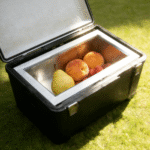
Thermal shell: revestimiento aislado + strong outer carton (and corner protection for pallets)
Packaging elements that drive outcomes
| Packaging element | Cómo se ve "bueno" | que sale mal | Lo que significa para ti |
|---|---|---|---|
| Inner seal | coherente, fuerte | micro-leaks | cartones mojados |
| Absorbencia | correctly sized | under-sized | olor + purge complaints |
| Carton strength | stays rigid when cold/wet | collapses when damp | crush claims |
| Pallet build | estable, protected corners | movedizo, overhang | damage spreads quickly |
Consejos y consejos prácticos
-
Separate coolant from meat: direct contact can change texture and appearance.
-
Reduce air gaps: tight packing often beats adding more gel packs.
-
Proteger las esquinas: corner boards and good patterns stop “domino damage.”
Ejemplo del mundo real: A processor cut carton damage by upgrading carton grade and adding corner boards. The carrier stayed the same, but claims dropped.
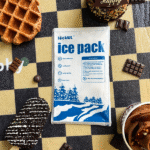
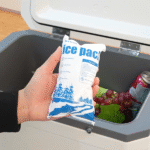
paquetes de gel, phase-change, or dry ice for cold chain meat shipping?
Most cold chain meat shipping relies on refrigerated transport and insulation, no hielo seco. Dry ice can be the right tool for frozen programs, but it adds training, calificación, and package-venting requirements. Treat refrigerants like a controlled process, not a “warehouse hack.”
Cooling options in plain language
| Opción | Mejor para | Cuidado | Lo que significa para ti |
|---|---|---|---|
| Reefer control | pallet freight | poor pre-cool | load warms early |
| paquetes de gel | parcels, carriles cortos | condensation/leaks | needs liners and layout |
| Paquetes de cambio de fase | tight chilled band | wrong setpoint | requires SOP discipline |
| hielo seco | frozen delivery | marking/venting | strong freeze buffer with rules |
| Contenedores activos | carriles premium | costo | use selectively |
Dry ice mini-checklist (keep it safe and audit-ready)
-
Desfogue: Nunca sellar hielo seco en envases herméticos.
-
Calificación: follow carrier/regulatory marking (often “Dry Ice / ONU1845” + peso neto).
-
Buffer planning: size for your timeline plus delay margin, then validate by testing.
-
Food contact control: keep dry ice from direct product contact to avoid quality damage.
Ejemplo del mundo real: A frozen program improved success by planning dry ice for an extra delay window, then validating on a pilot lane.
How do you control dwell time and handoffs in cold chain meat shipping?
Handoffs are where cold chain meat shipping breaks most often.
cold chain meat shipping
That’s when doors open and responsibility shifts between teams. Your strongest lever is a timed handoff plan with a named owner.
The “4-Clocks” method (turns chaos into data)
Track these clocks and set maximum minutes for each:
| Clock | que mide | Por que importa | Lo que significa para ti |
|---|---|---|---|
| Pack-out clock | seal → pickup | warm starts drift | reduces early warming |
| Handoff clock | dock/terminal time | hidden exposure | prevents silent temp loss |
| Transit clock | travel time | sets buffer need | aligns promise to reality |
| Door clock | delivery attempt time | doorstep warming | lowers failed delivery losses |
A 10-minute dock SOP you can actually run
-
Confirmación de preenfriamiento: truck arrived and is cold before staging.
-
Stage last, cargar rapido: keep product in the cold room until loading starts.
-
Disciplina de puerta: reducir el tiempo de apertura de la puerta; close between pauses.
-
Receiving rule: prioritize cold-room put-away before paperwork.
Ejemplo del mundo real: A DC reduced warm events by stopping deliveries during shift change. Put-away speed improved immediately.
How do you monitor and prove cold chain meat shipping worked?
Proof turns cold chain meat shipping from “trust me” into “here’s the evidence.”
cold chain meat shipping
You don’t need maximum monitoring on every load. necesitas actionable monitoring tied to shipment IDs, especially on high-risk lanes.
Monitoring levels (pick one baseline, then upgrade selectively)
| Level | Mejor para | Limitación | Lo que significa para ti |
|---|---|---|---|
| Level 1: marcas de tiempo | all lanes | no temp curve | accountability improves fast |
| Level 2: registradores de datos | validación de carril | post-trip | finds weak handoffs |
| Level 3: en tiempo real | critical loads | needs response team | enables rescue actions |
| Level 4: integrated records | audits/recalls | setup effort | fastest investigations |
Build a simple “proof bundle” per shipment
Incluir:
-
photo of pallet condition at load
-
departure timestamp
-
ID de registrador + temperature summary linked to shipment ID
-
receiving timestamp + notas
KPI dashboard (simple, útil)
| KPI | como medir | Good target | Lo que significa para ti |
|---|---|---|---|
| Warm exposure minutes | time outside control | tendencia a la baja | better shelf-life consistency |
| On-time pickup | scan timestamps | alto + estable | fewer warm starts |
| Temp compliance | muestreo de registrador | stable in-range | stronger dispute defense |
| Tasa de fuga | claims per 1,000 | near zero | menos reembolsos |
| Rework/re-ice | ops logs | bajo | costo más bajo + menos errores |
What compliance and labeling practices support cold chain meat shipping?
Sanitary transportation compliance for meat logistics is mostly about clean equipment, temperature control practices, capacitación, and records. Keep it operational, not legalistic. Your goal is fewer rejections, menos disputas, and faster corrective actions.
The “Clean, Separado, Control” rule
| Regla | Que haces | Common miss | Lo que significa para ti |
|---|---|---|---|
| Limpio | verify vehicle/tools | “looks clean” only | lowers contamination risk |
| Separado | raw vs ready-to-eat | mixed pallets | reduces cross-contact risk |
| Control | temperatura + tiempo | no dwell limits | prevents warm breaks |
Consejos prácticos que puede usar hoy
-
Use one-page checklists with signatures: short beats perfect.
-
Record cleaning events: “we always clean” is not evidence.
-
Keep labels readable: smudged labels create receiving delays.
How do you price cold chain meat shipping without overspending?
Cold chain meat shipping feels expensive when you only track invoices. Track cost per successful delivery instead. When success rate rises, total cost often drops even if packaging costs slightly more.
Simple cost calculator (use in a spreadsheet today)
All-in cost per shipment =
Carrier fee + Embalaje + refrigerante + Mano de obra + Expected claims
Cost per successful delivery =
All-in cost ÷ Success rate
| Aporte | Ejemplo | Por que importa | Lo que significa para ti |
|---|---|---|---|
| All-in cost | 18.00 | true spend per shipment | baseline for decisions |
| Tasa de éxito | 0.90 | in-range + on-time | reliability driver |
| Cost per success | 20.00 | real affordability metric | shows what failure costs |
Ejemplo del mundo real: One brand tightened delivery windows. Success rate rose, refunds fell, and total spend dropped.
2025 latest developments and trends in cold chain meat shipping
En 2025, cold chain meat shipping is shifting toward evidence-first operations. Companies measure dwell minutes, not just transit time.
cold chain meat shipping
They also tie temperature evidence to shipment IDs and lot IDs to speed disputes and recalls.
cold chain meat shipping
Última instantánea del progreso (what you can apply now)
-
Exception-based monitoring: use loggers on high-risk lanes, not every load.
-
Dwell time as a KPI: docks are treated like the weakest refrigeration zone.
-
Better identifiers: 2D barcode readiness is rising as the GS1 “Sunrise 2027” push accelerates scanning upgrades.
cold chain meat shipping
Insight del mercado (lenguaje sencillo)
-
Customers expect consistent shelf life, not “it was cold at pickup.”
-
Claims are more evidence-driven, so proof bundles matter more than opinions.
-
The best teams cut cost by fixing process first, not buying heavier packaging everywhere.
Preguntas frecuentes
1) What is the most important step in cold chain meat shipping?
Pre-cooling and dwell control matter most. If product warms during staging or receiving, shelf life drops quickly.
2) Do I need temperature monitoring for meat shipments on every load?
No siempre. Start with lane validation and high-risk routes, then sample once performance stabilizes.
3) Why do boxes arrive wet in cold chain meat shipping?
Most wet arrivals come from small leaks or unmanaged condensation. Fix seals and absorbency before adding more coolant.
4) What causes “soft arrival” in chilled meat?
Usually warm staging, delayed handoffs, or long door-open time. Fix timing and discipline before switching carriers.
5) Can chilled and frozen meat ship together?
Puede, but it’s risky. If you must mix, use zoning, physical separation, and a clear load plan.
Resumen y recomendaciones
Cold chain meat shipping becomes reliable when you lock five basics: temperature targets, leakproof packaging, disciplined handoffs, usable proof, and simple exception rules.
cold chain meat shipping
Most failures come from warm minutes during staging and receiving, not from the road. If you standardize pack-out, control dwell time, and keep a proof bundle per shipment, Reduces el deterioro, shorten disputes, and protect customer shelf life.
Plan de acción (borrar CTA)
-
Hoy: set a firm “time-out-of-cold” limit and train the team.
-
Next shipment: require trailer pre-cooling and a fast load plan.
-
Dentro 14 días: create a proof bundle template (fotos + marcas de tiempo + temp summary).
-
Dentro 30 días: review exceptions and fix the single worst warm point first.
Acerca de Tempk
Y tempk, we help teams make cold chain meat shipping repeatable under real warehouse pressure. Nos enfocamos en estabilidad de temperatura, control de fugas, and proof-ready routines that operators can follow without improvising. Nuestro objetivo es simple: fewer warm breaks, menos reclamos, and a program you can scale across seasons and lanes.
cold chain meat shipping
Siguiente paso: Share your shipment profile (frío o congelado), tiempo de tránsito típico, and your top failure (cartones mojados, soft arrivals, handoff delays). We’ll help you match packaging and monitoring to your lane risk and cost goals.