Lista de verificación de control de calidad del chocolate con leche en cadena de frío?
Cold chain milk chocolate quality control keeps milk chocolate Frío, seco, and stable from packing to delivery. Your biggest enemies are heat spikes and moisture events. Those two triggers can cause bloom, sticky wrappers, and soft texture. Many operators use a practical “cool band” around 18–21°C and target ~50% RH or lower cuando sea posible.
Este artículo responderá por ti.:
- Cómo ideal temperature and humidity for milk chocolate storage prevents silent damage
- Cómo cold chain milk chocolate quality control stops bloom by reducing swings, not “over-chilling”
- What must pass in a shipping release gate, incluyendo el 29–30°C working check
- Which packaging strategy reduces risk fastest: aislamiento + barrera + smart coolant
- como gestionar last-mile cold chain for milk chocolate without slowing drivers
Cold chain milk chocolate quality control: Why is milk chocolate so fragile?
Milk chocolate is fragile because small temperature swings can dull gloss, soften edges, and reduce “snap” fast. It often shows defects sooner than darker products. It can also pick up odors more easily in mixed storage areas, which turns your warehouse into a quality variable.
In cold chain milk chocolate quality control, the goal is stability. A slightly “warmer but steady” condition often beats a colder condition with frequent spikes. That’s why your workflow matters as much as your packaging.
Ideal temperature and humidity for milk chocolate storage
A practical target many teams use is 18–21°C con ~50% RH or lower cuando sea posible. The benefit is simple: fewer moisture events and fewer texture surprises.
| Storage factor | Objetivo práctico | Comprobación rápida | Your real-world benefit |
|---|---|---|---|
| Temperatura | 18–21°C | Wall sensor + spot probe | Fewer soft bars and scuffs |
| Humedad | ≤50% de humedad relativa (meta) | Simple RH meter | Lower sugar bloom risk |
| Odors | Neutral air zone | Walk-through smell test | Cleaner flavor notes |
Consejos prácticos y sugerencias.
- Warm warehouse: focus on stability first, not deep cooling.
- Humidity swings: add a dry staging area for packing and labeling.
- Mixed goods storage: create an odor-free chocolate zone.
Caso práctico: Teams often reduce defects by moving pack-out away from docks and limiting warm exposure time.
Cold chain milk chocolate quality control: How do you prevent bloom during transport?
Bloom prevention works when you stop partial melting and re-solidifying in unstable ways. Bloom is often a symptom of temperature instability, not one single warm event. In cold chain milk chocolate quality control, treat bloom like a process problem: where did the swing happen, and why did it repeat?
Most real-world triggers are boring but predictable: warm loading zones, repeated van door opens, air gaps in pack-out, y eventos de humedad. Fix the repeat trigger first, not the symptoms later.
How to prevent sugar bloom from condensation
Condensation is “water landing on your chocolate.” It often happens when product moves from a cooler zone into warm, aire húmedo. If you answer “yes” to two or more questions below, you need stronger moisture discipline.
Condensation Risk Self-Test (30 artículos de segunda clase):
- Did chocolate move from a cool room into warmer air?
- Is the packing room humid or rainy-season humid?
- Will customers open the box immediately after delivery?
| Control | lo que previene | como ejecutarlo | Lo que significa para ti |
|---|---|---|---|
| Keep product sealed until warmed | Condensation-driven sugar bloom | Add a simple unboxing card | Fewer “dusty” returns |
| Humidity cap in pack-out zone | Surface moisture pickup | Hygrometer + alarma | More consistent finish |
| Limitar el tiempo de apertura de la puerta | Humidity surges | “One person owns the door” | Less hidden variability |
Consejos prácticos y sugerencias.
- Entrega en varias paradas: keep chocolate grouped and use open/close discipline.
- Clima cálido: add insulation before adding more “ice.”
- Carga mixta: separate chocolate from high-moisture products.
Caso práctico: Teams often improve outcomes by reducing door-open seconds, not by adding extra coolant.
Cold chain milk chocolate quality control: What must pass before shipping?
A strong release gate prevents avoidable claims because no shipper can “save” poorly prepared chocolate. In cold chain milk chocolate quality control, release checks must be fast and measurable. Avoid vague rules like “looks okay.” Use repeatable checks: product temperature range, pack seal integrity, y trazabilidad de lotes.
Also remember this: chocolate is low in water activity, but risks still exist in low-moisture foods. Keep hygiene strong, especially when milk-derived ingredients are present.
Milk chocolate tempering checks your team can teach
Many teams teach a simple working temperature checkpoint around ~29–30°C for milk chocolate during tempering workflows. You don’t need to teach the full science on day one. You need staff to recognize “in range” vs “out of range.”
| punto de control de calidad | Cómo se ve "pase" | prueba rapida | Lo que significa para ti |
|---|---|---|---|
| Temper state | Glossy surface + clean break | Visual + snap check | Lower bloom risk |
| Temperatura de trabajo | ~29–30°C | Quick thermometer check | More stable finish |
| Pack seal | Ajustado, sin espacios | 10-second squeeze test | Menos entrada de humedad |
| código de lote | Claro + coherente | Scan/verify | Investigaciones más rápidas |
Consejos prácticos y sugerencias.
- Release only cooled product: don’t pack chocolate that is still warm.
- No-open-box rule: once packed, don’t leave it open in humid air.
- Clear owner: one person must own shipping release decisions.
Caso práctico: Teams often reduce “dull finish” complaints by adding a release step that checks working temperature and seal consistency.
Cold chain milk chocolate quality control: Which packaging strategy reduces risk fastest?
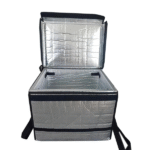
The fastest risk reduction comes from a “stability-first” packing logic: insulation to slow change, barrier to block moisture, and coolant to maintain—not freeze. Over-aggressive cooling can increase condensation risk if used poorly.
Cold chain milk chocolate quality control packaging should deliver two protections:
- protección térmica (slows heat entry) y 2) protección contra la humedad (reduces humidity contact).

18°C PCM for milk chocolate shipping decision tool
A controlled-ambient setpoint near 18°C often aligns with the “cool band” many teams target. It can reduce condensation risk versus near-freezing packs, especially in humid seasons.
Califica tu riesgo de carril (0–16):
- Peak outdoor heat: mild=0 / warm=2 / hot=4
- Tiempo de tránsito: same day=0 / next day=2 / 2+ days=4
- Last-mile uncertainty: low=0 / medium=2 / high=4
- Fragilidad del producto: bars=1 / inclusions=2 / bonbons=4
Score → recommendation:
- 0–5: solo aislamiento + stable pack-out
- 6–10: aislamiento + controlled coolant planning
- 11–16: aislamiento + 18° C PCM + escucha + exception rules
| Packaging component | Mejor para | Error común | Significado práctico para ti |
|---|---|---|---|
| Remitente | Rutas largas | Ignoring lid leaks | More stable temperatures |
| Barrier liner | Ambientes húmedos | Skipping drying step | Menos condensación |
| Dividers/void fill | Artículos mixtos | Leaving air gaps | Less hot spotting |
Consejos prácticos y sugerencias.
- Treat air gaps as risk: tight packing often beats “more packs.”
- Use photo pack-out maps: pictures beat memory during peak season.
- Validar una vez, luego estandarizar: don’t redesign every week.
Caso práctico: Teams often stabilize summer deliveries by using one standard PCM kit for hot zones and lighter rules for mild zones.
Cold chain milk chocolate quality control: How do you control last-mile heat and door-open time?
Last mile is where most temperature swings happen, because doors open often and stops vary. Your goal is to make the “right behavior” the easiest behavior. Cold chain milk chocolate quality control improves quickly when drivers follow a simple SOP.
Milk chocolate last-mile delivery risk checklist
Use this as a driver-friendly card, not a long manual.
| Last-mile problem | Simple driver rule | lo que previene | Value to you |
|---|---|---|---|
| Too many opens | “One open per stop” | Picos cálidos | Menos quejas |
| Hot cabin transfer | Keep boxes shaded | Choque de calor | Mejor apariencia |
| Delay events | Proteger + registro + escalar | Unclear blame | Resolución de disputas más rápida |
Consejos prácticos y sugerencias.
- High stop density: zone the route so chocolate is quick to access.
- Calor de verano: teach a “shade-first” habit at every stop.
- Cultura de prueba: record delays quickly, not perfectly.
Caso práctico: Teams often reduce issues by changing loading order so chocolate moves less and sits away from open doors.
Cold chain milk chocolate quality control: How do you catch problems before customers do?
Early warning beats refunds. Great cold chain milk chocolate quality control does not require a lab for daily detection. You need simple signals that catch patterns early: damp cartons, aperturas frecuentes de puertas, bordes suaves, and sudden “looks old” complaints.
10-minute spot test routine (3 cartons per shift)
Elegir 3 cartons per shift and log results in a short record. This creates proof and helps you find “warm corners” in storage.
| Spot test item | What “OK” looks like | What “risk” looks like | Lo que significa para ti |
|---|---|---|---|
| Carton dryness | Dry surface | Damp patches | Bloom risk |
| Wrapper feel | Limpio, seco | Sticky | Riesgo de condensación |
| Chocolate feel | Firme | Bordes suaves | Exposición al calor |
Consejos prácticos y sugerencias.
- Claims rising: do spot tests at receiving and dispatch for two weeks.
- New route: run a short pilot with extra checks before scaling.
- Busy season: increase sampling frequency, not checklist length.
Caso práctico: Teams often find a single airflow or door pattern that creates a “warm corner,” then fix it quickly.
Herramienta interactiva: Is your cold chain milk chocolate quality control “stable enough”?
Califica cada afirmación: 0 (No), 1 (a veces), 2 (siempre). Total score = 0–20.
- We keep chocolate in a stable cool zone with minimal swings.
- We control humidity and prevent condensation during transitions.
- Receiving includes a consistent temperature and condition record.
- Dispatch packing follows one standard diagram.
- We avoid direct coolant contact with product packaging.
- We limit staging time outside controlled areas.
- Drivers follow a door-open discipline rule.
- We have a clear delay response plan.
- We perform quick spot tests weekly.
- We review exceptions and coach improvements monthly.
Interpretación de partituras:
- 0–7: High risk → fix staging + despacho + door-open discipline first
- 8–14: Moderate → tighten humidity control + spot tests
- 15–20: Strong → optimize ROI and reduce packaging cost safely
2025 latest developments and trends in cold chain milk chocolate quality control
En 2025, chocolate logistics is becoming more “experience-driven.” Customers expect premium appearance and texture, not just safe arrival. That pushes teams to invest in stability, capacitación, and better packaging discipline—especially in last mile.
Última instantánea del progreso (2025)
- Stability-focused packaging: more teams prioritize insulation and seal quality over excessive coolant.
- Short training routines: micro-training for pack-out and door discipline beats long manuals.
- More proof habits: simple records and exception logs improve consistency and disputes.
Insight del mercado: Treating quality as a customer experience (shine, quebrar, clean wrapper) drives tighter process control—not just stronger packaging.
Preguntas frecuentes
Q1: What causes bloom the fastest during delivery?
Rapid swings and warm spikes trigger bloom faster than steady cool conditions. Focus on stability and short door-open time.
Q2: Should you freeze milk chocolate for shipping?
Freezing can increase condensation risk when it warms again. Many operations use stable cool conditions instead.
Q3: What is the best first step in cold chain milk chocolate quality control?
Standardize dispatch pack-out and reduce staging time. These changes often cut defects quickly.
Q4: How do you prevent condensation when moving chocolate?
Reduce sudden transitions and use moisture barriers. Let product acclimate before opening.
Q5: How do you control last-mile risk with many stops?
Use route zoning, minimize door-open time, and keep chocolate grouped. Behavior rules beat extra coolant.
Resumen y recomendaciones
Cold chain milk chocolate quality control works when you design for estabilidad: cool temperatures, low humidity exposure, minimal swings, and disciplined handling. Bloom and texture loss often come from warm spikes, long staging, and inconsistent pack-out. Standardize one packing diagram, shorten exposure time, and coach driver habits weekly.
Siguientes pasos (CTA):
- Audit your top 3 risk points: puesta en escena, dispatch pack-out, and last-mile door openings.
- Deploy one visual packing standard and a short closure check routine.
- Add a 2-week spot test program to detect hidden drift.
- Review exceptions weekly and coach one improvement at a time.
Acerca de Tempk
Y tempk, we help cold chain operators protect sensitive products where quality is visible and reputation matters—like milk chocolate. We focus on practical packaging solutions, repeatable pack-out standards, and routines that reduce temperature swings and condensation risk.
Llamado a la acción: If you want a rollout plan for cold chain milk chocolate quality control (diagramas de embalaje, reglas de puesta en escena, and last-mile door discipline), reach out for an operational blueprint you can implement right away.