Mantener los mariscos frescos desde el océano hasta la mesa es un arte y una ciencia. Como el deterioro puede destruir hasta 35 % de mariscos por mala manipulación y averías en la cadena de frío, necesitas confiable Soluciones de cajas de mariscos de cadena de frío.. En 2025 el mercado de la cadena de frío vale aproximadamente 436 mil millones de dólares y podría superar 1,3 billones de dólares por 2034. Si eres pescador, procesador o minorista, Dominar el control de la temperatura y elegir los contenedores adecuados puede transformar su negocio.. Esta guía utiliza un lenguaje claro y datos del mundo real para ayudarle a navegar por las opciones de embalaje., sensores, logística y sostenibilidad, asegurando que sus mariscos lleguen tan frescos como cuando fueron capturados.

Por qué es importante un control preciso de la temperatura – explorar cómo las pequeñas desviaciones afectan la seguridad y la calidad, además de los rangos de temperatura recomendados.
Cómo elegir la caja de marisco de cadena de frío adecuada - comparar cajas de pescado EPS, contenedores EPP reutilizables, Totes de PUR y HDPE, y alto rendimiento Cargadores VIP.
¿En qué tecnologías de seguimiento y embalaje inteligente están disponibles? 2025 – comprender los sensores de IoT, Etiquetas RFID, Rastreadores GPS y blockchain.
Cómo la sostenibilidad y las regulaciones están remodelando los envases de productos del mar – aprender sobre las prohibiciones de EPS, eficiencia energética y Responsabilidad Ampliada del Productor (EPR).
Mejores prácticas para la logística de la cadena de frío – ver consejos prácticos para el envío de productos del mar vivos y congelados, planificación de rutas y formación.
2025 tendencias e innovaciones del mercado – descubrir previsiones de crecimiento, Tendencias de embalaje inteligente y el auge de los kits de comida..
¿Por qué es importante el control de la temperatura para el transporte de productos del mar??
Los productos del mar son muy perecederos y sensibles a las fluctuaciones de temperatura.. Sin enfriamiento rápido, El crecimiento microbiano se acelera y la formación de histamina conduce al deterioro.. La FAO estima que alrededor 35 % de productos del mar se desperdician en todo el mundo debido a un manejo postcosecha ineficiente y fallas en la cadena de frío. Mantener el pescado entre 0 °C y 2 °C para productos refrigerados y –18 ºC para productos congelados preserva la frescura y previene el crecimiento bacteriano. Incluso los cambios de temperatura más leves, como subir por encima 1 °C – puede romper la cadena de frío, deterioro acelerado.
La ciencia de enfriar versus congelar
El enfriamiento reduce la temperatura de los alimentos por debajo de la temperatura ambiente pero por encima de –1 °C, ralentizar el crecimiento microbiano y las reacciones enzimáticas. La congelación a –18 °C estabiliza los peces al hacer que el agua no esté disponible para reacciones químicas. Sin embargo, la congelación no es un biocida; manejo seguro, La higiene y el procesamiento rápido siguen siendo esenciales.. Por ejemplo, pescado almacenado en 16 °C dura solo un dia, pero bajando la temperatura a 5 °C extiende la vida útil a tres días, y escalofriante para 0 °C Puede conservar el pescado hasta diez días..
| Método de almacenamiento | Rango de temperatura | Vida útil típica | Impacto en la calidad |
| Almacenamiento ambiental | > 10 °C | < 24 horas | Rápido deterioro y crecimiento bacteriano. |
| Enfriar con hielo | 0 - 2 °C | 3–10 días | Retarda el crecimiento microbiano, mantiene la textura |
| Congelación | ≤ –18 °C | Meses | Se conserva a largo plazo pero puede causar daños a los cristales de hielo. |
| súper escalofriante | –1 – –2 °C | 10–14 días | Extiende la vida útil al tiempo que reduce el daño por congelación. |
Consejos prácticos para el control de la temperatura.
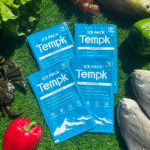
Contenedores de preenfriamiento y refrigerantes: Paquetes de gel frío, placas eutécticas o hielo seco antes de la carga. Una caja preenfriada mantiene su ambiente interno por más tiempo..
Llenar el espacio vacío: Utilice divisores térmicos o materiales de relleno para minimizar el volumen de aire y reducir la transferencia de calor..
Sellar los contenedores herméticamente: Un sellado adecuado puede mejorar el aislamiento hasta en 30 %.
Monitorear continuamente: Utilice sensores de IoT o registradores de datos para rastrear la temperatura y la humedad internas; alertas en tiempo real previenen excursiones.
Educa a tu equipo: Tripulaciones de trenes, Conductores y personal de almacén sobre el manejo de productos del mar y respuesta a alertas..
Estudio de caso: Una instalación de almacenamiento en frío de Kansas City emparejada neveras portátiles EPP reutilizables con sensores inteligentes e IA. El sistema mantuvo temperaturas precisas durante hasta 96 horas y eliminó el rechazo del producto debido a variaciones de temperatura.
Elegir la caja de marisco de cadena de frío adecuada: EPS, PPE, Puro, VIP y más
Seleccionar el embalaje adecuado garantiza que sus productos del mar lleguen intactos y a la temperatura correcta. Cada material ofrece un rendimiento de aislamiento diferente, durabilidad, Impacto ambiental y potencial de reutilización..
Cajas de pescado de EPS: de un solo uso pero eficaces
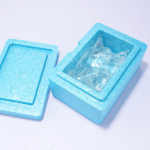
Poliestireno expandido (EPS) las cajas de pescado son livianas, 98 % aire y proporcionan un excelente aislamiento térmico. Una unidad típica pesa 0.203 kilos, sostiene 6.4 kg de pescado y 1.6 kg de hielo y está fabricado mediante perlas de poliestireno preexpansible con vapor.. Las cajas de EPS son a prueba de fugas, Previenen la contaminación y son lo suficientemente robustos para soportar el tránsito.. A menudo cuentan con orificios de drenaje para gestionar el agua de deshielo y cumplir con estrictos estándares de seguridad alimentaria.. Sin embargo, EPS es un solo uso y desafiante para reciclar, lo que lleva a preocupaciones ambientales.
Contenedores EPP reutilizables: duraderos y sostenibles
Polipropileno expandido (PPE) Las cajas utilizan una estructura de espuma de celda cerrada para atrapar bolsas de aire y proporcionar un excelente aislamiento.. Las cajas típicas de EPP mantienen temperaturas frías durante 72–96 horas cuando se combina con placas eutécticas. El material se combina peso ligero con alta resistencia, resiste caídas de 1.5 m y se mantiene estable desde –40 ºC a +110 °C. La absorción de agua es < 5 %, y el material resiste aceites y productos químicos.. A diferencia del EPS, Las cajas de EPP son reutilizable sobre 500 ciclos y totalmente reciclable. Densidades personalizadas (15–100 kg/m³ o superior) Permite adaptar la resistencia y el aislamiento a sus necesidades.. Con el tiempo, La reutilización del EPP reduce el coste total de propiedad y los residuos..
PPE frente a. EPS y EPE – análisis comparativo
La siguiente tabla resume las diferencias clave entre EPP, EPS y EPE (Polietileno expandido) para logística de productos del mar.
| Propiedad | PPE | EPS | EPE | Significado práctico |
| Densidad (kg/m³) | 15–100 (personalizable) | 15–30 | Variable | El EPP de mayor densidad soporta cargas más pesadas |
| Conductividad térmica (W/m·K) | 0.25–0,26 | ~0,036 | 0.034–0,04 | Valores más bajos significan un mejor aislamiento; Las paredes más gruesas del EPP mejoran la resistencia |
| Resistencia al impacto | Alto | Bajo (frágil) | Medio | Las cajas de EPP resisten caídas y manipulaciones bruscas |
| Absorción de agua | < 5 % volumen | 2–4 % volumen | Varía | La menor absorción de humedad previene el moho. |
| Rango de temperatura | –40 ºC a +110 °C | –30 ºC a +70 °C | –60 °C a +80 °C | El EPP se mantiene estable a pesar de las temperaturas extremas |
| Reutilizabilidad | 500+ ciclos | De un solo uso | < 10 usos | Una vida útil más larga reduce el desperdicio |
| Reciclabilidad | 100 % | Difícil | Limitado | Apoya los objetivos de la economía circular |
Contenedores para pescado con aislamiento de PUR y cajas de HDPE: opciones para trabajos pesados
Poliuretano (Puro) contenedores centrales, A menudo se combina con carcasas de polietileno de doble pared., Ofrecen factores de aislamiento y durabilidad muy altos.. Estos cajas de pescado con aislamiento de poliuretano use almohadillas de desgaste de goma reemplazables y tapas ajustadas para mantener el hielo frío por más tiempo. Son ideales para buques de recolección y mercados que requieren contenedores robustos pero portátiles.. Mientras tanto, reutilizable cajas de HDPE pesar 1.2 kilos, llevar 10 kg de pescado y 2 kg de hielo y se puede reutilizar durante aproximadamente 120 ciclos por año, con una vida útil de más 10 años. Las evaluaciones del ciclo de vida muestran que, si bien las cajas de HDPE tienen un mayor peso de tara, respaldan los principios de la economía circular cuando se lavan de manera eficiente y se reutilizan ampliamente.
Transportistas VIP: rendimiento superior
Panel aislado al vacío (personaje) Los transportistas combinan una película exterior duradera con paneles ajustados., ofrenda rendimiento térmico superior sin necesidad de una carcasa protectora de EPS. Su alto rendimiento reduce los requisitos de refrigerante y permite que los más pequeños, paquetes más ligeros que reducen los costos de flete. Los transportistas VIP son ideales para obtener un alto valor, Envíos sensibles a la temperatura pero con un precio más alto.. Cuando se combina con materiales de cambio de fase o hielo seco, permiten entregas de mariscos a través del continente.
Elegir la solución adecuada
Envíos de un solo uso & sensibilidad al costo: Las cajas de pescado de EPS siguen siendo ampliamente utilizadas debido a su bajo costo y excelente aislamiento.. Son adecuados para transporte aéreo de larga distancia cuando hay instalaciones de reciclaje disponibles..
Operaciones reutilizables y sostenibles: Las cajas de EPP o de HDPE reducen los costos a largo plazo y cumplen con las regulaciones EPR. Elija densidades y tamaños según el peso de la carga útil y la duración del viaje.
Alto valor, carga de temperatura crítica: Los transportistas VIP ofrecen tiempos de espera prolongados con un mínimo de refrigerante; ideal para productos del mar de primera calidad o envíos combinados de productos del mar y productos farmacéuticos.
Procesamiento pesado: Los contenedores aislados con núcleo de poliuretano resisten un manejo brusco y se prefieren para el almacenamiento a granel y para especies de alto valor como el bacalao o la langosta..
Tecnologías inteligentes de embalaje y seguimiento para 2025
La visibilidad y la trazabilidad son cruciales para prevenir fallas en la cadena de frío. Las tecnologías emergentes brindan monitoreo en tiempo real, registro automático y registros inmutables.
Sensores IoT y registradores de datos
Registradores de datos Son pequeños dispositivos que registran la temperatura y la humedad durante el envío.. Son asequibles y fiables, pero requieren recuperación manual.; en el momento en que se leen los datos, Es posible que ya se haya producido el deterioro.. Sensores inalámbricos de IoT, por el contrario, transmitir datos de temperatura y ubicación a través de Wi Fi, redes celulares o LoRaWAN. Estos sensores proporcionan accesibilidad remota y alertas inmediatas cuando se superan los umbrales.. Los algoritmos predictivos analizan tendencias para pronosticar fallas en los equipos y optimizar rutas, aunque dependen de una conectividad de red estable.
Etiquetas RFID, GPS y BLE
Sensores de temperatura RFID Incrustar sensores en etiquetas adheridas a paletas o paquetes.. Los lectores RFID escanean estas etiquetas cuando los envíos pasan por los puntos de control, racionalización de la gestión de inventario. Las limitaciones incluyen un alcance de señal corto e interferencias de metales o líquidos.. rastreadores GPS combinar monitoreo de ubicación y temperatura; Las alertas se activan cuando los vehículos se desvían de las rutas o la carga experimenta fluctuaciones de temperatura.. sensores BLE (Bluetooth de baja energía) Ofrecer seguimiento de temperatura rentable para almacenes y envíos de corta distancia., pero su alcance limitado requiere puertas de enlace para transmitir datos.
Blockchain y trazabilidad digital
Blockchain crea un libro de contabilidad digital a prueba de manipulaciones que registra cada cambio de custodia, desde la captura hasta el consumo.. Descentralizando la información, mejora la transparencia, disuade el fraude y apoya la sostenibilidad. Los estudios indican que Uno de cada tres productos del mar puede estar mal etiquetado, mientras ilegal, pesca no declarada y no reglamentada cuentas para 20 % de peces capturados en estado salvaje a nivel mundial, costando la economía 36.400 millones de dólares anualmente. Un seguimiento sólido mediante blockchain previene el fraude y respalda la pesca sostenible al documentar la temperatura, tiempo y lugar en cada etapa.
Innovaciones en envases inteligentes
Sensores biodegradables & indicadores de frescura: Sensores impresos fabricados con polímeros naturales detectan oxígeno, CO₂ o humedad y cambian de color cuando se superan los umbrales. A 2024 estudio demostró un sensor sin batería que duplicó la vida útil del pescado fresco a 14 días.
Embalaje activo: Utiliza captadores de oxígeno, agentes antimicrobianos o reguladores de CO₂ para prolongar la vida útil.
Códigos QR y participación del consumidor: Las etiquetas QR o NFC en los paquetes permiten a los consumidores escanear la fecha de captura, Temperaturas de almacenamiento e información sobre sostenibilidad..
Análisis impulsados por IA: Los algoritmos predictivos analizan los datos de los sensores para prevenir interrupciones y optimizar las rutas..
Consejos prácticos para implementar tecnología
Mapee su cadena de suministro para identificar puntos críticos de temperatura y asignar sensores en consecuencia.
Priorizar la formación – el personal debe comprender cómo leer los datos de los sensores y responder a las alertas.
Utilice identificadores únicos como códigos QR o etiquetas RFID para cada lote.
Invertir en conectividad – garantizar que los vehículos y almacenes tengan redes confiables; Considere LoRaWAN para áreas remotas.
Ejemplo del mundo real: Un exportador de productos del mar instaló sensores IoT en camiones frigoríficos y utilizó blockchain para registrar datos de temperatura. Cuando ocurrió un retraso inesperado, una alerta desencadenó un plan de desvío que mantuvo la carga por debajo 2 °C, y los datos registrados proporcionaron prueba de cumplimiento.
Consideraciones sostenibles y regulatorias
Ambiental, sociales y gobernanza (ESG) Factores impulsan la innovación en el embalaje de la cadena de frío.. La refrigeración insuficiente es la causa 526 millones de toneladas métricas de alimentos perdidas en 2017, liberando 1 gigatonelada de CO₂. Para mariscos, 27 % del pescado desembarcado se desperdicia debido a problemas con la cadena de frío. Abordar estas pérdidas es fundamental para la resiliencia climática y la seguridad alimentaria.
Impulsores de la sostenibilidad
Prohibiciones de espuma EPS: Muchas regiones costeras prohíben los envíos de espuma a base de petróleo debido a la contaminación marina.. Las alternativas biodegradables, como la espuma de origen vegetal y el cartón reciclable, reducen la basura y cumplen las normativas..
Eficiencia energética: El almacenamiento en frío consume una cantidad importante de energía; Las empresas están trasladando el almacenamiento congelado de –18 °C a –15 °C para reducir el consumo manteniendo la seguridad.
Reducción de la huella de carbono: Las empresas optimizan las rutas, consolidar cargas y utilizar programas de compensación de carbono; Las certificaciones de sostenibilidad enfatizan la trazabilidad y la seguridad alimentaria integral..
Inversión gubernamental: Los expertos piden a los gobiernos que traten las cadenas de frío como infraestructura crítica e inviertan en energía renovable y almacenamiento en frío compartido, particularmente en regiones de bajos ingresos.
Tendencias regulatorias
Responsabilidad extendida del productor (EPR): Los fabricantes deben tener en cuenta el impacto medioambiental de sus envases y garantizar una gestión adecuada del final de su vida útil..
Embalaje & Reglamento sobre residuos de envases (Páginas): La UE establece objetivos de reciclabilidad y contenido reciclado mediante 2030, empujando a las empresas hacia contenedores reutilizables y materiales reciclables.
Trazabilidad & normas de seguridad alimentaria: A NOSOTROS. Las reglas de trazabilidad de la FDA y HACCP requieren control y seguimiento de la temperatura documentados.
Hacer sostenible su cadena de frío
Adopte contenedores reutilizables o compostables: Reemplace el EPS de un solo uso con contenedores aislados de PUR o EPP, o hieleras biodegradables.
Reducir el uso de energía: Mantener el equipo, aislar las instalaciones y ajustar el almacenamiento congelado a –15 °C cuando sea posible.
Implementar energías renovables: Los paneles solares y las turbinas eólicas pueden alimentar el almacenamiento en frío y reducir la dependencia de los combustibles fósiles.
Utilice envases y sensores inteligentes: Integrar sensores pasivos, Códigos QR y registradores de datos para mejorar la trazabilidad y reducir el desperdicio.
Involucrar a los responsables de la formulación de políticas: Abogar por inversión en infraestructura de cadena de frío y apoyo a pequeños productores.
Ejemplo de caso: En el sur y sudeste de Asia, causas de la falta de refrigeración 8.2 % desperdicios de mariscos. Las cooperativas locales que invierten en cámaras frigoríficas con energía renovable y contenedores con aislamiento de PUR redujeron el deterioro, mayor alcance en el mercado y mayores ingresos de los pescadores.
Logística de la cadena de frío y mejores prácticas.
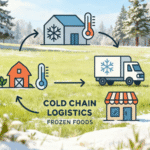
El embalaje por sí solo no puede garantizar la frescura.; La logística juega un papel importante.. Las cadenas de suministro integradas garantizan un control ininterrumpido de la temperatura desde la captura hasta el consumidor.
Manipulación de mariscos vivos versus congelados
Mariscos vivos: Evite el hielo húmedo o seco al enviar langosta o cangrejo vivos.. Utilice paquetes de refrigerante o algas frías para mantener la temperatura sin dañar a los animales..
Mariscos congelados: El hielo seco es rentable para los filetes envasados al vacío, pero se sublima entre 5 y 10 libras por día y requiere un manejo cuidadoso debido al frío extremo y las regulaciones sobre materiales peligrosos..
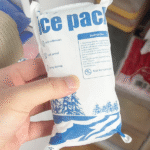
Paquetes de gel y placas eutécticas.: Ideal para entregas de mensajería de corta distancia y kits de comida, Estos mantienen los productos refrigerados fríos sin problemas de seguridad..
Tipos de contenedores y casos de uso
La siguiente tabla resume los tipos de contenedores comunes para pescado y sus beneficios..
| Tipo de contenedor | Construcción & Aislamiento | Beneficios clave | Casos de uso ideales |
| Totes de polietileno de doble pared | Carcasa de polietileno duro con interior de polietileno expandido de triple pared. | Aislamiento de espuma duradero; tecnología de bloqueo de pared; giratorio y apilable; agujeros de drenaje | Almacenamiento y procesamiento a granel donde la resistencia y la reutilización son importantes |
| Cajas para pescado con aislamiento de poliuretano | Polietileno con aislamiento PUR (hasta R28) | Alto factor de aislamiento; almohadillas de desgaste reemplazables; párpados apretados | Buques de recolección y mercados que necesitan contenedores robustos pero portátiles |
| Contenedores aislados con núcleo de PUR (Saeplast) | Plástico de doble pared con núcleo PUR | Aislamiento muy alto; fuerte y duradero; tapas opcionales y marcadores de seguimiento | Manejo de especies de alto valor como el bacalao y la langosta. |
| Bolsas de hielo seco | Contenedores de doble pared diseñados para alimentos congelados | Mantenga temperaturas congeladas sin refrigeración mecánica. | Transporte de marisco congelado a larga distancia |
| Neveras biodegradables | Espuma vegetal compostable | Reducir la contaminación marina; cumplir con las prohibiciones de espuma | Empresas y regiones ecológicas con restricciones de EPS |
Cadena de suministro y transporte integrados
Integrado, El soporte de importación y exportación con temperatura controlada ofrece una cadena de suministro ininterrumpida para los productores y distribuidores que se esfuerzan por ofrecer productos del mar de calidad.. Incluso ligeros cambios de temperatura pueden acelerar el deterioro, reducir el sabor, textura y valor nutricional. Los socios de almacenamiento en frío se encargan de las aduanas, transportar contenedores a las instalaciones portuarias adyacentes, y gestionar el etiquetado, reembalaje y trámites reglamentarios. Redes eficientes que abarcan puertos, El ferrocarril y los camiones reducen los tiempos de manipulación y ciclo., optimizando la logística. En cadenas de suministro complejas, coordinar cada etapa – desde la captura, aterrizaje, desde procesamiento y almacenamiento hasta distribución y venta al por menor, para evitar variaciones de temperatura.
Consejos prácticos para la logística.
Vehículos de preenfriamiento: Los camiones refrigerados deben enfriarse antes de cargarlos y mantener un flujo de aire correcto.; Los sensores ayudan a evitar arranques en caliente.
Planificar rutas y horarios: Evite paradas y retrasos innecesarios; coordinar la recogida y entrega para minimizar el tiempo fuera de entornos controlados.
Carga segura: Utilice sellos a prueba de manipulaciones y verifique la identidad de los transportistas.; Aumenta el robo de cargamentos de productos del mar.
primero en, primero en salir (FIFO): Rotar el stock para evitar productos caducados y reducir el desperdicio..
Capacitar al personal: Educar al personal sobre técnicas de carga., manejo de refrigerante, procedimientos de higiene y emergencia.
2025 Tendencias de la cadena de frío y conocimientos del mercado.
El mercado de embalajes de cadena de frío sigue creciendo rápidamente. El mercado global fue valorado en 34.280 millones de dólares en 2024 y se prevé que alcance 89.840 millones de dólares por 2034 en un 11.3 % Tocón. América del norte representa aproximadamente 44 % de ingresos con EPS sigue dominando, mientras cajas rígidas reutilizables registrar el mayor crecimiento (7.04 % Tocón). el pez, El segmento de carnes y mariscos lideró el mercado en 2024 y se prevé que se expandirá a un 6.93 % CAGR a 2030. Contenedores de media capacidad (5–20 litros) mantener la mayor demanda unitaria, mientras que los contenedores pequeños (≤5 litros) se están expandiendo más rápidamente debido a la medicina personalizada y la entrega directa de alimentos al consumidor..
Últimos desarrollos de un vistazo
Sensores inteligentes & análisis predictivo: Los sensores de IoT y los algoritmos de IA proporcionan un seguimiento continuo, pronosticar desviaciones de temperatura y permitir acciones preventivas.
Sensores biodegradables & embalaje activo: Nuevos materiales integran sensores que responden a gases o humedad, duplicar la vida útil del pescado.
Refrigeración energéticamente eficiente: Los compresores de velocidad variable y los refrigerantes naturales reducen el consumo de energía y las emisiones de gases de efecto invernadero..
Trazabilidad digital & aplicaciones de consumo: Los códigos QR en el paquete se vinculan a los registros de blockchain, permitir a los consumidores verificar la fecha de captura, condiciones de almacenamiento y frescura.
Crecimiento de kits de comida & envío directo al consumidor: La popularidad de los kits de comida significa que habrá más envíos pequeños que requerirán un control preciso de la temperatura.; El embalaje sostenible y el seguimiento inteligente se convierten en puntos de venta clave..
Soluciones de embalaje innovadoras: Cajas a base de fibra como las de DS Smith Paquete seco mantener el pescado debajo 40 °F por más 40 horas, son 100 % reciclable, Se envían planos y están aprobados para transporte aéreo.. Estas cajas reducen las emisiones de CO₂ y los costes de transporte entrante, promoviendo una economía circular.
Conocimiento del mercado y estrategias comerciales.
Diversificar las carteras de envases: Ofrezca opciones de un solo uso y reutilizables para satisfacer las diversas necesidades de los clientes..
Invertir en R&D: Desarrollar espumas compostables, Soluciones EPP y VIP de alta densidad; asociarse con institutos de investigación para adelantarse a los cambios regulatorios.
Adoptar modelos de economía circular: Fomentar programas de devolución de envases reutilizables e integrar servicios de reciclaje.
Aprovechar los datos: Utilice datos de sensores y análisis para optimizar el inventario, predecir la demanda y mejorar la confianza del cliente.
Preguntas frecuentes
Q1: ¿Cuál es la temperatura ideal para conservar pescado fresco??
El pescado debe almacenarse entre 0 °C y 2 °C (32–36 °F) para preservar la frescura y prevenir el crecimiento bacteriano. Temperaturas anteriores 1 °C puede romper la cadena de frío. Use hielo triturado, paquetes de gel o almacenamiento refrigerado para mantener este rango.
Q2: ¿Cuándo debo usar hielo seco versus paquetes de gel para enviar mariscos??
El hielo seco es mejor para congelado, mariscos envasados al vacio ya que mantiene temperaturas muy bajas pero requiere un manejo cuidadoso. Para mariscos vivos o refrigerados, Evite el hielo seco y use paquetes de gel o algas frías para evitar daños..
Q3: ¿Qué características debo buscar en una bolsa para pescado reutilizable??
Elegir Recipientes con núcleo de polietileno o PUR de doble pared. con altos factores de aislamiento, construcción duradera, tapones de drenaje, Tapas ajustadas y acceso para montacargas.. Los colores personalizados o las etiquetas RFID ayudan con el seguimiento y evitan pérdidas.
Q4: ¿Cómo puedo controlar la temperatura de mi envío de mariscos??
Usar registradores de datos de un solo uso o sensores de iot que registran temperatura y humedad. Algunos producen informes PDF o CSV automáticamente para la documentación regulatoria..
Resumen y recomendaciones
Ahora entiendes por qué Soluciones de cajas de mariscos de cadena de frío. son vitales para preservar la calidad del marisco en 2025. El control de la temperatura es fundamental: Mantenga el pescado refrigerado a 0–2 ºC y productos congelados en –18 ºC para prevenir el deterioro y las enfermedades transmitidas por los alimentos. Elija sabiamente el embalaje: cajas de EPS Proporcionan aislamiento de bajo costo pero son de un solo uso.; contenedores EPP reutilizables ofrecer ahorro y sostenibilidad a largo plazo; Totes PUR y cajas de HDPE ofrecer un rendimiento resistente; y Cargadores VIP habilitar envíos premium. Adopte la tecnología: sensores, IoT, RFID, GPS y blockchain: para controlar la temperatura, garantizar la trazabilidad y cumplir con las regulaciones. Invertir en prácticas sostenibles: adoptar contenedores reutilizables o compostables, optimizar el uso de energía, y cumplir con las reglas EPR y PPWR. Finalmente, Agilizar la logística a través de socios integrados de almacenamiento en frío., Planificación de rutas y formación del personal para mantener una cadena de frío ininterrumpida..
Próximos pasos viables
Audite su cadena de frío actual: Mapee cada etapa de su cadena de suministro de productos del mar, Identificar puntos críticos de temperatura y decidir dónde se requiere un mejor empaque o monitoreo..
Seleccione el contenedor correcto: Para cada producto, considerar la duración del viaje, peso, valor y requisitos regulatorios. Pruebe contenedores reutilizables de EPP o PUR junto con EPS de un solo uso cuando corresponda.
Implementar monitoreo en tiempo real: Implemente sensores de IoT y registradores de datos para ganar visibilidad. Integre blockchain o códigos QR para la trazabilidad.
Invertir en sostenibilidad: Cambie a materiales compostables o reciclables, Reducir el consumo de energía ajustando las temperaturas de almacenamiento y adoptando fuentes de energía renovables..
Entrena a tu equipo: Asegúrese de que todos comprendan las mejores prácticas para el manejo de refrigerantes., leer sensores y responder a alertas.
Acerca de TempK
Somos TempK, especialista en soluciones de embalaje para cadena de frío. Nuestro centro de investigación y desarrollo se centra en ecológico, envases reutilizables y reciclables que satisface las estrictas exigencias de los alimentos, industrias farmacéuticas y biotecnológicas. Diseñamos EPP, EPS, Palcos VIP y PUR, junto con paquetes de gel y soluciones refrigerantes, para proteger sus productos sensibles a la temperatura. Nuestro compromiso con la calidad está respaldado por certificaciones e innovación continua. Contáctenos para saber cómo nuestras soluciones de cajas de mariscos de cadena de frío pueden ayudarlo Reducir el desperdicio, costos más bajos y entregar frescura.
Llamado a la acción: Listo para revolucionar su cadena de frío? Comuníquese con los expertos de TempK para una consulta personalizada y descubra las soluciones perfectas de cajas de mariscos con cadena de frío para su negocio..