Caja refrigeradora de EPP de calidad alimentaria: Cómo elegir en 2025?
You choose a food-grade EPP cooler box para proteger la calidad de los alimentos, reducir el deterioro, and make reuse easier to manage. If you ship chilled items, aim to keep them at 40°F (4°C) o debajo, and treat your box as part of that system. EPP is lightweight and durable, but your results depend on proof (documentos), adaptar (size and lid seal), y procesar (empacar + limpieza).
Este artículo te ayudará:
-
Elige la derecha food-grade EPP cooler box size to reduce headspace and coolant waste
-
Confirm what “food-grade” means using EU/FDA-style proof and a simple checklist
-
Choose wall thickness and density based on your lane time, parada, and abuse risk
-
Empacar un food-grade EPP cooler box so temperature stays stable with fewer surprises
-
Limpio, seco, and prevent odor so reuse stays safe and customer-friendly
-
Run a 10-day validation plan (temperatura + cleaning cycles + manejo) antes de escalar
-
Use a supplier scorecard and cost-per-trip model to avoid “cheap that gets expensive”
-
Understand 2025–2026 trends (PPWR de la UE + repeated-use expectations)
What is a food-grade EPP cooler box, en lenguaje sencillo?
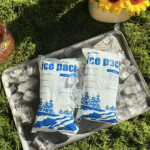
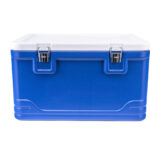
A food-grade EPP cooler box is a reusable insulated container made from expanded polypropylene (PPE). Think of it like a “mobile cold room.” The walls slow heat flow, the lid reduces air exchange, and your cold source (paquetes de gel, PCM, hielo, o hielo seco) does the cooling.
What makes it different is repeat use. Su food-grade EPP cooler box should handle stacking, gotas, and daily cleaning without warping. If the lid fit drifts, temperature control drifts with it.
EPP vs EPS vs PU: which one fits your reality?
| Material option | Fuerza típica | Typical reuse fit | Typical weak spot | Lo que significa para ti |
|---|---|---|---|---|
| Food-grade EPP cooler box | Alta resistencia al impacto | Alto | Needs cleaning discipline | Best for return loops and daily handling |
| Caja de espuma EPS | Bajo a medio | Bajo | Breaks, abolladuras, “one-way” feel | Often used for single-use shipments |
| PU insulated box/panels | Alto aislamiento | Medio | Costo + repair complexity | Good when space is tight or holds are long |
Practical rule: if you can bring boxes back reliably, a food-grade EPP cooler box usually wins on durability and repeatability.
What does “food-grade” mean for a food-grade EPP cooler box in 2025?
“Food-grade” is not a vibe. It’s proof that your food-grade EPP cooler box is suitable for contact scenarios in your market, and that quality stays consistent across batches.
-
EU mindset: materials must not release harmful substances or ruin taste/odor. Seguridad alimentaria
-
US mindset: polypropylene food-contact use is commonly referenced under FDA rules like 21 CFR 177.1520, subject to conditions and provisions. ECFR
If your shipment is packaged food, you still need “food-grade thinking.” Leaks, condensación, and broken packs happen in real life.
The “Food-Grade Proof Pack” checklist (rápido, usable)
Give yourself 1 point para cada uno Sí:
-
You can explain direct vs indirect food contact for your use case.
-
You can provide EU-style safety principles (1935/2004 alignment) si es necesario.
-
You can provide plastics compliance evidence (UE 10/2011) si es necesario.
-
You can show GMP-style manufacturing controls (CE 2023/2006) si es necesario.
-
For US programs, you can reference PP compliance under 21 CFR 177.1520.
Score guide
-
5/5: strong “food-grade EPP cooler box” foundation
-
3–4/5: workable, but expect retailer/audit questions
-
0–2/5: high compliance risk (and costly delays)
Compliance table you can use in procurement
| Market need | Key reference | What you ask suppliers for | Por qué te protege |
|---|---|---|---|
| EU general food-contact safety | Regulación (CE) 1935/2004 | Seguridad + taste/odor statement | Stronger defensibility |
| EU plastics scope | Regulación (UE) 10/201 | Plastics compliance + DoC expectations | Fewer approval delays |
| EU manufacturing discipline | Regulación (CE) 2023/2006 | GMP/QA overview + trazabilidad | Less batch drift |
| US polymer reference | 21 CFR 177.1520 ECFR | Resin/additives statement + condiciones | Easier customer acceptance |
How do you choose food-grade EPP cooler box size, wall thickness, and density?
A food-grade EPP cooler box should be the smallest size that fits your product plus coolant. Extra air warms fast and forces you to “buy temperature” with more gel packs.
Quick sizing guide (by use case)
-
10–20 litros: lunch delivery, short last-mile drops
-
20–40 L: kits de comida, seafood orders, mixed grocery
-
40–80 L: bulk chilled distribution, B2B routes
-
80 L+: hub-to-hub consolidation
Headspace warning: if your food-grade EPP cooler box is half empty, warm air becomes a heater. Tight packing is performance.
Espesor de la pared: pick it by lane time, not by guess
| Route reality | Practical choice | Por que funciona | lo que ganas |
|---|---|---|---|
| 1–3 horas, low stops | Moderate wall + good lid | Less bulk, fast handling | Faster pack-out |
| 3–8 hours or hot ambient | Thicker wall or better inserts | Less temperature swing | Fewer complaints |
| 8+ hours or high risk | Thicker + disciplined SOP | Handles worst-case | Predictable results |
Densidad (durabilidad) vs thickness (aislamiento)
-
Espesor helps you slow heat gain.
-
Densidad helps your food-grade EPP cooler box survive stacking, gotas, y reutilizar.
Use this simple match:
| Your biggest risk | Lean toward | Lo que significa para ti |
|---|---|---|
| Drops + apilado | Higher density features | Fewer cracks and lid drift |
| Long Holds | Thicker walls + better seal | Slower drift |
| Tight courier limits | Right-sized box + smart inserts | Mejor eficiencia del cubo |
| Cleaning speed matters | Smooth interior + fewer grooves | Less labor and odor risk |
How do you pack a food-grade EPP cooler box for stable temperature?
A food-grade EPP cooler box performs like a system, not a standalone product. Your goal is repeatability: the same steps, same layout, same results.
Pack-out steps (simple, repetible)
-
Pre-condition the box (start cool, not warm).
-
Pre-chill the product (don’t expect the box to cool warm food).
-
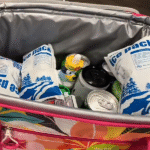
Place cold sources strategically (arriba + sides beats “all at the bottom”).
-
Reduce void space (use inserts or clean fillers).
-
Close fast and keep closed (every opening is a temperature hit).
Coolant placement cheat table
| Your goal | Best placement | Mejor para | What you’ll notice |
|---|---|---|---|
| Incluso enfriando | Arriba + both sides | Cargas mixtas | Less warm “top layer” |
| Protect delicate items | Side near sensitive item | Mariscos, lácteos | Mejor textura |
| espera larga | Arriba + lados + base | Rutas largas | Slower drift |
herramienta de decisión: choose your pack-out pattern (interactivo)
Pick one lane and follow it every time:
-
Chilled meal kits (target 0–6°C): arriba + lados, centrado en el producto, minimal air gaps
-
Congelado (target ≤ -18°C): stronger cold source, sello apretado, minimal doorstep dwell
-
Cargas mixtas: use a divider so it behaves like “two boxes in one”
Consejo: take one photo of the “perfect pack.” Train from that photo, not from memory.
How do you clean, seco, and prevent odor in a food-grade EPP cooler box?
Reusable programs fail for one boring reason: cleaning is inconsistent. Su food-grade EPP cooler box should be chosen with cleanability in mind, then run with a simple SOP.
The 4-step cleaning SOP (a diario)
-
Limpio: detergent + light brush, focus on lid lip and corners
-
Rinse: remove detergent residue
-
desinfectar (if your SOP requires): correct concentration and contact time
-
Dry fully: lid open, flujo de aire, no “wet storage”
Drying is not optional. Wet storage drives odor and microbial risk.
“Drying Matters” self-check (interactivo)
If you see any of these, your drying step is weak:
-
Boxes smell musty after storage
-
Lids feel damp inside
-
Water beads stay in corners
-
Labels peel because moisture remains
Fix in one sentence: store boxes abierto until fully dry, then close and stack.
Cleaning design features that save you labor
| Característica | Que hace | Por que importa | Tu beneficio |
|---|---|---|---|
| Smooth interior | Fewer dirt traps | Faster wipe-down | Lower labor cost |
| Rounded corners | Less residue | Less scrubbing | Faster turnaround |
| Drain strategy | Less standing water | Better drying | Less odor |
| Durable surface | Resists abrasion | Stays cleanable longer | Longer lifespan |
How do you validate a food-grade EPP cooler box before scaling?
A food-grade EPP cooler box is only “good” if it holds your temperature on your real routes. Validate with your real staff, real food mass, and worst-case ambient.
For food safety basics, many public guidelines set refrigerators at 40°F (4°C) o debajo and freezers at 0°F (-18°C) o debajo. Seguridad Alimentaria.gov Your delivery targets should be tighter than storage targets because routes include door openings and delays.
10-day lane validation plan (práctico)
-
Day 1–2: pack-out training + momento
-
Day 3–5: worst-case ambient test (hot day / heated room)
-
Day 6–7: handling stress test (multiple short openings)
-
Day 8–9: clean–dry cycles, then re-test hold
-
Día 10: review logs, lock SOP, and set acceptance rules
Validation table (copy into your project file)
| Prueba | What you measure | Pass indicator | Por que importa |
|---|---|---|---|
| Mantener la temperatura | Time-in-range | Meets lane duration | Confianza del cliente |
| Peak temperature | Highest spike | Under your limit | Peaks drive complaints |
| Reuse-cycle impact | Hold after cleaning cycles | Estable | Reuse confidence |
| Drop/stack | Grietas + lid fit | No seal failure | Lower replacement cost |
Logger tip: if you need audit-ready evidence, use temperature recorders that match recognized logistics expectations (EN 12830 is commonly referenced for temperature recording systems in transport and storage). iTeh Standards
How do you buy the right food-grade EPP cooler box (without getting trapped by price)?
The best food-grade EPP cooler box purchase is the one with the lowest cost per successful trip. That means fewer failures, fewer replacements, and fewer customer refunds.
Cuadro de mando de proveedores (interactivo, 0–2 each)
Score each supplier from 0 a 2:
-
Provides your market’s proof pack (EU/FDA style). Seguridad alimentaria+1
-
Explains additive/colorant control and change control.
-
Shows QA/GMP discipline for food-contact materials (if relevant). EUR-Lex
-
Supports pilot testing and lane validation.
-
Can keep lid fit consistent (tolerances + QC approach).
-
Supports traceability (batch IDs, archivos, change notices).
Score guide
-
0–5: high risk
-
6–8: pilot only
-
9–12: strong candidate
Mini ROI calculator (rápido, útil)
Use this simple model:
Cost per trip = (Box cost ÷ expected trips) + cleaning cost + loss/claim cost
To improve ROI, you usually do two things:
-
Increase expected trips (durabilidad + cleaning discipline)
-
Reduce loss/claim cost (sello + empacar + validación)
2025–2026 trends that change food-grade EPP cooler box decisions
En la UE, el Reglamento de Envases y Residuos de Envases (Páginas) is now framed as Regulación (UE) 2025/40. EUR-Lex The European Commission notes PPWR entered into force on 11 Febrero 2025, with a general application date 18 months later. Ambiente
What this means in plain language: reuse and waste prevention expectations are rising. Su food-grade EPP cooler box program becomes stronger when you can measure reuse cycles and reduce failures.
Repeated-use expectations are getting sharper
Regulación de la comisión (UE) 2025/351 highlights a repeated-use concern: deterioration over cycles can increase migration, so repeated-use articles need design and instructions that prevent that risk. EUR-Lex+1
Tu movimiento: treat your box like a controlled asset:
-
validate after cleaning cycles
-
lock change control with suppliers
-
track cycles, odor rate, and temperature exceptions
Preguntas comunes (Preguntas frecuentes)
Q1: What is a food-grade EPP cooler box used for?
A food-grade EPP cooler box is used for reusable cold-chain transport of chilled or frozen goods like meal kits, mariscos, lácteos, carne, y comestibles. It protects temperature stability, improves handling durability, and supports return logistics when you can reuse boxes consistently.
Q2: How do I prove my food-grade EPP cooler box is really “food-grade”?
Ask for a proof pack that matches where you sell. En la UE, buyers often expect alignment with the food-contact framework and plastics rules, plus GMP discipline. Seguridad alimentaria+1 en los estados unidos, polypropylene often references FDA rules like 21 CFR 177.1520. ECFR
Q3: What size food-grade EPP cooler box should I buy?
Elige el más pequeño food-grade EPP cooler box that fits your payload plus coolant with minimal headspace. Oversized boxes trap warm air and force extra gel packs. Start with one “most common order” size and standardize it before expanding sizes.
Q4: How thick should a food-grade EPP cooler box be?
Match thickness to lane time and ambient risk. Moderate walls can work for short urban drops, but longer or hotter routes usually need thicker insulation or tighter inserts. Your best answer comes from a short lane validation test, not a catalog.
Q5: What’s the biggest mistake in pack-out for a food-grade EPP cooler box?
Putting all cooling at the bottom and leaving big air gaps. For most chilled lanes, top-and-side placement reduces warm “lid zones.” Then keep the lid closed between stops.
Q6: What’s the biggest failure in reusable cooler box programs?
Wet returns. A food-grade EPP cooler box can be clean, but if it’s stored damp, odor and complaints will follow. Build a drying step (open lids + flujo de aire) into your daily workflow.
P7: Do I need temperature loggers for a food-grade EPP cooler box program?
If you want audit-ready proof or you ship higher-risk products, loggers help you validate worst-case performance. EN 12830 is commonly used as a reference for temperature recording systems in transport and storage. iTeh Standards
P8: How do I set a simple temperature target for chilled vs frozen?
Public food safety guidance commonly points to 40°F (4°C) o debajo for refrigerators and 0°F (-18°C) o debajo for freezers. Seguridad Alimentaria.gov Use tighter internal targets for delivery because stops and delays create spikes.
Resumen y recomendaciones
A food-grade EPP cooler box is a strong choice when you treat it like a system: prueba (documentos), adaptar (tamaño + lid seal), y procesar (empacar + limpieza). Start by choosing the right size to reduce headspace, then standardize coolant placement and lid discipline. Validate your lane performance with real food, real staff, and cleaning cycles. When you do this, you get fewer failures, menos desperdicio, and higher customer trust.
Plan de acción (do this next week):
-
Pick one lane and one box size to standardize.
-
Run a 10-day pilot with loggers and cleaning cycles.
-
Lock a simple pack-out photo SOP and a dry-storage rule.
-
Scale only after performance is stable and repeatable.
Acerca de Tempk
Y tempk, we design temperature-control packaging systems for real-world cold chain operations. We focus on repeatable performance: temperaturas estables, hygiene-ready reuse, and SOP-friendly handling that teams can execute daily. Con un food-grade EPP cooler box programa, our goal is to help you reduce product loss, cut single-use waste, and deliver a cleaner customer experience through consistent packaging and process design.
Siguiente paso (CTA): Share your product type, duración de la ruta, stop count, peak summer ambient, and cleaning method. We’ll outline a lane-specific food-grade EPP cooler box configuration and a pilot checklist you can run immediately.