The integrity of temperature-sensitive shipments hinges on more than a refrigerated truck. Thermal cargo covers create a protective micro-environment that reduces heat gain and loss, shields against weather and solar radiation, and helps you avoid costly spoilage or delays. En 2026 the cold chain faces stricter regulations, increasing demand and sustainability pressures. Using well-designed thermal cargo covers is one of the most effective ways to maintain compliance while cutting costs. This guide explains what thermal cargo covers are, Por qué importan, cómo elegir el tipo correcto, and what trends to watch in the years ahead.
Definition and function of thermal cargo covers – how they reduce temperature fluctuations and create a protective barrier for sensitive goods.
Why thermal covers are cost-efficient and sustainable – how they cut energy use, reduce labor, minimize product loss and support greener logistics.
Types of thermal cargo covers – comparing reflective, insulating and phase-change material (PCM) solutions with their strengths and limitations.
Selection criteria and usage tips – what to consider when choosing a cover, how to fit it correctly and how to maximize performance with slip sheets and monitoring tools.
2026 market trends and innovations – including regulatory developments, AI-enabled logistics, sustainable materials and new PCM technologies.
What Are Thermal Cargo Covers and How Do They Work?
Thermal cargo covers are passive insulation layers placed over pallets or containers to protect temperature-sensitive goods from heat, frío, moisture and UV radiation. They create a controlled microclimate by reducing heat transfer through conduction, convección y radiación. Durante el tránsito, cargo may face tarmac temperatures up to 40 °C when the ambient air is only 24 °C. Without a protective cover, such excursions can degrade pharmaceuticals, perishables and chemicals. Thermal covers also shield against wind, rain and theft, helping goods arrive intact.
How Thermal Covers Function Inside the Cold Chain
Thermal covers work by combining reflective surfaces, insulating layers and breathable materials. Reflective foils bounce solar radiation away, while foam or bubble insulation traps air to slow conductive heat transfer. Breathable membranes allow condensation and gas to escape, preventing moisture accumulation. When used with slip sheets that fully enclose the pallet, they form a “cocoon” that delays temperature equilibrium. Some advanced solutions integrate phase-change materials (PCM) that absorb heat during melting and release it during freezing; this active regulation maintains temperatures near a set point. The result is a passive system that maintains product temperatures without continuous energy input.
| Componente clave | Role in the Cover | Impacto en su envío |
|---|---|---|
| Reflective foil or metallised films | Reflects solar radiation away from the cargo | Reduces heat gain when pallets sit on tarmacs or loading docks, preventing spikes that cause excursions |
| Insulating layer (burbuja, espuma, lana) | Traps air and resists conductive heat flow | Maintains temperatures for longer periods, slowing both warming and cooling processes |
| Breathable membrane or vents | Allows moisture and gases to escape | Prevents condensation damage and maintains package integrity |
| Materiales de cambio de fase (PCM) | Absorbs or releases latent heat at specific temperatures | Provides extended protection through repeated freeze–melt cycles, ideal for 15–25 °C lanes |
User-Focused Advice for Basic Operation
Ensure full coverage: Wrap the cover over the top and sides of the pallet and use a slip sheet to seal the bottom. Gaps create thermal weak points and allow air exchange.
Position temperature monitors: Place probes at the edges, top and bottom of the load, not just in the center, to detect heat penetration sooner.
Allow for ventilation: Choose breathable covers for fresh produce or respiring goods to prevent condensation. Use reflective covers for tarmac exposure.
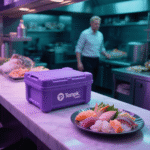
Ejemplo del mundo real: A regional meal-kit distributor using a biodegradable insulated box reported an 18 % reduction in temperature excursions during summer deliveries and fewer disposal complaints after switching from foam packaging.
Why Choose Thermal Cargo Covers for Temperature-Sensitive Goods?
Thermal cargo covers protect product quality, reduce losses and lower logistics costs by limiting temperature excursions. Studies show that around 60 % of temperature excursions in air transport occur during tarmac delays, while 90 % are linked to human error during pack-out. Using a properly fitted cover mitigates these risks. They also cut energy consumption by reducing the need for active refrigeration and allow use of less expensive dry vans instead of reefer trucks.
Extended Benefits for Cost and Sustainability
Más allá del control de la temperatura, thermal covers offer several cost and environmental advantages:
Ahorro de energía: Insulated blankets minimize cooling loss and retain heat, enabling warehouses to lower refrigeration intensity. Fewer reheating cycles mean less energy used.
Reduced labor: By keeping goods within target ranges longer, workers spend less time checking temperatures or adjusting systems.
Lower product loss: Maintaining a consistent microclimate decreases spoilage, especially for perishable foods and pharmaceuticals.
Sostenibilidad mejorada: Thermal blankets can reduce a facility’s carbon footprint by 20–30 % through energy savings and reduced waste. Reusable or recyclable covers further cut disposal impacts.
Comparison of Cost Savings in Dry vs. Reefer Transport
| Transport Option | Costo típico (Full Truck Load) | Associated Cover Cost (por 26 palets) | Lo que significa para ti |
|---|---|---|---|
| Dry van (CA to Dallas) | $4,300 | $400 for single-use covers | Using covers eliminates the $500 premium of a refrigerated truck while maintaining temperature protection |
| Reefer van (CA to Dallas, 41 ° F) | $4,800 | No requerido | Higher freight cost but simpler operation |
| Dry van (CA to Union City, NJ) | $6,900 | $400 | Covers offset the $900 difference vs. reefer transport, providing substantial cost savings |
Escenarios prácticos y consejos
Last-mile deliveries: Use covers for cross-dock operations or short-haul trips to maintain quality without running the refrigeration unit continuously.
Envíos farmacéuticos: Covers support compliance with Good Distribution Practices by maintaining controlled room temperature or 2–8 °C ranges, reducing risk of excursion.
Agriculture and perishables: Insulated covers keep produce and dairy fresh during transit; using slip sheets creates a protective cocoon for mixed loads.
Caso real: Third-party testing for CSafe’s Silverskin QLT 19 found that the cover could fit 30–40 % more product in the same container, reducing the number of freight vehicles and cutting carbon emissions.
Types of Thermal Cargo Covers: Pensativo, Insulated and PCM Solutions
Thermal covers fall into several categories — basic blankets, reflective covers, insulating blankets, material de cambio de fase (PCM) covers and hybrid dual-protection solutions. Each type offers unique benefits and is suitable for different shipping conditions.
Overview of Each Cover Type
Basic Thermal Blankets
These provide general protection against rain, dust and minor temperature fluctuations. They often use simple woven or plastic materials and are suitable for short-duration transports. Sin embargo, they offer limited thermal insulation and are not ideal for extreme conditions.
Reflective Covers
Reflective pallet covers use metallised films like aluminium foil to reflect radiant heat. Son livianos, inexpensive and effective at blocking solar radiation. Reflective covers are commonly used on airport tarmacs or during short exposures to heat. Their drawback is lower resistance to conductive heat transfer; they may tear under heavy handling.
Insulating Blankets
Insulating blankets are made from materials such as fiberglass, polyurethane foam or wool. They provide excellent protection against conductive and convective heat, stand up to heavy use and come in various thicknesses. Because they are bulkier, they may require more storage space and have higher upfront costs.
Material de cambio de fase (PCM) Covers
PCM covers incorporate materials that absorb and release large amounts of energy as they transition between solid and liquid states. The TLX PCM cargo cover, lanzado en 2026, reflects 97 % of thermal radiation and integrates Fibre-Flex technology that remains flexible even when frozen. The PCM freezes at around 18 °C in an aircraft hold and melts on the tarmac, absorbing heat and preventing temperature spikes. This repeated freeze–melt cycle can regulate temperature on 15–25 °C routes, making PCM covers particularly useful for pharmaceuticals and biologics.
Dual-Protection or Hybrid Covers
These solutions combine reflective surfaces with PCM or enhanced insulation. Según tecnologías de la cadena de frío, dual-protection covers deliver both short-term shielding and extended thermal stability. They are designed for high-risk shipments that face variable conditions, such as long flights followed by ground delays.
| Cover Type | Key Materials | Fortalezas | Limitaciones | Mejor caso de uso |
|---|---|---|---|---|
| Basic blanket | Woven/plastic fabric | Provides basic weather protection | Minimal thermal insulation | Short local transfers or non-perishables |
| Pensativo | Aluminium or metallised film | Ligero; reflects radiant heat | Less effective against conductive heat; can tear easily | Tarmac exposure and hot climates |
| Aislante | Fibra de vidrio, espuma, lana | Excellent conductive insulation; durable | Voluminoso; mayor costo | Largo listones; heavy-duty handling |
| PCM | Phase change composites | Maintains set temperature; absorbs heat spikes | More complex; mayor costo | Pharma and biologics on 15–25 °C lanes |
| Híbrido (Pensativo + PCM) | Combination materials | Dual protection for solar and long duration | Complex design; costo | High-risk shipments requiring versatility |
Tips for Choosing the Right Cover
Evaluar la sensibilidad del producto: Determine whether goods require strict temperature ranges (p.ej., vacunas) or only general cooling (p.ej., producir). Choose PCM or hybrid covers for high-risk items.
Consider route conditions: Reflective covers suffice for short tarmac exposures, while insulating or PCM covers suit long routes or multi-modal shipments with uncertain delays.
Check size and customization: Standard pallet sizes (48 × 40 inches) fit most shipments, but custom sizing may be required for oversize loads.
Evaluar la reutilización: Single-use covers cost $15–25, whereas reusable covers can cost $150–400. Reusable models are suited to closed-loop logistics; single-use covers work better for complex routes where retrieval is impractical.
Ejemplo práctico: CSafe’s third-party testing found that their Silverskin QLT 19 achieved thermal protection factors (TPF) as high as 84.2% during direct sunlight exposure, comparado con 66.2% for a competing solution. The cover’s design allowed 30–40 % more product per container, cutting emissions and costs.
How to Select the Right Thermal Cargo Cover for Your Shipment?
Selecting a thermal cargo cover involves balancing performance, cost and operational fit. Start by identifying regulatory requirements, product sensitivity and logistics constraints. Then evaluate material performance, installation ease and reusability options.
Factors to Consider When Selecting Covers
Cumplimiento normativo: Normas como la Ley de Modernización de la Seguridad Alimentaria (FSMA204) require digital tracking of critical events for at-risk foods, making traceability and data logging essential. Choose covers compatible with IoT sensors or integrated monitoring.
Rango de temperatura y duración: Determine the required temperature window (p.ej., 2–8 °C or 15–25 °C) y duración del tránsito. PCM covers maintain precise ranges for longer periods, while reflective covers suffice for short exposures.
Condiciones ambientales: Evaluate whether shipments will face direct sunlight, rain or extreme cold. Reflective surfaces protect against solar radiation, whereas insulating layers guard against cold or heat conduction.
Product Load and Pallet Size: Standard pallet covers fit typical dimensions (48 × 40 inches), but custom covers may be necessary for taller or wider loads.
Complejidad operativa: Single-use covers are simple to implement and low cost, while reusable covers require retrieval and cleaning but reduce long-term expenses and waste.
Integration with Active Systems: If combined with refrigerated containers or reefer trucks, ensure the cover does not impede air circulation. Use breathable covers or partial wraps to allow active cooling and humidity control.
Matriz de decisión: Matching Cover Types to Shipping Scenarios
| Escenario de envío | Recommended Cover | Por qué encaja |
|---|---|---|
| Short domestic flight with tarmac exposure | Reflective cover | Provides solar protection without bulk; easy to install and remove |
| International pharmaceutical shipment (15–25°C) | PCM or hybrid cover | PCM absorbs heat spikes and maintains controlled room temperature over long durations |
| Long road transport of frozen foods | Insulating blanket | Delivers strong conductive insulation, reducing reliance on active refrigeration |
| Mixed produce and dry goods in dry van | Single-use reflective or insulating cover with slip sheets | Enables multi-temperature loads in one truck and reduces energy costs |
| Closed-loop logistics (p.ej., distribution center to retail hub) | Reusable insulating or hybrid cover | Higher upfront cost but reusable over many cycles, lowering total cost and waste |
Steps to Implement Thermal Covers Successfully
Capacitar al personal: Teach handlers proper installation—covers should envelop the top, sides and bottom (via slip sheets) to prevent gaps.
Temperatura de monitor: Use data loggers at multiple points. Place probes near edges as they heat faster than the center.
Pair with sensors: IoT-enabled covers provide real-time temperature, humidity and location data for proactive interventions.
Inspeccionar regularmente: Check for tears or punctures before each use, especially with reflective and thin materials.
Document performance: Record performance during various routes to refine cover selection and adjust logistics strategies.
Caso de información: The IATA estimates that 50 % of temperature excursions occur when pallets are exposed to the weather on the tarmac. Integrating solar testing and probe distribution ensures covers reflect solar energy effectively and reveal early failure points.
2026 Market Outlook and Innovations for Thermal Cargo Covers
The market for thermal cargo covers is expanding as global demand for temperature-controlled logistics grows. Future Market Insights projects that the thermal pallet covers market will rise from USD 779.4 million in 2025 to USD 1.269 billion by 2035, at a 5 % compound annual growth rate (Tocón). Standard pallet covers account for about 68 % of the market, while single-use covers hold a 56 % usage share.
Driving Forces Behind Market Growth
Increasing demand for temperature-sensitive goods: The frozen food market is projected to grow from USD 311.74 billion in 2025 to USD 394.93 billion by 2030. Rising consumption of fresh and minimally processed foods intensifies the need for reliable thermal protection.
Regulaciones más estrictas: Rules like FSMA 204 in the United States, the European Union’s Import Control System 2 (ICS2) and Canada’s Safe Food for Canadians Regulations require electronic trackability and provable temperature control. Compliance drives adoption of validated covers with data logging.
Innovación de materiales: New reflective foils, non-woven fabrics and multilayer laminates extend transit times without compromising product integrity. Paper-based covers like Solaris provide recyclable alternatives to plastic, with micro-convective air pockets and reflective coatings that match or exceed traditional performance.
Presión de sostenibilidad: Businesses face heightened scrutiny over plastic waste. Solaris’s 100 % paper-based cover reduces environmental impact and offers water resistance and tear strength. Its variants (Solaris 5, 10, 25 and S20) provide up to 10 hours of protection and can double freight capacity while reducing carbon emissions.
Sistemas reutilizables: The reusable cold chain packaging market is projected to grow from USD 4.97 billion in 2025 to USD 9.77 billion by 2035 a una CAGR del 6,98%. Durable pallet covers made of PVC or nylon support closed-loop logistics and reduce waste.
Emerging Technologies and Trends
Embalaje inteligente y activo: IoT-enabled covers integrate temperature, humidity and GPS sensors for real-time tracking, while active packaging technologies use antimicrobial films and thermochromic inks to enhance protection.
Logística impulsada por IA: Predictive algorithms optimize routes, capacity planning and maintenance, considering thermal restrictions and environmental conditions. AI helps logistics operators avoid delays that lead to temperature excursions.
PCM and hybrid innovations: The TLX PCM cargo cover uses Fibre-Flex technology to incorporate phase-change materials into a flexible, lightweight blanket that remains stable even when frozen. It absorbs solar heat on the tarmac, preventing spikes and enabling repeated freeze–melt cycles.
Industry standards: There is a push for robust testing regimes that include solar testing, side-by-side comparisons and strategic probe placement. This ensures that covers meet the performance demands of pharmaceutical shipments.
Trend takeaway: Sustainability and smart data are becoming just as important as insulation performance. Choosing covers with recyclable materials, integrated sensors and validated testing will position your operations for success in the evolving regulatory landscape.
2026 Últimos desarrollos y tendencias en logística de cadena de frío
La industria de la cadena de frío en 2026 is undergoing rapid transformation. Six major trends are reshaping logistics operations, and thermal cargo covers play a pivotal role in adapting to these changes.
Growing demand for temperature-sensitive products: Consumption of refrigerated and frozen foods continues to rise, driving expansion in cold chain capacity. This growth necessitates more sophisticated thermal protection across the chain.
Regulatory strengthening and digital trackability: New rules require electronic data capture, digital trackability and provable thermal control. FSMA 204 in the U.S., the EU’s Import Control System 2 and Canada’s Safe Food for Canadians Regulations all mandate data sharing and documentation.
Artificial intelligence for predictive decisions: AI models help plan demand, predecir el mantenimiento de equipos y optimizar rutas, considering thermal restrictions and delivery windows.
Sustainability as a regulatory requirement: Europe’s carbon regulations (p.ej., CBAM, FuelEU Maritime, EU ETS2) and new initiatives like the Brazilian Emissions Trading System force logistics operators to reduce emissions and increase transparency. Recyclable covers like Solaris align with these goals.
Tariff volatility and geopolitics: Trade uncertainties and disruptions in routes such as the Red Sea or Panama Canal drive nearshoring and regional hubs. Flexible logistics strategies require adaptable packaging that can handle varied transit times and modes.
Reusable and smart packaging: The rise of reusable insulated containers with IoT tracking reduces waste and provides real-time data. Advanced thermal covers complement these systems by offering passive protection between active cooling phases.
Los últimos avances de un vistazo
Solaris paper-based covers – 100 % recyclable, with reflective coating and micro-convective air pockets that match traditional plastic cover performance, available in variants supporting up to 10 hours of protection.
Silverskin QLT 19 – Achieves Thermal Protection Factors up to 84.2 % under direct sunlight and allows 30–40 % more product per container.
TLX PCM cargo cover – Incorporates PCM fibre that stays flexible when frozen and reflects 97 % of thermal radiation, addressing tarmac temperature spikes.
Reusable cold chain systems – Insulated pallet covers made of durable materials integrate sensors and align with circular economy models, supporting long-term cost savings.
Perspectivas del mercado y preferencias del consumidor
The market is influenced by consumer demand for transparency, sustainability and freshness. Surveys show that eco-positive packaging enhances brand trust and loyalty. Regulatory scrutiny around single-use plastics and carbon emissions encourages adoption of recyclable and reusable covers. Businesses that invest in sustainable packaging report fewer compliance risks and improved customer satisfaction.
Preguntas frecuentes
Pregunta 1: Are thermal cargo covers necessary if I already use a reefer truck?
Sí. Thermal covers complement active refrigeration by reducing temperature fluctuations during loading, unloading and unexpected delays. Even in reefer trucks, external conditions can cause heat exchange through the container walls. Using a cover adds a layer of protection and can reduce energy consumption by stabilizing temperatures.
Pregunta 2: Can thermal covers be reused?
Some covers are reusable, particularly those made from durable PVC or nylon materials. These are suitable for closed-loop logistics systems where retrieval and cleaning are feasible. Reusable covers can cost between $150 y $400 but offer long-term savings and reduced waste. Single-use covers ($15–25 each) are more practical for complex distribution networks where recovery is difficult.
Pregunta 3: Do PCM covers require special handling?
PCM covers often need pre-conditioning (freezing or heating to the set temperature) antes de usar. Por ejemplo, TLX’s PCM covers freeze at around 18 °C in an aircraft hold and then absorb heat on the tarmac. They remain flexible thanks to Fibre-Flex technology and can be used repeatedly without the brittleness of traditional PCM packs.
Pregunta 4: How do I test if a thermal cover meets my needs?
Perform side-by-side testing under real-world conditions. Use solar testing to measure reflective performance, distribute temperature probes at the edges and top of the pallet, and simulate worst-case scenarios. Choosing covers that have been independently tested against recognized standards (p.ej., CUALQUIER) helps ensure consistent performance.
Pregunta 5: What is the difference between reflective and insulating covers?
Reflective covers primarily deflect solar radiation and are effective for short exposures on tarmacs, while insulating covers resist conductive and convective heat transfer, making them suitable for long-duration shipments. Hybrid covers combine both benefits.
Sugerencia
Control de llave: Thermal cargo covers are essential for maintaining product quality and regulatory compliance in the modern cold chain. They reduce energy consumption, minimize product loss and support sustainability goals. Different types—basic, pensativo, aislante, PCM and hybrid—offer varied strengths, and selecting the right one requires considering product sensitivity, route conditions, pallet size, reusability and regulatory requirements. Market trends show strong growth, with innovations in PCM technology, smart packaging and recyclable materials leading the way. Presiones regulatorias, sustainability demands and AI-enabled logistics will continue to influence adoption.
Siguientes pasos: Evaluate your current cold chain processes and identify points where temperature excursions or energy inefficiencies occur. Choose covers tailored to your products and routes, and integrate temperature monitoring for data-driven adjustments. Explore reusable or recyclable options to enhance sustainability and reduce long-term costs. Stay informed about evolving regulations and technological advancements—adopting smart, eco-friendly packaging early can give you a competitive edge. If you need tailored advice, consider consulting with a cold chain packaging specialist.
Acerca de Tempk
Perfil de la empresa: Tempk is a specialist in eco-friendly cold chain packaging solutions. The company provides reusable and biodegradable thermal pallet covers, insulated box liners and ice packs designed to maintain product integrity while reducing waste. Their biodegradable insulated boxes use plant-based fibres and bio-foams to trap air and offer insulation times of up to 96 horas, yet decompose naturally after use. By switching to biodegradable boxes, a meal-kit distributor reduced temperature excursions by 18 % and nearly eliminated disposal complaints.
Llamado a la acción: Tempk’s innovative products help you lower costs, meet sustainability goals and safeguard the quality of pharmaceuticals, envíos de alimentos y biotecnología. To explore the best solution for your operation or to request a custom quote, Póngase en contacto con los expertos de Tempk hoy.