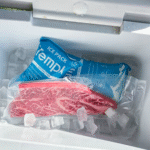
If you are searching for an insulated pouch enterprise solution, the right choice is the one that protects product quality, simplifies staff behavior, and still makes sense at scale. En 2026, that means more than picking a pouch with thick walls. It means matching the pouch to route time, objetivo de temperatura, frecuencia de apertura, traceability needs, flujo de trabajo de limpieza, y expectativas de sostenibilidad. A NOSOTROS. e-commerce kept growing in 2025, food spending remained high, and packaging regulation continued moving toward more circular models, so enterprise buyers now face more pressure to choose thoughtfully. (Census.gov)
Este artículo te ayudará a responder.:
- What an enterprise insulated pouch should do better than a retail bag
- Which materials and tests matter in custom thermal pouch procurement
- How to align pouch selection with food, farmacia, and medical workflows
- Qué 2026 trends in traceability, sostenibilidad, and compliance mean for buyers
- How to shortlist suppliers for long-term cold-chain partnerships
What is an insulated pouch enterprise solution, en realidad?
An insulated pouch enterprise solution is a controlled packaging format for repeatable cold-chain use. That may sound simple, but the difference from a consumer cooler bag is huge. Enterprise buyers need consistency across batches, predictable packout, documented testing, and a design people can use correctly under real time pressure.
en entrega de comida, that might mean a right-sized chilled pouch for short last-mile runs. In pharmacy, it might mean a compact thermal pouch that works with SOPs and secondary containment. In clinic or diagnostic transport, it might mean a small passive carrier built around coolant positioning and clean handling. WHO describes passive systems as insulated enclosures that maintain temperature using pre-conditioned coolant such as gel packs, PCM, o hielo seco, and CDC continues to emphasize current written SOPs for handling temperature-sensitive products. (Organización Mundial de la Salud)
Signs you need an enterprise-grade pouch
- You run repeat routes, not occasional ad hoc trips
- More than one team or site uses the same packaging
- Product loss or temperature drift already costs you money
- Training errors happen during packing and handoff
- You need traceability, audit readiness, or environmental reporting support
How should you define insulated pouch enterprise requirements before talking to suppliers?
Start by writing down the delivery reality. cuanto dura la ruta? How hot is the environment? How many times will the pouch be opened? Is it carried by rider, conductor, store staff, nurse, or courier? What is the real payload weight? These questions decide the pouch faster than color or shape ever will.
Then build a basic specification sheet with five things: rango de temperatura objetivo, minimum hold time, payload dimensions, metodo de limpieza, and operating assumptions. Add whether the pouch must work with gel packs or PCMs, whether it needs rain resistance, and whether it should support barcode or label placement. If you do this first, supplier comparisons become much cleaner.
Enterprise specification worksheet
Which materials matter most in a custom thermal pouch?
A good pouch does not rely on one miracle material. It uses layers. The outer shell handles abrasion and printing. The middle layer slows heat flow. The reflective layer helps reduce radiant heat gain. The inner liner manages hygiene, facilidad de limpieza, and contact with coolant or condensation. The best design is the one that balances all of these without becoming too bulky or too hard to use.
PCMs deserve special attention when you need a narrower temperature band. Scientific reviews describe phase change materials as latent-heat storage media that can hold large amounts of thermal energy at near-constant temperature, but they also note limits like leakage risk and cycling reliability unless the PCM is stabilized in a better composite structure. That is why buyers should ask how the PCM is formulated, contained, reconditioned, and validated in the actual pouch design. (PMC)
Material choices and buyer meaning
- Practical tips for better performance
- Use right-sized pouches: Extra empty space usually hurts performance.
- Fix coolant placement: Pockets or sleeves reduce packing mistakes.
- Avoid over-complex closures: Teams pack better when the pouch is intuitive.
- Specify cleaning chemicals early: Some linings look good until real sanitation starts.
Caso práctico: Many enterprise teams see better results after simplifying packout. A smaller pouch with fixed coolant placement often beats a bigger pouch with theoretically better insulation but inconsistent use.
Why do water resistance and seam design deserve more attention?
Because field use is messy. Rain, rider exposure, condensación, spilled product, and repeated wipe-down cycles all punish weak construction. That is why “water-resistant” should never be accepted as a vague sales phrase. Ask what was tested and how.
AATCC TM22 is used to evaluate resistance to surface wetting, while AATCC TM127 measures water penetration under hydrostatic pressure. Juntos, they give buyers a practical way to separate splash resistance from real penetration resistance. AATCC’s current professional manual also shows TM22 was revised in 2024 and listed in the 2026 edición, so buyers should ask suppliers to reference current test language when making waterproof claims. (AATCC)
When better water resistance matters most
- Outdoor rider delivery
- Pharmacy doorstep handoff
- Repeated coolant contact inside the pouch
- Shared fleet equipment with daily wipe-down
- Humid markets with long waiting time before handover
What tests and compliance signals matter in 2026?
For parcel and distribution comparison, ISTA says Standard 7E uses heat and cold profiles developed from real-world transport data and is now the reference thermal transport test standard for parcel shipment conditions. Para compradores, that matters because a pouch or insulated shipper should be compared under a recognized transport profile, not only under a friendly in-house test. (asociación internacional de transporte seguro)
For healthcare and pharmaceutical movement, the bigger message is distribution discipline. EMA says GDP sets the minimum standards wholesale distributors must meet to maintain medicine quality and integrity throughout the supply chain. IATA’s Temperature Control Regulations are built around packaging, documentación, and compliant handling for temperature-sensitive products, and CEIV Pharma reflects the same cold-chain rigor for air cargo participants. (Agencia Europea de Medicamentos (EMA))
For food-related use, traceability keeps getting more important. FDA’s traceability rule requires additional records for covered foods and FDA has stated it intends not to enforce the rule before July 20, 2028. The point for packaging buyers is clear: standard packaging, embalaje consistente, and scan-friendly labeling support better execution long before enforcement becomes urgent. GS1 likewise describes traceability standards as improving efficiency, seguridad, and supply-chain visibility. (A NOSOTROS. Administración de Alimentos y Medicamentos)
Compliance checklist for enterprise buyers
- Ask for thermal test conditions, not just hold-time claims
- Confirm whether water-resistance claims reference named test methods
- Require material disclosure appropriate to your market
- Standardize pouch SKUs for traceability and training
- Document packout instructions with photos, not text only
How are sustainability and regulation changing insulated pouch enterprise buying?
The sustainability conversation is no longer only about packaging disposal. It is also about avoiding wasted product, reducing repacks, and using materials more intelligently. EPA describes sustainable management of food as reducing wasted food and its life-cycle impacts, which matters because cold-chain failure wastes the product as well as the packaging. (EPA de EE. UU.)
Mientras tanto, Europe’s PPWR entered into force in February 2025 y tiene como objetivo reducir los residuos de envases, lower use of primary raw materials, and support a more circular economy. That means reusable pouch programs, clearer material choices, and easier recycling discussions are becoming more relevant in cross-border and export-oriented sourcing. (Ambiente)
Chemical scrutiny is also affecting decisions. EPA says PFAS have been used in textile mills and detected in some wastewater discharges, and EPA’s 2024 CERCLA rule designated PFOA and PFOS as hazardous substances. So when suppliers promise water resistance or stain resistance, you should ask how that performance is achieved, not just whether it exists. (EPA de EE. UU.)
2026 trend summary
More omnichannel demand: E-commerce growth keeps pressure on last-mile thermal protection. (Census.gov)
More documentation: Traceability and SOP-driven handling are moving from “nice to have” to operational baseline. (A NOSOTROS. Administración de Alimentos y Medicamentos)
More reuse pressure: Packaging rules and cost control both favor reusable systems where recovery is realistic. (Ambiente)
More chemistry questions: Water resistance claims now trigger material-disclosure conversations. (EPA de EE. UU.)
How do you choose the right supplier?
The best supplier is not simply the one with the lowest quote. It is the one that can translate your route conditions into a pouch design, explain material choices clearly, show test logic, and support changes after pilot feedback. Enterprise sourcing is rarely a one-round decision.
Ask for samples, guía de embalaje, and a discussion of failure modes. A serious supplier will tell you where the pouch works well, where it is weak, and how they would tune size, refrigerante, or lining for your exact use case.
Cuadro de mando de proveedores
Preguntas frecuentes
What is the biggest mistake in insulated pouch enterprise buying?
Choosing by appearance or thickness before defining the actual route and payload. That creates expensive misalignment very quickly.
Is a pouch enough for pharmaceutical transport?
A veces, Sí, for short controlled lanes. But the packaging choice must fit the product risk, Sops, y condiciones de la ruta.
Should you use PCM or gel packs?
Use PCM when you need a tighter temperature window. Use gel when you need simpler, lower-cost general cooling. Validate both before rollout.
Do I need a waterproof outer shell?
If the pouch will face rain, rider exposure, o saneamiento repetido, a better shell and better seams are usually worth the cost.
Can one enterprise pouch design serve every department?
Por lo general no. Two or three standardized pouch families are often better than one compromised universal design.
Resumen y recomendación
A successful insulated pouch enterprise program in 2026 depends on five things: clear use-case definition, smart material layering, repeatable coolant placement, honest testing, and supplier support that continues after the sample stage. When you also account for traceability, circular packaging pressure, and chemical scrutiny, the best pouch is the one that fits your operation as a system.
The simplest next step is to create a route-based specification sheet, shortlist suppliers that can explain both pouch construction and coolant logic, and run a real pilot before national or multi-site rollout.
Acerca de Tempk
According to its website, Tempk is a Shanghai-based cold-chain packaging supplier established in 2011, with operations linked to multiple factories in China. Tempk says it provides insulated bags, mochilas aislantes para llevar, revestimientos de cajas, Cajas aisladas de EPP, PCM-related cold-storage materials, and temperature-control verification support for food and medicine applications. Tempk also publishes quality, certificate, and environmental content that can be useful when buyers want a supplier with broader cold-chain category coverage rather than a single bag-only offer. (Templ)