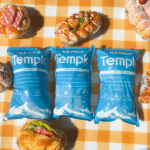
A strong cooler bag exporter helps you protect temperature, protect margins, and protect your brand. That is the real buying goal. You are not simply importing bags. You are importing a mix of materials, rendimiento térmico, sistemas de calidad, shipping discipline, and market compliance. When one of those pieces is weak, the whole project becomes expensive.
En 2026, buyer expectations are higher because the market is harder. Cold chain demand remains strong, sustainability rules are becoming more practical, and procurement teams want more proof before approving a supplier. If you choose the right cooler bag exporter, you get smoother reorders, menos quejas, and a more scalable supply plan.
Este artículo te ayudará:
- identify the traits that separate a dependable cooler bag exporter from a low-control supplier
- understand how material structure affects thermal performance and product life
- compare quotations using real value instead of surface-level price
- review compliance, contacto con alimentos, and chemical disclosure more confidently
- build a 2026-ready sourcing process with less risk and better repeatability
What should you expect from a professional cooler bag exporter?
You should expect process control, not just production capacity. A real cooler bag exporter can explain what the bag is made from, how the layers are assembled, what tolerances are allowed, how defects are caught, and how finished cartons are prepared for export. This sounds basic, but many supplier problems begin because these details were never fixed clearly.
A professional exporter also understands that different buyers need different bag logic. A retail tote, a meal-delivery bag, and a healthcare carry bag may all be called “cooler bags,” but their priorities are different. One may need better shelf appeal. Another needs repeated loading and cleaning. Another needs stronger temperature discipline. The exporter should ask about your end use before making performance promises.
The best suppliers think in systems. They do not sell “cold for 8 hours” as a slogan. They ask what coolant you use, what the start temperature is, how often the bag will be opened, and how far it will travel. That approach saves you from buying a product that looks right but performs badly in the real world.
Quick buyer scorecard
- Consejos prácticos
- Use one approval sample code: Tie mass production to one written sample reference.
- Ask about substitutions early: Do not let “similar material” stay undefined.
- Review carton efficiency: Freight cost often hides inside packaging choices.
Ejemplo de caso: A buyer approved a beautiful pre-production sample but forgot to define foam density tolerance and zipper model. The first shipment was acceptable. The second shipment felt softer, sagged more under load, and had weaker closure performance. After moving to a cooler bag exporter with locked BOM control and sample-revision coding, performance became more stable and the buyer stopped wasting time on post-shipment arguments.
How does material science affect your buying result?
Thermal performance depends on the whole structure, not on one magic fabric. The outer shell supports durability and brand appearance. The foam slows heat flow. The liner affects cleanup, leakage control, and sometimes food-related suitability. The closure controls air exchange. Costuras, esquinas, and handle anchor points decide whether the bag keeps working after repeated use.
That is why two bags with the same size and similar look can behave very differently. A supplier may save cost by thinning the foam, simplifying the liner build, weakening the top overlap, or using less stable reinforcement. The price goes down a little, but temperature retention, comodidad, and product life fall much more.
Technical validation helps here. ISTA identifies 7E as the key thermal transport testing standard for parcel delivery conditions, built from real heat and cold profiles. For more sensitive handling, logged monitoring is essential: NIST says continuous temperature monitoring is critical because excursions can damage product quality, and CDC guidance highlights digital data loggers and appropriate probes. (Asociación Internacional de Tránsito Seguro)
You do not need to turn every purchase into a research project. You simply need to ask the exporter for test conditions in writing and make sure your sample comparisons use the same payload, refrigerante, temperatura ambiente, and opening pattern.
Material and structure checklist
- shell fabric weight and coating type
- insulation type and nominal thickness
- liner material and sealing logic
- zipper model or closure design
- bottom support board and removability
- strap reinforcement method
- cleaning method after condensation or spill
Which compliance and market issues matter most in 2026?
Compliance matters when it is linked to use, mercado, y materiales. Broad labels like “eco,” “food grade,” or “export standard” are not enough. A stronger cooler bag exporter can show you which parts of the product are relevant to food contact, which chemical declarations are available, and which system certificates support process control.
On the food side, the FDA states that food contact notifications are specific to the company and intended use, which means one claim cannot be copied blindly across projects. En Europa, food-contact materials placed on the market must comply with Regulation (CE) No 1935/2004, and plastic food-contact rules under Regulation (UE) No 10/2011 remain important when plastic layers are involved. ISO says ISO 22000 can be used across the food chain to manage food safety hazards, mientras que ISO 9001 remains a strong base for quality management. (A NOSOTROS. Administración de Alimentos y Medicamentos)
Chemical transparency is also rising. For EU projects, ask for declarations that cover ink, revestimientos, espuma, etiquetas, webbings, and hardware. Suppliers of articles containing Candidate List SVHCs above 0.1% w/w can face duties tied to EU rules and the SCIP system, so partial disclosure is not enough. En los EE.UU., FDA says 35 PFAS-related food contact notifications are no longer effective as of January 2025, which makes PFAS-related claims around coated contact materials more sensitive. (欧洲化学品管理局)
Why are market trends changing exporter selection?
The market is no longer rewarding cheap supply alone. Los EE. UU.. Department of Commerce says cold chain-dependent food and pharmaceutical trade remains large and has seen steady growth since 2020. FAO links transport-side food-loss reduction to packaging, temperature management, y flujo de aire, while UNIDO notes that poor storage and transport can still drive major losses in vulnerable regions. This keeps demand for practical thermal packaging strong. (贸易局)
Al mismo tiempo, packaging regulation and procurement are changing buyer behavior. The European Commission says PPWR entered into force on 11 Febrero 2025 and begins applying from mid-2026. EPA says efficient and lightweight packaging can save money and reduce waste. OECD notes that sustainable packaging and route optimization can lower supply chain carbon footprint, and its green procurement work shows that 92% of OECD countries had adopted a national GPP strategy. (Ambiente)
This is why the best cooler bag exporter in 2026 usually wins by combining four things:
stable technical quality
- clearer material disclosure
- better shipping efficiency
- stronger support for buyer-side approval
- Últimas novedades
- Thermal proof is replacing slogan-based hold-time claims.
- Documentation is becoming a sales advantage, not an admin task.
- Reuse and packaging efficiency are shaping new RFQs.
Preguntas frecuentes
Q1: How many times should the keyword model be tested before approval?
At least under one controlled bench test and one practical-use test. If the project is sensitive, add route simulation or logged monitoring.
Q2: What is the best sign that an exporter is reliable?
Clear answers with fixed tolerances and written revision control. Reliable suppliers do not hide behind vague terms.
Q3: Should I ask for certifications first or samples first?
Ask for both early. Samples show execution. Certifications and declarations show system control. You need both to judge risk well.
Q4: What is the biggest hidden cost in cooler bag imports?
Instability. If batch two differs from batch one, you lose time, freight efficiency, customer trust, and internal approval confidence.
Q5: How do I make reorders easier?
Lock the BOM, sample code, carton spec, artwork version, and defect standard in one order file. Reorder discipline starts before order one ships.
Resumen y recomendaciones
Choosing a cooler bag exporter in 2026 is about more than price and appearance. You need a supplier that understands thermal structure, export execution, material disclosure, and repeat-order control. The strongest exporters help you reduce risk before goods ship, not after claims appear.
Use one detailed specification sheet, one supplier scorecard, and one approval file for every model. Test samples under the same conditions, ask for intended-use documentation, and choose the exporter that makes quality easier to repeat.
Acerca de Tempk
Tempk develops reusable thermal packaging for cold chain, entrega, minorista, and temperature-sensitive transport needs. We focus on practical engineering, clearer material communication, and scalable production discipline. If you need a cooler bag exporter approach that balances performance, cumplimiento, and procurement speed, we build the project around your real use conditions.