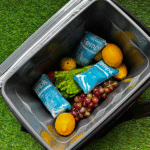
The global market for cooler backpacks and insulated bags is expanding rapidly. Analysts estimate that the cooler and insulated bag market will grow from about USD 986 million in 2025 to roughly USD 1.05 billion in 2026 and could reach USD 1.6 billion by 2032. Mientras tanto, the broader cold-chain packaging sector is expected to grow from about USD 27.7 billion in 2025 to USD 102.1 billion by 2034. Such growth reflects rising demand for portable cold-chain solutions that are efficient, durable and sustainable. This guide will help you choose the right cooler backpack packaging by combining industry data, practical advice and the latest trends for 2026.
Why cooler backpack packaging matters for cold-chain logistics: Discover how portable insulation protects temperature-sensitive items and why market growth highlights its importance.
How to select insulation materials and design features: Understand the differences between air, espuma, gel and vacuum insulation and how capacity, weight and closures affect performance.
Why sustainability is a must-have: Learn how recyclable materials, phase-change technology and new regulations are shaping eco-friendly cooler backpacks.
How smart technologies enhance user experience: Explorar sensores, IoT connectivity and digital barcodes that provide real-time monitoring and easy traceability.
How to optimise cooler backpacks for camping, pharma and daily commutes: Get practical advice on matching capacity and features to different use cases.
What trends will shape the cooler backpack market in 2026: Examine market forecasts, policy changes and consumer demands that will influence product development.
What makes cooler backpack packaging essential for cold chain logistics?
Portable cold-chain packaging allows you to maintain precise temperature control while keeping your hands free. Unlike bulky hard coolers, cooler backpacks combine insulation with wearable convenience. They are used to transport vaccines, biológicos, mariscos, prepared meals or drinks while maintaining temperatures over long durations. Market growth underscores their importance: the cooler and insulated bag market is expected to expand from USD 986.57 million in 2025 to USD 1,049.45 million in 2026 en un 7.12 % tasa de crecimiento anual compuesta (Tocón). This growth is fueled by outdoor recreation, urban commuting and cold-chain logistics for pharmaceuticals and perishable foods. Effective cooler backpack packaging helps you reduce waste, comply with regulations and ensure product integrity.
Explicación ampliada
From a supply-chain perspective, cooler backpack packaging functions as a portable cold room. Layers of insulation—such as air pockets, high-density foam or vacuum panels—work together with refrigerants like phase-change materials (PCM) to keep contents within a narrow temperature range. As cold-chain packaging evolves, new materials like PCMs and vacuum-insulated panels deliver longer cooling with less bulk. Regulations also drive adoption: authorities such as the U.S. Food and Drug Administration and the European Union require evidence that temperature-sensitive goods have been handled properly. Portable data loggers and smart sensors integrated into backpacks offer real-time monitoring, enabling you to meet these requirements. Además, outdoor enthusiasts appreciate backpack coolers because they are hands-free, ergonomic and lighter than hard coolers. Families use them for picnics and grocery runs, while healthcare workers rely on them to transport vaccines to remote areas.
Key components of cooler backpack packaging
A high-performing cooler backpack incorporates several components:
| Tipo de aislamiento | Temperature retention | Peso | Best use-case |
|---|---|---|---|
| Air-filled insulation | Moderado; traps air pockets to slow heat transfer | Muy claro | Short trips or everyday lunch bags |
| Aislamiento de espuma (EVA o poliuretano) | Alto; retains cold for 24–48 hours | Moderado | Cámping, beach days, outdoor work |
| Gel-based insulation | muy alto; gel packs retain cold longer than foam | mas pesado | Transporte de larga distancia, pesca, hunting |
| Paneles de aislamiento de vacío | Superior; minimal heat transfer for days | Light but costly | Pharmaceutical or biomedical logistics |
Consejos prácticos y orientación
Camping and hiking: Choose a foam-insulated backpack with a capacity of 20–30 litres. Foam provides long-lasting cold retention without excessive weight.
Pharmaceutical transport: Use vacuum-insulated or PCM-equipped backpacks with digital temperature loggers. These solutions comply with strict temperature requirements (2–8 ° C) and help you document conditions for regulators.
Daily commutes or meal prep: Select an air-insulated bag under 20 litres with leak-proof liners. This keeps your lunch fresh and prevents spills.
ejemplo real: A biotech company used PCM-equipped backpack coolers to deliver vaccines across a 400 km supply chain. By combining PCMs with smart sensors, they maintained temperatures between 2–8 °C and reduced spoilage by 30 %, demonstrating how portable cold-chain packaging protects medical products.
How to select the right insulation materials and design features in cooler backpacks?
Choosing the right insulation and design features depends on how long you need to keep items cold, how much weight you can carry and your specific application. Foam insulation remains the most common choice because it balances cost, weight and temperature retention. Air-filled insulation is lightweight but offers shorter cooling duration, while gel-based insulation delivers extended cooling at the cost of added weight. Paneles de aislamiento de vacío (VIP) and PCMs offer premium performance for critical cold-chain applications. Look for leak-proof liners, reinforced seams and ergonomic straps to enhance comfort and prevent leaks during transport.
Explicación ampliada
Selecting materials starts with understanding your mission. For day hikes or picnics, simple foam-insulated backpacks usually suffice. Foam retains cold for up to 48 hours and is cost-effective. Gel-based backpacks use integrated gel packs or flexible ice bricks to extend cooling beyond 48 horas. Vacuum-insulated backpacks leverage vacuum panels—highly efficient barriers that drastically slow heat transfer. Although expensive, VIPs are thinner and lighter than foam while offering superior performance, making them ideal for medical or high-value shipments. PCMs—substances that change state at specific temperatures—absorb or release heat to maintain a constant temperature, ensuring stable conditions for pharmaceuticals or biologics.
Design features also affect usability. Waterproof zippers, magnetic seals and reinforced bottom panels prevent water leakage and improve durability. Adjustable shoulder straps and hip belts distribute weight evenly, crucial for long treks. Some models include side pockets for easy access, reflective materials for visibility, or integrated bottle openers and cutting boards for convenience.
Insulation materials and design features explained
Air insulation: Inexpensive and light but provides limited cold retention. Best for short excursions or lunches.
Aislamiento de espuma: Most versatile; provides good insulation and structure. Multi-layer foam with reflective liners can keep ice frozen for days. Combine with gel packs for better performance.
Paquetes de gel o ladrillos de hielo: Use non-toxic gel packs to extend cooling. They freeze at lower temperatures and slowly release cold energy during transit.
Paneles de aislamiento de vacío (VIP): Use evacuated micro-sealed panels to provide high thermal resistance. Suitable for pharmaceuticals or long-distance travel where weight is critical.
Materiales de cambio de fase (PCM): Substances that maintain a constant temperature while changing phase (sólido a líquido). They can maintain 2–8 °C or other specific ranges for vaccines and biologics.
Practical design features include:
Leak-proof liners and welded seams to prevent water intrusion or leakage.
Waterproof zippers or magnetic closures for one-hand operation.
Adjustable straps and breathable back panels to reduce fatigue.
External attachment points or pockets for gear, utensils or gel packs.
Use-case tip: For a 12-hour camping trip, pair foam insulation with two gel packs and pre-chilled contents. If you expect to hike more than 10 kilómetros, choose a backpack with padded hip belts and weight distribution straps. For pharmaceutical shipments requiring 48-hour cold retention, invest in VIPs or PCMs and ensure the backpack has integrated data loggers.
Why sustainability matters in cooler backpack packaging and how to achieve it?
Sustainability has shifted from a differentiator to a baseline expectation in packaging. The reusable cold-chain packaging market is projected to reach USD 4.97 billion by 2025 y casi el doble por 2034. Al mismo tiempo, regulations like the European Union’s Packaging and Packaging Waste Regulation (Páginas) and extended producer responsibility schemes are pushing manufacturers to adopt recyclable materials. Eco-friendly cooler backpack packaging reduces waste, lowers disposal costs and appeals to eco-conscious consumers. It also aligns your brand with sustainability goals without compromising performance.
Explicación ampliada
Sustainable cooler backpacks minimize environmental impact by using materials derived from recycled or renewable resources. Examples include recycled PET (PET), plant-based foams, biodegradable liners and compostable films. Some innovations, such as Embalagem do Futuro—a reusable cold-chain transport system—combine insulated expanded-polypropylene (PPE) boxes made from recycled fishing-industry waste with a paper-based bacterial detection label and IoT monitoring. These solutions show how circular economy principles can be integrated into cold-chain logistics.
Legislation is a major driver. The EU’s PPWR requires packaging to be recyclable by design, encourages reusable systems and discourages single-use plastics. Deposit return schemes and extended producer responsibility (EPR) programs increase the availability of recycled materials and shift disposal responsibility to producers. En los Estados Unidos, 2025 tariff adjustments on materials like high-density polyethylene have driven companies to diversify sourcing and invest in automated production, indirectly accelerating investment in lightweight and locally sourced materials.
Adopting sustainable cooler backpacks also has business benefits. Reusable containers reduce costs over time by eliminating single-use purchases. Returnable systems enable you to track and retrieve containers, creating closed loops that lower carbon footprints. Communicating these efforts transparently builds trust with consumers who are increasingly sceptical of vague sustainability claims.
Steps to implement sustainable cooler backpack packaging
| Implementation phase | Acciones clave | Expected benefit |
|---|---|---|
| Evaluación | Auditar el embalaje actual, measure disposal costs and environmental impacts | Identify waste hotspots and cost-saving opportunities |
| Selección de material | Choose recycled or plant-based insulation (p.ej., PET, EPP from fishing waste), opt for compostable liners | Reduce reliance on virgin plastics and improve recyclability |
| Diseño para reutilización | Incorporate durable shells, easy-to-clean liners and return-friendly labels | Enable closed-loop logistics and lower long-term costs |
| Integrar monitoreo | Add IoT sensors or barcodes to track temperature and location | Demonstrate compliance and optimise supply-chain efficiency |
| Educate users | Provide clear instructions on care, return and recycling | Increase correct use and extend product life |
Consejos prácticos y ejemplos.
Replace single-use gel packs with PCM bricks that can be reused multiple times. Más de un año, you’ll reduce gel pack waste and save money.
Use recycled fabrics and foams—many cooler backpacks now feature outer shells made from recycled fishing nets or plastic bottles.
Create a return program for damaged backpacks. Offer customers incentives to return used packaging for refurbishment or recycling.
Caso real: A meal-delivery service switched from disposable EPS boxes to reusable foam-insulated backpacks lined with rPET. Más de seis meses, la empresa redujo el desperdicio de envases en 65 % and saved on disposal fees while customers appreciated the eco-friendly packaging.
What role do smart technologies and user experience play in modern cooler backpacks?
Smart technologies transform cooler backpacks into connected devices that enhance temperature control, traceability and user convenience. Today’s advanced coolers integrate sensors that monitor internal temperature and humidity, smartphone apps that display alerts, and modular attachments that customise functionality. Digital innovations such as 2D barcodes and IoT connectivity support real-time tracking, ensure regulatory compliance and improve user experience.
Explicación ampliada
Smart sensors and data loggers embedded in cooler backpacks continuously record temperature, humidity and geolocation. These devices alert users if conditions stray outside acceptable ranges, permitiendo una intervención inmediata. Smartphone integration allows you to check the status of your cargo and share data with colleagues or regulators. Some backpack coolers also integrate wireless charging to power sensors or mobile devices. Modular designs let you attach auxiliary compartments, solar panels or hydration systems.
Digitalisation is broader than sensors. En 2026, businesses are preparing for Sunrise 2027, a global initiative to upgrade traditional barcodes to enhanced 2D barcodes that carry richer data. These barcodes can encode sustainability information, batch numbers and recall alerts, improving traceability and consumer transparency. Smart packaging also supports supply-chain optimisation by transmitting location and condition data to logistics platforms. This data helps shippers select slower, lower-emission transport modes without risking spoilage.
Smart features that enhance performance
sensores de iot: Embedded temperature, humidity and shock sensors provide continuous monitoring and push notifications.
Smartphone integration: Bluetooth or Wi-Fi connectivity allows you to check conditions and update firmware via an app.
Modular attachments: Add-ons such as solar panels, hydration reservoirs or battery packs increase versatility.
Digital barcodes: New 2D barcodes embed product information, sustainability data and usage instructions to improve transparency.
Consejos prácticos
Calibrate your sensors regularly to ensure accurate readings.
Use apps that integrate with your quality-management system; this enables automatic record keeping for audits.
Set up alerts for temperature excursions so you can respond quickly.
Balance technology with simplicity; choose features that genuinely enhance your workflow rather than adding complexity.
Caso ilustrativo: A hospital network adopted IoT-enabled cooler backpacks for vaccine transport. The system sent real-time alerts to pharmacists if temperatures deviated by more than 0.5 °C. Más de un año, the network reduced product loss by 40 % and improved compliance reporting—a testament to how smart technology enhances cold-chain reliability.
How to optimise cooler backpack packaging for different applications?
Different uses require different insulation levels, capacities and features. Backpack coolers designed for camping or hiking differ from those used in pharmaceutical delivery or urban commuting. Understanding application-specific requirements helps you choose the right product and avoid over- or under-specification. Market research reveals that product type is a primary way consumers differentiate offerings: backpack coolers come with air, espuma, gel or vacuum insulation across multiple size options. Distribution channels also vary, from direct-to-consumer websites to sporting goods stores.
Explicación ampliada
For recreational uses such as camping, fishing or beach trips, the goal is to keep drinks and food cold for a day or weekend. Foam or gel insulation provides long-lasting cold retention, while ergonomic straps and external pockets allow easy transport of gear. En contraste, pharmaceutical shipments require strict adherence to temperature ranges (a menudo 2–8 °C). Vacuum-insulated backpacks combined with PCMs provide stable conditions for up to 72 horas, and integrated data loggers document the thermal history. For urban commuters and meal prep enthusiasts, lightweight air-insulated models with leak-proof liners suffice, as they primarily keep lunch cool for a few hours.
Regional preferences and regulation also influence selection. En América del Norte y Europa, consumers value durable materials and high performance because of strong outdoor recreation cultures. En los mercados emergentes, affordability and portability drive demand, while local regulations may affect insulation materials. Tariff policies introduced in early 2025 have increased costs for imported materials, prompting manufacturers to diversify suppliers and automate production lines.
Optimisation guidelines for common applications
| Solicitud | Aislamiento recomendado | Typical capacity | Beneficios |
|---|---|---|---|
| Cámping & senderismo | Multi-layer foam or gel packs | 20–30 litros | Larga duración de enfriamiento, comfortable carry, pockets for gear |
| Fishing & hunting | Gel or vacuum insulation | 30–40 L | Retención de frío superior, revestimientos a prueba de fugas, reinforced bases |
| Pharmaceutical or biomedical transport | Vacuum or PCM panels | 15–25 litros | Mantiene entre 2 y 8 °C, integrated data loggers, lightweight for field use |
| Viaje diario & preparación de comida | Air or foam insulation | 10–20 litros | Ligero, a prueba de fugas, fácil de limpiar |
| Outdoor events & deportes | Foam with gel packs | 20–35 L | Durable, comfortable straps, quick-access pockets |
Additional user tips
Consider capacity relative to ice volume: Típicamente, ice or PCM packs should occupy about one-third of the backpack’s volume for optimal performance.
Pre-chill the backpack: Place the empty pack in a cool environment before loading to enhance thermal efficiency.
Balance weight distribution: Use side pockets to distribute weight evenly, preventing strain on your shoulders and back.
Check airline or event regulations: Some venues restrict the size or type of cooler allowed; confirm compliance before traveling.
Escenario del mundo real: A nurse traveling to remote clinics uses a 25-litre backpack with vacuum panels and PCM packs. The bag maintains vaccines within 2–8 °C for 24 hours while leaving her hands free to carry medical supplies. Integrated data logging provides proof of compliance, illustrating how application-specific optimisation improves healthcare delivery.
What trends and market insights will shape cooler backpack packaging in 2026?
Several converging trends will define the cooler backpack market in 2026: growth across recreation and pharmaceuticals, a shift toward sustainability, regulatory changes and digitalisation. The cooler box market itself is projected to grow from USD 7.75 billion in 2025 to USD 8.46 billion in 2026 and could reach USD 13.15 billion by 2031. Hard-sided coolers currently dominate, but electric/thermoelectric units are projected to grow at over 10 % anualmente. By capacity, personal (≤20 quart) units represent 65.9 % del mercado. These figures illustrate broader demand for portable cooling solutions and hint at opportunities for backpack variants.
Latest progress and insights
Consumer convenience matters: Las encuestas muestran que 83 % of consumers value convenience more now than five years ago and rising urbanisation is driving demand for smaller, resealable packages. For cooler backpacks, this translates into lightweight designs with easy-access pockets and quick-seal closures.
Sustainability becomes mainstream: En 2026 the differentiator will not be whether packaging is sustainable but how transparent and robust the strategy is. Materiales ecológicos, recyclability and clear communication of environmental impact will influence purchase decisions.
Regulation and policy: The EU’s PPWR and other global EPR schemes push manufacturers to rethink materials and product life cycles. Tariff changes in the United States have already spurred supply-chain diversification and investment in automation.
Tecnología e innovación: The upcoming Sunrise 2027 project will upgrade barcodes to data-rich 2D codes, emphasising digitalisation. Smart sensors and IoT connectivity are increasingly expected features.
Crecimiento y segmentación del mercado.: Cooler backpacks fall within the broader cooler box and insulated bag market, which is expected to grow at a 7.12 % CAGR de 2025 a 2032. Demand is diversified by capacity, insulation type and end-user segments such as camping, pharmaceuticals and urban commuters.
Market insights and opportunities
The overall packaging market is forecast to grow at a 3.8 % CAGR to reach USD 1.43 trillion by 2028. Growth will be driven by emerging regions where rising incomes fuel demand for affordable, portable packaging solutions, while high-income regions will set standards for sustainability and technology. Cooler backpack manufacturers that invest in recyclable materials, integrate smart features and adapt to evolving regulations are well positioned to capture market share. Cross-industry partnerships—such as collaborations between packaging firms and IoT companies—will enable faster innovation. Además, end-user education and clear sustainability messaging will build trust in an increasingly competitive landscape.
Preguntas frecuentes
Pregunta 1: How long can a cooler backpack keep items cold?
Most foam-insulated backpacks keep contents cold for 24–48 hours when properly packed with ice or gel packs. Vacuum-insulated or PCM-equipped models can maintain specific temperature ranges for up to 72 horas. Para maximizar el rendimiento, pre-chill the backpack and fill it at least one-third with ice or PCM packs.
Pregunta 2: Are cooler backpacks allowed on airplanes or at events?
Generalmente, you can take cooler backpacks on airplanes as carry-on or checked baggage, but you must empty or gel-pack liquids to meet Transportation Security Administration guidelines. Many sporting venues allow soft-sided coolers of limited size. Always check airline and venue policies to avoid surprises.
Pregunta 3: What size cooler backpack should I choose?
Choose capacity based on your activity. For solo trips or daily lunches, 10–15 litres works well. For group camping or fishing, 25–35 litres provides enough space for food, drinks and ice. Remember that ice or PCM packs should occupy roughly one-third of total volume.
Pregunta 4: How do I clean and maintain a cooler backpack?
Después de cada uso, empty water and wipe the interior with mild soap. Allow the bag to air-dry completely to prevent mould. For heavy stains or odours, use a diluted vinegar solution. Avoid machine washing unless specified by the manufacturer; it may compromise insulation.
Sugerencia
Choosing the right cooler backpack packaging in 2026 means balancing performance, sostenibilidad y conveniencia. The market for cooler backpacks and insulated bags is growing rapidly, highlighting their importance in camping, pharmaceuticals and everyday life. Select insulation based on how long you need to keep items cold, and evaluate design features like leak-proof liners, ergonomic straps and smart sensors. Sustainability should be a priority, incorporating recycled materials and reusable systems. Digitalisation offers real-time monitoring and traceability, enhancing compliance and reducing waste. By understanding your specific application—whether camping, pharmaceuticals or commuting—you can choose the best capacity, insulation and features to meet your needs.
Próximos pasos viables
Assess your current usage: Identify how long you need to keep items cold, your typical load and any regulatory requirements.
Choose the appropriate insulation: Air or foam for short, light trips; gel or vacuum for longer durations or critical shipments.
Integrar la sostenibilidad: Opt for recycled materials and returnable systems; explore PCMs and EPP made from recycled content.
Consider smart features: Invest in sensors and digital barcodes for high-value or regulated products.
Manténgase informado sobre las tendencias: Monitorear la evolución de las regulaciones, consumer expectations and technological innovations to ensure your packaging strategy remains competitive.
Acerca de Tempk
Tempk is a leading provider of cold-chain packaging solutions. We design and manufacture insulated bags, boxes and ice packs that deliver superior thermal performance while prioritising sustainability. Our reusable containers use advanced foams, PCMs and recyclable materials to keep products at precise temperatures. By integrating smart sensors and data loggers, we help clients maintain regulatory compliance and reduce product loss. With a focus on research and customer collaboration, we deliver solutions tailored to food, industrias farmacéutica y logística.
Llamado a la acción: Contact our team for customised cooler backpack packaging solutions. We can help you select the right materials, size and smart features to meet your specific cold-chain needs.