How to choose the right insulated bag producer in 2026
The market for insulated packaging is booming. En 2025 it reached roughly US$16.71 billion and is projected to reach US$22.06 billion by 2030. This growth is driven by online food delivery, pharmaceutical distribution and outdoor recreation. With so many manufacturers, choosing an insulated bag producer can feel overwhelming. This guide breaks down the factors you need to consider—from material science to sustainability—so you can confidently find a supplier who meets your quality, objetivos de costes y medioambientales. Our insights reflect the most recent data available as of February 23 2026, ensuring you stay ahead of competitors.
Este artículo responderá:
What defines a high-quality insulated bag producer? Understand manufacturing capabilities, certifications and product diversity.
How do insulation materials affect performance? Compare foams, vacuum panels and phase-change materials.
Why does sustainability matter when choosing a producer? Learn about reusable systems and eco-friendly innovations.
How can you evaluate suppliers for different use cases? Distinguish between food, pharmaceutical and consumer applications.
What trends will shape insulated bag production in 2026 y más allá? Discover new technologies and market forecasts.
What defines a high-quality insulated bag producer?
A high-quality insulated bag producer integrates reliable materials, rigorous testing and customer-centric service. You should look for producers with a track record of designing and manufacturing insulated bags for diverse industries, such as food delivery and pharmaceuticals. Leaders like ProAmpac and Cold Chain Technologies are examples: ProAmpac launched the curbside-recyclable ProActive FiberCool insulated bag in June 2024, while Cold Chain Technologies introduced reusable CCT TheraShield solutions for cell-and-gene therapy shipments in January 2023. These innovations show that reputable manufacturers invest in research and offer products validated by independent standards.
Choosing a producer is similar to hiring a personal trainer—you don’t just want someone who owns equipment; you want someone who understands your goals, monitors progress and adjusts techniques. Look for ISO certifications, ISTA testing and documented compliance with Good Distribution Practice (PIB) regulaciones, which ensure consistent quality. Evaluate the breadth of their product line: do they offer soft-sided coolers, tote bags, pallet covers and reusable shippers? Reputable producers provide performance data showing how long their bags maintain target temperatures under various conditions. Customer support matters too; a good supplier will customize products, offer technical guidance and provide after-sales service.
Key criteria for selecting an insulated bag producer
| Criterio | Por que importa | Evidence from industry | Tu beneficio |
|---|---|---|---|
| Certified quality management | ISO 9001 or similar standards demonstrate controlled processes | Leading companies like Sonoco ThermoSafe offer recyclable EOS packaging made from post-consumer paper fiber | Ensures consistent product quality and regulatory compliance |
| Innovación de materiales | Using high-performance foams, vacuum panels and phase-change materials improves insulation | Cold Chain Technologies’ CCT TheraShield provides reusable thermal packaging across various temperature profiles | Better hold times reduce spoilage and cost |
| Iniciativas de sostenibilidad | Eco-friendly materials and reusable designs reduce waste | ProAmpac’s FiberCool bag is recyclable and companies explore paper and feather insulation | Aligns with ESG goals and customer expectations |
| Industry experience | Long-standing producers understand diverse requirements and regulations | Firms like Sonoco ThermoSafe and Peli BioThermal have decades of experience and global reach | Reliable partnership and scalable supply |
| Comprehensive customer support | Technical guidance, customization and monitoring tools help optimize shipments | Vendors provide performance data and IoT sensors for real-time tracking | Ensures that you use the product effectively |
Practical tips for identifying the right partner
Solicitar datos de rendimiento: Ask suppliers to provide validated test results showing how long their bags maintain specific temperatures. Look for ISTA-qualified products like ultra-cold shippers that support vaccine distribution down to –70 °C.
Verificar certificaciones: Ensure the producer complies with GDP, ISO and sustainability standards. Reusable systems should meet regulatory guidelines for food safety and pharmaceutical logistics.
Assess product range and customization: Choose a producer who offers multiple bag sizes, closure mechanisms and optional features like temperature loggers or tamper-evident seals.
Estudio de caso: A regional meal-kit company adopted real-time multi-sensor monitoring in its insulated shipments, enabling staff to respond to temperature alerts promptly and reduce spoilage by 40 %. This demonstrates how partnering with a producer that supports IoT integration can significantly improve product quality and customer satisfaction.
How do insulation materials affect performance?
Insulation materials are the heart of any insulated bag, dictating how well your products stay cold or hot. Modern bags use multiple layers—fabric, foam and reflective films—to slow heat transfer. Premium models incorporate vacuum insulated panels (VIP) y materiales de cambio de fase (PCM) to maintain precise temperature windows. Understanding these materials helps you choose the right bag for your application.
Insulation works like dressing in layers on a chilly hike: the outer jacket shields you from wind, the mid-layer traps air and the base layer regulates moisture. Similarmente, insulated bags use a durable outer shell, foam or hybrid boards for conduction resistance and a metalized film to reflect radiant heat. VIPs create a near-vacuum layer with very low thermal conductivity, delivering high performance in thin designs; they allow more payload space but cost more. PCMs absorb or release latent heat during phase transitions, maintaining stable temperatures across a range of –75 °C to 151 °C. Manufacturers often combine VIPs with PCMs and gel packs to extend hold time beyond 72 horas.
Comparing common insulation materials
| Material | Rendimiento térmico | Insight del mercado | Mejor caso de uso | Beneficio práctico |
|---|---|---|---|---|
| Poliestireno expandido (EPS) | R-value ≈ 7 por pulgada | EPS dominated the cold chain packaging market in 2025 con 38 % participación en los ingresos | Corto- to medium-duration shipments; low-cost applications | Widely available and easy to mold but limited recyclability |
| Poliuretano (Puro) | High insulating efficiency; can achieve –89 °C in ultra-cold shippers | Used in foldable and molded shippers; critical for vaccine distribution | Farmacéuticos ultra frenos; transporte de larga distancia | Supports temperatures as low as –89 °C for 120 horas |
| Paneles aislados de vacío (VIP) | Thermal conductivity as low as 0.0043–0.008 W/(m · k) | VIP segment projected to grow at 14.2 % CAGR from 2026–2033 | High-value shipments where space and weight matter | Longer hold times with thinner walls |
| Materiales de cambio de fase (PCM) | Mantiene temperaturas específicas. (p.ej., 2–8 ° C) by absorbing or releasing heat | PCMs paired with VIPs extend performance beyond 72 horas | Productos farmacéuticos, biológicos, alimentos especiales | Precise control across wide temperature ranges |
| Materiales ecológicos (feather, seaweed, fibra) | 15 % menor conductividad térmica que el EPS; maintain –20 °C for 120 horas | Growing due to consumer demand for sustainable packaging | Kits de comida, mariscos, sustainable brands | Biodegradable and curbside recyclable |
Helpful advice on material choices
Match material to your product: Frozen shipments benefit from thick foam and VIPs plus gel packs to maintain sub-zero temperatures, while chilled goods require multi-layer insulation and standard gel packs.
Evaluate duration and payload: VIPs provide long hold times in a thin profile; however they cost more, so reserve them for high-value or long-distance deliveries. EPS or PUR may suffice for 24–72 hour shipments.
Considere la sostenibilidad: Natural fibres and paper-based liners provide curbside recyclability and appeal to the 79 % of consumers who factor environmental impact into purchases.
Ejemplo de caso: The cold chain research firm Nordic Cold Chain Solutions introduced Drain Safe gel packs in 2019, an eco-friendly refrigerant safe for disposal via drains. Choosing a producer who offers such innovations can help you reduce waste and comply with environmental regulations.
Why does sustainability matter when choosing a producer?
Sustainability is more than a buzzword—it influences consumer behaviour, regulatory compliance and long-term costs. Nearly half of U.S. consumers are very or extremely concerned about the environmental impact of packaging. Regulators worldwide are enacting extended producer responsibility laws that penalize single-use plastics. En respuesta, leading manufacturers are developing reusable and recyclable insulated bags, investing in biodegradable materials and offering rental or pooling programs.
Think of sustainability like maintenance on your vehicle. You could ignore oil changes and save money today, but you risk engine failure and higher costs later. Similarmente, single-use insulated bags may seem cheaper initially, but they create waste and can incur disposal fees or brand backlash. Reusable systems spread costs over multiple trips and reduce waste. The reusable cold chain packaging market is valued at USD 4.97 mil millones en 2025 y se prevé que alcance los USD 9.77 mil millones por 2035. This growth reflects the shift toward circular models in both food and pharmaceutical sectors.
Sustainability considerations for insulated bag producers
| Sustainability factor | Evidencia | que buscar | Beneficio para ti |
|---|---|---|---|
| Reusable containers and pooled systems | The reusable packaging market is forecasted to reach USD 9.77 mil millones por 2035 | Producers should offer durable, hygienic bags designed for multiple cycles with easy cleaning | Reduces waste and long-term purchasing costs |
| Materiales ecológicos | Natural fibres like feather and paper provide lower thermal conductivity and biodegradability | Look for compostable liners, recycled plastics and bio-based PCMs | Meets ESG goals and appeals to environmentally conscious customers |
| Return-logistics and rental programs | Companies are experimenting with closed-loop models and renting reusable shippers | A good producer will manage cleaning, reparación y redistribución | Simplifies logistics and ensures compliance |
| Carbon footprint disclosure | Water-based ice packs emit 39 % less CO₂ than gel packs | Suppliers should provide life-cycle analyses and carbon reduction plans | Enables transparent reporting and marketing claims |
Sustainable practices you can adopt
Implementar programas reutilizables: Negotiate with your supplier for rental or pooled containers. Evaluate total cost of ownership to justify higher upfront costs.
Choose biodegradable or recyclable materials: Replace EPS with paper-based liners or feather insulation to reduce landfill impact.
Educa a tu equipo y a tus clientes: Provide clear instructions for returning containers and emphasize the environmental benefits. Engaged stakeholders reduce loss rates and improve program success.
Visión de la industria: En 2023, Sonoco ThermoSafe introduced EOS, a curbside-recyclable packaging solution made entirely from post-industrial paper fibre. This demonstrates how major producers are integrating sustainability into product design and can serve as a benchmark when evaluating suppliers.
How can you evaluate suppliers for different use cases?
Selecting an insulated bag producer depends on the end-use—food delivery, pharmaceutical shipments or consumer retail each have unique requirements. Soft-sided cooler bags from outdoor brands like Igloo and YETI suit recreational use; they offer durability and cooling efficiency for picnics and day trips. En contraste, pharmaceutical cold chain requires rigid containers, validated hold times and IoT monitoring.
Evaluating suppliers is like choosing shoes for different activities: you wouldn’t wear hiking boots to a gala. Similarmente, match the bag design and features to your operational context. para entrega de comida, consider backpack-style coolers with easy access, high-density foam and wipe-clean linings. Para productos farmacéuticos, prioritize validated VIP/PCM combinations, tamper-evident closures and data loggers to ensure compliance with GDP and FDA standards.
Matching insulated bag producers to specific industries
| Industry/use case | Producer examples and features | Consideraciones |
|---|---|---|
| Outdoor and consumer goods | Brands like Igloo, Yeti, Coleman, Hydro Flask, AO Coolers, RTIC Outdoors and Polar Bear offer soft-sided coolers; they are known for durability and insulation | Evaluate design (backpack vs. totalizador), size options and ease of cleaning; ensure materials meet food contact safety |
| Servicios de entrega de alimentos | Producers such as Chill-Pak supply thermal bags capable of maintaining extreme low temperatures for up to 168 hours for vaccine distribution; local brands provide lightweight insulated backpacks | Look for foldable designs, leakproof linings, reflective exteriors and optional inserts for meal segregation |
| Pharmaceutical and biologics | Companies like Peli BioThermal (Crēdo Go reusable solution) and CSafe (CSafeAPS pallet shipper) specialize in high-performance, embalaje validado | Ensure compliance with GDP, ISTA 7E and WHO guidelines; require real-time monitoring and extended hold times |
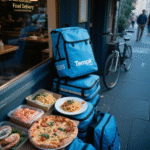
| E-commerce grocery and meal kits | Producers offering VIP/PCM systems with compact, diseños reutilizables; examples include Tempk’s insulated backpacks and modular containers | evaluar peso, stacking ability and door-step durability; prefer systems with return-logistics support |
Lista de verificación de evaluación de proveedores
Assess capacity and reliability: Publicly traded companies like YETI report their cooler bag sales (Dólar estadounidense 698.6 million in FY2024), demonstrating operational scale. For mass production, choose suppliers with large manufacturing facilities and robust supply chains.
Demand transparency: Ask for data on distribution footprint; Igloo sells through about 90,000 retail stores, signalling high output. Scale and distribution networks reduce risk of shortages.
Check design flexibility: Some producers offer custom sizing, branding and advanced closures. This can differentiate your service and support brand recognition.
Ejemplo del mundo real: Peli BioThermal’s Crēdo Go, launched in September 2022, provides a flexible, reusable solution for pharmaceutical logistics that helps companies save costs and ensures precise temperature management. Evaluating such case studies helps you benchmark supplier capabilities.
What trends will shape insulated bag production in 2026 y más allá?
Industry trends in 2026 reveal rapid growth, Innovación tecnológica y presiones sobre la sostenibilidad.. The global cold chain packaging market was USD 33.73 mil millones en 2025 y se prevé que alcance los USD 93.15 mil millones por 2033, con una CAGR de 13.5 %. Dentro de este mercado, the vacuum insulated panels segment is expected to grow at 14.2 % Tocón, and the pharmaceutical end-use segment may achieve a 16 % Tocón. These statistics underline the importance of high-performance insulation and healthcare applications.
Resumen del último progreso
Innovación de materiales: Advanced materials like VIPs, aerogels and phase-change composites are gaining market share. VIPs deliver ultra-low thermal conductivity and thinner designs. Aerogeles, composed of 99 % aire, offer two to three times the insulation of foam and reduce weight by 40 %.
Tecnologías inteligentes: sensores de iot, RFID tags and digital twins are now integral to cold chain packaging, transmitting real-time temperature, datos de ubicación y shock. This reduces spoilage by up to 40 % and supports regulatory compliance.
Reusable and circular models: The market for reusable cold chain packaging is growing, with rental and pooling programs becoming mainstream. This shift aligns with consumer demand for sustainable packaging and regulatory pressure against single-use plastics.
Ideas del mercado
La creciente demanda de productos biofarmacéuticos, personalized medicine and temperature-sensitive foods is pushing companies to invest in high-performance packaging. North America currently holds the largest market share, but Asia Pacific is the fastest-growing region. The expanding e-commerce grocery sector also amplifies demand for compact, efficient insulated bags.
Sustainability considerations are reshaping the competitive landscape. Recyclable paper and feather-based liners, bio-based aerogels and natural fibres are gaining traction. Consumers not only demand eco-friendly materials but also expect companies to disclose carbon footprints and adopt circular packaging models. Companies like Sonoco ThermoSafe, ProAmpac and Cold Chain Technologies are leading the way with recyclable and reusable solutions.
Preguntas frecuentes
Q1: Are thermal bags and insulated bags different?
No. A thermal bag and an insulated bag describe the same product category. Both terms refer to bags designed to maintain internal temperature, whether you need to keep items cold or hot. The key is to focus on materials, construction and performance data rather than terminology.
Q2: What is the typical temperature hold time for insulated bags?
Hold times vary by material and design. Standard foam bags may keep goods cold for 24–72 hours, while VIP and PCM systems can maintain specific temperatures for over 72 horas. Ultra-cold shippers using PUR can hold temperatures below –70 °C for up to 120 horas.
Q3: Can insulated bags be recycled?
Some insulated bags are recyclable, but it depends on materials. Solutions like Sonoco ThermoSafe’s EOS use post-industrial paper fibres and are curbside recyclable. Other materials like EPS may require specialized recycling programs. Emerging eco-friendly liners made of feather, seaweed or paper are designed for curbside recycling.
Q4: How do I maintain and clean reusable insulated bags?
Most reusable bags use durable outer shells and food-safe inner linings. Clean the interior with mild detergent after each use, allow thorough drying, and inspect for damage. Follow manufacturer guidelines for cleaning VIP or PCM components, and replace worn elements to ensure performance.
Q5: Why are IoT sensors important in insulated bags?
IoT sensors provide real-time temperature and location data, enabling shippers to act quickly when excursions occur. Studies show that predictive monitoring can reduce spoilage by up to 40 %. For regulated products like vaccines and biologics, sensors help maintain GDP compliance and support audits.
Resumen y recomendaciones
En resumen, selecting the right insulated bag producer requires balancing performance, sostenibilidad, industry expertise and customer service. Look for certified manufacturers who invest in material innovation, provide validated performance data and offer recyclable or reusable solutions. Evaluate producers based on your specific use case: consumer goods may prioritize portability and design, while pharmaceuticals demand validated VIP/PCM systems and IoT monitoring.
When negotiating with suppliers, request transparency about their manufacturing capabilities, sustainability practices and carbon footprint. Compare the total cost of ownership for single-use vs. reusable packaging and consider renting or pooling programs. Embrace smart technologies—temperature loggers, RFID tags and digital twins—not only to prevent spoilage but also to demonstrate compliance and build customer trust.
Actionable steps for readers
Define your needs: List your product temperature requirements, shipment durations and regulatory obligations. This forms the basis for selecting materials and bag designs.
Shortlist producers: Research companies with certified quality systems and a proven record in your industry. Request performance data and sustainability credentials.
Pilot reusable systems: Collaborate with suppliers to test reusable containers or pooled programs. Comparar rendimiento, customer feedback and cost savings over several cycles.
Implementar monitoreo: Adopt IoT sensors and data loggers to gain real-time visibility. Use analytics to optimize packing, reduce waste and improve customer satisfaction.
Siguiendo estos pasos, you can choose an insulated bag producer that safeguards your goods, meets regulatory demands and aligns with your sustainability goals. Don’t hesitate to consult experts and pilot new technologies—being proactive today will position your business for success in 2026 y más allá.
Acerca de Tempk
Tempk es un proveedor confiable de soluciones de embalaje y logística de cadena de frío.. The company designs and supplies temperature-controlled packaging—including insulated shippers, contenedores refrigerados, phase-change materials and monitoring devices—for industries ranging from pharmaceuticals to gourmet foods. Its experts combine industry knowledge with cutting-edge technology to keep products safe throughout the supply chain. Sustainability is a core focus: Tempk offers reusable containers and eco-friendly materials that help clients reduce waste and meet ESG targets. Con una red global y una profunda experiencia técnica, Tempk assists customers in navigating complex regulations, optimizing operations and delivering critical goods with confidence.
Tempk’s commitment to innovation and service makes it an ideal partner whether you’re shipping vaccines, gourmet seafood or sensitive biologics. Contact Tempk’s experts to explore customized solutions that protect your shipments and support your business growth.