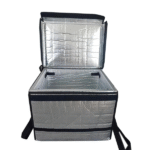
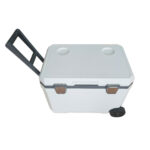
Exportación de cajas de hielo industriales: Evite retrasos costosos?
Si está planeando exportar cajas de hielo industriales, Tu mayor riesgo no es el precio unitario.. es el dia caluroso, the missed connection, and the rough forklift move that pushes a shipment out of range. This guide turns industrial ice box export into a repeatable system: lane-based specs, holdover proof, POE de embalaje, and compliance checks you can reuse across markets.
What you’ll get in this guide:
How industrial ice box export works in real B2B operations (not brochure claims)
A simple way to set holdover time validation by lane and season
A buyer-friendly industrial ice box export compliance checklist (HS, ISPM 15, Incoterms, dry ice readiness)
A copy-ready industrial ice box export packing SOP template to reduce packing mistakes
A practical industrial ice box export landed cost calculator so you compare “success cost,” precio sin caja
What is industrial ice box export in real operations?
Respuesta directa: Industrial ice box export means shipping export-grade insulated containers that must protect a defined temperature band while surviving stacking, vibración, humedad, and repeated handling. Es “packaging as equipment,” no “packaging as a one-time box.”
Export lanes add more handoffs than domestic routes. That means more chances for delays, picos de temperatura, and physical damage. A reliable industrial ice box export setup is designed for the worst day, no es el día normal.
Industrial ice box export = a “mobile cold room”
Think of your system like a small, passive cold room on wheels. It works only if three parts match:
The box (aislamiento + sello + estructura)
The coolant strategy (gel/PCM/dry ice depending on the band)
The pack-out SOP (el “receta” that makes results repeatable)
| lo que define “industrial”? | Consumer cooler | Industrial ice box | Lo que significa para ti |
|---|---|---|---|
| Manejo | Light use | Forklift + hub handling | Fewer cracks and claims |
| Holdover | Corto | Largo + predictable | More delay tolerance |
| Reutilizar | Bajo | High cycles | Lower cost per trip |
| Export readiness | Mínimo | Documentos + etiquetas + control de calidad | Faster receiving and reorders |
Consejos prácticos que puede usar hoy
Start with one lane: pilot one route before scaling your full industrial ice box export program.
Definir “industrial” with use cases: stacking height, aberturas, el muelle espera, and cleaning routines.
Write the temperature band: don’t say “keep cold.” Say “2–8 ° C” o “0–10 ° C,” with pass/fail rules.
ejemplo real: A buyer reduced box damage after export handling by switching to reinforced corners and a tighter lid seal—without changing the coolant.
How do you set the right temperature band for industrial ice box export?
Respuesta directa: Your industrial ice box export temperature band should match the product’s tolerance, not a generic label. “Más frío” can be worse if it causes freeze damage, texture changes, or condensation problems.
When teams skip this step, they often overpack with coolant. That creates cold contact points and unstable payload zones. A better approach is simple: define the safe band, then design the pack-out to protect it.
El “band first” regla (sin jerga)
Artículos fríos: often 2–8°C or 0–10°C
Ambiente controlado: a menudo 15-25°C (heat-spike protection)
Congelado: define your frozen threshold and your handling limits
Industrial ice box export holdover time validation: the lane method
Holdover time is not a marketing number. It depends on your lane and your packing behavior:
Perfil ambiental (hot dock + pista + depósito)
Payload mass and layout
Coolant type and starting condition
Lid openings and dwell time
| Holdover variable | Mejor práctica | Error común | Lo que significa para ti |
|---|---|---|---|
| Ambiente | Plan worst-case | Assume “room temp” | Summer failures appear |
| Carga útil | Define min/max | Undefined payload | Tests don’t apply |
| refrigerante | Match the band | “More ice = safer” | Freeze risk grows |
| Aperturas | Control behavior | Frequent checking | Holdover collapses |
Consejos prácticos y sugerencias.
Agregar un búfer de retraso: target holdover = transit time + realistic buffer (often 25–50% if delays are common).
Utilice paquetes de temporada: one for hot months, one for cool months.
Separate payload from cold contact: a buffer layer often prevents cold burns and hotspots.
ejemplo real: A shipper improved industrial ice box export reliability by approving two pack-outs: “verano” y “invierno,” instead of one compromise recipe.
How do you validate industrial ice box export performance without guessing?
Respuesta directa: You validate industrial ice box export by testing the exact lane, estación, payload range, and pack-out steps you will actually use—then logging temperature with a pass/fail rule.
You don’t need a perfect lab graph to be confident. You need repeatable performance when different people pack the same way. That’s what stops surprise excursions.
Lane matrix: the fastest way to stop guessing
| factor de carril | Bajo riesgo | Riesgo medio | Alto riesgo | Lo que significa para ti |
|---|---|---|---|---|
| Tiempo de tránsito | Same-day | 24–48 horas | 48–96+ hrs | Drives insulation + refrigerante |
| Clima | Leve | Estacional | Hot/humid | Needs seasonal pack-outs |
| Manejo | Las etiquetas RFID y blockchain reducen estos riesgos | 1–2 centros | Multiple hubs | Delay risk rises |
| Aperturas | Ninguno | 1–2 | Frecuente | Holdover drops fast |
Un plan de validación simple que puedes ejecutar
Define your temperature band + regla de pasar/fallar
Lock one box size + one pack-out SOP
Run a 30-day pilot on one lane with logging
Add one stress condition (hotter day, demora, extra opening)
Estandarizar, then repeat on a second lane
Consejos prácticos y sugerencias.
Pilot in the hardest month: the difficult season teaches you faster.
Test with a new worker: SOPs must work for beginners.
Write your endpoint clearly: “within 2–8°C for X hours” late “keeps cold long.”
ejemplo real: A team reduced excursions after adding one “hot-lane” configuration for summer exports.
What construction features make industrial ice box export more durable?
Respuesta directa: Industrial ice box export durability comes from protecting the seal and structure: rigid shell strength, esquinas reforzadas, consistent lid geometry, quality hardware, and stacking guidance.
If the box warps, the seal leaks warm air. If the lid cracks, insulation performance becomes unpredictable. That’s why durability is not “nice to have.” It’s a temperature-control feature.
Materials you’ll see in industrial ice box export (buyer-friendly)
| Build approach | Durabilidad | Estabilidad térmica | Lo mejor para ti cuando... |
|---|---|---|---|
| Lightweight insulated shipper | Medio | Alto | Stable handling, cost-sensitive lanes |
| Rigid industrial shell + aislamiento | Alto | Alto | Manejo brusco, apilado, reutilizar |
| Hybrid shell + aislamiento | Alto | Alto | Variable abuse across markets |
| EPP-based reusable systems | Alto | Medio -alto | Pooling programs and return loops |
Consejos prácticos y sugerencias.
Inspect lid fit: great walls don’t matter if the lid leaks.
Check handles under load: handles fail when teams rush.
ejemplo real: Breakage dropped after switching to reinforced corners and a tighter lid seat—without increasing wall thickness.
What compliance issues can slow industrial ice box export?
Respuesta directa: Industrial ice box export compliance is a bundle: product classification (HS/HTS), wood packaging rules (ISPM 15), Incoterms responsibility, destination material rules (food-contact), and dry ice readiness (UN1845) Cuando corresponda.
You don’t need to overwhelm buyers with legal language. You do need a “proof package” that reduces customs and receiving friction.
Industrial ice box export compliance checklist (listo para copiar)
| Caso de uso | Enfoque de cumplimiento | Qué preparar | Lo que significa para ti |
|---|---|---|---|
| Food distribution | Food-contact documentation | Declaración + traceability notes | Faster buyer approval |
| Pharma-style lanes | Route control expectations | COMPENSACIÓN + plan de seguimiento | Higher trust and fewer disputes |
| Wood pallets/crates | ISPM 15 | Treated wood + visible marks | Fewer border delays |
| Dry ice workflows | UN1845 | Label zones + checklist template | Fewer carrier rejections |
| Classification risk | HS/HTS variation | Product file + broker notes | Fewer duty surprises |
Consejos prácticos y sugerencias.
Evitar “Aprobado por la FDA” phrasing: use accurate “regulatory status for intended use” idioma.
Don’t promise one HS code globally: confirm per SKU and destination.
Make labels visible after wrap: receiving teams hate hidden information.
ejemplo real: A distributor’s purchase stalled until a clear food-contact document pack was provided. Once shared, procurement moved quickly.
How do you evaluate an industrial ice box export supplier (beyond price)?
Respuesta directa: You evaluate industrial ice box export suppliers by proof, repetibilidad, and export support: thermal data, Prueba de durabilidad, documentation quality, stock stability, and after-sales capability.
A low quote can become expensive if the first shipment causes claims, rehacer, or a rejected lane. The supplier you want is the one who reduces surprises.
Industrial ice box export RFQ scorecard
| Criterios | Strong supplier | Risky supplier | Impacto en ti |
|---|---|---|---|
| Thermal proof | Defined test assumptions | Impreciso “horas” reclamos | Predictability |
| Structural durability | Drop/stack guidance | No limits stated | Menor tasa de daño |
| Export documentation | Consistent and complete | “We’ll send later” | Faster clearance |
| QC traceability | Batch/mold ID + basic records | No traceability | Easier root-cause |
| Apoyo | Pack-out diagrams + SOP help | Product-only | Faster scale |
Consejos prácticos y sugerencias.
Ask for test assumptions: perfil ambiental, masa de carga útil, endpoint rule.
Request a packing diagram: performance depends on pack-out, not just walls.
Check spare parts planning: pestillos, enchufe, hinges reduce downtime.
ejemplo real: A buyer avoided repeat reshipments by choosing a supplier who could show documented durability limits and a repeatable pack-out SOP.
How do you calculate landed cost for industrial ice box export?
Respuesta directa: Industrial ice box export landed cost is the total cost to deliver a successful, in-spec shipment—not the box price. It includes labor time, freight impact, and failure risk.
A simple way to think about it: a cheap tool that breaks is expensive. A slightly higher-cost tool that works every day is cheaper over time.
Industrial ice box export landed cost calculator (copiar/pegar)
Cost per successful shipment =(Caja + refrigerante + accesorios)
freight impact
(packing minutes × labor rate per minute)
(failure probability × failure cost)
(devolver + cleaning cost per cycle, si es reutilizable)
| Impulsor de costos | que medir | Por que importa | Lo que significa para ti |
|---|---|---|---|
| tiempo de embalaje | Minutos por paquete | Mano de obra + errores | Scaling becomes easier |
| Freight size | Dimensional volume | Express costs jump | Fewer cost surprises |
| Riesgo de falla | Excursion rate estimate | One failure is expensive | Reduces hidden cost |
| Ciclos de reutilización | Cycles per box | Spreads unit cost | Mejor retorno de la inversión |
Consejos prácticos y sugerencias.
Time a new worker packing: that’s your real baseline cost.
Estimate failure cost honestly: include customer impact and rework.
Comparar “success cost”: industrial ice box export is about delivered quality.
ejemplo real: A company lowered total cost by reducing packing time and rework—without negotiating the box price down.
How do you build a repeatable packing SOP for industrial ice box export?
Respuesta directa: A repeatable industrial ice box export SOP turns packing into a checklist anyone can follow. It reduces mistakes on busy days and makes performance consistent across shifts.
Most mistakes happen in three places: coolant condition, payload separation, and close-out checks. If you fix these, results improve fast.
Industrial ice box export packing SOP template
A) Preparación
Confirm payload weight is within min/max
Confirm coolant type and starting condition
Stage liners, sellos, etiquetas, and logger (Si se usa)
B) Empacado
Place bottom coolant + capa de amortiguamiento
Place payload in the defined payload zone
Add side/top coolant per diagram
Add void fill to prevent shifting
Place the logger in the defined location
do) Close-out
Close lid fully and confirm seat
Apply seal (Si se usa) and record ID
Apply labels and verify visibility
Take one photo for traceability (opcional)
| SOP checkpoint | Pass criteria | Common error | Lo que significa para ti |
|---|---|---|---|
| Coolant condition | Matches SOP | Too cold/too warm | Range drift increases |
| Payload separation | Buffer present | Contacto directo | Freeze/hot spots |
| control de vacío | Stable fit | Shifting payload | Damage and drift |
| Lid seat | Fully closed | Espacio en la tapa | Warm air leaks |
| Etiquetado | Visible + complete | Hidden labels | Receiving delays |
Consejos prácticos y sugerencias.
Use a one-page packing card: include it in every industrial ice box export shipment.
Agregar “never do” advertencias: they prevent well-meaning mistakes.
Standardize consumables: fewer options reduce variability.
ejemplo real: Consistency improved after a simple 20-second “lid-seat check” was added before sealing.
How do you scale industrial ice box export with reusable workflows?
Respuesta directa: Reusable industrial ice box export works when returns are simple and predictable. If returns are chaotic, “reutilizable” becomes “shortage.”
Treat packaging like equipment: check-in, inspección, limpio, y “listo” status. That’s how you protect performance across cycles.
Reusable workflow map (simple y escalable)
| Paso | Lo que sucede | Dueño | Lo que significa para ti |
|---|---|---|---|
| Return trigger | Receiver initiates return | Receiver + distribuidor | Higher recovery rate |
| Check-in | Scan and inspect | Operaciones | Fewer missing assets |
| Clean and dry | Standard process | Operaciones | Stable performance |
| Ready status | Pass inspection | control de calidad | Reliable next use |
Consejos prácticos y sugerencias.
Definir “listo” claramente: limpio, seco, lid seat OK, no cracks.
Track cycles: some parts wear faster than others.
Plan spare parts: pestillos, sellos, plugs reduce downtime.
ejemplo real: A distributor avoided shortages by adding a simple “listo” check before restocking.
What market trends are shaping industrial ice box export in 2026?
Respuesta directa: Industrial ice box export is moving toward more documentation, more traceability, and more total-cost thinking. Buyers want proof, no promesas.
The trend is clear: “trust but verify” is becoming “verificar, then trust.”
Key shifts you should know
More buyers asking for thermal test data with assumptions
More compliance documentation required at receiving
More interest in reusable systems with controlled returns
More total-cost thinking: “success cost” late “precio unitario” in procurement decisions
Insight del mercado que puede usar
If your export lanes vary widely, build a small portfolio:
One core configuration for routine lanes
One long-duration configuration for remote lanes
One hot-season variant for summer risk
That improves industrial ice box export reliability without creating a SKU explosion.
Interactive tools to make industrial ice box export decisions faster
- Export readiness self-test (0–24)
Date a ti mismo 0, 1, o 2 points each:
You have 2–3 stable SKUs for export
You have a one-page spec sheet per SKU
You have an HS/HTS notes file per destination
You can prove ISPM 15 compliance when using wood packaging
You quote with Incoterms written clearly
You have a visual packing SOP + label placement rules
You photograph pallets before loading
You have a spare-parts plan (pestillos, enchufe, hinges)
You have a dry ice readiness guide if buyers use UN1845
You track complaints and corrective actions
guía de puntuación
18–24: export-ready program
10–17: solid base, fix docs + SOP gaps
0–9: alto riesgo; build foundations first
- 90-second configuration chooser
Elige tu banda de temperatura (p.ej., 2–8 ° C, 0–10 ° C, congelado)
Classify lane risk (low/medium/high using the lane matrix)
Set holdover target (tránsito + realistic delay buffer)
Choose build type (lightweight vs rigid vs hybrid)
Lock the pack-out recipe (diagrama + COMPENSACIÓN + capacitación)
Common questions about industrial ice box export
Q1: How long can an industrial ice box maintain temperature?Depende del aislamiento, perfil ambiental, carga útil, and pack-out. For industrial ice box export, use lane-based testing and add a delay buffer so you’re not relying on best-case conditions.
Q2: Is reusable industrial ice box export always cheaper?No siempre. Reuse wins when returns, inspección, and cleaning are controlled. If recovery is inconsistent, shortages and emergency buys can erase the savings.
Q3: Is colder always safer for industrial ice box export?No. Overcooling can damage products and create condensation issues. Match coolant and pack-out to your safe temperature band, no un “colder is better” mindset.
Q4: What’s the fastest way to compare two supplier quotes?Compare cost per successful shipment, no precio unitario. Include packing time, freight impact, costo esperado de falla, and reuse cycles if applicable.
Q5: What compliance items cause the most export delays?En la práctica: mismatched paperwork vs carton counts, unclear Incoterms responsibility, labeling hidden by wrap, and wood packaging that lacks required treatment marks.
Q6: How do you reduce damage claims in industrial ice box export?Standardize pallet patterns, protect corners, state stacking limits, and document loading photos. Packaging discipline often beats “stronger plastic” fixes.
Resumen y recomendaciones prácticas.
Industrial ice box export works best when you sell (y comprar) a system, not a box. Define your temperature band, choose holdover time with a real delay buffer, and standardize a pack-out SOP that works on busy days. Validate by lane and season, then compare suppliers using landed cost per successful shipment—not unit price.
¿Qué deberías hacer a continuación?
Build your lane matrix (tiempo, clima, manejo, aberturas)
Choose one industrial ice box export configuration and run a 30-day pilot
Standardize two seasonal pack-outs if you ship year-round
Scale with kit-ready materials and simple training tools
Sugerencias de enlaces internos (tu sitio)
Industrial cold chain packaging basics
How to choose ice packs for industrial shipments
Temperature logger placement and review
How to validate holdover time for new lanes
Dry ice labeling checklist (UN1845)
Acerca de Tempk
Y tempk, we support industrial ice box export with an operations-first approach: durable builds, repeatable pack-out design, and buyer-friendly documentation that reduces delays and disputes. We focus on stable SKUs, practical SOPs, and configuration planning so your shipments arrive in-spec with fewer claims and less rework.
Siguiente paso (CTA): Comparte tu banda de temperatura, payload range, arriba 3 destinations, and your “worst-case delay buffer.” We’ll suggest a scalable industrial ice box export configuration plan you can standardize and reuse.