Hoja de bolsa de hielo seco aislada: ¿Qué deberías usar??
Si envía productos congelados, un insulated dry ice pack hoja helps you hold −78.5°C longer, cut sublimation loss, y pasar auditorías. You’ll learn how to size an insulated dry ice pack sheet for 24–72‑hour lanes, pack to IATA PI 954/UN1845 rules, and choose materials that actually lower claims. Dry ice sits at −78.5°C; mis‑packing raises risk and cost.
-
Elige la derecha insulated dry ice pack sheet para la comida, biológicos, or lab reagents (long‑haul frozen shipping).
-
Calcular la cantidad de hielo seco using a quick planning method (5–10 lb por 24 h como línea de base).
-
Pack safely and compliantly (UN1845 mark, Clase 9 etiqueta, desfogue, 2.5 kg passenger limits, PI 954).
-
Reduce claims by pairing your insulated dry ice pack sheet with better liners (VIP vs.. bubble vs. EPS).
What is an insulated dry ice pack sheet, y cuando deberías usarlo?
Un insulated dry ice pack sheet es un flexible, cut‑to‑fit pad that lines products or voids to slow heat gain and dry ice loss. It wraps around items, adding a thin thermal barrier so your dry ice works longer without adding bulk or weight. Use it when you need −78.5°C stability through sort centers, door swings, or delays.
En términos simples: dry ice keeps things frozen; the insulated dry ice pack sheet helps the dry ice keep es Frío. It’s like a scarf around a thermos—less heat sneaks in, so less CO₂ “evaporates.” Choose it for frozen meats, helado, tissue samples, or lane trials that push past 24 horas.
How does an insulated dry ice pack sheet compare to liners?
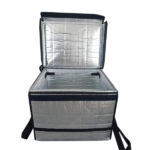
The insulated dry ice pack sheet is a local, product‑hugging layer; a box liner (EPS, reflective bubble, o VIP) lines the entire shipper. Bubble wraps typically deliver ~R‑1 per 3/8″ without sealed air spaces; VIP panels deliver far higher R‑values per inch. Use both when lanes are long or ambient heat is high.
| Elección de aislamiento | Construcción típica | R‑value signal | Lo que significa para ti |
|---|---|---|---|
| Reflective bubble | Frustrar + burbujas | Often ~R‑1 per 3/8″ unless air space is perfect | Fine for short hops; don’t expect miracles in summer. |
| Revestimiento de espuma EPS | Molded foam | ~R‑3.5 to R‑4.2 per inch | Cost‑effective baseline for day‑definite deliveries. |
| Revestimiento | Vacuum panel | ~R‑25 to R‑50 per inch reported | Maximizes runtime; slim walls protect payload volume. |
Consejos prácticos & advice
-
For 24–48 h lanes: pair an insulated dry ice pack sheet with EPS.
-
For 48–72 h lanes or hot routes: add VIP lid/walls más the insulated dry ice pack sheet near the product core.
-
For laboratory vials: wrap vials with the insulated dry ice pack sheet, then backfill voids with dry ice nuggets.
Caso del mundo real: A frozen dessert shipper added one insulated dry ice pack sheet around pint clusters and swapped to VIP lid only. Sublimation fell by “about a third” on a 48 h carril, cutting replacement dry ice by ~6 lb per box and halving melt complaints.
¿Cómo se mide un insulated dry ice pack sheet durante 24 a 72 horas?
Respuesta corta: empezar con 5–10 lb de hielo seco por 24 horas in a well‑insulated cooler, then trim or add based on ambient, cubo, and liner R‑value. An insulated dry ice pack sheet reduces the required margin because it slows product‑side heat leak.
Why that range works: Dry ice sublimates faster with warm air, repeated openings, and low‑R packaging. UPS and multiple industry sources cite 5–10 lb per day as practical guidance; better insulation pushes you to the lower end.
A 2‑minute planning method (copiar y usar)
-
Pick a baseline: 7 lb/24 h.
-
Ajustar para aislamiento:
-
Bubble/EPS only: +20%
-
EPS + insulated dry ice pack sheet: 0%
-
personaje + insulated dry ice pack sheet: −20%
-
-
Adjust for ambient:
-
Fresco (≤20°C): −10%
-
Caliente (30–35°C): +25%
-
Muy caliente (≥35°C): +40%
-
-
Multiplicar por días (include buffers for weekends/weather).
-
Redondear al más cercano 1 libras o 0.5 kilos.
Ejemplo: 48 h route, EPS + insulated dry ice pack sheet, hot 33°C.
7 libras × (1.00) × (1.25) × 2 = 17.5 lb → round to 18 lb hielo seco.
Consejo: A tighter product wrap with the insulated dry ice pack sheet can drop your starting point toward 5 lb/24 h in good liners. Verify with a lane qualification test.
How do you pack with an insulated dry ice pack sheet sin peligro (Aquí está Pi 954 / UN1845)?
The essentials: marca "Hielo seco" o "dióxido de carbono, sólido,” plus UN1845 y peso neto de hielo seco (kilos) en dos lados; aplicar un Clase 9 etiqueta de peligro; usar envasado ventilado; and keep the package ≤200 kg dry ice per piece para carga aérea. Para pasajeros, el límite es 2.5 kilos por persona con aprobación de la aerolínea.
Pasos de embalaje (simplificado):
-
Pre -chill el remitente; load product wrapped in the insulated dry ice pack sheet.
-
Agregar una ruta de ventilación (Nunca es hermético); dry ice must vent CO₂ gas.
-
Colocar hielo seco alrededor y encima of the wrapped product to create a cold dome.
-
Cerca, etiqueta, y documentar (UN1845; kg neto de hielo seco; Clase 9). Equipaje de pasajeros: 2.5 límite de kg, marked and vented.
Por qué ventilar es importante: El gas CO₂ desplaza al oxígeno; OSHA’s TWA limit is 5,000 PPM, mientras 40,000 PPM is an IDLH level. Keep areas ventilated and consider CO₂ monitoring where you stage multiple boxes.
Will an insulated dry ice pack sheet reduce sublimation costs?
Yes—by reducing heat leak at the product interface, an insulated dry ice pack sheet can push you toward the lower end of the 5–10 lb/24 h consumption band. In real lanes, that often removes 2–6 lb per box and frees payload space for revenue.
Sublimation isn’t “waste”—it’s the cooling engine. But if heat reaches product surfaces too easily, dry ice burns down faster. By adding a targeted layer, the insulated dry ice pack sheet lowers peak heat flux during the first hours (when products are warmest) and during handoffs. You’ll still qualify each lane, but the sheet is a low‑cost lever before you jump to VIP.
Quick A/B test plan you can run this week
-
A (control): Revestimiento EPS + solo hielo seco.
-
B (prueba): Same loadout + insulated dry ice pack sheet alrededor de la carga útil.
-
Registro: Dry ice start/end weights, product core temps, perfil ambiental.
-
Win condition: ≥15% less dry ice consumed with equal or better product temps.
Ejemplo real: A vaccine courier added an insulated dry ice pack sheet and switched dry ice from pellets to blocks + top‑off pellets. Runtime improved by ~12 hours; CO₂ monitor alarms stopped triggering in the staging room due to fewer lid lifts. (Keep CO₂ within OSHA 5,000 ppm TWA; IDLH is 40,000 ppm.)
Material choices for your insulated dry ice pack sheet: What works in 2025?
Reflective bubble sheets are thin and cheap but deliver modest R‑values unless paired with sealed air spaces. Paneles VIP deliver unmatched R‑per‑inch, helping you downshift dry ice mass. Construcciones híbridas place an insulated dry ice pack sheet around the product and use EPS walls plus a VIP lid to control budget.
Starter decision guide (rápido)
-
Paquete pequeño, 24–48 H, calor moderado: EPS walls + insulated dry ice pack sheet (product wrap).
-
48–72 h or hot lanes: EPS walls + VIP lid + insulated dry ice pack sheet.
-
Biológicos de alto valor: Full VIP set + insulated dry ice pack sheet + registro de datos.
Safety notes you can actually use
Recordar: dry ice is −78.5°C and can cause frostbite; never seal it airtight; etiqueta correctamente; ventilate staging areas; monitor CO₂ if you stage pallet quantities. Para carga aérea, ≤200 kg por paquete Bajo Pi 954 with correct marks/labels; for passengers, ≤2,5 kilogramos per person with airline approval and venting.
One‑line checklist: “UN1845 + ‘Dry Ice/Carbon Dioxide, solid’ + Kg neto + Clase 9 + desfogue + no sealed tubs.”
Troubleshooting shipments with an insulated dry ice pack sheet
Problema: product temp rose near delivery.
Arreglar: Add top‑load dry ice and keep the insulated dry ice pack sheet snug against product faces (minimizar los huecos).
Problema: courier rejected due to labels.
Arreglar: Imprimir UN1845, Clase 9, and net kg on two sides; ensure the sheet and box don’t obstruct labels.
Problema: CO₂ alarm in staging.
Arreglar: Increase ventilation; stage fewer boxes; minimize lid‑open time; keep OSHA 5,000 ppm TWA in mind; IDLH is 40,000 PPM.
2025 regulatory and market updates that impact your choice
Trazabilidad & inspecciones: FSMA de la FDA 204 traceability rule still shows a Ene 20, 2026 compliance date in the final rule, but in Ago 2025 the FDA propuesto a 30‑month extension to July 20, 2028; routine inspections won’t start until 2027. Plan records and labels now, even if enforcement phases in later.
Air rules: IATA’s current materials reaffirm PI 954 requisitos (calificación, desfogue, ≤200 kg por paquete para carga aérea). Para pasajeros, 2.5 kilos per person with airline approval and marks remains the norm.
Supply/demand context: Dry ice demand remains strong; market analyses point to continued growth, while CO₂ sourcing sees regional constraints and new capture projects (RNG, industrial). Expect spot price swings; build margin in your load plans.
Últimos desarrollos de un vistazo
-
FSMA 204 línea de tiempo: Proposed extension to Julio 20, 2028 para el cumplimiento; routine inspections in 2027. Lo que significa: more time to digitize traceability without pausing packaging upgrades.
-
PI 954 Lista de verificación de aceptación (2026): Clear call‑outs for UN1845 marks, ≤200 kilogramos por paquete, y ventilación. Lo que significa: build standard work around a single page.
-
High‑performance liners: VIP R‑values per inch help cut dry ice mass while preserving payload volume. Lo que significa: pair VIP lid/panels with your insulated dry ice pack sheet para carriles de 48 a 72 h.
Insight del mercado: PCM (materiales de cambio de fase) keep gaining traction for refrigerated (+2 a +8°C) carriles; para congelado lanes you’ll still rely on dry ice, but hybrid boxes (PCM pre‑cool + dry ice kick) smooth temperature curves and reduce fogging.
Selector interactivo: do you need an insulated dry ice pack sheet?
-
If your lane ≥ 36 horas o ambient ≥ 30°C → Use it.
-
If you’ve had frost‑burn or cold spot damage → Use it to buffer product faces.
-
If claims come from late stops → Add a sheet + hielo seco de carga superior.
-
If payload volume is tight → Use sheet + VIP lid instead of thicker foam.
Cómo empacar (De cómo) con un insulated dry ice pack sheet
-
Condición the shipper and product to freezer temps.
-
Envoltura the payload snugly with the insulated dry ice pack sheet; tape edges if needed.
-
Lugar dry ice blocks below and pellets above to form a cold canopy.
-
Respiradero: Nunca es hermético.
-
Marca & etiqueta: UN1845, nombre de envío adecuado, Kg neto, Clase 9.
-
Documento on air waybill (count × net kg).
Preguntas frecuentes
Q1: Cuántos insulated dry ice pack sheet layers do I need?
Comenzar con one layer directly touching the product faces. For long lanes or hot routes, add a second layer on the lid side where heat enters fastest.
Q2: Cuanto hielo seco por día?
Tener pensado 5–10 lb por 24 h in well‑insulated shippers; your insulated dry ice pack sheet helps you lean toward the low end. Test and document.
Q3: Is passenger baggage allowed with dry ice?
Sí-2.5 kilos (5.5 lb) por pasajero, vented and properly marked; airline approval is required.
Q4: Do I still need a Class 9 label and UN1845 text?
Sí—marca "Hielo seco" o "dióxido de carbono, sólido,"UN1845, y Kg neto en el paquete, y aplicar un Clase 9 etiqueta.
Q5: Is bubble wrap enough insulation?
Often not by itself; typical effective R‑values are low without sealed air gaps. Combine it with EPS or VIP and an insulated dry ice pack sheet alrededor del producto.
Q6: What about CO₂ safety limits?
Follow OSHA 5,000 ppm TWA y nota IDHL 40,000 PPM. Ventilate staging rooms and avoid airtight boxes.
Resumen & recomendaciones
Control de llave: Utilice un insulated dry ice pack sheet to cut heat leak at the product, which lowers dry ice consumption toward 5–10 lb/24 h. Pack and label to UN1845 + Clase 9, vent for safety, and use VIP/EPS liners as the route demands. Size with a simple model, then verify in lane tests.
Siguientes pasos (Haz esto ahora):
-
Qualify one lane with/without an insulated dry ice pack sheet.
-
Estandarizar PI‑954 marks and venting across pack‑outs.
-
Tamaño correcto aislamiento: add a VIP lid if routes exceed 48 h.
-
Monitor CO₂ in staging zones and keep records for FSMA/quality.
Acerca de Tempk
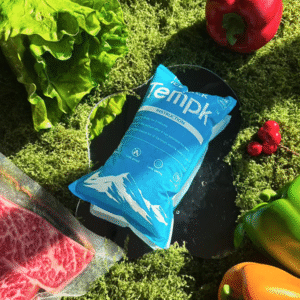
We are a cold‑chain packaging team focused on reliable frozen performance with fewer moving parts. Our insulated dry ice pack sheet is engineered to hug product faces, reduce early heat spikes, and simplify IATA/UN labeling workflows. We back pilots with data logging templates and right‑sizing advice so you can hit temperature targets while lowering total cube and cost.
Llamado a la acción: Ready to qualify your lane? Start a quick pilot with our insulated dry ice pack sheet and a sizing plan tailored to your route.