Introducción: Why Insulated EPP Boxes Matter
Delivering hot or chilled meals requires a container that can resist temperature changes, protect against impacts, and stay reusable. Insulated EPP box food delivery systems excel because they combine superior insulation with durability and sustainability. Polipropileno expandido (PPE) foam boxes keep food safe for 48–72 horas and are resilient enough to survive bumps and drops. Unlike traditional expanded polystyrene (EPS) contenedores, EPP boxes are reusable and compressible when empty. With bans on single-use foam taking effect in many states and the rapid growth of e-commerce food delivery, restaurants and caterers need a modern solution. This article answers critical questions about EPP boxes, compares them to other materials, y explora 2025 tendencias de la cadena de frío.
This Article Will Help You Understand:
The advantages of insulated EPP box food delivery – how EPP’s closed-cell structure maintains temperature and reduces damage
How EPP compares with EPS and other materials – insulation performance, durabilidad, e impacto ambiental
Regulatory and sustainability trends for 2025 – foam bans and market shifts toward reusable packaging
Cold chain innovations in 2025 – automatización, IoT visibility, and AI-driven efficiency
Frequently asked questions about EPP boxes – sizing, limpieza, and best use cases
What Makes EPP Boxes Ideal for Food Delivery?
Aislamiento y durabilidad superiores
EPP’s closed-cell foam structure traps air, creating a strong thermal barrier that keeps meals hot or cold for up to 72 horas. Because the material rebounds after compression, it handles drops and vibrations without cracking. This means your customers receive meals at the right temperature even after long trips or rough handling.
EPP boxes also protect against moisture and chemicals. The non porous surface resists water absorption and is easy to clean. When you deliver soups or sauces, the container won’t warp or leak. Además, EPP es resilient under wide temperature ranges, so it maintains performance from freezer conditions to hot kitchens, making it perfect for cold-chain foods, abastecimiento, and meal kits.
Lightweight Yet Strong
Expanded polypropylene is largely composed of air — up to 98% por volumen. That makes it incredibly lightweight while maintaining high strength-to-weight ratios. Drivers can carry multiple boxes without strain, and shipping costs remain low. The material’s shock-absorbing property means it returns to shape after impact, protecting fragile foods or packaging. Unlike rigid plastic or metal containers, EPP minimizes breakage during delivery.
Reusability and Environmental Benefits
As single-use EPS foam faces bans in several U.S. states starting July 2025, businesses are shifting to reusable containers. EPP boxes are built for dozens or hundreds of cycles. They can be cleaned, desinfectado, and redeployed, reducing waste and long-term costs. Even when end-of-life arrives, EPP is recyclable through specialized facilities; its carbon footprint is lower than many plastics. Because each box contains mostly air and no harmful blowing agents, it meets strict safety standards and aligns with eco-friendly brand images.
Diseños personalizables
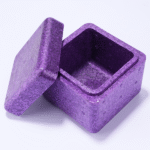
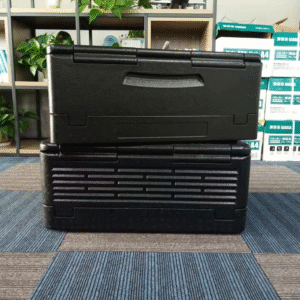
Manufacturers offer tamaños personalizados, bandera, densidades, y marca for EPP containers. You can order boxes that fit popular meal kits, pizza sizes, or large catering trays. High-density EPP walls (1.5 pulgadas o más) are available for longer cold-chain journeys, maintaining safe temperatures for up to three days. Algunos diseños incluyen compressible hinges that allow boxes to collapse when empty, ahorrando espacio de almacenamiento. Features like built-in labels or QR codes support inventory management.
Enhanced Hygiene
EPP’s smooth, closed-cell surface does not harbor bacteria or odors. It is easy to wipe down or wash with mild detergent. This hygienic property is critical for food delivery where cross-contamination risks must be minimized. Some suppliers certify their EPP boxes as FDA-compliant for food contact and offer models suitable for the medical cold chain, where sterility is crucial.
Eficiencia de rentabilidad
While EPP containers may have a higher upfront cost than disposable EPS or cardboard, their long lifespan provides value. Businesses recover the cost over multiple deliveries, avoiding constant purchases of single-use packaging. Lower waste management fees and positive sustainability marketing further enhance return on investment. Además, durable insulation reduces temperature-related spoilage, preventing food waste and customer complaints.
How Does EPP Compare With EPS and Other Insulation Materials?
Insulation Performance and Durability
| Material | Aislamiento | Durabilidad | Impacto ambiental | Beneficio práctico |
| Polipropileno expandido (PPE) | Very good insulation that keeps contents safe for 48–72 hours | Highly durable and shock-absorbing, rebounds after impacts | Reutilizable y reciclable in specialized facilities | Suitable for long-haul deliveries; compressible designs save storage space and reduce cost over time |
| Poliestireno expandido (EPS) | Aislamiento moderado; works for 24–48 hours but fails beyond | Brittle and prone to cracking or compression damage | De un solo uso; difícil de reciclar; banned in some states | Low upfront cost but contributes to waste and may not meet 2025 regulaciones |
| Poliuretano (PU) | Excelente aislamiento pero pesado.; often used in coolers | Rigid and non flexible; not compressible | Chemical-intensive manufacturing; no es fácilmente reciclable | Suitable for large, permanent coolers rather than mobile delivery |
| Paneles aislados de vacío (personaje) | Máximo aislamiento (up to days); very thin walls | Fragile and costly; any puncture compromises performance | Difícil de reciclar | Used for medical or pharmaceutical shipments; overkill for standard food delivery |
| Cardboard with Gel Packs | Minimal insulation; relies on cold packs | Easily damaged by moisture; short lifespan | Single-use and often contaminated after use | Low cost but inadequate for long deliveries or regulatory compliance |
Summary of Key Differences
Duración de aislamiento: EPP’s insulation is comparable to PU or VIP but at lower cost, providing safe temperatures for 2–3 days without additional gel packs.
Reutilizabilidad: EPP is the only foam that retains shape and performance after multiple cycles, whereas EPS often breaks after one use.
Impacto ambiental: EPP can be recycled and reused; EPS is being phased out due to environmental concerns.
Design Flexibility: EPP offers collapsible designs and custom colors; EPS and PU are rigid and offer limited customization.
Regulatory and Sustainability Trends in 2025
Foam Bans and Policy Changes
Several U.S. states have enacted legislation banning single-use EPS foam containers for restaurants and food service. Delaware is prohibiting restaurants from providing polystyrene foam containers for ready-to-eat food starting Julio 1, 2025. Virginia follows with a ban applying to large chain restaurants and grocery stores in 2025 and extending to all vendors the following year. These bans signal a growing trend: states and municipalities are pushing businesses toward reusable, recyclable materials like EPP. Internacionalmente, similar policies emerge as part of broader circular-economy strategies.
Growing Demand for Sustainable Packaging
Consumer awareness of environmental impacts is driving demand for sustainable packaging. Many food delivery services now highlight their use of reusable or compostable containers to attract eco conscious customers. Brands that adopt EPP boxes can position themselves as leaders in sustainability, aligning with corporate social responsibility (RSE) objetivos.
Plant-Based and Health-Focused Foods
El plant-based meat market is projected to reach $162 mil millones por 2030. These products require reliable cold-chain logistics to maintain quality and safety. EPP boxes provide the extended insulation needed to ship plant-based meals across states or countries without spoilage. Consumers looking for healthy and sustainable options will appreciate packaging that aligns with their values.
IoT, AI, and Smart Logistics
La industria de la cadena de frío está adoptando rápidamente Internet de las cosas (IoT) sensors and AI-driven analytics. Sensors embedded in EPP boxes or pallets can monitor temperature, humedad, y ubicación en tiempo real. Enhanced management visibility enables companies to detect issues early and reduce waste. AI-powered predictive analysis helps schedule maintenance and optimize routes, improving energy efficiency and reducing costs. When these technologies pair with durable EPP containers, businesses gain comprehensive control over their delivery operations.
Automatización y Robótica en Cámaras Frigoríficas
Sistemas automatizados de almacenamiento y recuperación. (ASRS) y robots móviles autónomos (AMR) are revolutionizing warehouses. These systems handle pallet movements and order picking in cold environments, where human labor can be challenging. Cajas EPP, being lightweight and tough, are ideal for robotic handling. Their consistent dimensions and durability allow machines to grip, move, and stack them without damaging contents.
Sustainability Regulations in the EU and Beyond
La Unión Europea Ecodesign for Sustainable Products Regulation promotes longer product lifecycles and low environmental impact packaging. Similar standards are emerging worldwide, pushing businesses to consider life-cycle analysis and adopt recyclable materials. EPP’s recyclability positions it as a favorable solution, especially when paired with proper recovery programs.
Trends and Innovations for Insulated Food Delivery in 2025
Tendencia 1: Modular EPP Containers with Smart Features
Los fabricantes están desarrollando modular EPP systems that link multiple compartments with different temperature zones. A delivery truck can carry hot and cold items in the same container without cross-contamination. Integrated temperature loggers provide data for compliance and quality control. Expect to see boxes with built-in temperature displays y Bluetooth connectivity for easy monitoring via smartphone apps. These enhancements support regulatory compliance and customer reassurance.
Tendencia 2: Subscription and Return Programs
To encourage reuse, some delivery services offer subscription programs where customers return EPP boxes in exchange for discounts or loyalty points. The boxes incorporate QR codes for tracking, allowing businesses to manage inventory and cleaning. Expect more apps that notify drivers when to pick up empty boxes and reward customers for participation.
Tendencia 3: Hybrid Insulation Materials
Research teams are experimenting with hybrid EPP materials, combining EPP with thin vacuum insulated panels (personaje) o materiales de cambio de fase (PCM) to extend thermal performance. These hybrids can maintain strict temperatures for pharmaceutical or high-value food shipments while keeping weight low. This innovation may find wider adoption as costs decline.
Tendencia 4: AI-Optimized Delivery Routes
Artificial intelligence is being applied to optimize delivery routes based on real-time traffic, clima, and order volume. When paired with EPP containers, route optimization minimizes time out of the kitchen and keeps food within safe temperature ranges. AI-driven systems can also predict seasonal demand spikes (p.ej., holidays or major events), enabling businesses to scale up EPP container inventory accordingly.
Tendencia 5: Corporate Responsibility and Reporting
Businesses are increasingly required to report on packaging waste and carbon emissions. EPP’s life-cycle advantages allow companies to meet ambiental, social, y gobernanza (ESG) objetivos. Expect to see more corporate sustainability reports highlighting EPP adoption and reuse metrics.
Consejos prácticos y consejos de usuario
Select the Right Size and Wall Thickness: Choose EPP boxes that match your typical meal sizes and delivery distances. For long-distance or multi-day deliveries, opt for walls 1.5 inches or thicker to maintain temperature for up to 72 horas. Avoid oversizing containers, as empty space can reduce insulation efficiency.
Implement a Return System: Offer incentives for customers to return boxes—such as discounts, loyalty points, or free delivery on the next order. Ensure you have a simple drop-off process and cleaning protocol to keep the boxes hygienic.
Use Temperature Indicators: Affix temperature-sensitive stickers or digital loggers to monitor conditions during transit. This not only ensures compliance but also helps identify weak points in your delivery process. Integrate these with IoT platforms for real-time alerts.
Educate Staff and Customers: Train drivers on proper handling—EPP boxes are durable but still need to be stacked and secured correctly to avoid damage. Provide customers with information on how to return boxes, clean them if needed, or store them until pickup.
Plan for End-of-Life Recycling: Partner with recycling facilities that accept EPP. When boxes become damaged beyond repair, ensure they are processed properly rather than ending up in landfills.
Preguntas frecuentes (Preguntas frecuentes)
Q1: How long can EPP boxes keep food hot or cold?
Most EPP boxes maintain safe temperatures for 48–72 hours. Performance depends on wall thickness, temperatura ambiente, and the starting temperature of contents.
Q2: Are EPP boxes dishwasher-safe?
Generalmente, Sí. EPP’s closed-cell structure resists water absorption. Sin embargo, high temperatures in industrial dishwashers may warp lower-density boxes. Hand washing or using a gentle cycle is recommended.
Q3: Do EPP boxes need gel packs or dry ice?
Para entregas cortas (bajo 24 horas), EPP alone may suffice. For longer journeys or extremely hot environments, adding gel packs or dry ice provides extra thermal protection. Avoid direct contact between dry ice and the container walls to prevent surface cracking.
Q4: Can I customize EPP boxes with my brand?
Sí. Manufacturers offer custom colors, logotipos, and sizes. Many businesses apply labels or stickers themselves. Engraved branding may slightly increase cost but enhances brand recognition.
Q5: ¿Las cajas de EPP son reciclables??
EPP is recyclable through specialized facilities. Contact your local recycling center to confirm acceptance. Reuse programs extend the life of each box, reducing the need for recycling.
Latest Developments in Cold Chain and EPP Containers (2025)
Continued Shift to Plant-Based and Specialty Foods
The growing popularity of plant-based and functional foods drives demand for precise temperature control. Companies are using EPP boxes with sensores inteligentes to ensure these niche foods arrive at optimum quality. Marketing emphasizes both the nutritional benefits of meals and the sustainability of their packaging.
Smart Labeling and Data Integration
QR codes and Etiquetas NFC on EPP containers allow customers to scan and see journey data such as temperature history and estimated time of arrival. Integrated with ordering apps, these technologies build trust and transparency.
Robotics for Last Mile Delivery
Autonomous robots and drones are increasingly used for last-mile deliveries in dense urban areas. Lightweight EPP boxes suit these carriers well, ensuring that payload limits aren’t exceeded and contents remain protected. In the next few years, expect to see more partnerships between food delivery services and robotics companies.
Modelos de economía circular
Some businesses are experimenting with deposit-refund models where customers pay a small deposit for the EPP box that is returned when they give it back. This incentivizes reuse and closes the loop on packaging. Government incentives and regulations may further promote such models.
Cumplimiento de salud y seguridad
Stricter regulations require more traceability in food delivery. EPP boxes with embedded data chips can record cleaning cycles and usage counts. Restaurants will need to maintain logs showing that boxes are sanitized according to health department standards.
Resumen y recomendaciones
Control de llave:
Insulated EPP boxes offer exceptional thermal insulation, durabilidad, y reutilización, keeping food safe for 48–72 hours.
They outperform EPS foam by providing better durability, compressibility, y beneficios ambientales.
Regulatory changes in 2025 are banning single-use EPS in several states, pushing businesses toward reusable EPP boxes.
Cold chain innovations como sensores de IoT, Optimización de rutas de IA, and automation enhance delivery performance.
Businesses should implement return programs, monitoreo de temperatura, and recycling plans to maximize the benefits of EPP containers.
Pasos de acción:
Assess your current delivery containers and determine if they meet 2025 regulaciones. If using EPS, plan to transition to EPP or other sustainable alternatives.
Partner with a reputable EPP supplier to order containers sized appropriately for your products. Consider custom branding to strengthen brand recognition.
Implement a return and reuse program. Provide incentives for customers to return boxes and establish a system for cleaning and tracking inventory.
Integrar sensores de IoT to monitor temperatures and use data analytics to optimize routes and reduce delivery times.
Train staff and educate customers on the benefits of EPP boxes and proper handling procedures. Use marketing materials to highlight your commitment to sustainability.
Acerca de Tempk
Y tempk, we specialize in reusable cold chain solutions for the food delivery industry. Nuestro polipropileno expandido (PPE) contenedores deliver outstanding thermal performance and durability. We design custom boxes tailored to your menu and route requirements, with features like collapsible sides, integrated labels, and sensor-ready compartments. Our products are tested for 48–72 hour insulation under varying conditions and are fully recyclable at the end of their lifecycle. Con tempk, te vuelves confiable, eco-friendly packaging that protects your food and your brand.
Siguientes pasos: Contact us for a free consultation. Our team will assess your delivery workflow and recommend the right EPP solution for your business. Join the movement toward sustainable, efficient food delivery in 2025 y más allá.