Espacio de cabeza ideal en una bolsa de hielo seco: 2025 Guía
El ideal headspace in a dry ice bagramo is the free volume that keeps CO₂ venting safe and your payload cold. Tu objetivo no es sólo un número; es una configuración que evita la acumulación de presión y mantiene temperaturas uniformes. Como punto de partida, many ground packouts validate 15–25% headspace por volumen, pero venting outranks headspace in all lanes, especialmente aire.
-
Cómo el espacio libre ideal en una bolsa de hielo seco afecta la seguridad y la uniformidad de la temperatura en envíos reales.
-
Qué porcentaje utilizar como punto de referencia y cuándo priorizar la ventilación sobre el volumen.
-
Cómo calcular la evolución del CO₂ en la primera hora para que el conducto de ventilación nunca se obstruya.
-
¿Qué estilos de bolsos cambian el espacio de cabeza que necesitas? (válvula, perforado, doblar y sujetar).
-
Qué 2025 tendencias de embalaje significan para la validación, sensores, y respiraderos más inteligentes.
¿Cuál es el espacio libre ideal en una bolsa de hielo seco y por qué es importante??
Respuesta corta: The ideal headspace in a dry ice bag is enough free volume to keep the vent path unobstructed while CO₂ gas escapes continuously. Regulators mandate ventilado, sin aire paquetes; headspace supports that requirement by preventing ballooning and uneven cooling. For many insulated shippers, 15–25% headspace balances safety and efficiency, but air shipments must proof venting first.
Longer view: Dry ice expands dramatically as it sublimates. Apenas 1 lb yields ~8.8 ft³ de Co₂; 1 kg yields ~500–541 L. If vents are blocked, pressure rises and can deform liners, compromise temperature profiles, or breach compliance checks. Use headspace to protect the vent route, not to replace it.
How the ideal headspace in a dry ice bag supports safe venting
Venting controls risk; headspace enables venting. A bag with a one-way valve may work with modest slack because the valve is the designed outlet. Perforated liners need extra slack at the top so holes sit above the pellet bed. Fold-and-clamp bags require roomy necks and must never be heat-sealed. In every style, size headspace so settling ice never chokes the vent zone.
| Escenario de envío | Baseline headspace | Preferred venting method | Lo que significa para ti |
|---|---|---|---|
| Suelo (alimentos congelados, 10–30 litros) | 15–20% | Perforated liner with slack | Stable airflow; low rupture risk; simple SOP. |
| Biofarma (carriles validados) | 20–25% | Bolsa de válvula; valve exposed | Protects vials, supports audits, tiempos de espera más largos. |
| Carga aérea (any mass) | Funcional (vent-first) | Any non-airtight path | Compliance requires visible venting; % is secondary. |
Consejos prácticos que puede aplicar hoy
-
Transporte aéreo: Show a visible vent path; never heat-seal plain poly around dry ice. Dejar 3–5 cm slack near vents.
-
Perforated liners: Shake-settle pellets, keep holes above the bed, and avoid taping over perforations.
-
Bolsas de válvula: Cut a small window in overwrap so the valve breathes; don’t bury it under foam walls.
Caso del mundo real: A meal-kit team eliminated box bulging by swapping a plain liner for a valve bag and leaving the valve exposed—no change in ice mass, big improvement in acceptance checks.
How do you calculate the ideal headspace in a dry ice bag?
Idea central: Combina un percentage baseline con un first-hour gas check. Many validated ground lanes work at 15–25% headspace. Then verify that your vent path can handle early CO₂ evolution without ballooning. For planning, assume 1–2% of dry ice mass sublimates per hour at room conditions inside insulated shippers.
Paso a paso:
-
Compute headspace:
Headspace% = (Container – Product – Ice) ÷ Container × 100%
Objetivo 15–25% as a starting point for ground lanes. -
Estimate first-hour CO₂:
CO₂_first_hour (ft³) ≈ Ice_lb × Rate_per_hour × 8.8
Usar 1–2%/h for Rate_per_hour. Keep vents clear for that volume. -
Proof venting: Squeeze-test the loaded liner; if it balloons, reduce fill, add slack, or switch to a valve bag.
| Volumen del contenedor | Example headspace (20%) | Typical dry ice load | Por qué te ayuda |
|---|---|---|---|
| 10 l | 2.0 l | 1–2 kg | Reduces pressure spikes; stable airflow. |
| 20 l | 4.0 l | 3–4 kg | Supports uniform cooling across payload. |
| 30 l | 6.0 l | 5–6 kg | Buffer for early sublimation; menos puntos calientes. |
Does adding “more” headspace always improve safety?
No. The ideal headspace in a dry ice bag prevents vent obstruction, pero venting does the safety work. Too much void can accelerate sublimation and reduce duration. Size for a clear vent route, verify with a logger, and tune by lane.
Which bag style changes the ideal headspace in a dry ice bag?
Bolsa de válvula (vented liner): Modest headspace is fine because the valve is the outlet. Keep the valve visible; don’t tape over it.
Perforated liner: Usar espacio de cabeza moderado so perforations sit arriba bandear. Avoid compressing the hole zone with dunnage or tight foam fits.
Fold-and-clamp poly: Requiere roomy necks y never heat-seal; choose a bag at least 1.5× the bulk ice volume to keep the fold from clogging.
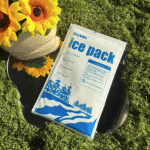
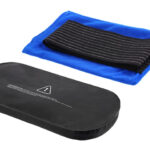
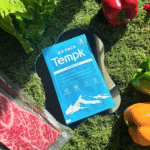
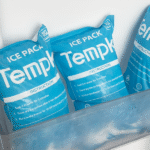
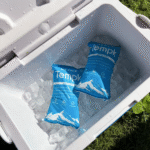
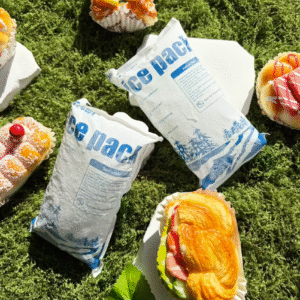
Nota: “24-cell dry ice packs” are polymer sheets that freeze near 0 °C. They aren’t solid CO₂ and don’t require UN1845 labels when used alone. Use them for chilled lanes or hybrid packouts; they occupy space that reduces headspace, so plan volume accordingly.
2025 compliance rules that shape the ideal headspace in a dry ice bag
Venting is non-negotiable: Air rules require non-airtight packages y continuous CO₂ release. Carriers explicitly warn: do not place dry ice in sealed plastic bags. Passenger limits (~2.5 kg) and workplace CO₂ limits also apply. Plan headspace to preserve the vent path and pass acceptance checks.
Quick checklist
-
Marcar y documentar: UN1845 + net weight when shipping solid CO₂.
-
Keep a lid void: Preserve a small top void so gas rises and exits freely.
-
Validar: Logger traces should show stable pressure and ≤ ±2 °C gradients across payload.
2025 tendencias: smarter headspace, smarter vents
Descripción general de la tendencia: Los equipos están adoptando pressure-regulated vents, AI thermal models, y validation culture that treats headspace as a functional vent-protector rather than a fixed percentage. Expect more valve liners, real-time CO₂ telemetry, and packout templates that scale by lane and season.
Último progreso de un vistazo
-
Pressure-regulated smart valves: Auto-relief under spikes; reduce liner ballooning.
-
3D-printed insulation geometries: Shape headspace to steer gas paths.
-
Paquetes híbridos: Polymer sheets stabilize product, small CO₂ charge extends hold.
Insight del mercado: Providers report higher pass rates when SOPs explicitly show dónde the vent sits and how much slack protects it. Many lanes standardize 20–25% for biopharma and 15–20% para alimentos congelados, then tune by ambient.
Preguntas frecuentes
Q1: Is there a universal percentage for the ideal headspace in a dry ice bag?
No. Usar 15–25% as a ground-lane baseline, pero regulations require venting, not a fixed %. Size headspace to keep the vent path open.
Q2: Can I heat-seal my liner and rely on headspace alone?
No. Plain poly bags must no ser hermético. Use a valve bag or fold-and-clamp closure that breathes.
Q3: How much gas appears early in transit?
Tener pensado 1–2%/h sublimation initially; 1 libra ≈ 8.8 pies³ total CO₂. Confirm your vent path handles the first-hour volume.
Q4: Do polymer “dry ice packs” change headspace needs?
Sí. They take volume and reduce headspace but don’t create CO₂. Recalculate free volume when mixing with solid CO₂.
Q5: What’s different for air cargo?
Air lanes prioritize visible venting y apropiado UN1845 marcas. Headspace is “functional”: whatever preserves continuous gas release.
Resumen & recomendaciones
The ideal headspace in a dry ice bag is the slack that protects a clear vent path while delivering uniform cooling. Empezar 15–25% for ground lanes, then verify with a first-hour CO₂ check and a squeeze-test. Para el aire, lead with venting compliance and bag style selection. Validate seasonally and adjust for container, carga, y ambiente.
Pasos de acción:
-
Calculate headspace and first-hour gas.
-
Choose the right bag style and expose vents.
-
Logger-validate pressure and temperature.
-
Standardize SOPs per lane and season.
-
Document UN1845 and train teams on vent-first closures.
Acerca de Tempk
Diseñamos validated cold-chain packouts that balance safety, cumplimiento, y costo. Our engineers optimize vented liners, valve-bag SOPs, y CO₂ calculators to size the ideal headspace in a dry ice bag for your lanes. Clients typically cut warm-arrival claims and rework by double digits after one seasonal cycle.
Llamado a la acción: Need a lane-specific plan? Book a 20-minute review and get a ready-to-publish SOP with headspace, desfogue, and logger criteria tailored to your routes.