Water Injection Ice Pack Factory: 2026 Lista de verificación?
A water injection ice pack factory decision is really a risk decision. If packs leak, explosión, or arrive underfilled, you lose product, tiempo, y confiar en. Water packs also expand by about 9% al congelarse, so weak seals fail fast. Cuando se hace bien, a water injection ice pack factory gives you stable lots, enfriamiento predecible, and fewer “wet carton” claims.
Esta guía te ayudará:
-
Elija un water injection ice pack factory quality control checklist that procurement and QA can share
-
Verificar water injection ice pack factory sealing and leak testing sin conjeturas
-
Definir water injection ice pack factory customization and private label specs that reduce errors
-
Controlar water injection ice pack factory capacity and lead time planning for peak season
-
Validate performance for 2–8 ° C and frozen lanes using repeatable tests
-
Use quick decision tools to shortlist suppliers with confidence
What does a Water Injection Ice Pack Factory make?
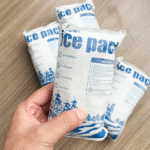
A water injection ice pack factory produces sealed flexible pouches filled with water (or water-based blends). The formats are simple. The failure modes are not.
Common pack formats you can source:
-
Pillow packs (easy to lay flat in cartons)
-
Brick packs (stacking stability for longer lanes)
-
Multi-cell sheets (mejor cobertura, less shifting)
-
Reusable cap packs (return loops, if you have the process)
Think of each pack as a small batería fría. El hielo absorbe aproximadamente 334 kJ por kilogramo while melting at 0°C. That “energy soak” helps stabilize temperature during transit. Your job is to make sure the “battery casing” (película + sello) never fails.
Water Injection Ice Pack Factory vs gel packs: que cambios?
Two packs can look identical and behave very differently. Water is less forgiving because freeze expansion stresses seals and corners.
| Factory focus area | Water injection packs | paquetes de gel | Lo que significa para ti |
|---|---|---|---|
| Freeze expansion stress | Más alto | Medio | Water packs need stronger seals and corner design |
| Fill accuracy | Critical | Importante | Underfill = weak hold time and unstable results |
| Modo de falla | Seam split, micro-channels | Seam split, punción | Seal control becomes your #1 screening filter |
| Process sensitivity | Alto | Medio | Small drift in sealing shows up in winter failures |
Consejos prácticos que puedes usar
-
If leaks happen after freezing: prioritize seal design and seal consistency, not branding.
-
If you freeze in-house: align film and seal specs to your freezer temperature and handling.
-
If you ship via automated sorting: prioritize puncture resistance and protective carton packing.
ejemplo real: A brand switched to a cheaper supplier and saw “random wet boxes.” The root cause was micro-channels in seals that only appeared after freeze expansion. Tight seal controls stopped the leaks.
Water Injection Ice Pack Factory quality control checklist
A qualified water injection ice pack factory should prove three things: consistencia, durabilidad, y escalabilidad. Samples are easy. Repeatability is hard.
What “good” looks like in production
You want stable control of:
-
Fill weight (tight tolerance, recorded checks)
-
Seal width + integridad (mesurado, documentado, corrected when drifting)
-
Espesor de la película (batch stability, incoming inspection records)
-
Dimensiones (so your packout does not drift)
-
Trazabilidad (códigos de lote + registros de lotes)
| Capacidad | que pedir | Strong signal | Lo que significa para ti |
|---|---|---|---|
| Fill control | Target weight + tolerancia | In-line checks + registros | Predictable cooling duration |
| Seal control | Seal width + parameters | Recorded by shift | Fewer leaks and bursts |
| Trazabilidad | Códigos de lote + archivos | Batch logs available | Análisis de causa raíz más rápido |
| Durabilidad | Gota + compresión + freeze–thaw | Multi-cycle evidence | Fewer delayed failures |
| Packing protection | Inner liners / divisores | Consistent carton method | Less damage before you receive it |
Consejos prácticos y sugerencias.
-
Ask for a process map: you want to see where checks happen, no promesas.
-
Ask how they handle rework: reworked seals can create weak points.
-
Ask about change control: “No film change without written notice” is a strong rule.
Water Injection Ice Pack Factory sealing and leak testing (the make-or-break step)
Sealing is the heartbeat of a water injection ice pack factory. Most failures trace back to seal drift, contaminación, uneven pressure, or weak geometry.
Common seal defects you should screen for:
-
Seam split: weak seal energy or misalignment
-
Micro-channel leak: tiny pathway that appears after freezing
-
Corner tear: stress concentration during stacking and drops
-
Pinholes: film damage, contaminación, or abrasion
| Seal issue | Causa probable | Factory control that helps | Lo que significa para ti |
|---|---|---|---|
| Seam split | Low seal energy | Parameter monitoring | Fewer wet cartons |
| Micro-channel | Contaminación | Clean process + uniform pressure | Menos “filtraciones misteriosas” |
| Corner tear | Sharp corners, thin film | Corner rounding + stronger film | Better handling survival |
| Pinholes | Abrasion / manejo | Tougher film + better packing | Lower leak rate in transit |
Consejos prácticos y sugerencias.
-
Require a seal spec: seal width target and acceptable range.
-
Demand freeze checks: seals must pass después congelación, not only at room temperature.
-
Add compression tests: stacked packs create real stress in cartons.
ejemplo real: A seafood distributor saw leaks only in winter. Packs froze harder, expanded more, and stressed weak seams. Slightly wider seals eliminated the seasonal spike.
How to audit a Water Injection Ice Pack Factory in 2026
You do not need a perfect tour. You need proof of systems and records. If the factory cannot explain prevention, you become their test lab.
The 60-minute audit plan (fast but effective)
-
0–10 minutos: Incoming film
-
Film ID and storage conditions
-
Incoming inspection records
-
Cuarentena / reject area
-
-
10–25 min: Relleno + caza de focas
-
Fill repeatability controls
-
Seal parameter records (tiempo, temperatura, presión)
-
Calibrated measurement tools
-
-
25–40 min: In-process QC
-
Leak screening method and sampling frequency
-
Seal strength measurement approach
-
Defect handling workflow
-
-
40–55 min: Finished goods
-
Lot coding discipline
-
Carton packing method and pallet pattern
-
FIFO and storage conditions
-
-
55–60 min: Corrective action culture
-
One real defect example and the fix
-
Retraining process
-
How recurrence is prevented
-
Questions that expose real capability
-
“Show me your last seal-monitoring chart."
-
“What happens when seal results drift?"
-
“How do you stop a suspect lot from shipping?"
-
“How do you test packs after drops and compression?"
Autoevaluación interactiva: Factory QC Fit Score
Puntuación de cada elemento 0–2 agujas (0 = no evidence, 2 = documented and routine):
-
Lot coding on every carton and batch
-
Incoming film inspection with records
-
Fill weight checks at defined intervals
-
Leak screening with clear sampling rules
-
Seal width measurement and acceptance range
-
Freeze–thaw durability checks (multi-cycle)
-
Clear rework and reject handling
-
Written change-notification rule for materials
guía de puntuación
-
13–16: candidato fuerte, ready to scale
-
8–12: workable, but pilot must be tighter
-
0–7: alto riesgo; require upgrades or switch suppliers
Water Injection Ice Pack Factory customization and private label
Customization helps only when it reduces risk or cost. Too many SKUs create picking errors and chaos.
High-value customization options:
-
Pack size that fits your shipper interior
-
Two fill weights (short vs long lanes)
-
Multi-cell sheet designs for better coverage
-
Film upgrades for rough handling routes
-
Color coding for lane sorting
-
Private label + clear lot coding placement
| Custom option | Mejor caso de uso | Risk if overused | Lo que significa para ti |
|---|---|---|---|
| Multi-cell sheet | Cobertura uniforme | More SKUs | More consistent cooling |
| Two fill weights | Lane matching | Inventory mistakes | Less overpacking |
| Thicker/tougher film | Rough carriers | Mayor costo | Fewer punctures |
| Codificación de colores | Embalaje más rápido | Confusion if unmanaged | Menos errores de embalaje |
| Private label + código de lote | Audit needs | Clutter if messy | Faster traceability |
Consejos prácticos y sugerencias.
-
Limit formats: 2–3 pack formats cover most programs.
-
Use color for workflow: one color per lane reduces mistakes.
-
Document packout maps: customization fails when packers improvise.
ejemplo real: A grocery brand had six pack sizes and constant wrong picks. They cut to two sizes and improved insulation. Errors dropped fast.
Water Injection Ice Pack Factory capacity and lead time planning
A water injection ice pack factory can have perfect samples and still fail you at scale. Late packs trigger rushed substitutions and unstable outcomes.
Que verificar:
-
Monthly capacity and peak capacity
-
Standard lead time and worst-case lead time
-
Film sourcing stability and backup plans
-
Safety stock options
-
Planning support and forecasting process
-
Protective packaging that prevents damage before arrival
| Reliability factor | Que verificar | Strong signal | Lo que significa para ti |
|---|---|---|---|
| Capacidad | Weekly output limits | Clear numbers | Menos desabastecimientos |
| Tiempo de entrega | On-time history | Stable window | Predictable packing plans |
| Backup sourcing | Film alternatives | Documented plans | Less disruption risk |
| control de cambios | Written notice policy | Formal rule | Menos sorpresas |
| Embalaje | Transit protection | Consistent method | Fewer leaks on receipt |
Consejos prácticos y sugerencias.
-
Ask for “no silent change” rules: film and seal changes must be documented.
-
Require batch labeling: it speeds investigations and claim resolution.
-
Inspect receiving lots: catching defects early saves downstream damage.
How to validate a Water Injection Ice Pack Factory for your lane
Validation turns supplier claims into repeatable outcomes. Your goal is a packout your team can run every day.
Un plan de validación práctico (simple, repetible)
Correr three repeats for each profile:
-
Typical lane test (normal conditions)
-
Warm worst-case (peak ambient + doorstep dwell time)
-
Cold worst-case (over-freeze risk, winter handling)
Colocación del registrador (minimum two loggers):
-
Near the product core zone
-
Near the warm corner or lid zone
If you measure only one spot, you miss the failure zone.
| Validation element | Buena practica | Por que importa | Lo que significa para ti |
|---|---|---|---|
| Perfil de carril | Includes dwell times | Matches reality | Menos sorpresas |
| Repeat runs | 3+ pruebas | Shows variability | Confianza a escala |
| Photo packouts | Always documented | Stops “packer drift” | Stable results |
Mini herramienta de decisión: Lane-to-factory match
Paso 1 — Transit time: 0- 24 horas / 24-48h / 48-72h / 72h+
Paso 2 — Handling intensity: low-touch B2B / courier parcel / automated sorting
Paso 3 — Product risk: no debe congelarse / can freeze / must stay frozen
Output guidance
-
Si 48-72h + automated sorting: prioritize tougher film and protective carton packing.
-
Si no debe congelarse: prioritize placement rules and buffer layers in your SOP.
-
Si hot ambient peaks: upgrade insulation before adding pack mass.
ejemplo real: A subscription brand passed a lab test but failed on doorsteps. Adding dwell time to validation fixed the packout fast.
Common failures and how the right Water Injection Ice Pack Factory prevents them
Most defects are predictable. The right supplier prevents them with process control, not sorting.
| Symptom you see | Causa probable | Supplier control | Lo que significa para ti |
|---|---|---|---|
| Leaks after freezing | Seal weakness | Seal monitoring + freeze checks | Fewer wet cartons |
| Packs feel “light” | Underfill | In-line weight checks | Tiempo de espera predecible |
| Bursts in transit | Overfill or weak film | Fill control + tougher film | Fewer replacements |
| Random packout failures | Batch variation | Trazabilidad + control de cambios | Soluciones de causa raíz más rápidas |
| Corner pinholes | Sharp geometry | Rounded corners | Better survival in drops |
Consejos prácticos y sugerencias.
-
Set acceptance sampling: define how many packs you inspect per lot.
-
Inspect seams and corners first: most failures start there.
-
Store smart: heat and pressure can deform packs before freezing.
2026 trends for Water Injection Ice Pack Factory sourcing
En 2026, buyers are moving away from “lowest unit price” and toward total cost of failure. That means fewer leaks, clearer documentation, and better change control.
Última instantánea del progreso
-
More in-line inspection: weight checks and seal monitoring reduce variability.
-
Better “seal science”: fewer operator guesses, more controlled setpoints.
-
Simplified SKU sets: fewer sizes, more repeatable packouts by lane.
-
Higher audit expectations: retailers and enterprise buyers want faster onboarding.
-
More recyclability pressure: mono-material thinking influences film choices and labeling.
Insight del mercado que puede usar
Procurement teams increasingly measure supplier value by outcomes:
-
Fewer leakage claims
-
Fewer temperature excursions
-
Faster corrective action cycles
-
Stable delivery during peak season
Preguntas frecuentes
Q1: What is the biggest risk when choosing a water injection ice pack factory?
The biggest risk is hidden variability in seals and fill weight. That causes leaks and unpredictable hold times. Require seal specs, fill tolerances, and lot records in writing. Then validate with repeat runs using real lane conditions.
Q2: How do I know if seals are strong enough?
Ask for seal width targets, controles de resistencia del sello, and freeze validation. Many seals look fine at room temperature and fail after freezing. A reliable factory monitors sealing time, temperatura, and pressure, not only appearance.
Q3: Should I choose reusable cap packs or heat-sealed packs?
Heat-sealed packs fit high-volume single-use programs. Reusable cap packs can work in return loops, but you must manage cleaning, inspección, and cap-tightness discipline. Choose based on operations, not only product preference.
Q4: How can I reduce leaks in real shipping lanes?
Start with seal consistency, corner design, and protective carton packing. Then align film toughness to handling intensity. Also train packers to avoid sharp objects and over-stacking. Good suppliers support improvements with documented changes.
Q5: How many pack formats should I run?
Most operations succeed with two or three formats. Too many SKUs increase picking errors and slow packing. Standardize first, then tune performance with placement and insulation before adding new pack sizes.
Q6: What should I test before approving a factory?
Run at least three repeats on one lane with the same shipper and packout map. Include warm worst-case and cold worst-case conditions. Use two logger locations, and document pack placement with photos to prevent drift.
P7: Why do some packs fail only in winter or only in summer?
en invierno, packs freeze harder and expand more, stressing weak seals. en verano, heat load rises and underfilled packs fail early. Seasonal failures usually signal weak process control, no “mala suerte”.
P8: Can a water injection ice pack factory help with packout design?
Many can offer guidance on pack shapes and placement. You should still validate with your own lane profile and SOP. The best results come from combining factory consistency with warehouse discipline.
Resumen y recomendaciones
A water injection ice pack factory is part of your cold chain quality system. En 2026, the winning approach is simple: lock measurable specs, verify seal and fill controls, demand traceability and change control, and validate performance using lane-based tests. Keep customization focused, and reduce SKUs so your team can execute consistently.
Plan de acción (CTA)
-
Define one lane: temperatura objetivo, duración, and worst-case ambient peaks.
-
Write a one-page spec: dimensiones, fill tolerance, película, ancho del sello.
-
Require proof: seal monitoring, weight checks, lot records, change notices.
-
ejecutar un piloto: three repeats with loggers and photo packout maps.
-
Scale carefully: add lanes only after results repeat.
Acerca de Tempk
Tempk supports cold chain teams with packaging programs that scale. We help you define pack specifications, build repeatable packout SOPs, and reduce leak risk by aligning film, caza de focas, and handling to real lane conditions. Our focus is reliability: fewer wet cartons, fewer temperature failures, and smoother operations as your volume grows.
Siguiente paso: Comparte la duración de tu carril, tamaño del listón, y banda de temperatura objetivo. We will recommend a factory scorecard and RFQ template you can use immediately.