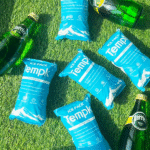
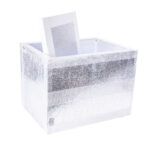
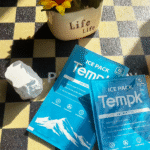
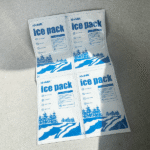
Respuesta central: Un fabricante de bebidas con paquetes de gel refrigerante fuerte debe garantizar la repetibilidad: peso de llenado constante, sellos consistentes, y rendimiento consistente a escala. You are not paying for “cold today.” You are paying for the same cooling behavior on every pallet, all year. Your biggest wins usually come from fewer leaks and fewer exceptions, not extra minutes of cold.
Explicación expandida: Think of your gel pack like a “cold battery.” If the battery changes every time you reorder, your operations become chaotic. A manufacturer should control three failure drivers: fill variation, seal weakness, and pack-out fit. Your draft emphasis on stable fill behavior, esquinas reforzadas, and traceability is exactly what reduces surprises at volume.
What repeatability looks like in the real world
| Manufacturer Promise | What they control | What you see in delivery | Practical value to you |
|---|---|---|---|
| Cooling stability | gel mass + consistencia | beverages arrive cold | fewer refunds and reships |
| Resistencia a fugas | película + seal design | fewer soggy cartons | fewer complaints and disputes |
| Pack-out fit | tamaño + shape tolerance | faster packing | lower labor and fewer mispacks |
| Trazabilidad | lot records + control de cambios | correcciones más rápidas de la causa raíz | less downtime during issues |
Consejos prácticos y recomendaciones.
If you ship glass bottles: ask for puncture resistance and corner reinforcement on the pack film.
If you ship mixed kits: standardize pack sizes to reduce packing mistakes.
If you scale fast: require a written change-control rule before your second order.
Caso práctico (typical outcome): Beverage programs often cut “mystery leaks” when the supplier records seal checks per production lot and stops silent material changes.
How do you score a refrigerant gel package beverage manufacturer in 15 minutos?
Respuesta central: You can screen any refrigerant gel package beverage manufacturer by scoring evidence in three buckets: durabilidad, pack-out realism, and quality discipline. This prevents you from choosing based on nice samples or sales claims. A scorecard also makes your decision easier to defend internally.
Explicación expandida: When beverage delivery fails, it usually fails in predictable ways: fugas, wet-box collapse, or warm arrival. A fast scorecard forces a supplier to show proof of control points and testing habits. Your draft already uses a simple “Yes/Partial/No” structure—keep it, but tighten the questions so each one protects money.
herramienta de decisión: Cuadro de mando de ajuste del proveedor (interactivo)
Puntuación de cada elemento: Yes = 2, Partial = 1, No = 0.
The refrigerant gel package beverage manufacturer provides a spec sheet with tolerances.
The refrigerant gel package beverage manufacturer shows leak screening evidence by lot.
The refrigerant gel package beverage manufacturer records seal checks during production.
The refrigerant gel package beverage manufacturer supports a pilot batch before scaling.
The refrigerant gel package beverage manufacturer reviews your box size and pack-out layout.
The refrigerant gel package beverage manufacturer offers corner reinforcement options.
The refrigerant gel package beverage manufacturer has written change-control rules.
The refrigerant gel package beverage manufacturer can retrieve records quickly.
| Score Range | Nivel de riesgo | ¿Qué haces a continuación? | lo que protege |
|---|---|---|---|
| 13–16 | Bajo | sample → pilot → scale | stable refund rate |
| 9–12 | Medio | piloto + tighter acceptance | reputación de la marca |
| 0–8 | Alto | avoid scaling | cash flow and time |
Consejos prácticos y recomendaciones.
Ask for proof first, price second: it saves weeks later.
Request one failure story: “What failed last month, and what changed?”
Treat vague answers as risk signals: silence often equals weak controls.
Caso práctico (común): Teams reduce exceptions after switching to suppliers that enforce change control and document seal checks.
Which food-safe materials should your refrigerant gel package beverage manufacturer use?
Respuesta central: Your refrigerant gel package beverage manufacturer should use materials that stay clean, resist odor, and remain strong in wet conditions. Beverage buyers judge shipments by smell and appearance in seconds. If a carton feels wet or smells “químico,” trust drops immediately.
Explicación expandida: You do not need a chemistry lecture to buy safely. You need clear answers about film type, control de olores, and manufacturing hygiene. For food-contact materials in the EU, the framework rule is Regulation (CE) No 1935/2004, with specific measures for plastics under Regulation (UE) No 10/2011. Good manufacturing practice is addressed under Regulation (CE) No 2023/2006. Even when gel packs are “indirect,” leaks can create contact concerns, so documentation matters.
Material choices that change outcomes
| Componente | Basic option | Better option | Significado práctico para ti |
|---|---|---|---|
| Gel behavior | simple gel | estable, repeatable gel | more predictable cold hold |
| película exterior | single-layer | multi-layer barrier film | fewer punctures and pinholes |
| Seal design | standard edge | reinforced corners/edges | fewer leaks in rough handling |
| Odor control | not checked | lot-based odor checks | fewer “oler” quejas |
Compliance evidence to request (plain-English version)
EU programs: statement aligned to 1935/2004 + plastics approach under 10/2011 (if relevant) + GMP controls aligned to 2023/2006.
Multi-market programs: ask for a short summary page that explains what materials are used and how changes are controlled.
Consejos prácticos y recomendaciones.
Premium beverages: require odor checks before scaling.
Wet environments: prioritize film durability over “extra cold” at minute one.
Reuse programs: request freeze–thaw durability checks as a baseline.
Caso práctico (típico): Programs often see fewer complaints after adding odor checks and upgrading to tougher barrier film.
How do you design leak-resistant pack-outs with a refrigerant gel package beverage manufacturer?
Respuesta central: The best refrigerant gel package beverage manufacturer helps you design a system: paquetes de gel + aislamiento + colocación + control de humedad. Leaks and condensation are different problems, but customers feel both as “a wet mess.” Your goal is to protect cardboard strength, prevent rubbing punctures, and keep cooling coverage even.
Explicación expandida: Condensation is not a surprise. Cold packs meet humid air, and corrugate absorbs moisture. That is why your pack-out needs structure, no espero. Your draft’s “three-layer” idea—barrier, espaciado, structure—is a simple model you can train in one shift.
Wet-box prevention model (easy to remember)
capa barrera: keeps moisture away from cardboard.
Spacing layer: prevents rubbing punctures and bottle contact.
Structure layer: keeps the box strong under compression.
| Riesgo | Por que sucede | solución rápida | What to ask the manufacturer |
|---|---|---|---|
| Wet cardboard | condensation soak | add barrier liner | “Which liner works for my route?” |
| Puncture leaks | rubbing on edges | add dividers/spacers | “What divider layout fits my box?” |
| Esquinas aplastadas | presión de apilamiento | reinforce seals/corners | “Do you offer corner reinforcement?” |
| Enfriamiento desigual | poor placement | standardize layout | “Can you review my pack-out photo?” |
Consejos prácticos y recomendaciones.
Use a pack-out photo standard: one photo per box size reduces mispacks fast.
Avoid one-sided coolant placement: it creates hot spots and uneven chilling.
Keep gel packs off labels: condensation ruins barcodes and presentation.
Caso práctico (típico): Beverage programs often reduce damage reports after standardizing placement and adding simple dividers.
Which tests should a refrigerant gel package beverage manufacturer support for parcel beverage shipping?
Respuesta central: Your refrigerant gel package beverage manufacturer should support “as-packed carton” pruebas, not just single-pack bench checks. The most useful tests catch leaks, sellos débiles, and pack-out collapse under distribution hazards. ASTM D4169 describes a structured approach to evaluate shipping units using test methods at levels representing real distribution. For parcel delivery, ISTA describes Procedure 3A as a test for individual packaged products shipped through a parcel system.
Explicación expandida: If you only test gel packs alone, you miss real failure modes. Most beverage failures happen after the carton is packed, apilados, abandonó, and vibrated. Your acceptance rules should be simple pass/fail statements, tied to your refund risks. Your draft already emphasizes carton-level drop and compression checks—keep that as a standard gate.
Practical test set (carton-level)
| Prueba | What it catches | Simple “aprobar” regla | Por que importa |
|---|---|---|---|
| Leak screening | pinholes, sellos débiles | no visible leaks | prevents wet-carton refunds |
| Seal strength | corner/edge failure | stable seal integrity | reduces in-transit failures |
| Fill-weight checks | gel mass drift | within tolerance | stabilizes cold duration |
| Gota + vibración | handling shocks | no rupture in packed carton | matches parcel reality |
| Compresión | presión de apilamiento | no seal failure under load | protects van and pallet loads |
Acceptance criteria you can put in a PO (listo para copiar)
Filtración: No leaks after carton-level drop/compression sequence.
Peso: Net gel pack weight within your tolerance window.
Sello: No corner splitting, edge opening, or seepage under compression.
Empacado: Layout matches the approved photo standard.
Consejos prácticos y recomendaciones.
Test the finished shipment: packed cartons reveal the truth fastest.
Retest after any change: película, seal settings, or size changes require revalidation.
Keep tests simple: pass/fail rules beat complicated lab language.
Caso práctico (típico): Brands cut leak claims after adding compression checks that reflect stacked courier van loads.
How do you write OEM specs to prevent spec drift with a refrigerant gel package beverage manufacturer?
Respuesta central: OEM works when you replace vague goals with measurable specs. A refrigerant gel package beverage manufacturer can customize size, forma, and gel mass, but customization increases variability. Your job is to lock a one-page spec, approve a golden sample, and require written approval for any changes.
Explicación expandida: “Spec drift” is the quiet killer of beverage programs. Small material changes can show up as new leaks, new odors, or shorter cold duration. Your draft’s “golden sample → pilot batch → lock spec” sequence is the simplest way to keep performance stable.
One-page OEM spec template (listo para copiar)
| Spec element | Tu objetivo | como verificas | Por que importa |
|---|---|---|---|
| Dimensiones | ___ | measure samples | pack-out fit |
| Peso neto | ___ ± ___ | lot weight checks | cooling repeatability |
| Film type | ___ | material confirmation | puncture resistance |
| Seal design | estándar / reforzado | control de sello | prevención de fugas |
| Odor control | criterios de aprobación | cheques de lote | customer trust |
| código de lote | formato + colocación | label audit | trazabilidad |
| Embalaje | foto + contar | pack audit | fewer mispacks |
Safe OEM process (pasos repetibles)
Approve a golden sample with photos and measurements.
Run a pilot batch using your real box and payload weight.
Test packed cartons for leaks, gotas, y compresión.
Lock the spec and require written approval for changes.
Scale with lot-based checks and monthly trend reviews.
Consejos prácticos y recomendaciones.
Comience simple: one pack size across multiple SKUs reduces MOQ pressure.
Define revalidation triggers: tamaño de la caja, seal design, film change, or layout change.
Ask for a monthly defect trend summary: it keeps quality visible.
Caso práctico (típico): Beverage programs avoid seasonal surprises by freezing the spec and revalidating only after box changes.
How do you compare total cost and reduce refunds with a refrigerant gel package beverage manufacturer?
Respuesta central: Compare total loss prevention, no precio unitario. A cheaper gel pack that triggers refunds is not cheaper. si envías 10,000 boxes per month, a 1% avoidable failure becomes 100 incidents. That is a lot of support time and reships.
Explicación expandida: Refund reduction is mostly about repeatability, not extreme coldness. Your draft’s playbook—standardize layout, run a pilot, track complaints by category, and change one thing at a time—is the fastest way to lower refund rates without chaos.
Refund ROI calculator (interactivo)
Completa los espacios en blanco:
Monthly shipments: ___
Incident rate tied to warm/wet/damage: ___%
Cost per incident (reembolso + reenviar + mano de obra): ___
Added cost per shipment for better packaging: ___
Regla general: Si (shipments × incident rate × incident cost) is bigger than (shipments × added cost), the safer option usually wins.
Complaint-to-fix map (use this weekly)
| Complaint type | Causa raíz probable | Fastest fix | What to ask the manufacturer |
|---|---|---|---|
| Warm arrival | too little thermal mass | adjust mass or placement | “Sizing guidance for my lane?” |
| cartón mojado | micro-leaks + condensación | esquinas reforzadas + barrera | “control de fugas + liner option?” |
| Bottle damage | fricción + impacto | divisores + stronger film | “Puncture proof plan?” |
Consejos prácticos y recomendaciones.
Separate complaint types: warm vs wet vs damaged needs different fixes.
Cambiar una variable a la vez: otherwise you will not learn what worked.
Standardize first, optimize second: stability reduces costs faster than fine-tuning.
Caso práctico (típico): Programs reduce refunds after splitting “cálido” complaints from “daño” quejas, then fixing each directly.
2026 trends reshaping refrigerant gel packaging for beverages
Descripción general de la tendencia: En 2026, beverage shipping faces tighter sustainability pressure and higher delivery expectations. Reglamento de la UE sobre envases y residuos de envases (Páginas) entró en vigor el 11 Febrero 2025 and has a general application date 18 meses después, which points to 12 Agosto 2026 for broad applicability. En los EE.UU., packaging EPR laws expanded quickly, with legal summaries noting seven states having comprehensive packaging EPR laws as of October 1, 2025.
Latest developments you should track in 2026
Right-sized coolant designs: menos desperdicio, flete más bajo, fewer wet boxes.
More durability upgrades: reinforced corners become standard in rough routes.
More traceability: faster lot tracking shortens corrective action cycles.
More reuse readiness: freeze–thaw durability becomes a baseline request.
Insight del mercado: The winners in 2026 treat gel packs as part of a controlled system. They standardize pack-outs, validar cambios, and prevent spec drift.
Preguntas frecuentes
Q1: What is the biggest mistake when choosing a refrigerant gel package beverage manufacturer?
Choosing on unit price alone. Wet boxes and warm arrivals cost more than small savings.
Q2: Do I need different gel packs for summer and winter?
No siempre. Many programs keep one pack and tune conditioning or layout instead.
Q3: What is the fastest way to reduce leaks?
Start with reinforced corners, controles de sello, and dividers that prevent rubbing punctures.
Q4: Should I test gel packs alone or the full packed carton?
Test the packed carton. Most failures happen after packing, apilado, y manejo.
Q5: What documents should I request before a first bulk order?
A tolerance spec sheet, leak test evidence, pilot plan, and written change-control rule.
Q6: Why do boxes arrive wet even without obvious leaks?
Condensation can soak cardboard. Use barrier liners and moisture-aware pack-outs.
Resumen y recomendaciones
A refrigerant gel package beverage manufacturer should protect your program with repeatable cooling, sellos fuertes, and disciplined change control. Build a pack-out system that prevents wet boxes with barrier, espaciado, and structure layers. Validate performance using carton-level testing that reflects real distribution hazards, then lock OEM specs to stop drift.
Siguiente paso (CTA): Shortlist two suppliers, run a pilot using your real box and payload, and scale only after results stay repeatable.