


Vaksin Influenza
Pengiriman musiman bervolume tinggi perlu stabil 2-8 penanganan C, penerimaan klinik cepat, kontrol identitas karton, dan perlindungan dari kontak langsung gel beku.
Sebagian besar rute pengiriman vaksin rutin direncanakan 2-8 C, namun keputusan pengemasan sebenarnya bukan hanya suhu. Botol dan karton harus dilindungi dari pembekuan, perolehan panas, kerusakan label, kontak pendingin, waktu serah terima yang lama, dan menerima penundaan.
Untuk distribusi vaksin, paket yang lebih kuat tidak selalu merupakan paket yang lebih dingin. Banyak vaksin yang didinginkan memerlukan kandang 2-8 C lingkungan dan harus dijauhkan dari kontak langsung gel beku. Tempk membangun paket seputar pengkondisian cairan pendingin, ketebalan isolasi, dukungan botol/karton, dan bukti rute yang dibutuhkan penerima.
Pengiriman musiman bervolume tinggi perlu stabil 2-8 penanganan C, penerimaan klinik cepat, kontrol identitas karton, dan perlindungan dari kontak langsung gel beku.
Lebih kecil, paket bernilai lebih tinggi memerlukan perlindungan pembekuan, perlindungan karton asli, kejelasan label, dan penanganan ringan selama pengisian klinik.
Vaksin adjuvan memerlukan pencegahan pembekuan yang kuat, pendingin yang dikondisikan, dukungan botol, dan bukti suhu yang jelas saat menerima.
| Rute produk | Maksud suhu | Pengaturan pengemasan | Kisaran cairan pendingin awal | Periksa saat menerima |
|---|---|---|---|---|
| Pengisian kembali klinik vaksin influenza | 2-8 C, hindari pembekuan selama puncak volume musiman. | Karton terisolasi atau pengirim EPP, karton botol di tengah, paket gel terkondisi atau 5 C PCM dipisahkan oleh papan penyangga. | Tentang 1.0-2.5 paket gel terkondisi kg atau PCM untuk a 1-4 L muatan berpendingin menyala 8-24 jam jalur. | Catatan pencatat, kekeringan karton botol, kejelasan label, posisi pendingin, dan waktu penyimpanan habis. |
| Paket vaksin HPV atau transfer klinik | 2-8 C dengan pembekuan yang kuat dan penanganan yang sadar cahaya. | Karton asli dilindungi dalam baki bagian dalam yang kaku, cairan pendingin di sekitar sisi/atas, tidak ada permukaan beku langsung pada karton. | Tentang 1.2-3.2 paket gel terkondisi kg atau PCM untuk 12-36 jam jalur, disesuaikan dengan ukuran pengirim dan musim. | Suhu minimal, penghancur karton, kondisi label, paparan cahaya selama penanganan, dan kondisi pendingin yang tersisa. |
| Distribusi vaksin hepatitis B | 2-8 C, dengan perhatian ekstra untuk pencegahan pembekuan. | Muatan pusat yang disangga, pendingin yang dikondisikan, lapisan penyerap atau pembagi di mana kondensasi dapat mempengaruhi karton. | Tentang 1.0-3.0 paket gel terkondisi kg atau PCM untuk 8-36 jam jalur; hindari muatan menyentuh gel beku tanpa syarat. | Setiap pembacaan di bawah nol, basahnya botol/karton, pergerakan produk, dan waktu serah terima yang terdokumentasi. |
Rentang ini merupakan rentang perencanaan untuk diskusi pengemasan, bukan kriteria pelepasan. Kemasan akhir harus dikonfirmasi dengan label vaksin, profil rute, ukuran muatan, logger suhu, dan persyaratan penanganan lokal.
Gunakan kurva validasi bersama dengan cek penerimaan produk. Pengemasan vaksin harus dinilai berdasarkan riwayat suhu, penghindaran beku, kondisi karton, dan betapa mudahnya penerima dapat mengkonfirmasi kiriman.
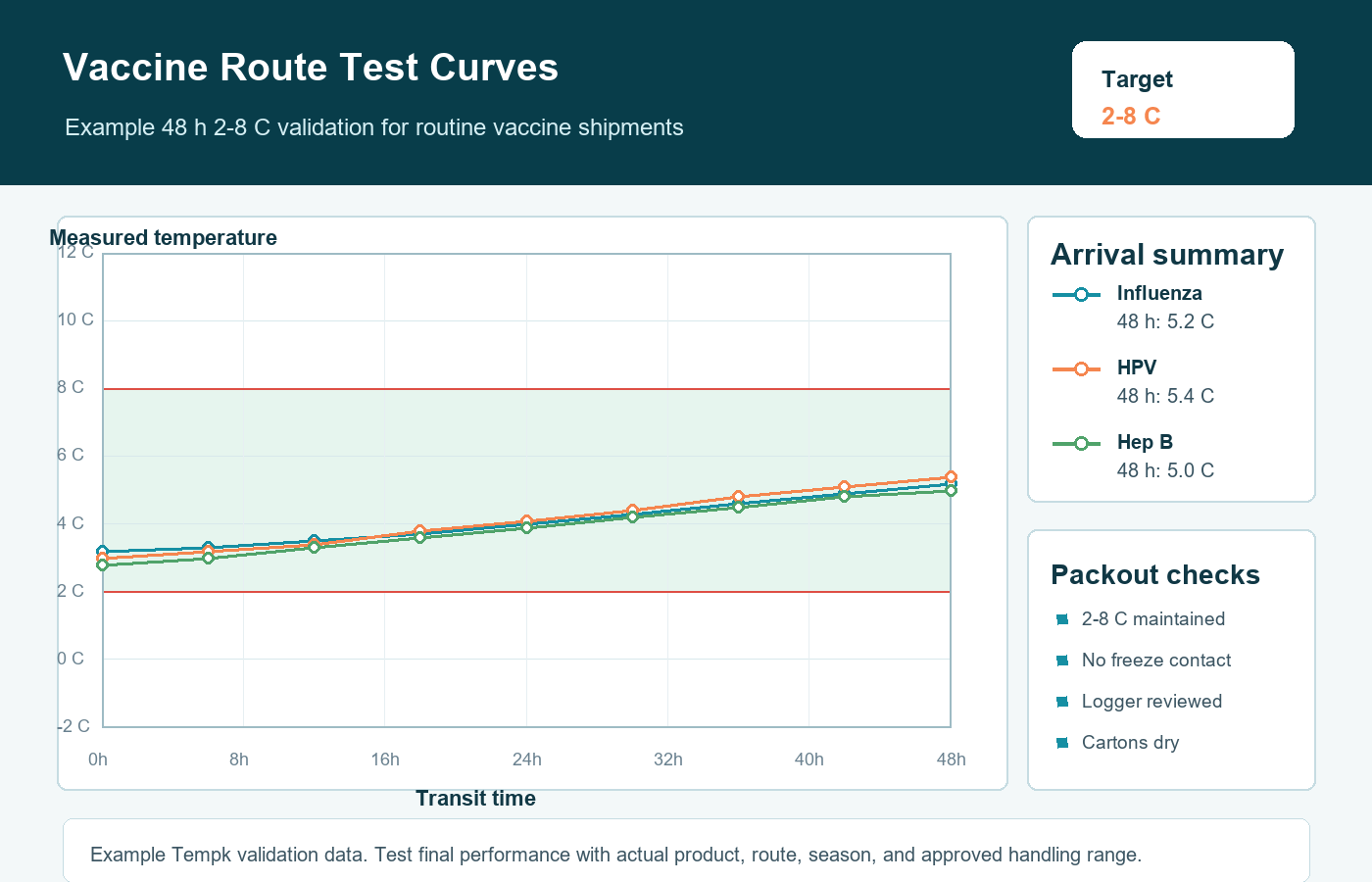
Untuk produk yang belum memerlukan halaman solusi khusus, panduan ini menjaga hub solusi tetap berguna tanpa membuat terlalu banyak halaman yang memerlukan banyak pemeliharaan.
Gunakan artikel ini jika produk tersebut bukan salah satu dari tiga halaman khusus solusi vaksin, atau ketika jalur tersebut memerlukan catatan paket khusus vaksin yang terpisah.
Gunakan artikel ini jika produk tersebut bukan salah satu dari tiga halaman khusus solusi vaksin, atau ketika jalur tersebut memerlukan catatan paket khusus vaksin yang terpisah.
Gunakan artikel ini jika produk tersebut bukan salah satu dari tiga halaman khusus solusi vaksin, atau ketika jalur tersebut memerlukan catatan paket khusus vaksin yang terpisah.
Gunakan halaman ini saat jalur, suhu sekitar, atau pemilihan cairan pendingin memerlukan pemeriksaan cepat kedua sebelum pengujian.
Kebanyakan vaksin rutin lebih rentan terhadap pembekuan dibandingkan kondisi dingin ringan. Rencana pengemasan harus tetap berlaku 2 ke 8 C sambil mencegah kontak dingin langsung dengan botol atau karton.
Bekukan paparan, keterlambatan pembukaan klinik, ukuran karton campuran, dan penempatan logger yang buruk adalah alasan utama mengapa paket vaksin gagal divalidasi.
Gunakan cairan pendingin yang dikondisikan, keranjang produk, dan pemisahan yang jelas antara karton pendingin dan karton vaksin. Simpan pencatat data di zona muatan, tidak melawan cairan pendingin.
Menggunakan 2 ke 8 C PCM atau paket gel yang dikondisikan dengan benar. Hindari es kering kecuali produk diberi label khusus dan divalidasi untuk pengangkutan beku.
Validasi jalur musim panas dan musim dingin secara terpisah. Penerima harus memeriksa posisi logger, kondisi karton, suhu minimum, dan waktu di luar pendingin.
Untuk vaksin rutin, pertanyaan desain pertama biasanya bukanlah bagaimana menambahkan lebih banyak pendinginan, tapi bagaimana mencegah pembekuan saat memegang 2 ke 8 C. Muatan harus berada di dalam rongga terlindung dengan cairan pendingin terkondisi atau PCM yang memenuhi syarat di sekitarnya.
Jalur musim dingin memerlukan perhatian khusus karena pengirim yang lulus uji musim panas masih dapat mendinginkan karton secara berlebihan selama serah terima di luar ruangan. Penempatan logger harus mewakili karton vaksin, bukan dinding terdingin pengirim.
Tempk harus memvalidasi suhu minimum, suhu maksimum, jumlah muatan, pengkondisian cairan pendingin, dan menerima penundaan. Pemeriksaan penerimaan harus menyertakan data logger, kondisi karton, dan apakah staf klinik dapat membongkar barang dengan cepat.
Dukungan paket khusus
Untuk ukuran karton tetap, batas muatan, persyaratan merek, jalur musiman, atau target validasi, Tempk dapat mengadaptasi solusi ini ke dalam paket rantai dingin khusus.
Bagikan jenis vaksinnya, volume muatan, Ukuran pengirim, durasi jalur, kondisi sekitar, dan diharuskan menerima cek. Tempk dapat membantu membandingkan isolasi, massa pendingin, penempatan cairan pendingin, dan rencana validasi sebelum pengiriman langsung.
Minta peninjauan paket