A 2–8°C pharmaceutical packout is a designed system, nem uma única caixa. To design one, you start with the shipment profile — target range, carga útil, temperatura inicial, transit time and ambient exposure — then choose an insulated shipper, select and condition the cooling media, separate the coolant from the payload to prevent freezing, adicionar monitoramento, and confirm the whole configuration with sample testing before you scale. This guide walks through that sequence step by step, using the facts published on Tempk’s pharmaceutical cold chain packaging solutions pages and packout validation resources.
Comece com o perfil de remessa
Every 2–8°C pharmaceutical packout decision starts with the cargo, não a caixa. Before comparing boxes or gel packs, write down the inputs that will drive the design:
- Target range and excursion rule. Confirm the required 2–8°C window, whether any short excursion is tolerated, and who makes the release decision on arrival.
- Sensibilidade de congelamento. Many refrigerated medicines must stay above 0°C, so freeze protection matters as much as heat protection.
- Perfil de carga útil. Unit dimensions, peso total, orientação, and whether the load is real product or a simulated payload during testing.
- Temperatura inicial. The product should enter the packout already conditioned to its storage range.
- Transit and route. Planned transit hours, contagem de transferências, morada em armazém, customs or airport exposure, and the receiving window.
- Handling and opening. Whether the box may be opened, re-packed or staged in transit, and how the receiver will handle it.
These inputs decide everything that follows: nível de isolamento, massa de refrigerante, separation layout, logger placement and test conditions. A packout chosen without them is a guess. Tempk groups the main temperature bands — 2–8°C refrigerated, 15–25°C controlled room temperature and ultra-cold — and each band needs a different starting point.
Choose the insulated shipper
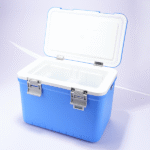
The insulated shipper is the thermal envelope: it slows heat transfer between the ambient environment and the payload chamber. For 2–8°C pharma work the common families are thermal bags and box liners, EPS (poliestireno expandido) expedidores, Caixas frigoríficas EPP, VIP (painel de isolamento a vácuo) caixas térmicas médicas, and carton-based insulation systems.
Compare them on the factors that actually change performance and operations:
- Internal volume versus payload. A box that is too large wastes coolant and creates air gaps; one that is too tight removes the buffer space the design needs.
- Construção de parede. Thicker insulation and higher-performance materials such as VIP extend the usable hold window, but add weight, cost and handling differences.
- Reutilização e durabilidade. Reusable EPP or VIP boxes suit repeat lanes and closed-loop programs; single-use EPS or carton systems suit one-way distribution.
- Fechamento e manuseio. Ajuste da tampa, condição da junta, tape or strap method, and parcel or pallet handling all affect thermal performance.
The shipper should never be chosen on its own. It has to be selected together with the cooling media, because the two only work as a matched pair. A high-performance box with the wrong coolant mass can underperform a simpler box that has been correctly specified.
Select and condition cooling media
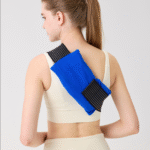
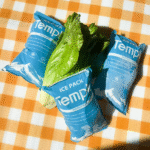
Cooling media carry the cold that the shipper then holds. In a 2–8°C pharma packout you are normally choosing between conditioned gel packs, PCM (material de mudança de fase) bricks and tijolos de gelo. Dry ice belongs to frozen and ultra-cold lanes, not to refrigerated 2–8°C work, because it is far too cold for a product that must stay above freezing.
The selection logic is straightforward, even when the final answer is not:
- Match the phase point to the target range. A coolant that changes phase near the required band holds a stable temperature longer than one that is simply frozen hard.
- Size the mass to the demand. Trânsito mais longo, warmer ambient and weaker insulation all require more coolant mass or a stronger shipper.
- Condition to a defined state. Gel packs and PCM bricks should be brought to a documented temperature state and staged for a defined time before loading, not used straight from a freezer.
- Record what was used. SKU de refrigerante, preencher peso, quantity and conditioning time are part of the approved configuration and part of any test.
Use a packaging selector to narrow the family before requesting samples, then confirm coolant quantity with a calculator or a trial rather than a rule of thumb.
Build the payload chamber and freeze-protection separation
This step is where many 2–8°C shipments fail: the coolant is correct and the box is correct, but the layout is wrong. The payload chamber is the protected space in the middle of the packout, and the cooling media sit outside it, separated by one or more layers.
A practical layout usually includes:
- Separator layers between coolant and payload so cold reaches the product gradually instead of directly.
- Buffer or void fill to stop the payload shifting and to remove air gaps that create hot and cold spots.
- Controle de condensação such as an absorbent pad or liner to keep the carton, labels and documents dry.
- A fixed loading order so every operator builds the packout the same way, toda vez.
Coolant should not touch a freeze-sensitive medicine unless the layout and the test results specifically support it. A packout is therefore best understood as a system of insulation, mídia de resfriamento, gel ice packs and PCM ice bricks, separação, método de carregamento, monitoring and route assumptions — not insulation plus a random number of ice packs.
Account for route and ambient risk
A packout is designed for a route, not for a laboratory. A configuration that holds temperature perfectly on a mild two-day lane can fail when the same shipment sits on a hot dock, changes hands three times, waits in customs, or arrives after a weekend. Route and ambient risk belong inside the design, not after it.
Document these before you finalise the packout:
Ferramentas úteis de decisão
Verifique os detalhes antes de escolher a embalagem
Essas ferramentas rápidas podem ajudá-lo a comparar o risco da rota, necessidades de dimensionamento, escolhas de refrigerante, e detalhes da embalagem antes de solicitar um orçamento.
Refrigerante & Referência PCM
Compare as opções de refrigerante e PCM quando uma rota precisar de suporte adicional de temperatura.
Comparar opçõesForro de caixa & Dimensionamento da cobertura de paletes
Verifique a lógica de dimensionamento do forro da caixa e da tampa do palete para projetos de embalagens isoladas.
Dimensionamento estimadoSeletor de embalagens
Compare opções de embalagens isoladas por produto, rota, e necessidade de temperatura.
Encontre embalagens- Transit time and dwell. Total planned hours plus realistic delay, including warehouse, doca, customs and receiving dwell.
- Contagem de transferência. Each transfer adds handling, staging and orientation variation.
- Ambient and season profile. Summer heat and winter cold stress the same packout in opposite directions and often need separate rules.
- Ar, export and tarmac exposure. Airport transfer and uncontrolled stands are common excursion sources.
Run the assumptions through a route risk checker to turn them into a planning-level risk band, then use the result to decide whether the lane needs stronger insulation, tighter monitoring or a documented contingency plan.
Plan monitoring and test conditions
Monitoring and testing turn a proposed packout into an evidence-backed one. A temperature logger should sit where it represents payload risk, not the air next to a box wall or a coolant surface. Loggers record sensor ID, status de calibração, position and raw data, and they support the arrival decision and any deviation review.
When you plan a test, define the conditions before you start:
- Carga útil: real or simulated, with the same mass and volume as commercial shipments.
- Perfil ambiente: alto, low or dynamic, matching the actual season and lane.
- Duração: at least the planned transit time plus a delay margin.
- Pass or fail criteria: o intervalo alvo, any allowed excursion and the acceptance rule.
Tempk publishes reference packout tests on its pharmaceutical pages — for example 2–8°C configurations tested against high, low and dynamic ambient profiles. These are reference examples for comparison only, not a universal guarantee, because final performance depends on payload, Tamanho da caixa, condicionamento, perfil ambiente, route delay and handling. Use o cold chain packaging validation and packout testing guide to build the full test plan instead of relying on a single curve.
Review before bulk procurement
Once a sample configuration holds temperature in testing, the last step is to make sure it can be repeated at scale. Bulk procurement should lock the packout, não apenas a caixa. Before you commit to volume, confirmar:
- Approved shipper SKU and size, with internal and external dimensions.
- SKU de refrigerante, quantity and conditioning SOP, including staging time before loading.
- Carregando mapa, separator and closure method, written as operator work instructions.
- Logger position and acceptance basis, plus the report format QA expects.
- Change control and re-test triggers for payload, refrigerante, caixa, rota, carrier or season changes.
- Volume details such as MOQ, previsão, carton packing and any private-label or documentation needs.
This is also the point to align purchasing, QA, logistics and the warehouse on one specification. Tempk custom cold chain packaging path covers the OEM decisions — dimensions, refrigerante, câmara de carga, logger access and repeat supply — that turn a working sample into a repeatable program.
2–8°C Pharmaceutical Packout: Perguntas frequentes
What is a 2–8°C pharmaceutical packout?
It is the complete system used to keep a refrigerated medicine, vacina, diagnostic or lab sample within 2–8°C from packing to receipt. It combines an insulated shipper, conditioned cooling media, camadas de separação, a defined loading method, monitoring and route assumptions — not a single box or a fixed number of ice packs.
How do I stop the cooling media from freezing the product?
Separate the coolant from the payload with one or more layers, condition the coolant to a controlled state instead of using it straight from a freezer, and confirm the layout with a test that includes a real or simulated payload. Coolant should not touch a freeze-sensitive product unless the tested configuration supports it.
Which insulated shipper is best for 2–8°C pharma?
There is no single best box. Thermal bags and liners suit lighter or last-mile lanes, EPS shippers suit one-way distribution, and EPP or Caixas frigoríficas VIP suit longer holds, reuse and higher-value programs. The right choice depends on payload, tempo de trânsito, ambient profile and reuse plan, and must be matched to the coolant.
How long can a 2–8°C packout hold temperature?
Hold time depends on the shipper, coolant mass and conditioning, carga útil, ambient profile and route. Tempk publishes reference tests for 48-hour and 72-hour configurations under high, low and dynamic ambient profiles, but these are reference examples only. Your own configuration should be confirmed with sample testing before you rely on a specific hold time.
Does one packout work for every route and season?
Não. Calor do verão, frio do inverno, morada da alfândega, airport transfer and extra handoffs all change the risk profile. Many programs need summer and winter rules, or a stronger shipper for higher-risk lanes, even when the product and payload stay the same.
What should I send for a packout review or quote?
Send the target temperature range, tamanho e peso da carga útil, sensibilidade do produto, rota e temporada, transit and dwell time, preferred box and coolant, monitoring and testing needs, e volume esperado de pedidos. Tempk can then suggest a packout direction, sample testing and quotation path. Start on the contact page.
Designing a 2–8°C pharmaceutical packout is a sequence, not a single purchase: profile the shipment, choose the shipper, select and condition the media, separate coolant from payload, account for route risk, plan monitoring and testing, and review the configuration before bulk procurement. Treat every existing test result as a reference point, and confirm your own configuration with sample testing before routine shipments.