Cold Chain Liner Wholesale Price is easiest to choose well when you stop treating it like a commodity and start treating it like a cold-chain operating decision. The best option is not automatically the thickest, the cheapest, or the fastest to source. It is the option that matches your lane risk, método de empacotamento, sensibilidade do produto, and replenishment pattern with fewer surprises. That is why serious buyers in 2026 compare cold chain liner wholesale price through a combined lens of materials, prova, serviço, and total delivered cost.
This optimized guide brings together the product-education view, the technical validation view, and the market-trend view into one decision framework. You will see what to ask first, which data actually matters, how to normalize price, how current guidance should influence your specification, and how to choose a partner that can support scale without creating more complexity on the packing floor.
What this optimized guide will help you decide
- What to look for first when qualifying cold chain liner wholesale price
- How to compare material fit, qualidade do serviço, and total delivered cost on one scorecard
- What proof serious suppliers should show before you scale volume
- Como a sustentabilidade, conformidade, and operational ease fit together in 2026
- Which next steps will help you move from quote collection to confident approval
What should you look for first when qualifying cold chain liner wholesale price?
Start with the shipment, not with the sales sheet. The first review should define the box family, carga útil, janela de temperatura alvo, duração do trânsito, and coolant approach. Those inputs keep the rest of the conversation honest. Sem eles, two options can look comparable even though they solve completely different problems. Em 2026, the smartest buyers use cold chain liner wholesale price as a packaging-system decision from the first conversation onward.
This first-step discipline matters because it immediately filters out weak recommendations. A serious partner will ask about lane severity, lidar com risco, and pack-out method before recommending a structure. A weaker one will lead with generic premium language or a price ladder. That difference matters. The first approach reduces confusion and rework. The second usually pushes complexity back onto the buyer after the order is placed.
What information should be on your first-page brief?
List the payload type, duração do envio, start condition, Tamanho da caixa, coolant format, and any seasonal lanes that behave differently. Also note whether the program is food-facing, healthcare-supporting, or general consumer logistics, because that changes the documentation you may need. This short brief becomes the anchor for every quote, sample, and validation conversation.
- Write one shared shipment brief before you request the first formal quote.
- Separate your common lanes from your hardest lanes so the comparison stays realistic.
- Agree internally on the pass criteria before vendors start recommending different formats.
Best-practice reminder: um simples, shared shipment brief eliminates much of the confusion that buyers mistake for market complexity.
Which material and fit decisions control the outcome for cold chain liner wholesale price?
Material selection matters most when it is tied to geometry and handling. Camadas reflexivas, trapped-air structures, paper-forward builds, and compressed formats all create different balances of weight, rigidez, cubo, e recuperação. But material choice only becomes useful when the liner actually fits the box and stays in the validated position. Fit controls edge closure, coolant proximity, and how much the result depends on operator improvisation.
The best way to simplify this section is to ask one practical question: what is the lightest structure that still protects the shipment under the worst realistic conditions? That framing keeps you from overspecifying a mild route and underspecifying a hard route. It also turns the material discussion into a total-system discussion, which is exactly how cold chain liner wholesale price should be evaluated if the goal is fewer failures and a cleaner warehouse process.
What details often separate a strong material choice from a weak one?
Finished dimensions, padrão de dobra, corner closure, qualidade do selo, and behavior after storage often separate the winning option from the merely acceptable one. If a liner opens awkwardly or leaves air gaps, the theoretical insulation story loses power quickly. Em operações, fit and repeatability often matter as much as the nominal layer stack.
| Construção de materiais | Força típica | Melhor ajuste | O que isso significa para você |
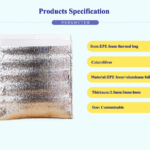
| Reflective Liners | Lightweight reflective control | Short to medium lanes | Useful when you want low freight weight and quick packing |
| Foam-Backed Liners | Balanced insulation and handling | Broader operating windows | Often easier to position as a practical middle-ground option |
| Paper-Plus-Bubble Hybrids | Higher structural control | Programs needing better cube use or tighter fit | Can help warehouse efficiency if recovery and fit stay consistent |
- Review the liner in the real carton, not only as a flat sample.
- Ask whether the chosen construction changes freight cube or coolant count in a meaningful way.
- Check recovery after storage if the commercial plan involves compression or high pallet stacking.
Optimized buying principle: the right liner is the lightest design that still survives your real lane, not the thickest one that looks reassuring on paper.
How do you compare commercial options for cold chain liner wholesale price fairly?
Use one scorecard and one set of assumptions for every serious option. Commercial comparisons drift when one vendor quotes a different size, different delivery terms, or a different test setup than the others. Lock the assumptions first. Then score the options on fit, prova, confiabilidade do serviço, and total delivered value. This keeps the decision grounded in the shipment rather than in presentation quality.
A fair comparison also respects the business model behind the offer. Some buyers benefit from distributor speed or wholesaler assortment. Others need factory-level repeatability or direct supplier support. There is no single best channel model for every case. The right choice depends on demand rhythm, technical difficulty, and how much flexibility the program needs after launch. That is why cold chain liner wholesale price should be compared through both the packaging lens and the supply-model lens.
Which scorecard categories usually make the decision clearer?
Fit and handling should receive the greatest weight because those factors affect both thermal behavior and line speed. Proof and documentation come next because they protect the decision from vague claims. Commercial reliability matters because temperature-sensitive programs do not tolerate stock surprises well. Total value and credible sustainability then complete the picture.
| Área de pontuação | What to rate | Peso |
| Fit and handling | Does the liner seat cleanly and pack consistently? | 30 |
| Proof and documentation | Are the test logic, especificações, and change rules clear? | 25 |
| Commercial reliability | Can the partner support samples, replenishment, and continuity? | 20 |
| Total value | Does it improve delivered cost, não apenas preço unitário? | 15 |
| Sustentabilidade e conformidade | Is the claim credible for the use case and market? | 10 |
- Score each candidate against the same box, carga útil, refrigerante, e suposições de rota.
- Review one live packing exercise before making the final call.
- Separate nice-to-have catalog features from capabilities that change the daily operation.
- Document why the winning option beat the runner-up so the team can defend the choice later.
Regra de decisão: if the scorecard discussion sounds clearer than the vendor presentation, your buying process is working.
What proof should a serious wholesale price partner provide before you scale cold chain liner wholesale price?
Serious proof combines specification clarity, relevant testing, e disciplina de controle de mudanças. You want to see what the material is, how the finished dimensions are controlled, what conditions were used in testing, and what rules govern substitutions or revisions. Without those items, an apparently strong result can erode quickly after the first material adjustment or seasonal spike.
This is where the product-education, técnico, and commercial views all meet. The buyer wants a liner that protects the shipment. The technical reviewer wants assumptions that can be defended. The operations team wants a format that packs consistently. Proof is the bridge between those needs. It turns marketing language into something that can survive onboarding, replenishment, and audit-style questioning.
Which proof points are most valuable in practice?
Finished dimensions, descrição do material, pack-out definition, Perfil de teste, and documented change rules usually provide the most useful first-pass proof. These items tell you whether the option is clear enough to approve and stable enough to scale. If any one of them is vague, the decision risk rises fast.
| Proof point | O que solicitar | Por que isso importa |
| Pack-out definition | Tamanho da caixa, carga útil, tipo de refrigerante, e tempo de espera alvo | Makes sure the test reflects your real shipment rather than a generic carton |
| Material specification | Layer description, nominal thickness or weight, and dimensions | Helps you compare like with like across competing quotes |
| Validation summary | Temperature profile, start conditions, and pass/fail logic | Shows whether the claim survives a realistic lane assumption |
- Ask whether the production version is controlled to the same key details as the tested version.
- Ask how substitutions are handled during raw-material shortages or sudden demand spikes.
- Ask who owns follow-up if field performance differs from the original sample-stage expectation.
Scale-up lesson: the most expensive surprises usually come from changes that were never treated as important at quotation stage.
How should you score sustainability and compliance around cold chain liner wholesale price?
Treat sustainability and compliance as filters on the full shipment, not as isolated labels. A better liner choice should be safe for the intended use, documentable for the target market, and credible when it makes an environmental claim. That credibility usually comes from a practical benefit: peso mais leve, better cube use, menos refrigerante, menos falhas, or simpler handling at end of use.
This approach helps buyers avoid two common mistakes. The first is accepting a green claim that disappears once the hardest lane is tested. The second is treating compliance as an afterthought until launch. Na realidade, both topics should be discussed early because they influence material choice, necessidades de documentação, and the way the pack-out is explained to internal teams or customers. The best packaging decisions in 2026 are the ones that make these conversations simpler, não é mais difícil.
What does a credible claim usually look like now?
A credible claim links a design change to a measurable or observable system effect. It might mean a smaller box, a lower pallet count, a simpler material path, or fewer temperature-related failures. Vague labels without a practical operating benefit are losing persuasive power because buyers have become better at asking what actually changed.
| Claim area | Useful only if | O que perguntar |
| Design leve | It still protects the shipment under your real lane conditions | Can the supplier show what system cost or waste was reduced? |
| Recyclable or simpler disposal | The construction and local disposal path are clear enough to follow | How should operators and end users separate or handle the materials? |
| Lower carbon or lower waste | The claim reflects the whole shipment rather than one material swap | Did the change reduce box size, refrigerante, transport volume, or reshipment? |
- Confirm the intended use and market before making any broad safety or compliance statement.
- Ask whether the sustainability improvement still holds under your hardest realistic shipping conditions.
- Prefer claims that make the operating method simpler as well as lighter or cleaner.
Credibility test: if the claim cannot be explained clearly to procurement, qualidade, and warehouse teams at the same time, it probably needs more proof.
2026 best practices for choosing cold chain liner wholesale price
Em 2026, the strongest cold-chain teams are blending thermal proof, lógica de conformidade, lighter-weight design, and clearer commercial discipline into one packaging decision. Public guidance still points in that direction. Google Search Central keeps emphasizing helpful, people-first content and the use of important terms in prominent locations. FDA sanitary transportation rules continue to focus on equipment, operações, registros, e treinamento. FoodSafety.gov still advises shippers of perishable foods to use insulated packaging with dry ice or frozen gel packs and to check arrival temperature against the 40°F threshold. ISTA 7E remains the parcel-thermal reference built from real-world heat and cold profiles, EPA continues to favor lighter and more efficient packaging within a life-cycle view, and the EU packaging regulation that entered into force in 2025 applies broadly from August 12, 2026. Para compradores, that means better documentation, melhor dimensionamento correto, and fewer vague claims.
The best current practice blends the buyer-guide view, the technical-validation view, and the market view into one method. Define the shipment. Compare material and fit. Normalize the commercial assumptions. Review proof and change control. Then score sustainability and compliance in the context of the whole shipment. That sequence works because it follows the real order in which risk enters the system. It also keeps the decision grounded in outcomes instead of marketing language.
Best-practice checklist
- Create one brief that defines the box, carga útil, refrigerante, gravidade da rota, e passar critérios.
- Shortlist only options that can explain both their strengths and their limits clearly.
- Run a live packing check before final approval, not only a desktop review.
- Preserve the approved specification, resumo do teste, and change rules in one controlled record.
- Review the winning option again before the warmest season or the next major demand spike.
Practical market insight: buyers who use this method usually move faster after the first shortlisting round because the conversation becomes more concrete. Instead of arguing about premium language, the team talks about fit, dados, serviço, and value. That makes cold chain liner wholesale price easier to defend internally and easier to manage after rollout.
Perguntas frequentes
What should you check first before approving cold chain liner wholesale price?
Start with lane difficulty, Tamanho da caixa, plano de refrigeração, e sensibilidade do produto. Those four inputs keep the rest of the comparison honest.
How do you normalize quotes from different vendors?
Lock the specification, pack-out assumptions, delivery terms, and test conditions before discussing price.
Can sustainability and cost improve together?
Sim. Dimensionamento correto, better cube use, and fewer failures often reduce waste and cost at the same time.
Should you prefer a local stock program or factory-direct supply?
It depends on your demand pattern. A stock program helps speed and flexibility; factory-direct buying can help when volumes are stable and specifications are fixed.
What turns a good trial into a weak rollout?
Poor change control, unclear packing instructions, and no agreement on what data or conditions defined the original approval.
Resumo e recomendação
The smartest way to choose cold chain liner wholesale price in 2026 is to connect the shipment, the material, the commercial model, and the proof into one clear decision. When those pieces are reviewed together, the buyer sees the real trade-offs earlier and avoids approval by assumption. That usually leads to better temperature control, cleaner pack-outs, documentação mais forte, and fewer surprises when volume rises.
Your next step should be to build a shortlist of two or three serious options, score them against one shared brief, and make the final decision only after a live packing review. That process is simple enough to use quickly and strong enough to support a high-confidence approval.
Sobre Tempk
Tempk focuses on cold-chain packaging programs that balance thermal logic, usable design, e repetibilidade operacional. We work on liners, inserções, and supporting packaging decisions with attention to fit, validation thinking, and the day-to-day realities of the packing line.
If you are reviewing a new liner program, a practical next move is to compare your current pack-out against the hardest real route you ship and see whether the approved specification still matches the job you need it to do.