Pacote de gelo seco a granel para embalagens de frutos do mar: A Route-Ready Sourcing Framework
O volume certo pacote de gelo seco for seafood packaging is not the sheet with the boldest duration claim. It is the component that fits a defined payload, pacote isolado, rota, operating process, e decisão de aceitação, with evidence that remains valid at production scale. Buyers should separate hydration sheets from solid carbon dioxide, protect against both warming and overcooling, and approve the complete system rather than the coolant in isolation.
This framework is designed for a seafood processor, exportador, cold-store operator, distribuidor, or packaging procurement team that needs to move from search term to controlled purchase. It combines product fit, projeto térmico, qualidade dos materiais, supplier governance, qualificação, operações, e custo total entregue. The outcome is a specification and packout that can be defended, taught, repetido, e melhorado.
Separate the Seafood Hazard From the Coolant Choice
A sound sourcing decision separates three questions that are often mixed together: what condition the payload requires, what cooling medium can support that condition, and what evidence proves the assembled packout on the intended route. Starting with a product name reverses that logic. Starting with the payload and decision criteria makes the supplier comparison useful.
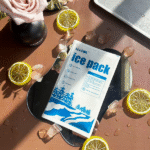
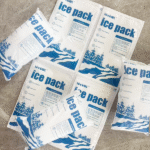
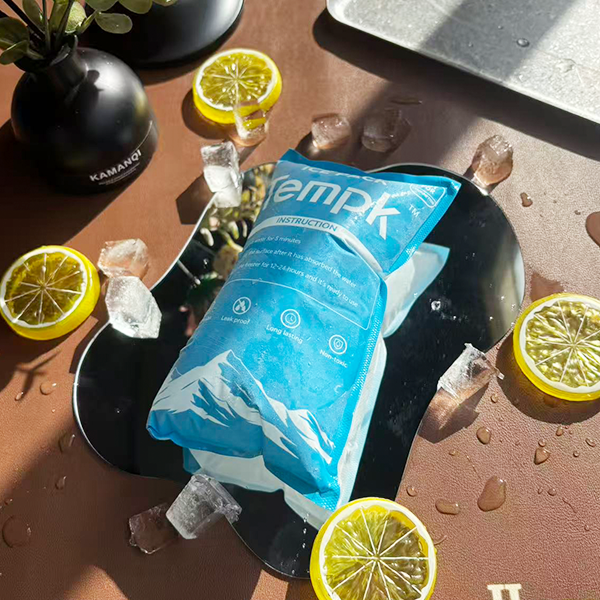
A hydration dry ice pack is a water-activated cell sheet that is frozen before use. It can provide broad, flexible cooling around seafood, but it remains one component of the shipping system. It should not be treated as solid carbon dioxide, como um expedidor qualificado por si só, or as evidence of a universal duration. The goal is to control time and temperature while managing salt, água, punção, odor, higiene, and the difference between fresh, refrigerado, e frutos do mar congelados.
The final selection must connect composition, comportamento térmico, integridade material, isolamento, geometria da carga útil, condicionamento, exposição da rota, monitoramento, and operating control. When actual solid carbon dioxide is proposed, its separate safety and transport requirements enter the plan. When a water-based sheet is proposed, classify and approve that product from its own documentation.
Seafood cartons are exposed to more than ambient heat. Sharp shells, fish spines, superfícies molhadas, brine, drenagem, cargas empilhadas, and repeated handling all challenge the coolant and the outer pack. Histamine-forming species introduce an additional time-temperature concern for refrigerated product. The bulk buying decision must connect thermal design with sanitation, physical durability, categoria de produto, and the evidence needed at receiving.
Write a one-page shipment requirement before contacting suppliers. Include product identity and condition, primary package, dimensões e massa da carga útil, dispatch temperature, upper and lower acceptance limits, route and handovers, exposição sazonal, isolamento, processo de recebimento, monitoring decision, planned volume, and applicable quality or market requirements. Mark unknowns for the pilot.
Separate product-safety limits from quality preferences and packaging-damage limits. They may lead to different sensor positions and actions. The receiver should know which observation or data set triggers acceptance, segurar, investigação, or disposition. A thermal design cannot be optimized until the decision rule is clear.
Build the Pack Around Product State and Geometry
Compare technologies against the requirement. Hydration sheets offer flat pre-activation storage, broad surface coverage, and flexible cell geometry. Pacotes de gel can be easier to deploy in some chilled parcels. PCM can be selected around a narrower phase-change condition. Solid carbon dioxide supports appropriate deep-frozen uses but has distinct handling and transport controls. Active equipment may be justified on high-risk complex lanes.
Within seafood, product and route cases still need segmentation. The table shows why a single catalog SKU cannot be assumed to serve every case.
| Product or route case | Main exposure or failure | Useful design response | Assumption to avoid |
|---|---|---|---|
| Fresh chilled fish | Abuso de temperatura, pingar, transferência de odor, e hematomas | Use an approved chilled process and monitor handovers | A deeply frozen contact surface may damage product or packaging |
| Histamine-forming species | Time-temperature exposure can create a food-safety hazard | Align controls with the seafood HACCP plan and receiving evidence | Coolant selection cannot replace hazard controls |
| Frutos do mar congelados | Corner thawing, longa permanência, and carton weakening | Test the full frozen packout under export conditions | Hydrate sheets are not equivalent to solid carbon dioxide |
| Shellfish and irregular payloads | Punção, vazios, drenagem, and uneven contact | Use protective layers and a sheet geometry that follows the load | Film and seams need physical as well as thermal review |
Choose the simplest technology that creates an adequate, demonstrated margin without introducing a larger cold-side, umidade, manuseio, or compliance risk. If two options appear viable, compare them through the same payload, perfil, acceptance rule, and total-cost boundary.
Protect the Thermal Layer From Water and Puncture
Build the architecture from outside to inside: outer carton or reusable container, isolamento, liner or vapor control where needed, localização do refrigerante, buffer, payload holder, product packages, headspace management, posições dos sensores, encerramento, e etiquetas. Every layer should have a job. Removing or moving a layer after qualification is a design change, not a harmless packing preference.
Route analysis should explicitly challenge using a food-grade claim as a substitute for seafood-specific packout evidence, ignoring brine, água derretida, spines, conchas, and rough frozen handling, placing sensors only in easy central positions, testing a clean laboratory carton that does not reproduce real drainage and stacking, and accepting bulk production with changed film or absorbent media without review. Use alternatives such as flaked or slurry ice for processes designed around drainage and direct product chilling, conditioned gel packs for selected chilled parcel formats, phase change systems for a defined narrow temperature requirement, and solid carbon dioxide for approved deep-frozen shipments with vented compliant packaging where they solve the exposure more directly. Por exemplo, better vehicle control may be more effective on a dense route, while a parcel network may need stronger passive protection at walls and handovers.
Application-specific technical considerations include A broad cell sheet can cover irregular seafood surfaces and reduce large warm gaps, but it must be protected from puncture and movement., Water uptake affects frozen mass and available cooling, so activation and drainage tolerances matter in bulk operations., Insulation loses practical value when lids gap, colapso das caixas, drain paths bypass the thermal barrier, or wet board deforms., Seafood payload temperature at packing is part of the heat balance; a passive pack should not be expected to correct an uncontrolled chilling process., and The coldest point, warmest point, and elapsed time through dock and customs handovers should all inform the test map. Convert each material consideration into a drawing feature, controle de fornecedores, operating step, inspeção, or protocol variable. Otherwise it remains an observation that cannot protect routine shipments.
Score Bulk Suppliers on Control, Not Claims
Use decision gates to compare manufacturers. This keeps procurement from awarding on unit price before composition, evidência, controle de produção, and scale have been reviewed.
| Portão de decisão | Condição de aprovação | Sinal de alerta |
|---|---|---|
| Ajuste da aplicação | The supplier asks about seafood, carga útil, rota, isolamento, e limites de aceitação | A pack count is offered from keyword or carton size alone |
| Especificação | Dimensões, materiais, ativação, tolerâncias, and intended use are written | The sample is treated as the entire specification |
| Evidência | Test conditions and system boundaries are disclosed | Component claims are presented as universal packout performance |
| Controle de qualidade | Rastreabilidade de lote, inspeção, não conformidade, and change notification are defined | Substitution is allowed without buyer review |
| Escala | Capacidade, embalagem de papelão, suposições de prazo de entrega, and peak planning are discussed | Only nominal monthly output is discussed |
| Apoiar | Production-representative samples and a route trial plan are available | The buyer is urged to skip the pilot |
After the initial screen, request production-representative samples and a written specification. Review the manufacturer's proposed tolerances, métodos de teste, identificação do lote, tratamento de não conformidade, amostras retidas, complaint response, and notice period for change. Define who owns tooling, obra de arte, and approval of custom cell patterns or packaging.
Commercial terms should make assumptions visible. Confirm quotation unit, dry or activated condition, quantidade da caixa, paletização, minimum order, lead-time basis, sample status, freight term, documentação, and peak capacity without turning any unverified figure into a performance promise. Compare landed and operating cost under the same scope.
Qualify the Export Packout and Its Handoffs
Qualification starts with an approved protocol and ends with a controlled report, desenho, especificação, e instrução de trabalho. Test the intended payload or a justified surrogate, real insulation and coolant, defined conditioning, assembly variation, a representative or risk-based ambient profile, appropriate duration, and pre-agreed acceptance criteria. Include physical inspection and receiving behavior.
Ferramentas úteis de decisão
Verifique os detalhes antes de escolher a embalagem
Essas ferramentas rápidas podem ajudá-lo a comparar o risco da rota, necessidades de dimensionamento, escolhas de refrigerante, e detalhes da embalagem antes de solicitar um orçamento.
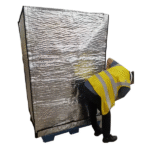
Forro de caixa & Dimensionamento da cobertura de paletes
Verifique a lógica de dimensionamento do forro da caixa e da tampa do palete para projetos de embalagens isoladas.
Dimensionamento estimadoResistência à queda de material de isolamento
Revise a resistência à queda e os fatores de manuseio antes de escolher materiais de isolamento.
Verifique a resistênciaRefrigerante & Referência PCM
Compare as opções de refrigerante e PCM quando uma rota precisar de suporte adicional de temperatura.
Comparar opçõesPlace loggers at expected warm and cold risk locations. A center-only map can miss wall heat and frozen contact. Define accuracy, status de calibração, interval, synchronization, start and stop logic, data ownership, and treatment of anomalies. Repeat the test sufficiently to understand system variation rather than selecting one favorable run.
Operationalize these controls: Hydrate and drain sheets using controlled time, water condition, e etapas de manuseio., Freeze in racks or layers that allow complete conditioning and avoid fused blocks., Use puncture barriers, forros, and drainage arrangements matched to the seafood format., Pre-chill or freeze the product to the approved dispatch condition before final packing., and Record packout, muito, hora de envio, rota, and receiving observations during trials and launch. Training should include wrong-component prevention, freeze-status checks, damaged-sheet rejection, route-variant selection, and deviation escalation. Observe actual operators during launch; ambiguity often appears only at production speed.
Apply the relevant claim boundaries as well. FDA seafood guidance emphasizes hazard analysis and controls, including time-temperature controls for relevant products such as histamine-forming fish., Food sanitary-transport responsibilities include appropriate temperature control, condição do equipamento, limpeza, and contamination protection where the rules apply., and Actual solid carbon dioxide has specific transport requirements. A water-activated sheet should be assessed from its composition and carrier rules, not from the words dry ice in a product name. When product, carga útil, refrigerante, isolamento, condicionamento, rota, operadora, temporada, site, registrador, or supplier material changes, let the quality team determine whether document review, confirmation testing, or requalification is needed.
Balance Landed Cost, Dano, e evidências
Calculate cost per successful shipment, not price per dry sheet. Include inbound freight and cube, armazenar, hydration water, trabalho, drenagem, freezer energy and capacity, prateleiras, buffers, isolamento, tempo de montagem, monitoramento, rejeita, vazamento, danos ao produto, atendimento ao Cliente, disposição, retorna, and the cost of a failed or delayed delivery. State which items are measured and which are assumptions.
Dry flat storage can reduce inbound volume to a processing plant or export packhouse.
The analysis should include freezer energy, água, damaged seafood, vazamento, liner and carton use, opções de descarte, and product loss because seafood carries a high embedded value.
Reusable formats need a credible cleaning, inspeção, secagem, retornar, and rejection process before reuse is counted as an advantage.
Optimize in controlled steps. Remove excess headspace, improve insulation fit, ajustar o posicionamento do refrigerante, create qualified seasonal variants, simplify operator motions, or improve receiving timing before reducing thermal margin without evidence. Track product acceptance, excursões, dano, reclamações, pack loss, trabalho, and energy by route family.
A stable program does not mean a frozen design. It means changes are proposed with a reason, evaluated against the system boundary, tested when necessary, aprovado, documentado, treinado, and traced. That discipline allows cost and sustainability improvement without turning the live distribution network into an uncontrolled experiment.
Perguntas frequentes
Are hydrate dry ice packs suitable for fresh and frozen seafood?
They may support selected chilled or frozen packouts, but the arrangement must match product state, approved temperature condition, rota, isolamento, e manuseio. Peixe fresco, histamine-forming species, filés congelados, and shellfish do not share one universal packout.
Can the sheet touch seafood directly?
Direct food contact should never be assumed. Confirm intended use, documentação material, controles de saneamento, and the pack design. A liner or protective barrier may also be needed to control moisture, punção, odor, and local cold contact.
O que deve ser testado antes de um pedido em grandes quantidades?
Test hydration consistency, vazamento, proteção contra perfurações, frozen handling, ajustar, localizações dos sensores, desempenho térmico, drenagem, empilhamento, and receiving condition using the intended seafood, Carton, isolamento, e perfil de rota. Compare multiple production-representative samples rather than one hand-selected piece.
Does a seafood HACCP plan make a coolant pack compliant?
Não. A coolant is one component of the process. The seafood operation must identify hazards and apply appropriate controls, monitoramento, ações corretivas, verificação, e registros. Packaging evidence should support that system rather than replace it.
How should a buyer compare bulk pricing?
Compare total activated and delivered cost, não apenas preço unitário. Include inbound freight, armazenamento seco, trabalho de hidratação, água, capacidade do congelador, protective liners, rejeita, vazamento, utilização da caixa, thermal trial costs, disposição, and the cost of seafood loss or delayed acceptance.
Approve a Controlled System, Not an Isolated Claim
The best sourcing outcome links six decisions: o requisito de carga útil, cooling technology, pack architecture, manufacturer controls, evidência de qualificação, e processo operacional. If any link is missing, the buyer is relying on an assumption that may fail at scale or on a different route.
Para frutos do mar, the practical next step is to document the product, rota, carga útil, isolamento, dispatch and receiving conditions, exposição sazonal, e necessidades de evidências. Use that brief to compare production samples and design a trial. Only then freeze the commercial specification and rollout plan.
Sobre Tempk
Tempk provides water-activated cell sheets and related embalagem da cadeia de frio support for food, frutos do mar, amostras médicas, e outras remessas sensíveis à temperatura. Para frutos do mar, Tempk can review payload and route inputs, propose sheet and cell formats, discuss material and print options, and prepare samples for packout trials. The final shipping configuration should be approved from the customer's product requirements and evidence on the complete insulated system, with production and change controls aligned before scale-up.
Send Tempk your seafood shipment brief and expected order scale to discuss coolant-sheet options, custom cell geometry, production samples, and a route-based packout review.