How Does Cold Chain Frozen Food Logistics Keep Products Safe in 2025?
Última atualização: 30 novembro 2025
Manter um robusto cold chain frozen food logistics system has never been more important. Em 2025 the global cold chain market is forecast to reach about USD 252.89 billion and the food and beverage segment alone could expand from roughly USD 90.81 bilhão em 2025 para USD 219.44 bilhão por 2034. Yet poor temperature control still causes roughly 14 % da comida do mundo to be lost between harvest and retail. This guide explains how cold chain logistics protect frozen foods, outlines the latest market and technology trends, and provides practical steps to help you build a resilient supply chain. All recommendations are based on current research and regulatory guidance for 2025, so you can confidently safeguard quality and comply with evolving standards.
What cold chain frozen food logistics means and why it matters: learn how temperature controlled stages from harvest to retail preserve quality and reduce waste.
Temperature categories and food safety ranges: discover the differences between deep freeze, congelado, chilled and ambient zones and which foods they suit.
Tamanho do mercado, growth drivers and regulations: explore market projections, regional trends and the 2025 regulatory landscape including FSMA 204 e haccp.
Technologies transforming frozen food logistics: compare IoT sensors, RFID, GPS and AI powered tools for real time visibility and predictive analytics.
Sustainability and future trends: see how green logistics, the move to −15 °C and plant based products are reshaping the industry.
Step by step best practices: follow actionable guidance for receiving, armazenando, embalagem, transporting and monitoring frozen foods.
FAQs and recommendations: find answers to common questions and practical tips to improve your operations.
What Is Cold Chain Frozen Food Logistics and Why Is It Critical?
Cold chain frozen food logistics refers to a coordinated system of temperature controlled processes—from harvest and pre cooling to storage, transportation and delivery—that preserves the quality, safety and nutritional value of frozen foods. Without continuous temperature control, products thaw, microbes multiply and nutrient loss accelerates. MarketDataForecast estimates that nearly 14 % da alimentação mundial is lost due to inadequate temperature management. Os EUA. Census Bureau reported that more than USD 2.7 trilhões de mercadorias com temperatura controlada foram transportadas por caminhão em 2022, representando 90 % of all temperature controlled shipments—underscoring the scale and importance of cold chain logistics.
Como funciona a cadeia de frio
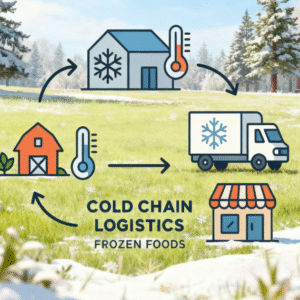
Em sua essência, cold chain logistics functions like a relay race: each stage must maintain the baton (controle de temperatura) without delay. Typical stages include:
| Estágio | O que acontece | Por que isso importa |
| Colheita & Pré-resfriamento | Products are harvested or processed and quickly cooled to ideal storage temperatures. O pré-resfriamento interrompe a respiração e o crescimento microbiano. | Delays at this stage lead to rapid spoilage and quality losses. |
| Armazenamento Frio | Goods are stored in refrigerated warehouses or distribution centres. Em 2024, cold storage represented 55.66 % of the food cold chain market. | Provides bulk inventory buffer for meat, frutos do mar e produtos; improper storage causes hotspots and condensation. |
| Transporte | Products travel via refrigerated trucks, contêineres marítimos, vagões e carga aérea. Real time monitoring ensures temperatures stay within set limits during multimodal transfers. | Any break in the chain leads to thawing, recongelamento e perda de produto. |
| Distribuição & Varejo | As mercadorias são descarregadas, stored in staging areas and transferred to retail freezers. Consumer handling completes the chain. | Final transit must be quick to avoid thermal shock; labeling and documentation ensure traceability. |
Temperature Categories and Food Safety
Different foods require specific temperature ranges to maintain quality. Understanding these categories helps you choose the right equipment and packaging:
| Categoria | Faixa (°C/°F) | Alimentos Típicos | O que isso significa para você |
| Congelamento profundo | Below −25 °C (−13 °F) | Sorvete, frutos do mar de qualidade sushi | Evita cristais de gelo e preserva a textura. |
| Congelado | −10 °C a −20 °C (−14 °F to 0 °F) | Legumes congelados, carnes | Mantém a textura e previne o crescimento microbiano. |
| Refrigerado | 2 °C a 4 °C (35 °F a 39 °F) | Produção fresca, laticínio | Mantém a crocância e inibe o crescimento bacteriano. |
| Banana (especial) | 12 °C a 14 °C (53 °F a 57 °F) | Bananas | Evita o escurecimento e garante a qualidade. |
| Refrigerado | 2 °C a 7 °C (35 °F a 45 °F) | Frutas, laticínio | Preserva o frescor; manter a umidade para evitar a desidratação. |
| Ambiente controlado | 10 °C a 21 °C (50 °F a 70 °F) | Chocolate, vinho | Evita derretimento ou alterações químicas. |
Tips for maintaining temperature control:
Pre cool goods before loading. Reefer trailers maintain rather than create cold temperatures.
Controle a umidade. Monitor humidity to prevent condensation on produce and packaging.
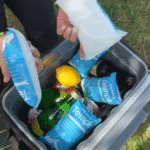
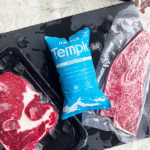
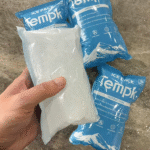
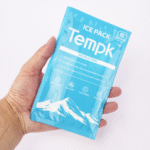
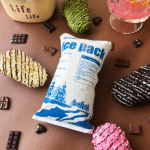
Use embalagens térmicas validadas. Pacotes de gel, phase change materials and insulated containers maintain target temperatures.
Implement multi zone trailers. Separate compartments keep chilled and frozen items at distinct temperatures.
Stack products properly. Ensure airflow by leaving space around packages and avoiding blocked vents.
Equip monitoring devices. Temperature indicators and smart tags provide visual alerts if thresholds are exceeded.
Exemplo do mundo real: Um exportador de frutas cítricas instalou embalagens isoladas e sensores IoT em contêineres refrigerados. Os dados de temperatura alertaram a equipe quando uma porta do caminhão foi deixada aberta, evitando deterioração e salvando a remessa.
How Big Is the Market and Which Segments Are Growing?
O setor de logística da cadeia de frio está em franca expansão. Research from Custom Market Insights cited by Food Shippers of America notes that the global cold chain logistics market was valued at acima de USD 321 bilhão em 2023, projected to exceed USD 368 bilhão em 2024, e poderia superar USD 1.245 trilhão por 2033, refletindo um 14.5 % taxa composta de crescimento anual (Cagr). Fortune Business Insights provides a similar view: o mercado estava USD 293.58 bilhão em 2023, Espera -se que alcance USD 324.85 bilhão em 2024 e USD 862.33 bilhão por 2032 com um 13 % Cagr.
Market Drivers
Vários fatores alimentam esse crescimento:
Expansão do comércio global de alimentos: Demand for perishable foods and globalization require robust cold chain infrastructure to preserve quality.
Comércio eletrônico e varejo de alimentos on-line: More consumers order fresh and frozen foods online, increasing demand for temperature sensitive transportation and warehousing.
Avanços tecnológicos: Rastreabilidade de blockchain, Monitoramento da IoT, advanced refrigeration and smart packaging improve transparency and reduce spoilage.
Mercados emergentes e urbanização: Rising incomes and urban populations in Asia and Latin America create opportunities for cold chain logistics.
Regulamentações mais rígidas: FSMA, HACCP and similar rules impose stricter temperature monitoring and record keeping requirements.
Market Segmentation and Trends
Cold chain revenues come from both storage and transportation. Em 2024 cold storage facilities commanded about 55.66 % of the food cold chain market. No entanto, transportation is growing faster as providers invest in multi temperature fleets and last mile networks. Other notable trends include:
Chilled foods dominated revenue em 2024 com um 60.15 % compartilhar, while frozen foods are projected to see 15.49 % Cagr para 2030.
Crescimento regional: North America currently accounts for the largest share of cold chain logistics revenue, but Asia Pacific markets are expected to grow at more than 16 % Cagr due to rising incomes and e commerce adoption.
Plant based and specialty foods: A Maersk report notes that plant based protein products could capture 7.7 % do mercado global de proteínas por 2030 com valor acima de USD 162 bilhão. These products often come from small and medium producers that need reliable cold chain partners.
Crescimento farmacêutico: Aproximadamente 20 % de novos medicamentos under development are gene and cell based therapies requiring ultra cold storage, and the pharmaceutical cold chain market may reach USD 1.454 trilhão por 2029.
Investimento em logística de alimentos frescos: North America’s food cold chain logistics market is expected to reach USD 86.67 bilhão em 2025, reflecting the surge in direct to consumer delivery and last mile logistics.
What Regulations and Standards Govern Frozen Food Logistics in 2025?
Regulatory compliance ensures both food safety and consumer confidence. O Lei de Modernização da Segurança Alimentar (FSMA) Regra 204, Análise de perigos e pontos críticos de controle (HACCP), Boas Práticas de Distribuição (PIB) e ISO 9001/22000 quality standards form the backbone of compliance. FSMA 204—also known as the Regra Final de Rastreabilidade—requires companies handling high risk foods to record key tracking events (colheita, embalagem, envio, recebendo) e principais elementos de dados (o que, onde, quando, Quem), maintain digital records for at least two years and provide them to regulators within 24 horas. A data de conformidade, originalmente janeiro 2026, was extended by 30 meses para dar tempo aos sistemas digitais.
Principais requisitos regulamentares
Manutenção de registros: Maintain digital records of critical tracking events and provide data within 24 horas quando solicitado.
Códigos de lote de rastreabilidade: Assign unique codes to foods on the FDA’s Food Traceability List to enable rapid recalls.
Planos HACCP: Identificar perigos, establish critical temperature/time limits and develop corrective actions.
Documentation and vendor audits: Keep transaction history and audit suppliers to ensure temperature requirements are met.
Treinamento de pessoal: Train personnel on temperature control, documentação e procedimentos de emergência.
Sistemas de gestão da qualidade (SGQ): Documentar responsabilidades, procedures and continuous improvement processes.
Complying with these regulations fosters transparency, reduces liability and helps companies qualify for government and retailer contracts.
Which Technologies Are Transforming Frozen Food Logistics?
The digital transformation of cold chain logistics centres on visibilidade em tempo real e análise preditiva. Traditional monitoring relied on battery powered data loggers that record conditions for later retrieval, providing historical data but failing to prevent incidents. Sistemas modernos integram Sensores baseados em IoT, RFID, Rastreamento GPS, BLE beacons and smart reefers que transmitem dados continuamente via Wi-Fi, redes celulares ou LoRaWAN.
Comparing Monitoring Technologies
| Método de monitoramento | Principais recursos | Limitações | Uso prático |
| Registradores de dados | Affordable devices record temperature and humidity; data downloaded via USB or NFC. | Sem alertas em tempo real; manual retrieval delays response. | Good for compliance records and as backup in areas lacking connectivity. |
| Sensores de IoT | Send continuous data via wireless networks; integrate with cloud platforms for analytics. | Require robust network; higher costs and cybersecurity considerations. | Ideal for high value shipments needing proactive alerts. |
| Sensores RFID | Tags passivas com sensores de temperatura incorporados; escaneados em postos de controle. | Alcance limitado; interferência de sinal de metais ou líquidos. | Useful for pallet level tracking in warehouses. |
| Rastreadores GPS | Combine location and temperature monitoring; provide route visibility and cargo security. | Require power and incur transmission costs. | Best for long haul shipments and theft prevention. |
| Sensores BLE | Low energy devices transmit data to nearby gateways or smartphones. | Curto alcance (30–100m) e problemas de interferência. | Cost effective for warehouses and last mile monitoring. |
| Reefers inteligentes | Contêineres refrigerados com sistemas automatizados de resfriamento e monitoramento. | Alto consumo de energia e custos de manutenção. | Provide stable temperatures for ocean transport of pharmaceuticals and seafood. |
Benefits of real time monitoring: Dados contínuos permitem que os operadores intervenham quando ocorrem variações de temperatura. Sobre 25 % das variações de temperatura acontecem durante a entrega na última milha, so real time alerts are crucial. The global cold chain monitoring market is forecast to grow from USD 6.8 bilhão em 2025 para USD 13.4 bilhão por 2032 (12.1 % Cagr).
Inteligência artificial, Robotics and Predictive Analytics
Digitalization extends beyond sensors. IA e análise preditiva otimizar roteamento, prever a demanda e antecipar falhas de equipamentos. The Trackonomy report notes that automated storage and retrieval systems and robotic handlers reduce labour costs and errors, ainda sobre 80 % dos armazéns permanecem não automatizados. AI driven demand forecasting helps companies allocate inventory effectively, while predictive maintenance prevents costly equipment breakdowns. These technologies integrate with IoT data to refine decision making and deliver a holistic view of the supply chain.
Blockchain and Cloud Platforms
Blockchain enhances traceability by recording immutable transactions for each critical tracking event. Juntamente com plataformas em nuvem, blockchain enables secure sharing of temperature and location data across stakeholders. Por exemplo, a produce distributor used blockchain to assign lot codes and capture key data elements at harvest, embalagem e envio. The company reduced recall response time from days to hours and satisfied auditors.
How Are Sustainability and Green Logistics Shaping the Frozen Food Chain?
Cold chain operations consume significant energy. A refrigeração representa aproximadamente 15 % do uso global de energia, and the food cold chain infrastructure contributes around 2 % das emissões globais de CO₂. With climate change intensifying and regulations tightening, sustainability has become a core priority.
Innovations in Green Logistics
The Emergent Cold LatAm report highlights that sustainability is no longer optional: cold chain operators must adopt greener practices, reduce carbon footprints and improve energy efficiency. Key initiatives include:
Renewable energy and energy management: Armazéns integram painéis solares e turbinas eólicas; frotas adotam biocombustíveis e veículos elétricos.
Refrigerantes verdes: Natural refrigerants such as CO₂ and ammonia replace high global warming potential HFCs. Regulatory phase outs accelerate conversions.
The Move to –15 °C initiative: A coalition of companies promotes increasing frozen food storage temperatures from −18 °C to −15 °C. Research suggests this shift could reduce energy consumption by around 10 % but may shorten shelf life by about 30 % e exigem embalagens mais espessas.
Embalagens reutilizáveis e recicláveis: The reusable cold chain packaging market is projected to grow from USD 4.97 bilhão em 2025 para USD 9.13 bilhão por 2034, with companies deploying pallet shippers, insulated totes and collapsible crates. Sustainable materials like biodegradable films and recycled plastics reduce waste.
Reduzindo a perda e o desperdício de alimentos
Each year more than 1 billion tons of food é desperdiçado, contributing 8 10 % das emissões globais de gases com efeito de estufa. Cold chain logistics plays a crucial role in preserving food quality and reducing losses. Effective practices—such as maintaining proper temperatures, controlling humidity, minimizing dwell time and integrating real time monitoring—help curb waste at every stage. Investing in modernized facilities and training also enhances resilience against extreme weather events and geopolitical disruptions.
Built to Suit Solutions and Resilience
High infrastructure and maintenance costs make outsourcing cold storage attractive. Construído para se adequar (BTS) facilities tailor design to operational needs, optimizing efficiency and costs. Enquanto isso, maintaining strategic stock and diversifying supply chains are essential to mitigate risks from shipping disruptions and port restrictions.
2025 e além: Key Trends Shaping Frozen Food Logistics
Olhando para frente, several trends will define the frozen food cold chain landscape:
Mudanças de mercado e pressões geopolíticas: Geopolitical unrest affects transit times and capacity availability; no entanto, industry leaders report that cold chain logistics are becoming more resilient.
Visibilidade mais forte: Investment in software that improves end to end visibility will continue, allowing companies to monitor shipments in real time and respond quickly to disruptions.
New products and plant based foods: Baseado em plantas, gluten free and organic products require specialized storage and transportation; small and medium producers seek logistics partners with strong networks and innovation capabilities.
Upgraded facilities: Ageing cold storage built 40–50 years ago is being replaced by modern, automated facilities with energy efficient systems and natural refrigerants. Regulatory phase outs of HFC refrigerants drive this upgrade.
Melhor distribuição e soluções de última milha: Proximity to customers—whether port centric for exports or closer to production areas—remains vital. Investments in large, automated facilities and last mile networks will grow to meet direct to consumer demand.
Automação e robótica: Warehouses are increasingly deploying automated storage and retrieval systems, robotic handlers and automated palletizers to address labour shortages and improve throughput.
Visibilidade ponta a ponta e rastreamento em tempo real: Wider adoption of IoT enabled tracking devices, plataformas em nuvem e análise preditiva fornecem melhor controle de localização, temperatura e umidade.
Modernizing infrastructure and energy efficiency: Investimentos em isolamento, coleta de dados, renewable energy and natural refrigerants upgrade ageing infrastructure.
Crescimento na cadeia de frio farmacêutica: Demand for biologics and gene/cell therapies drives expansion of ultra cold logistics.
Strategic partnerships and data integration: Colaboração entre fabricantes de alimentos, packaging suppliers and technology providers enhances product development and resilience. Por 2025, 74 % de dados logísticos espera-se que seja padronizado, facilitating seamless integration.
Best Practices for Frozen Food Logistics
Ensuring product quality requires careful management at every stage of the supply chain. The following step by step guide synthesizes proven best practices from research and industry guides.
Recebimento e Inspeção
Inspecionar mercadorias recebidas: Check temperature and physical condition upon receipt; reject loads outside specified ranges.
Use temperature controlled staging areas: Keep a chilled staging area near loading docks to minimize exposure during transfer.
Rotule com precisão: Incluir tipo de produto, código de lote, requisitos de armazenamento e data de validade.
Storage and Inventory
Armazéns de zona: Áreas de armazenamento separadas por categoria de temperatura (frio, congelado, ultracongelado).
Girar inventário: Follow first in, primeiro a sair (FIFO) principles to minimize aging stock.
Monitorar umidade: Mantenha a umidade para evitar desidratação e condensação.
Implementar sistemas de gerenciamento de armazém (WMS): Rastrear a localização do inventário, temperatura e status em tempo real.
Embalagem e Preparação
Selecione a embalagem com base na viagem: Escolha ativo (resfriamento mecânico) ou passivo (pacotes de gel, gelo seco) soluções; hybrid approaches often work best.
Garanta a integridade da vedação: Use heat sealing or ultrasonic techniques calibrated for low temperatures to prevent freezer burn.
Controlar a umidade: Dehydration or excess moisture can damage food; controlled humidity and faster freezing (por exemplo, QIQ) minimizar a formação de cristais de gelo.
Choose temperature resistant materials: Polyethylene and polypropylene blends offer flexibility and resistance to cracking; multi layer films add barriers against oxygen and moisture.
Mantenha as áreas de embalagem frescas: Maintain lower ambient temperatures to reduce thermal shock when products exit freezers.
Carregamento e Transporte
Perform pre trip inspections: Drivers should verify reefer settings, níveis de combustível, vedações de porta e funcionalidade do sensor.
Use multi zone or partitioned vehicles: Keep different foods at their specific temperatures.
Integrate route optimization: Use software to minimize transit time and avoid traffic; adjust for weather and road conditions.
Forneça atualizações em tempo real: Communicate estimated arrival times to customers and share alerts for any deviations.
Leve suprimentos de backup: Inclui pacotes de gel sobressalentes, gelo seco e geradores portáteis para emergências.
Monitoring and Record Keeping
Empregue monitoramento em camadas: Combine sensores IoT para alertas em tempo real com registradores de dados para registros de backup.
Aproveite a análise preditiva: Analyse temperature trends to forecast equipment failures and plan maintenance.
Integre plataformas blockchain ou em nuvem: Garanta que os dados de temperatura e localização sejam imutáveis e interoperáveis entre parceiros.
Violações de documentos: If temperature excursions occur, documentar a duração, causa e ações corretivas para apoiar a rastreabilidade.
Treine a equipe: Fornecer treinamento específico para funções em tecnologias de monitoramento, emergency procedures and regulatory requirements.
Continuous Improvement
Fornecedores de auditoria: Conduct regular audits to verify supplier compliance and equipment calibration.
Revise e atualize protocolos: Periodically evaluate your quality management system and update procedures to incorporate new technologies and regulations.
Invista em atualizações de infraestrutura: Modernize insulation, refrigeration systems and data collection devices; consider renewable energy and natural refrigerants.
Construir parcerias estratégicas: Collaborate with packaging suppliers, technology providers and third party logistics partners to broaden market reach and resilience.
Practical case study: A dairy processor reduced product returns by installing humidity sensors in refrigerated trailers. Monitoring moisture prevented condensation that caused labels to deteriorate, improving product appearance and customer satisfaction.
2025 Desenvolvimentos e Tendências: A Quick Look
The table below summarises notable 2025 desenvolvimentos, innovations and their practical implications.
| Tendência | Descrição | Significado prático |
| Automação & Robótica | Adoption of automated storage and retrieval systems, robotic handling and palletizing. | Addresses labour shortages, reduces errors and improves throughput; 80 % of warehouses still lack automation. |
| Rastreamento em tempo real & Visibilidade | Wider use of IoT sensors, cloud platforms and predictive analytics provides continuous monitoring. | Reduces spoilage and improves compliance; 25 % of temperature excursions occur in last mile delivery. |
| Práticas sustentáveis | Energia renovável, refrigerantes naturais, reusable packaging and the Move to −15 °C initiative. | Cuts energy consumption (10 % savings at −15 °C) but requires careful shelf life management. |
| Plant Based & Alimentos Especiais | Growing market for plant based, alimentos sem glúten e orgânicos; 7.7 % share of global protein market by 2030. | Requires cold chain partners experienced with small producers and specialized storage conditions. |
| Cadeia de Frio Farmacêutica | Rising demand for biologics and gene/cell therapies; market expected to reach USD 1.454 trilhão por 2029. | Drives investments in ultra cold storage and precise temperature control. |
| Construído para se adequar & Resiliência | Customised facilities and diversified supply chains mitigate disruptions. | Offers flexibility, cost optimisation and buffer against geopolitical or climate related shocks. |
FAQs About Cold Chain Frozen Food Logistics
Q1: What are the typical temperature ranges for frozen and deep frozen foods? Frozen products are kept between −10 °C and −20 °C (14 °F a 0 °F), while deep frozen goods like ice cream and seafood require temperatures below −25 °C. Maintaining these ranges prevents ice crystal formation and preserves texture.
Q2: How does the move from −18 °C to −15 °C affect frozen foods? Research suggests that increasing storage temperature to −15 °C can reduce energy consumption by about 10 % but may shorten shelf life by around 30 % and necessitate thicker packaging. Companies should evaluate product sensitivity and consider differentiated approaches for low , medium and high sensitivity foods.
Q3: Why is real time monitoring better than traditional data logging? Traditional loggers record temperature and humidity for later retrieval, whereas IoT sensors transmit data continuously and trigger alerts when temperatures drift outside acceptable ranges. Real time visibility allows immediate intervention, reduzindo a deterioração e garantindo a conformidade regulatória.
Q4: What regulations apply to frozen food logistics in 2025? A FSMA 204 regra de rastreabilidade, HACCP, GDP and ISO standards require digital record keeping, unique traceability codes, hazard analysis and staff training. Companies must maintain records for at least two years and provide data to regulators within 24 horas.
Q5: How can small producers benefit from cold chain logistics? Small and medium producers—particularly those in plant based or niche markets—can leverage third party cold chain providers with advanced monitoring and distribution networks. Strategic partnerships provide expertise, extend market reach and ensure compliance.
Resumo e recomendações
Cold chain frozen food logistics underpin food safety, quality and market expansion. As principais conclusões incluem:
Invest in comprehensive temperature management. Implement pre cooling, multi zone storage and validated packaging to maintain safe temperature ranges.
Leverage digital technologies. Use sensores IoT, GPS, RFID and cloud platforms for real time monitoring and predictive analytics; supplement with data loggers for redundancy.
Fique compatível. Adopt FSMA 204 traceability measures, HACCP plans and ISO based quality systems; manter registros digitais e treinar funcionários.
Pursue sustainability. Upgrade facilities with renewable energy and green refrigerants; consider the Move to –15 °C while evaluating product specific impacts.
Planeje a resiliência. Diversify supply chains, invest in built to suit facilities and adopt automation to withstand geopolitical and climatic disruptions.
ACTO ACEDIVO PRÓXIMO PASSOS
Mapeie as necessidades do seu produto by listing all items and their ideal temperature and humidity requirements.
Assess your infrastructure and plan upgrades (isolamento, refrigeração, energia renovável). Evaluate new packaging solutions for durability and sustainability.
Pilotar um sistema de monitoramento using IoT sensors integrated with your WMS or TMS; start with a high value product line to demonstrate ROI.
Treine sua equipe on proper loading, monitoramento e manutenção de registros. Develop contingency plans for equipment failure or delays.
Consulte especialistas for built to suit facilities or to design custom cold chain solutions. Collaborative partnerships can unlock new markets and build resilience.
Sobre Tempk
Tempk is a global innovator in cold chain solutions, offering reusable insulation systems, ice packs and smart packaging designed to keep products at precise temperatures. Nosso centro de pesquisa e desenvolvimento concentra-se em eco friendly cold chain products and we are certified under Três and other quality programs. Our solutions are used across food, indústrias farmacêuticas e de biotecnologia, helping clients reduce waste, comply with regulations and improve customer satisfaction.
Chamado à ação: Interested in enhancing your cold chain operations? Contact Tempk’s experts for a custom assessment and discover how our reusable packaging and smart monitoring systems can protect your frozen foods.