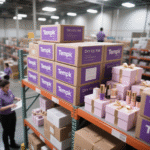
Frozen-food logistics can fail at consolidation and transfers even when the product starts and ends in suitable storage. Plan compatible loads, intermediate waiting and custody records around the actual product requirements. A refrigerated vehicle or warehouse description does not establish that every intervening stage is controlled.
Map the freight transfer chain
Identify dispatch, consolidation, cross-docking, temporary storage, vehicle loading and receiving. Record which provider controls each step and how long product may wait before moving to the next one.
Use the requirements for the actual product and primary package. A mixed freight load should not be organized only by destination if its temperature, hygiene or handling requirements are incompatible.
Agree conditions for consolidation
| Consolidation factor | Question to resolve |
|---|---|
| Product compatibility | Can the items share the planned conditions and handling? |
| Load pattern | Does loading preserve required protection and airflow? |
| Waiting | Where is the load held between vehicles? |
| Transfer access | Can staff unload and reload without unassessed exposure? |
| Identity | Do lot and shipment records remain linked? |
| Delay | Who decides the next action when a connection is missed? |
Confirm the actual service scope and facilities. A provider that operates refrigerated trucks may still need a separate agreement for transfer storage or after-hours handling.
Retain evidence across the transfer
- Record departure and relevant arrival events.
- Keep product and lot identifiers with the load.
- Use monitoring appropriate to the actual assessment.
- Record damage, closure changes and abnormal waiting.
- Provide incident contacts to each receiving party.
- Retain the receiving and disposition records.
A vehicle-air display and product-temperature record may describe different conditions. Use the measurement strategy required for the actual product and process, and document gaps rather than assuming they were harmless.
Review a changed freight arrangement
Assess a new hub, consolidation schedule, vehicle, loading pattern or storage provider against the existing exposure and system evidence. A lower freight cost is not evidence that the changed plan protects the product.
Helpful decision tools
Check the details before you choose packaging
These quick tools can help you compare route risk, sizing needs, coolant choices, and packaging details before you request a quote.
Dry Ice Calculator
Estimate dry ice needs for frozen or ultra-cold shipments before packing.
Estimate dry iceIce Pack Calculator
Estimate gel ice pack quantity for chilled shipments and practical route planning.
Estimate ice packsRoute Risk Checker
Review lane conditions before selecting packaging for real operating requirements.
Check route riskFor covered US operations, FDA: sanitary transportation of food addresses sanitary transportation of food. Identify applicable duties for each actual business role and any other product requirements.
If product exposure is uncertain, use the responsible food-safety and quality process. Refreezing or moving the load into cold storage does not by itself resolve its status.
Frequently asked questions
Does using refrigerated vehicles cover cross-dock waiting?
Not automatically. Confirm the transfer environment and agreed procedure.
Can all frozen goods be consolidated together?
Check actual product, hygiene, package and handling compatibility.
Can tracking timestamps replace temperature evidence?
They help reconstruct movement but do not necessarily measure product conditions.
Connect the freight plan with supporting controls
Use the frozen-product configuration register guide for approved variations and the loading and unloading guide for dock execution.