Gestão de Carnes na Cadeia de Frio: Evitar perdas em 2025?
Última atualização: dezembro 18, 2025
Cold chain meat management is how you keep meat seguro, consistente, and sellable desde o armazenamento até a entrega. Em 2025, the fastest losses usually come from transferências—staging, carregando, and multi-stop delivery. Even short “warm minutes” can quietly reduce shelf life and trigger claims later. You can fix this with clear temperature lanes, tight dock discipline, simple monitoring, and proof you can retrieve in minutes.
Este artigo vai te ajudar:
-
Construa um cold chain meat management checklist your team actually follows
-
Cut losses by reducing warm minutes at docks and cross-docks
-
Conjunto prático faixas de temperatura for chilled vs frozen products
-
Escolher temperature monitoring for meat shipments without drowning in data
-
Track the right cold chain meat management KPIs semanalmente
-
Use a simple meat transport deviation decision tree that stops repeat problems
Cold Chain Meat Management Checklist: What Are Your Non-Negotiables?
Cold chain meat management works when you control temperature, tempo, higiene, e prova como um sistema. If you only “keep it cold,” you still lose margin during door openings and rushed staging. Your non-negotiables should be short, visível, and easy to repeat on busy days.
Think of cold chain meat management like protecting a candle in the wind. You cannot stop the wind. You can build a shield and follow a routine.
O 4 pillars of cold chain meat management
| Comprimidos | O que controla | O que isso impede | O que isso significa para você |
|---|---|---|---|
| Estabilidade de temperatura | condição do produto | deterioração, perda de textura | menos rejeições |
| Hygiene discipline | risco de contaminação | odores, limo, safety issues | menos incidentes |
| Transition control | handoff exposure | picos quentes, condensação | vida útil mais longa |
| Proof and traceability | evidence speed | claim disputes | faster resolution |
Your 60-second self-check (pontuação 0–2)
Pontue cada item: 0 = No, 1 = Sometimes, 2 = Yes, consistentemente.
-
We verify product temperature antes carregando.
-
We control door-open time with a clear rule.
-
We limit staging outside cold zones with a timer.
-
We separate chilled and frozen lanes during handling.
-
We store shipment proof in one consistent folder format.
-
We document corrective actions after deviations.
Sua pontuação:
-
0–5: Alto risco. Fix handoffs first.
-
6–9: Risco médio. Improve consistency and proof speed.
-
10–12: Strong control. Optimize and scale.
Exemplo prático: One operator reduced weekly claims by adding dock timers and standard proof packs. Product stayed the same. Management improved.
Cold Chain Meat Management Temperature Lanes: How Cold Is “Cold”?
Cold chain meat management starts with clear temperature lanes that everyone can describe in one sentence. Your buyer specs and local rules may differ, but most teams use simple baselines. Chilled foods are often kept around 4°C / 40°F ou abaixo, and frozen foods are commonly kept around -18°C / 0°F ou abaixo.
Many food-safety trainings also use the “danger zone” concept (comumente 40° F - 140 ° F. / 4°C-60 °C) to remind teams that time at warmer temperatures increases risk. Use it as a risk signal, not a replacement for your spec.
Lane builder (a quick decision tool)
Answer these three questions for each SKU:
-
What is the product state? refrigerado / congelado / pronto para comer
-
Where are the handoffs? receive → stage → load → deliver → verify
-
What’s your warm-minute budget? how many minutes outside the lane is acceptable?
| Tipo de pista | Practical goal | Maior risco | Your control lever |
|---|---|---|---|
| Carne gelada | stay in the chilled lane | warm-minute spikes | encenação + disciplina de porta |
| Carne congelada | stay fully frozen | thaw-refreeze damage | vedação + stop-order loading |
| Ready-to-eat | tight lane + higiene rigorosa | contato cruzado | separação + proof pack |
Dicas práticas que você pode usar hoje
-
Write one lane sentence per SKU: “This item stays in the chilled lane end-to-end.”
-
Define a “do not load” rule: if it fails the lane check, it pauses.
-
Track stability, not averages: averages hide short spikes that matter most.
Cold Chain Meat Management at the Dock: How Do You Cut Warm Minutes?
Most cold chain meat management failures happen at the dock, not on the highway. Portas abertas, entra ar quente, pallets wait, and people rush. A short delay can create more damage than a long drive.
Treat warm minutes like money. If you do not track them, you will overspend.
Refrigerated meat loading checklist (dock timer tool)
Start a timer when the door opens. Capture four timestamps.
| Dock step | O que você faz | O que você grava | O que isso significa para você |
|---|---|---|---|
| Pré-estágio | keep pallets in cold buffer | buffer zone + start time | less warming |
| First pallet in | begin loading sequence | carimbo de data/hora | exposure control begins |
| Last pallet in | finish loading fast | carimbo de data/hora | warm minutes measurable |
| Door close + selo | close immediately | seal photo + tempo | menos disputas |
The warm-minute budget worksheet (simples e utilizável)
Fill in these numbers for each lane:
-
Staging minutes: ____
-
Loading minutes: ____
-
Receiving minutes: ____
-
Total de minutos quentes: ____
Regra: If total warm minutes exceed your budget, you trigger a corrective action.
Practical dock rules that actually stick
-
Pista de espera somente fria: no “parking pallets” near open doors.
-
Door-open limit per load: one rule, one owner, one timer.
-
Carregar por ordem de parada: less searching, fewer door openings.
-
Dock owner per shift: one person controls flow and decisions.
Caso real: A processor cut deviation events by using a “load clock” rule. If loading was not ready in 10 minutos, pallets returned to cold storage.
Cold Chain Meat Management Monitoring: What Data Actually Matters?
The best cold chain meat management monitoring is simple, consistente, and actionable. You do not need a dashboard nobody checks. You need signals that trigger action during real operations.
O 3 signals that matter most
| Sinal | O que isso te diz | Por que isso importa | Sua vitória prática |
|---|---|---|---|
| Temperature history | stability over time | spikes predict shelf-life loss | melhores decisões |
| Time out of lane | minutos quentes | shows handoff weakness | fast ROI fixes |
| Condição de chegada | fotos + basic checks | supports accountability | menos disputas |
Sensor placement that catches the worst spot
-
Place sensors where risk is highest: perto de portas, top-front pallets, and mixed zones.
-
Do not rely on one wall display reading. Use product-adjacent placement when possible.
-
Calibrate and label devices. Untrusted data becomes wasted work.
The “proof pack” template for every load
Keep one consistent proof pack per shipment:
-
Pre-load temperature check result
-
Dock timer timestamps (minutos quentes)
-
Trip temperature log summary
-
Exceções + ações corretivas
-
Arrival photos + seal verification
If proof retrieval takes more than 2–3 minutes, simplify the format.
Cold Chain Meat Management KPIs: What Should You Review Weekly?
Cold chain meat management KPIs should predict loss before loss happens. If you track too many metrics, teams stop caring. Track a small set, review exceptions weekly, and change one root cause per week.
A simple KPI scorecard (ready to use)
| KPI | What it measures | Good direction | O que isso significa para você |
|---|---|---|---|
| Minutos quentes por carga | time outside lane | abaixo | less hidden quality loss |
| Minutos de porta aberta | exposure at loading | abaixo | menos picos |
| Contagem de excursões | out-of-range events | abaixo | menos reclamações |
| Claim rate | customer disputes | abaixo | margin protected |
| Encolher % | waste and markdown | abaixo | more sellable inventory |
| Entrega dentro do prazo | schedule discipline | acima | fewer curbside waits |
| Calibration compliance | sensor trust | acima | prontidão para auditoria |
Practical tips that change behavior
-
Análise exceções, not averages. Averages hide the most expensive minutes.
-
Tie each KPI to one habit. Door-open minutes improves quickly when visible.
-
Post results where teams work. Visibility creates ownership faster than emails.
Cold Chain Meat Management Deviations: What’s Your Decision Tree?
Strong cold chain meat management is not “no deviations.” It is predictable response speed. Delays and equipment issues happen. Your playbook decides whether it becomes a minor event or a costly claim.
Detect → Contain → Decide → Fix → Verify (the playbook)
| Etapa | O que você faz | O que você grava | O que isso significa para você |
|---|---|---|---|
| Detectar | identify out-of-lane event | tempo + localização | resposta rápida |
| Contain | isolate impacted pallets | palete + lot ID | prevents mixing |
| Decidir | liberar / segurar / rebaixar | decisão + razão | consistent outcomes |
| Consertar | correct process/equipment | owner + Ação | stops repeats |
| Verificar | re-check within days | proof of improvement | audit-ready control |
Deviation decision tree (simple “if/then” tool)
-
Se you cannot prove duration, então treat as high risk until verified.
-
Se product was out of lane during a handoff, então hold and measure first.
-
Se the same deviation repeats weekly, então change the process, not the reminder.
Practical tips for defensible corrective actions
-
Write one sentence: o que aconteceu, o que você fez, o que mudou.
-
Avoid “be careful.” It is not a corrective action.
-
Require a re-check. “Fixed” means tested, not promised.
Exemplo operacional: One DC reduced repeat deviations by assigning one dock staging owner and requiring weekly re-checks of the warmest zone.
Cold Chain Meat Management Hygiene: What Must Stay Clean?
Cold chain meat management must include hygiene because cold slows growth, but does not remove contamination. Dirty surfaces can preserve risk longer. Leaks and wet cartons are early warning signs.
Sanitation snapshot checklist
| Área | O que verificar | Freqüência | O que isso significa para você |
|---|---|---|---|
| Dock floor + staging zone | limpar, seco, sem resíduos | every shift | fewer contamination events |
| Trailer interior | limpar, seco, no debris | every load | menos reclamações de odor |
| Door seals | intacto, closes fully | every load | less contamination entry |
| Tools and totes | cleanable and documented | agendado | better audit outcomes |
Dicas práticas que você pode usar hoje
-
Treat the dock like a food area, not a parking area.
-
Fix leaks at the source. Wet cartons increase claim risk immediately.
-
Use separation rules between raw handling and clean packing zones.
Cold Chain Meat Management for Last-Mile: O que muda?
Last-mile cold chain meat management is mainly about repeated openings and small exposures. Multi-stop routes create many small temperature hits. Those hits add up when drivers search, or customers are not ready.
Last-mile route risk score (interativo)
Pontue cada fator 0–2, then total it:
-
Paradas por rota
-
Aberturas de portas
-
Outdoor curbside waiting
-
Complexidade do pedido (many small picks)
-
Calor ambiente
Guia de pontuação:
-
0–4: Baixo risco. Standard SOP likely holds.
-
5–7: Risco médio. Tighten staging and handoffs.
-
8–10: Alto risco. Add insulation support and stricter timers.
Practical last-mile tips that reduce warm minutes
-
Carregar por ordem de parada. Search time becomes door-open time.
-
Use micro-batches for picking. Smaller waves reduce dock exposure.
-
Separate chilled and frozen physically when mixing is unavoidable.
2025 Cold Chain Meat Management Trends You Should Plan For
Em 2025, cold chain meat management is shifting toward evidence-first operations. Teams want fewer surprises, decisões mais rápidas, and proof that travels with the load. Buyers also expect faster responses when questions appear.
Instantâneo do progresso mais recente (2025)
-
Warm-minute KPIs replacing “average temperature” thinking
-
Exception-first reviews that focus on what went wrong, not everything
-
Standard proof packs that close claims faster and reduce audit stress
-
Better monitoring placement inside high-risk zones, not only on walls
Realidade do mercado (linguagem simples)
Consistency is a performance metric. If you can prove stable handling, reorders happen faster and disputes shrink.
Sugestões de links internos (sem links externos)
Use these as internal content pieces on your site:
-
Meat loading dock temperature break prevention checklist
-
How to separate chilled and frozen products in transport
-
Temperature monitoring basics for meat shipments
-
Corrective action workflow for cold chain deviations
-
Airflow and stowage rules for refrigerated meat loads
Perguntas frequentes
Q1: What is cold chain meat management in one sentence?
Cold chain meat management keeps meat in the right temperature lane, limits warm minutes at handoffs, and proves control with simple records.
Q2: What is the fastest way to reduce loss in cold chain meat management?
Control dock staging first. A visible timer, cold-only staging, and one owner usually deliver the quickest gains.
Q3: Do I need a temperature logger on every shipment?
Nem sempre. Start with risk-based monitoring for high-value loads, rotas com múltiplas paradas, and hot-weather lanes.
Q4: What should I document when a deviation happens?
Tempo, localização, affected pallets, evidência de temperatura, and the corrective action you took. Keep it short and consistent.
Q5: Can packaging replace refrigeration in cold chain meat management?
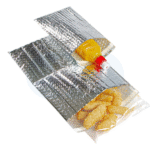
Não. Packaging supports stability and hygiene during transitions, but refrigeration provides the cold lane.
Resumo e recomendações
Cold chain meat management protects safety, prazo de validade, and profit by controlling estabilidade de temperatura, hygiene discipline, transition control, e prova. Most losses come from staging and loading, where warm minutes and door-open time create hidden damage. Start with clear temperature lanes, a dock timer routine, and a proof pack per load. Then review a small KPI set weekly and fix one root cause at a time.
Seus próximos passos (simple 7-day plan)
-
Define chilled and frozen lanes for your top SKUs.
-
Add a dock timer and record warm minutes on every load.
-
Standardize sensor placement in the warmest zones.
-
Build one proof pack template and enforce 2-minute retrieval.
-
Run one deviation drill and require a re-check within days.
CTA: If you want fewer claims and more predictable quality, treat cold chain meat management as a daily routine—not an emergency response.
Sobre Tempk
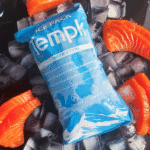
E tempk, we support cold chain meat management with practical packaging and temperature-control expertise designed for real dock pressure. We help you reduce temperature swings during transitions, improve load stability, and standardize proof packs that hold up in audits. Our goal is measurable improvement: menos desvios, menos disputas, and more consistent delivery outcomes.
Próximo passo: Talk with our specialists to map your handoff risks, set lane rules, and build a dock-ready cold chain meat management workflow for 2025.