Tecnologia de carne da cadeia fria: How Do You Keep Meat Safe?
Última atualização: dezembro 16, 2025
Cold chain meat technology is the simplest way to protect meat safety, frescura, and profit at the same time. Most chilled programs aim for about 0–4°C, while frozen programs typically stay at -18°C or colder.
cold chain meat technology
When you keep product in range at every handoff, you reduce spoilage, perda por gotejamento, and “mystery” claims that show up days later.
Este artigo responderá para você:
-
How cold chain meat technology works across processing, armazenar, e entrega
-
Which meat cold chain temperature requirements matter most for chilled and frozen meat
-
How meat cold chain monitoring (madeireiros, RFID, and TTIs) prevents surprises
-
Which packaging technology protects color, textura, and yield on longer routes
-
How to build HACCP-friendly SOPs buyers trust and auditors can follow
-
A quick self-test and an excursion impact calculator you can use today
Cold chain meat technology: what is it really?
Cold chain meat technology is the full system that keeps meat in a controlled temperature range, with proof. Inclui equipamentos (chillers, câmaras frias, frigoríficos), embalagem (vácuo, MAPA, forros isolados), monitoramento (madeireiros, sensores, alertas), and the routines your team repeats every day. If any one part fails, the whole chain weakens, even if your trucks are “set to the right number.”
Think of cold chain meat technology like a relay race. Your meat quality is the baton. Every handoff—cut room, blast chill, doca, reboque, DC, last mile—can drop it. The goal is not “cold somewhere.” The goal is “stable everywhere,” plus records that show what happened when conditions changed.
The three levers you must control
Cold chain meat technology gets easier when you focus on three levers: temperatura, tempo, e toque.
cold chain meat technology
| Control lever | What usually fails | What cold chain meat technology adds | O que isso significa para você |
|---|---|---|---|
| Temperatura | Warm docks, door events, pontos quentes | Sensores, airflow rules, alarmes | Fewer quality swings and safer product |
| Tempo | “Only 15 minutes” repeated all day | Staging limits, timed loading | Longer shelf life and less waste |
| Touch | Cross-contact, caixas molhadas, dirty tools | Hygienic SOPs, dry zones, cheques | Fewer claims and fewer rework events |
Dicas práticas que você pode usar hoje
-
Name the owner: One person per shift owns cold chain meat technology alarms and actions.
-
Make airflow visible: Mark “do not block vents” zones on the floor.
-
Turn habits into rules: “When the door opens, the timer starts.”
Cold chain meat technology temperature targets: what should you run?
Cold chain meat technology works best when you set targets by product state, not by habit. Chilled fresh meat often targets roughly 0–4°C, while frozen meat typically stays at -18°C or colder. Ground products usually need tighter time control because they have more exposed surface area. If you use one setpoint for “all meat,” you create hidden risk at the edges.
As a simple reference point, many food safety programs treat about 4°C (40°F) as the upper limit for chilled storage and about -18°C (0°F) for frozen storage.
A helpful mental model is this: every degree of warming is like taking time off your shelf life. You may not see it on day one. Your customer will see it on day four.
Meat cold chain temperature targets by category
| Categoria de produto | Alvo prático | Risco comum | O que isso significa para você |
|---|---|---|---|
| Chilled fresh meat | 0–4 ° C. | Encenação quente, pontos quentes | Focus on stability and fast loading |
| Carne congelada | -18°C ou mais frio | Thaw during transfers | Prevent thaw–refreeze damage |
| Vacuum-packed chilled meat | 0–4 ° C. | Seal damage, condensação | Manuseie com cuidado; avoid wet cartons |
| Ground meat | 0–4 ° C. (often tighter in practice) | Higher spoilage sensitivity | Minimize o tempo fora da refrigeração |
cold chain meat technology
Ferramenta de decisão: should you ship chilled or frozen?
Use this quick check before you change your whole cold chain meat technology design. If you match more items in the right column, plan a frozen (or deeper-chill) strategy for that lane.
| Ponto de decisão | Chilled strategy fits when… | Congelado / deeper-chill fits when… |
|---|---|---|
| Tempo de rota | Short and predictable delivery windows | Long routes or unpredictable delays |
| Door events | Few stops and brief door-open time | Many drops, longo tempo de porta aberta |
| Selling window | Fast turnover at destination | Buffer inventory and longer shelf-life needs |
| Handling control | Strong staging discipline and fast loading | Staging discipline is hard to enforce today |
Regra rápida: If your biggest risk is warm staging, fix staging first. Changing product state cannot “heal” slow handoffs in cold chain meat technology.
Armazenamento refrigerado: what “stable” looks like in real life
Cold chain meat technology is not “set it colder.” Stable means:
-
Fewer door openings beat a colder thermostat.
-
Even airflow beats “cold corners and warm centers.”
-
Short staging beats “temporarily on the dock.”
Dicas e sugestões práticas
-
Separate staging lanes: If you ship mixed chilled and frozen, build two lanes, not one compromise lane.
-
Pre-cool the trailer: A reefer cools air fast, but it cannot remove product heat quickly.
-
Measure time-out-of-range: Averages hide spikes. Spikes cost shelf life.
Cold chain meat technology monitoring: how do you prove control?
Cold chain meat technology becomes trustworthy when you can prove temperature control, not just assume it. Monitoring should answer three questions: What is happening now? What happened yesterday? Who acts when an alarm happens? You do not need “more data.” You need the right signals in the right places.
If you only log a single air point, you may miss the warm pocket inside a pallet. That is where quality fails first.
Monitoring tools that fit real operations
| Ferramenta | Melhor uso | Força | Limitação | O que isso significa para você |
|---|---|---|---|---|
| Single-use data logger | Prova de envio | Baixo custo, simples | No live alerts | Great for disputes and audits |
| Registrador reutilizável | Repetir pistas | Better accuracy over time | Needs retrieval | Best for stable routes |
| Wireless room sensor | Estabilidade das instalações | Live visibility | Placação é importante | Catch door-zone excursions |
| RFID temp sensor | DC scanning | Rápido, low-touch checks | Necessidades de infraestrutura | Good for high volume |
| Time-temperature indicator (ITT) | Box-level screening | Shows cumulative exposure | Needs calibration | Helps spot hidden abuse |
The 3-point sensor plan for meat
Cold chain meat technology monitoring works best with three points:
-
Zona da porta: Where warm air enters.
-
Far corner: Where airflow often weakens.
-
Product-representative point: One pallet position matching your highest-risk loads.
cold chain meat technology
KPIs to track weekly (simples, mas poderoso)
Cold chain meat technology gets easier when you manage a few KPIs your team can influence daily in cold chain meat technology.
| KPI | Target example | Por que isso importa | Simple way to collect |
|---|---|---|---|
| Time-out-of-range | <30 min per load | Prevê perda de prazo de validade | Logger or sensor reports |
| Door-open duration | trending down | Creates warm spikes | Door sensor, camera review, or manual logs |
| Pre-chill compliance | >95% cargas | Prevents warm loading | Dispatch probe + registro |
| Seal failure rate | <0.5% caixas | Drives odors and wet packs | Receiving checks |
| Claims per 1,000 Remessas | trending down | Measures customer pain | QA and customer service logs |
Dicas práticas que você pode usar hoje
-
Coloque sensores onde os problemas acontecem: Do not hide them near evaporators “because it looks good.”
-
Assign alert ownership: One person responds; one person closes out the event.
-
Log the why: Every alarm gets a cause and an action note in plain language.
Exemplo prático: One team stopped repeat excursions by moving a sensor closer to the door and enforcing a staging timer.
Cold chain meat technology packaging: what protects color and yield?
Cold chain meat technology is not only cold air—packaging is the last protective layer. The right pack slows oxygen exposure, controls drip, and prevents handling damage. The wrong pack can make your cold chain look “fine” while customers see grey color, caixas molhadas, and off-odors.
Packaging is like a rain jacket. Cold air is the weather. If the jacket leaks, you still get wet.
Packaging options compared for chilled meat
| Tipo de embalagem | O que protege | Main tradeoff | Melhor para | O que isso significa para você |
|---|---|---|---|---|
| Vacuum pack | Oxidation, odor | Darker color look | Primal cuts, exportar | Strong shelf-life stability |
| Vacuum skin pack | Appearance, pingar | Film damage if abused | Cortes prontos para varejo | Apresentação mais limpa |
| MAPA (atmosfera modificada) | Cor + selling days | Needs gas and seal discipline | Exibição de varejo | Better inventory control |
| Overwrap tray | Speed and cost | Vida útil curta | Very local routes | Requires tight timing |
Insulated shipping: simple rules that work
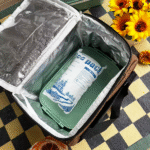
Cold chain meat technology for parcel or last mile often needs insulation and coolants.
| Shipping element | Helpful when | Risk if misused | Conclusão prática |
|---|---|---|---|
| Forro isolado | Rotas curtas, última milha | Falsa confiança | Still limit dock time |
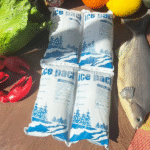
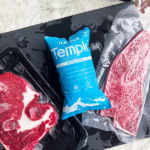
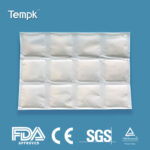
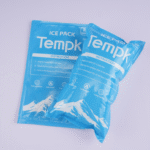
| Pacotes de gel | Warm ambient days | Surface freezing | Separate with a barrier layer |
| Pacotes PCM | Tight control needed | Ponto de fusão errado | Match PCM to your target |
Dicas e sugestões práticas
-
Se as caixas chegarem molhadas: Fix condensation sources before changing packaging.
-
If color varies load to load: Check seal integrity and oxygen exposure first.
-
If refunds spike in last mile: Add a barrier between coolant and product to avoid edge-freezing.
Exemplo prático: A DTC brand reduced refunds after adding a simple barrier layer between gel packs and chilled meat.
Cold chain meat technology SOPs: how do you make it repeatable?
Cold chain meat technology succeeds when your process is designed for humans, condições não perfeitas. The best SOP is the one your team can repeat at 6 a.m. on a busy day. Your goal is to reduce “decision fatigue” by turning key steps into defaults.
Below is a simple workflow you can adapt. It targets the most common breakpoints: recebendo, arrepiante, encenação, carregando, e entrega.
A simple cold chain meat technology workflow
-
Receive and verify: check temperature and packaging condition.
-
Stabilize in cold room: stack for airflow, not for maximum density.
-
Pick and pack: batch picks to reduce door openings.
-
Stage cold, carregar rápido: minimize dock exposure with timed windows.
-
Transport with proof: log temperature and exceptions.
-
Handover checks: confirm conditions at destination.
| Etapa do processo | Falha típica | Easy fix | O que isso significa para você |
|---|---|---|---|
| Recebendo | Warm loads blend into stock | Isolation lane | Stops “warming the whole room” |
| Armazenamento refrigerado | Hot spots inside pallets | Airflow channels | More even product temps |
| Escolhendo | Doors open too long | Batch picks | Better room stability |
| Carregando | Long dock time | Timed windows | Menos picos de temperatura |
| Entrega | “No data” handoff | Proof pack | Resolução de disputas mais rápida |
The clean handoff checklist (your “touch” control)
Cold chain meat technology fails when cold product meets dirty or wet conditions. Use this simple handoff checklist at receiving, embalagem, and loading.
-
Keep raw and ready-to-eat flows separated, even in small spaces.
-
Use a clean-to-dirty tool flow (fresh gloves and tools for new tasks).
-
Sanitize high-touch surfaces on a timer, not “when it looks dirty.”
-
Control condensation: water droplets spread microbes and weaken cartons.
-
Quarantine returns and questionable pallets in a labeled isolation zone.
Dock discipline tip: Aim for a short, repeatable handoff. If your dock is warm, treat every extra minute as shelf-life loss.
Blast chilling after processing
Blast chilling removes heat quickly so meat reaches stable cold faster.
-
It reduces time spent in risky warm ranges.
-
It improves consistency across pallets.
-
It supports predictable dispatch timelines.
Dicas práticas que você pode usar hoje
-
Use time stamps: hora de recebimento, into-cooler time, out-of-cooler time.
-
Adopt a “no exceptions” rule: chilled meat never waits on a warm dock.
-
Train with pictures: show correct pallet spacing and airflow gaps.
Exemplo prático: One plant improved on-time dispatch by creating a cold staging buffer inside the facility.
Cold chain meat technology transport: how do you avoid reefer hot spots?
Cold chain meat technology in transport is mostly airflow and loading discipline. Reefers can cool air well, but they cannot cool a blocked pallet core quickly. If you load wrong, the trailer becomes a moving hot-spot generator and you learn it too late.
A reefer is like a fan-cooled fridge. Air must circulate. If you block the path, the back corners warm first.
Reefer loading habits that create hot spots
| Loading habit | O que isso causa | What to do instead | Benefício para você |
|---|---|---|---|
| Tight wall stacking | Trapped warm pockets | Leave airflow gaps | More uniform temps |
| Mixed pallet heights | Short-circuit airflow | Standardize or separate rows | Fewer corner failures |
| Over-wrapping | Poor air exchange | Wrap for stability, not sealing | Better cooling response |
| Blocking return air | Uneven circulation | Keep returns clear | Less variability |
Cross-docking: where cold chain meat technology often breaks
Cross-docks are high risk because time pressure wins. Two practices cut risk fast:
-
Cold-to-cold transfer lanes: Keep product in cold zones until the last moment.
-
Exception labeling: Mark pallets that had extra warm exposure.
Dicas práticas que você pode usar hoje
-
If setpoint looks fine but quality fails: map the failing pallet positions.
-
If trailers “never reach setpoint”: check door discipline and loading speed first.
-
If last mile is your model: treat staging as the main battlefield, não tempo de condução.
Cold chain meat technology troubleshooting: symptoms to root causes
Cold chain meat technology improves fastest when you connect what you see to what likely caused it. This table helps you stop guessing and fix the repeatable failure point.
| O que você vê | What it often means | Verificação rápida | Practical fix |
|---|---|---|---|
| Grey or dull color | Oxygen exposure or temp swings | Inspect seals and dock time | Improve seal checks; encurtar a preparação |
| Excess purge (pingar) | Exposição quente + compressão | Compare pallet core temps | Improve airflow channels; reduce stacking pressure |
| Off-odor complaints | Tempo + abuso de temperatura | Review excursions by lane | Tighten loading windows; improve alarm response |
| Caixas molhadas | Eventos de condensação | Check door cycles and humidity | Add curtains; reduzir oscilações; keep dry zones |
| Uneven quality across a load | Hot spots from airflow blocks | Map failure positions | Adjust loading pattern; move sensors to risk zones |
Dicas práticas que você pode usar hoje
-
Start with one lane in cold chain meat technology: fix your worst route first, then copy the win.
-
Measure before you change: one week of simple logs beats one day of opinions.
-
Separate safety from quality: both matter, but they use different indicators.
Cold chain meat technology self-check tools: pontuação + calculadora
Cold chain meat technology improves fastest when you stop guessing and start scoring. Use the tools below to find your biggest weakness today, then fix only that item first.
Ferramenta interativa 1: Cold Chain Meat Technology Readiness Score
Score each line 0–2 (0 = não, 1 = às vezes, 2 = sim). Total 0–20.
-
We verify receiving temperature on every load. (2)
-
We have an isolation lane for warm or questionable pallets. (2)
-
We limit chilled meat dock time with a timer rule. (2)
-
We keep vents and returns clear with floor markings. (2)
-
We monitor door-zone and far-corner temperatures. (2)
-
We close out every alarm with cause and action. (2)
-
We pre-cool trailers before loading starts. (2)
-
We train handlers on airflow-safe pallet patterns. (2)
-
We check packaging seals and damage at receiving. (2)
-
We keep a simple proof pack buyers can review quickly. (2)
Significado da pontuação
-
0–6: Alto risco. Cold chain meat technology is likely failing silently.
-
8–14: Risco médio. You have controls, but gaps cause surprises.
-
16–20: Baixo risco. You are stable and scalable.
Ferramenta interativa 2: Excursion impact estimator for chilled meat
This is a simple way to estimate “how bad was that warm exposure?” It is not a lab model. It helps you decide where to focus.
Etapa 1: Calculate Warm Exposure Points (WEP)
WEP = (Temperature above your target band) × (Hours exposed)
cold chain meat technology
Exemplo:
-
Your target is 0–4°C.
-
A pallet sat at 8°C for 3 horas.
-
Temperature above band is 4°C.
-
WEP = 4 × 3 = 12
Etapa 2: Interpret WEP (regra geral)
-
WEP 0–5: Low impact. Melhorar o processo, but likely manageable.
-
WEP 6–15: Medium impact. Investigate handling and re-check product.
-
WEP 16+: High impact. Consider hold/release decisions and root cause.
Dicas práticas que você pode usar hoje
-
Track WEP by route: your worst lane becomes obvious quickly.
-
Use WEP in training: it turns “be careful” into a measurable habit.
-
Pair WEP with packaging checks: seal failures plus high WEP are high risk.
2025 cold chain meat technology trends you should watch
Em 2025, cold chain meat technology is shifting from “keeping it cold” to “keeping it consistently cold with proof.” Teams are moving from data collection to decision support. Buyers also want simpler, auditable evidence that your process is controlled.
Here are the trends that matter because they change your daily work.
Instantâneo do progresso mais recente (2025)
-
Smarter alerting: fewer alarms, better prioritization by risk zones.
-
Análise preditiva: earlier warnings that a lane is drifting toward failure.
-
More intelligent indicators: wider use of TTIs for box-level exposure screening.
-
Otimização de embalagens: stronger focus on seal quality, barrier performance, and drip control.
-
Lower-emission refrigeration planning: more attention to energy, refrigerantes, and uptime.
-
Proof-first selling: traceability and stability are becoming contract advantages.
Informações de mercado que você pode usar
Consistency is now a feature. Many customers accept premium pricing when quality is predictable. Cold chain meat technology supports that by reducing variability, not just meeting minimum limits.
Frequently asked questions about cold chain meat technology
Q1: What is cold chain meat technology in plain terms?
Cold chain meat technology is the equipment, embalagem, monitoramento, and SOPs that keep meat in range with proof. When you control temperature, tempo, and clean handling at every handoff, you reduce spoilage and claims.
Q2: What temperatures should I target for chilled and frozen meat?
Many operations target about 0–4°C for chilled meat and -18°C or colder for frozen meat. Your product specs and safety plan should define your exact limits and actions.
Q3: Why do hot spots happen even when the trailer is cold?
Hot spots usually come from blocked airflow, mixed pallet heights, or return-air paths being blocked. Cold chain meat technology depends on loading patterns that let air circulate around pallets.
Q4: Do I need real-time monitoring on every lane?
Nem sempre. Use real-time monitoring on high-risk routes and tight timelines. For stable lanes, shipment loggers can still give you strong proof, if you have a clean retrieval process.
Q5: Which packaging is best: vácuo, skin pack, or MAP?
It depends on route time and selling window. Vacuum often improves shelf-life stability for longer storage. Skin packs can improve presentation and reduce leaks. MAP can help with retail color, but needs seal discipline.
Q6: What is the fastest way to cut spoilage claims?
Fix staging and dock time first. Many failures come from warm exposure during handoffs, not from the cold room thermostat setting.
Resumo: your next steps for cold chain meat technology
Cold chain meat technology works when you run it as one system: alvos, fluxo de ar, monitoramento, embalagem, e resposta. If you want fast improvement, focus on the handoffs.
Takeaways -chave
-
Cold chain meat technology is a system, not a gadget.
-
Temperature stability beats “colder setpoints” almost every time.
-
Monitoring works when sensors sit in risk zones and alarms have owners.
-
Packaging protects quality, but only when staging and seals are controlled.
-
Transport quality depends on airflow-safe loading patterns.
Um plano de ação simples
-
Essa semana: add receiving checks, an isolation lane rule, and a dock timer.
-
Próximo 2 semanas: audit airflow and fix your top two hot-spot locations.
-
This month: deploy the 3-point monitoring plan and review exceptions weekly.
Sobre Tempk
E tempk, we support cold chain meat technology with practical tools that help you keep operations stable and auditable. We focus on monitoring plans, usable SOP workflows, and evidence-ready reporting that fits real shift work. Our goal is to help you reduce avoidable excursions, improve consistency, and strengthen buyer confidence without overcomplicating your day.
Próximo passo: If you share your product types, packaging formats, and dispatch schedule, we can outline a monitoring and SOP checklist you can implement quickly.