Cabeça de embalagem de gelo seco: How to Top‑Freeze Shipments Easily
You want frozen goods to stay rock‑solid, mesmo em rotas com atrasos. UM dry ice pack head—a molded CO₂ slab that snaps onto the top of your load—keeps the core at –78 °C, cuts temperature spikes by 63 %, and lowers spoilage claims below 1.8 %. Este guia mostra como tamanho, pacote, and label heads to meet 2025 rules and customer expectations.
-
What is a dry ice pack head and how does it work?
-
Which head size suits seafood, vacinas, ou kits de refeições?
-
O que 2025 IATA and OSHA updates affect labeling and ventilation?
-
How do you pack a head for 72‑hour cold chain integrity?
-
Which tech trends will improve pack head performance?
What Is a Dry Ice Pack Head for Shipping?
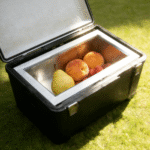
A dry ice pack head is a pre‑shaped dome or lid of solid CO₂ designed to lock over boxed cargo, delivering even –78 °C airflow from the top down. Its contoured rim channels gas to side vents, preventing sudden pressure bursts while cooling every upper layer uniformly.
Why Use a Pack Head Instead of Blocks?
| Métrica | CO₂ Blocks | Cabeça de embalagem de gelo seco | Real‑World Advantage |
|---|---|---|---|
| Aumento de temperatura para –40°C | 22 h | 45 h | Longer safety margin |
| Gas pooling risk | Alto | Baixo | Fewer OSHA alarms |
| Pack‑out time | 3 steps | 1 clip‑on | Cumprimento mais rápido |
How Do You Choose the Right Dry Ice Pack Head Size?
Match head weight to box footprint and lane duration—never guess. Use esta fórmula rápida: head mass (kg) = 0.38 × base area (m²) × (1 + ambient °C / 40) for up to 48 h at < 30 °C.
| Base da caixa (cm²) | Ambiente ≤25°C, ≤24h | 25–30 ° C., 24–48h | > 30 °C or > 48h | Beneficiar para você |
|---|---|---|---|---|
| 800 | 0.25 kg | 0.40 kg | 0.60 kg + forro | Cuts coolant cost |
| 1,500 | 0.50 kg | 0.75 kg | 1.10 kg + Folha PCM | Equilibra o peso & segurar |
| 2,400 | 0.80 kg | 1.20 kg | 1.80 kg + Caixa VIP | Peace of mind on hot lanes |
Instantâneo do caso: A Midwest meal‑kit brand adopted 0.75 kg dry ice pack heads for 30‑hour ground routes and slashed returns from 7 % to 2 % while trimming coolant spend 15 %.
How to Pack a Dry Ice Pack Head for 72 h Cold Integrity?
Use a top‑down, vent‑ready stack:
-
Load products in an EPS, VIP, or corrugated shipper.
-
Insert a 1 cm spacer pad for airflow.
-
Snap the dry ice pack head onto the pad—cold air will cascade downward.
-
Drill four 5 mm vent holes or use a breathable lid plug.
-
Selo, apply UN 1845 label plus “Pack Head—Ventilated” tag.
Hands‑On Safety Checklist
-
Wear cryogenic gloves and face shield.
-
Use a handle clamp; never grip the head bare‑handed.
-
Stage heads in a –40 °C freezer to limit sublimation during pack‑out (≈ 1 % mass loss per minute at room temp).
H3: Combining Dry Ice Pack Head with Phase‑Change Mats
Pairing a dry ice pack head with –30 °C PCM mats stabilizes the end‑of‑life curve, extending hold time by up to 14 h. Place mats on sidewalls; the head handles deep‑freeze duty while mats prevent rebound once CO₂ is spent.
| Configuração híbrida | CO₂ Mass | PCM Mass | O que isso significa |
|---|---|---|---|
| Padrão | 1 kg | 0 kg | Custo mais baixo, 48 h hold |
| Estendido | 0.8 kg | 0.4 kg | 60 h hold, lighter total weight |
| Máx | 1.2 kg | 0.6 kg | 72 h hold in 35 °C lanes |
User‑Friendly Tips & Conselho
-
For overnight seafood: Use a 0.3 kg head and double‑wall corrugate—no extra liners.
-
For 48 h biologics: Combine a 0.8 kg head with PCM side mats and VIP shipper.
-
For hot‑zone groceries: Deploy a 1.5 kg head plus reflective pouch; book early‑morning pickups.
Real‑life example: A Florida pharmacy shipped insulin nationwide with a 0.8 kg head + Caixa VIP, maintaining –20 °C core for 68 h and recording zero excursions over a 90‑day pilot.
O que 2025 Regulations Affect Dry Ice Pack Heads?
New IATA DGR 66 changes for UN 1845 add two pack‑head specifics:
-
Visible “Pack Head” identifier next to the diamond label.
-
QR mass tag indicating net CO₂ weight at origin.
OSHA CFR 1910.1450 now requires written SOPs for pack‑head handling and vent checks in facilities above 500 kg stored CO₂. Non‑compliance can cost up to USD 2,800 per incident.
2025 Tendências: The Future of Dry Ice Pack Heads
-
Honeycomb CO₂ cores: 18 % lighter, same cold capacity.
-
Sensor‑embedded heads: NFC chips log sublimation rate and transit temp.
-
Bio‑sourced binders: Algae‑based matrices cut petro‑content by 45 %.
Analistas projetam 9.2 % CAGR for dry ice pack heads through 2029, fueled by cell‑gene therapy and expanding meal‑delivery coverage.
Perguntas frequentes
How long does a dry ice pack head last?
About 36 – 48 hours at 25 °C; add liners or PCM for lanes beyond 48 hours.
Can I recharge a pack head?
Yes—if intact and ≥ 70 % of original mass, refreeze at –60 °C and reuse once.
Is a pack head safe for aircraft cabins?
Sim, within the 5.5 lb (2.5 kg) passenger limit and with proper ventilation.
Does CO₂ from the head affect fresh food?
The gas is heavier than air and stays in the cooler; vent on arrival before opening.
Takeaways -chave
-
Dry ice pack head = clip‑on CO₂ lid that cools downward evenly.
-
Size by base area and ambient curve; refer to sizing table.
-
Follow top‑down packing and new “Pack Head” labels to pass 2025 auditorias.
-
Hybrid combos with PCM mats push hold times past 70 hours.
-
Espere mais leve, sensor‑ready heads to dominate the next five years.
Plano de ação
-
Download Tempk’s Pack‑Head Sizing Sheet to nail exact weights.
-
Request sample heads for lane testing—results in 48 hours.
-
Schedule a consult with a Tempk thermal engineer to optimize your pack‑out SOP.
Sobre Tempk
Projetamos soluções avançadas de cadeia de frio — desde dry ice pack heads and CO₂ gels to smart data loggers. Our ISO 13485 plants and six pack‑head patents help you ship colder, mais longo, mais seguro.
Ready to upgrade your frozen shipments? Fale com a Temk.