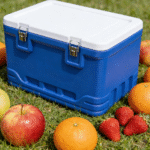
Pacote de transporte de gelo seco: Como dimensionar e rotular 2025
Se você precisar de um pacote de gelo seco que realmente permaneça congelado, comece dimensionando o gelo seco para horas de trânsito, escolhendo o isolamento certo, e imprimindo UN1845 com quilogramas líquidos em uma caixa ventilada. A maioria das pistas funciona com 5–10 lb por 24 horas mais um buffer de 24 horas, e 2025 as listas de verificação exigem rótulos claros e caminhos de ventilação para CO₂.
-
Quanto gelo seco por dia mantém mercadorias congeladas em sua pista (com uma calculadora de copiar e colar).
-
O que imprimir na etiqueta para que as transportadoras aceitem seu pacote de gelo seco na primeira vez.
-
Quando escolher gel/PCM em vez de uma embalagem de gelo seco para simplificar os envios aéreos.
-
Qual isolamento (EPS, Pur, VIP) dimensiona corretamente o custo e a massa para rotas de 24 a 120 horas.
O que é a pacote de transporte de gelo seco e quando você deve usá-lo?
Resposta curta: UM pacote de transporte de gelo seco é um ventilado, pacote isolado que mantém cargas úteis sólido como uma rocha congelado usando CO₂ sólido (sublima a -78,5°C). Use-o quando seu produto precisar chegar totalmente congelado de ponta a ponta; otherwise consider gel/PCM if chilled control is enough. Marca “Gelo seco/dióxido de carbono, sólido,”E 1845, e net kg, and ensure gas can vent.
Por que isso importa para você: A ventilação evita o acúmulo de pressão; correct markings speed acceptance and reduce delays. 2025 acceptance materials emphasize airline‑specific limits and providing net weight at booking, enquanto USPS caps domestic air mail at ≤5 lb per piece and prohibits international mail with dry ice. If your lane is short or only needs chilled ranges, a gel/PCM pack avoids hazmat steps.
Dry ice shipping pack vs. gel/PCM—what fits your lane?
Choose a dry ice shipping pack when you need deep‑frozen conditions or ultracold lanes; escolha gel/PCM when you need 2–8 °C or moderate frozen (por exemplo, −15°C) with simpler paperwork. Larger pellets or blocks sublimate slower for multi‑day routes; tiny pellets are better for fast pull‑down.
| Opção | Temp capability | Pátria (ar) | O que isso significa para você |
|---|---|---|---|
| Dry ice shipping pack | ≈ −78.5 °C surface | Sim | Longas esperas; ultracold lanes; rótulo & ventilação necessária. |
| PCM -21 ° C. / −26 °C bricks | Congelado (−15 to −26) | Geralmente não | Easier processing; reutilizável; não ultrafrio. |
| 0 Venha ° c / +5 ° C PCM | 2–8 ° C. | Não | Produtos refrigerados; simple returns. |
Dicas práticas que você pode usar hoje
-
For DTC frozen food: Pré-resfrie o remetente; place product low, gelo seco acima; preencher vazios; deixe as aberturas desobstruídas.
-
Para pistas quentes (verão): Use o high end of 5–10 lb/day and consider PUR or VIP insulation.
-
Para produtos biológicos: Add a data logger and record gelo seco da rede em kg on the label before tender.
Caso do mundo real: A pastry brand cut melted‑product claims by 38% after switching to a 2‑inch liner, larger pellets, and a 24‑hour buffer—ice spend stayed flat while failures plummeted.
How much dry ice should a dry ice shipping pack carry?
Regra geral: Plano ~ 5-10 lb. (2.3–4,5 kg) por 24 horas de trânsito plus an extra 24 horas para buffer. Comece próximo 7.5 lb/dia e ajuste para isolamento, calor ambiente, Tamanho do pellet, and whether the box is opened mid‑route.
Por que funciona: Dry ice absorbs substantial heat while subliming (≈570 kJ/kg), so modest masses can cover a day or two in a tight shipper. Box R‑value, Headspace, and pellet size drive real‑world loss rates.
Quick planner table
| Tempo de trânsito | Gelo seco típico (Libra) | Notas |
|---|---|---|
| 12–24 h | 5–10 | Thick foam → 5; summer lanes → 10. |
| 24–48 h | 10–20 | Prefer larger pellets for slower loss. |
| 72 h | 20–30 | Consider bigger box or added liner. |
| 96 h | 30–40 | Validate with a lane test before scale. |
How should you label a dry ice shipping pack in 2025?
Print this on one panel (same surface as Class 9 when size allows):
E 1845
Dióxido de carbono, sólido (Gelo seco)
Gelo seco da rede: ____ kg
Remetente: ____________________
Consignatário: ____________________
Para ar, Aplique o Classe9 Diamond, Continue embalando ventilado, and follow IATA PI954. Airlines may impose additional limits and ask for net weight at booking. USPS licenças ≤5 lb domestic air under PI 9A and prohibits international mail. Passenger flights allow ≤2.5 kg per person/package with airline approval and venting.
How do you pack out a dry ice shipping pack step by step?
-
Pré -Chill product and shipper to reduce the day‑one heat load.
-
Linha & isolar: add a poly liner and absorbent pad; place a tray to avoid direct contact.
-
Carregar: produto baixo, gelo seco acima; fill voids to reduce convection.
-
Fechar & ventilação: never seal the outer box airtight; keep gas paths clear of tape.
-
Rótulo & book: marca E 1845 com NET KG, adicionar Classe9 para o ar, e siga o 2025 Lista de verificação de aceitação.
Safety and ventilation: CO₂ limits to respect
Gelo seco se transforma em gás CO₂. Indoors or in vehicles, gas can accumulate. Keep rooms ventilated and train staff. Reference limits: 5,000 ppm twa e 30,000 ppm stel; add CO₂ alarms in staging areas. Always use insulated gloves and eye protection.
Which insulation and pellet size fit your dry ice shipping pack?
Pick insulation for duration e pellet size for endurance. EPS works for short lanes; PUR and VIP cut heat gain for 48–120 h routes and allow less refrigerant mass. Larger pellets or slabs sublimate slower on multi‑day lanes.
| Tipo de pacote | Janela típica | Notas | Significado para você |
|---|---|---|---|
| EPS (1–2″) | 24–48 h | Lowest R‑value; menor custo | Bom para pistas curtas; mais gelo seco necessário. |
| Pur | 48–96 h | Higher R/inch; consistente | Reduce mass and carton size. |
| VIP | 72–120 h+ | Very high performance | Pistas longas, high value payloads; lighter overall. |
2025 trends shaping your dry ice shipping pack
O que há de novo 2025: IATA’s 66th Edition Adenda 1 (effective Apr 30, 2025) highlights airline‑specific dry ice limits and net weight at booking; carriers refreshed job aids stressing Class 9 placement with the Proper Shipping Name. USPS kept the ≤5 lb domestic air cap. VIP adoption keeps rising to trim refrigerant mass and freight.
Últimos desenvolvimentos de vista
-
Clearer acceptance paperwork: Fewer dock delays if you mirror the 2025 Lista de verificação.
-
Preprinted cartons: More boxes ship with dry‑ice panels to reduce pack errors.
-
Perspectivas de mercado: Several reports project ~7–7.4% CAGR for dry ice through 2032, led by food and healthcare demand.
Insight de mercado: Near‑shoring and recyclable materials are trending, while IoT loggers make lane validation simpler and faster for audits.
Perguntas frequentes
How much dry ice per day for a small dry ice shipping pack?
Plano 5–10 lb por 24 horas, Em seguida, adicione mais um dia como buffer; use more for hot lanes or thin walls.
What must appear on my label in 2025?
Incluir E 1845, ““Gelo seco/dióxido de carbono, sólido,” gelo seco líquido em quilogramas, remetente/consignatário, e Classe9; Mantenha o pacote ventilado.
Can passengers carry a dry ice shipping pack?
Sim, ≤2,5 kg (5.5 Libra) por pessoa/pacote com aprovação da companhia aérea; mark and vent the container.
Can I mail a dry ice shipping pack via USPS?
Somente ar doméstico, ≤5 lb por correio; correio internacional não é permitido.
O gelo seco é regulamentado para solo?
Com alguns serviços (por exemplo, certas redes terrestres), gelo seco não é perigoso - mas marcações ainda são necessárias. Verifique a página da sua operadora para obter detalhes.
Quando devo escolher PCM em vez de um pacote de gelo seco?
Escolher −15°C a −26°C PCM para muitas pistas congeladas ou 0 °C gel/+5°C PCM para 2–8°C quando você deseja processamento e reutilização mais fáceis.
Resumo & Recomendações
Lembrar: Dimensione o seu pacote de transporte de gelo seco por primeira vez (5–10 lb/dia + 24buffer de horas), em seguida, selecione o isolamento (EPS → PUR → VIP) e tamanho de pellet. Ventile a caixa, imprimir E 1845 com NET KG, e lugar Classe9 por 2025 orientação. Treinar equipes Exposição co₂ limites e pacotes de palco em zonas ventiladas.
PRÓXIMOS PASSOS:
-
Estime o gelo seco com a calculadora acima. 2) Imprima um bloco de etiquetas com E 1845 e NET KG. 3) Pilote duas remessas e pese pós-entrega para ajustar a massa. 4) Adicione o 2025 Lista de verificação de aceitação para o seu POP.
Sobre Tempk
Somos uma equipe de engenharia da cadeia de frio que transforma requisitos complexos de transporte em SOPs de embalagem simples. Nós validamos pacote de transporte de gelo seco projeta faixa por faixa, cargas de refrigerante do tamanho certo, e fornecer modelos de etiquetas que sejam aprovados na primeira aceitação. Os clientes dos setores de alimentos e ciências biológicas reduzem rotineiramente os sinistros em dois dígitos, ao mesmo tempo em que reduzem os custos de reenvio. Pronto para enviar mais frio, mais seguro, mais barato? Solicitar a 15revisão do pacote em minutos e obtenha uma lista técnica específica da rota, rótulos, e uma calculadora de gelo testada.