Caixa de espuma EPP para serviços pesados: O que funciona 2025?
Última atualização: dezembro 16, 2025
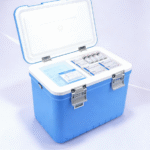
UM caixa de espuma EPP resistente works when you need insulation e toughness at the same time. It’s made from polipropileno expandido (PPE), a closed-cell bead foam known for absorção de energia, resistência a impactos múltiplos, isolamento térmico, and water/chemical resistance. BPFC+1 If your shipments get dropped, empilhado, or returned and reused, the heavy-duty EPP foam box is designed for that reality.
Este artigo responde:
-
Como um caixa de espuma EPP resistente differs from EPS/EPE options (and why it matters)
-
O que EPP foam box thermal conductivity means for your hold time
-
How to size wall thickness, densidade, and volume for your lane
-
Como validar um caixa de espuma EPP resistente using ISTA thermal standards
-
How cleaning, retorna, e 2025 sustainability rules change your packaging plan
Heavy-duty EPP foam box basics: What is it really?
Resposta direta: UM caixa de espuma EPP resistente is a reusable insulated container made from molded EPP beads. EPP is widely described as a versatile closed-cell foam with high strength-to-weight, multiple impact resistance, e isolamento térmico. BPFC+1 That combination is why it shows up in logistics, cadeia de frio, and protective transport applications.
Explicação expandida: Think of a heavy-duty EPP foam box like a “helmet for your payload.” It doesn’t just slow heat transfer. It also absorbs shock and springs back after bumps that would crack brittle foams. EPP grades come in a wide faixa de densidade (industry references cite roughly 15–200g/L geral), letting designers trade weight for strength and insulation. BPFC
Heavy-duty EPP foam box vs EPS: o que muda para você?
Informações detalhadas: The biggest operational difference is reuse. A heavy-duty EPP foam box is built for repeated handling cycles, while single-use systems often fail on the “second trip” problem: amassados, rachaduras, wet damage, or messy reverse logistics. Industry sources highlight EPP’s durability and resistance as reasons it stays in circulation for years in returnable systems. EPP-Forum e.v.+1
| Fator de decisão | Remetente de espuma descartável | Heavy-duty EPP foam box | O que isso significa para você |
|---|---|---|---|
| Drop/impact behavior | Often cracks or chips | Multiple-impact resistant BPFC+1 | Fewer claims from handling damage |
| Prontidão para reutilização | Baixo | Alto (returnable model) EPP-Forum e.v. | Lower “packaging per trip” over time |
| Limpeza + higiene | Often not designed for it | Many grades are easy to clean/sterilize SpecialChem | Better fit for controlled operations |
Dicas práticas que você pode usar hoje
-
Se você executar retorna: choose a heavy-duty EPP foam box with a lid that seals consistently after many openings.
-
If you stack loads: prioritize thicker walls and higher-density corners, not just “bigger size.”
-
Se você envia líquidos: add an internal liner or absorbent plan so the box stays clean for reuse.
Cenário do mundo real: If your boxes travel in vans with constant loading/unloading, the “multiple-impact” property becomes a cost lever, not a material detail. BPFC+1
Heavy-duty EPP foam box insulation: How cold can it stay?
Resposta direta: UM caixa de espuma EPP resistente slows heat gain because its closed-cell structure traps air, and air is a great insulator. O EPP é amplamente descrito como thermally insulating, and technical property sheets show low thermal conductivity values for EPP grades. EPD International+1 When you combine that with the right coolant strategy, you get stable internal temperatures for longer routes.
Explicação expandida: Insulation is not a magic number. É um sistema: caixa + tampa + costuras + carga útil + refrigerante + how often someone opens it. The box material sets the baseline heat leak, but your process determines the real-world results. That’s why thermal validation standards exist for insulated shippers. Associação Internacional de Transporte Seguro
EPP foam box thermal conductivity: What’s a “good” number?
Informações detalhadas: A technical property table for EPP products lists condutividade térmica (ASTM C177) em volta 0.24–0.26 BTU·in/(ft²·hr·°F) depending on grade. foam-industries.com That converts to roughly 0.035–0.038 com m · k (aprox.), which is in the expected insulation range for bead foams used in temperature-controlled packaging.
| O que você mede | Typical EPP reference | What moves it | O que isso significa para você |
|---|---|---|---|
| Condutividade térmica (k) | 0.24–0.26 BTU·in/(ft²·hr·°F) foam-industries.com | Densidade, molding quality, costuras | Lower k usually = longer hold time |
| Absorção de água | Very low values shown (<5% vol) foam-industries.com | Método de limpeza, dano | Less soggy insulation over reuse |
| Service temperature | Max values listed up to 212°F foam-industries.com | Grade and design | Helps with wash and hot environments |
Dicas práticas que você pode usar hoje
-
Treat seams like “holes”: a great wall doesn’t help if the lid gap leaks air.
-
Use a simple rule for coolant: colder lanes need more coolant mass, not thicker walls only.
-
Stop “empty space waste”: voids raise heat flow and can trigger compliance issues in some markets. Ambiente
Cenário do mundo real: If drivers open the lid twice per stop, you’ll lose more performance than any small material upgrade could recover.
Heavy-duty EPP foam box strength: Which density actually holds up?
Resposta direta: Density matters because it drives mechanical strength. Technical references list EPP grades around 20–60g/L with compressive strength increasing as density rises. foam-industries.com For a heavy-duty EPP foam box, higher-density corners and ribs often deliver more “real strength” than simply making the box bigger.
Explicação expandida: “Heavy-duty” usually means three things in operations: it survives drops, it survives stacking, and it survives repeated cleaning/handling. You don’t need the highest density everywhere. You need smart reinforcement where failures happen: cantos, rim, interface da tampa, and base.
Density and compressive strength: quick reference table
Informações detalhadas: One EPP properties sheet lists typical values like these across densities (example grades shown). foam-industries.com Use this to sanity-check supplier claims and to write your own spec.
| Propriedade (ASTM) | ~20 g/L | ~30 g/L | ~45 g/L | Seu significado prático |
|---|---|---|---|---|
| Compressive @ 25% (psi) | 14.5 | 23.5 | 42 | Better stacking resistance foam-industries.com |
| Tensile strength (psi) | 38 | 55.5 | 67 | Less cracking at handles foam-industries.com |
| Tear strength (lb/in) | 10 | 13 | 16 | Fewer chips and rim failures foam-industries.com |
Dicas práticas que você pode usar hoje
-
If you stack >3 camadas: specify a minimum compressive strength target, not just “EPP box.”
-
If boxes ride on conveyors: reinforce rim edges and add wear zones where scraping happens.
-
If you use straps: define strap locations so the box doesn’t “dent” over time.
Cenário do mundo real: Many breakages happen at the lid lip after thousands of touches, not at the wall center. Design for that.
Heavy-duty EPP foam box sizing: How do you pick volume and wall thickness?
Resposta direta: Pick the smallest heavy-duty EPP foam box that fits your payload and coolant plan. Smaller internal air space reduces heat load and movement damage. Then choose wall thickness based on your duração da rota, condições ambientais, e frequência de abertura.
Explicação expandida: Oversizing is a quiet budget killer. It increases coolant needs, increases empty space, and raises shipping cost. Na UE, packaging “minimisation” rules also push companies to reduce unnecessary empty space in transport and e-commerce packaging.
A simple heavy-duty EPP foam box sizing “calculator”
Informações detalhadas: Use this quick method before you ask for quotes.
-
Measure payload volume (C × L × A).
-
Adicionar coolant volume (your pack-out recipe).
-
Adicionar 10–15% de buffer for safe closure and airflow.
-
Choose the smallest internal dimension set that meets the result.
| Etapa | What you enter | O que você ganha | O que isso significa para você |
|---|---|---|---|
| Carga útil | Product dimensions | Volume de carga útil | Prevents “box too big” waste |
| Refrigerante | Packs/PCM size | Coolant volume | Drives hold time the most |
| Buffer | 10–15% | Clearance | Helps consistent closure |
Dicas práticas que você pode usar hoje
-
Se você enviar SKUs mistos: design around the 80% case and use inserts for the rest.
-
If you ship glass or vials: add corner protection and stop movement first.
-
Se você enviar comida: choose a layout that keeps cold sources from direct contact where needed.
Cenário do mundo real: UM 10% size reduction can cut coolant needs and improve delivery consistency, especialmente em estações quentes.
Heavy-duty EPP foam box for cold chain: Which use cases win biggest?
Resposta direta: UM caixa de espuma EPP resistente wins when you have repeat shipments, strict temperature needs, ou manuseio brusco. It’s common in food logistics, entrega de refeição, and sensitive goods where return-and-reuse is realistic. EPP industry references note its use as reusable transport packaging, often kept in circulation for years.
Explicação expandida: If you only ship once a month to random addresses, return logistics may be the hard part. But if you ship daily between depots, hospitais, kitchens, lojas, or distribution points, the heavy-duty EPP foam box becomes a predictable asset.
Use-case match table
| Caso de uso | Why EPP helps | Typical “gotcha” | O que isso significa para você |
|---|---|---|---|
| Entrega de refeições / catering | Durável + isola + reutilizável FAO AGRIS | Cleaning and odor control | Requires a wash SOP |
| Farmacêutico / transporte médico | Isolamento + absorção de choque EPP-Forum e.v.+1 | Validation documentation | Plan ISTA-style profiles |
| Depot-to-store food | Força da pilha + ciclos de reutilização foam-industries.com+1 | Disciplina de tampa | Train teams on closure |
Dicas práticas que você pode usar hoje
-
Start with one closed loop: uma pista, one return path, um proprietário.
-
Add tracking early: even simple IDs reduce loss and theft.
-
Padronize a embalagem: mesmo refrigerante, same placement, same close.
Cenário do mundo real: A closed-loop route (kitchen → van → drop → return) is the easiest place to prove ROI quickly.
Heavy-duty EPP foam box validation: How do you prove performance in 2025?
Resposta direta: Validar um caixa de espuma EPP resistente with a repeatable test plan that matches your shipping reality. ISTA provides thermal standards guidance for insulated shipping containers, incluindo Padrão ISTA 20 and parcel-focused thermal standards like 7E. Your goal is not a “pretty report.” Your goal is confidence that your box performs on the worst day.
Explicação expandida: Validation is where many teams get stuck. They either test only in perfect conditions, or they test so harshly that no design can pass. You want a realistic worst-case: hottest ambient exposure, longest dwell, and the most openings your route actually sees.
Howto: Validate a heavy-duty EPP foam box (baseado em pista)
Informações detalhadas: Use this as your starting structure.
-
Define your temperature target (chilled vs frozen vs CRT).
-
Choose worst-case seasons and ambient profiles.
-
Build your pack-out recipe (payload simulator + refrigerante).
-
Corra pelo menos 3 repete (não 1).
-
Record internal temps and excursions (time above/below limits).
-
Document results and corrective actions.
| Etapa de validação | O que você testa | O que você grava | O que isso significa para você |
|---|---|---|---|
| Thermal profile | Exposição ambiental + habitar | Time/temperature curve | Proof for QA and customers |
| Manuseio | Gotas, vibração, empilhamento | Dano + desempenho da vedação | Reduces claims and re-shipments |
| Reuse cycle | Lavar + reembalar + repita | Fit and lid closure | Shows real “heavy-duty” value |
Dicas práticas que você pode usar hoje
-
Don’t test only the box: test the caixa + empacotar + passos humanos.
-
Measure “time out of fridge” during loading: it often dominates failures.
-
Keep the report short: one page summary + graphs is enough to act.
Cenário do mundo real: Many failures come from “lid not fully closed,” not from insulation thickness.
Heavy-duty EPP foam box cleaning: How do you keep it hygienic without damage?
Resposta direta: Treat cleaning like part of the packaging design, não é uma reflexão tardia. Some EPP grades are described as easy to clean and sterilize, with low water absorption. SpecialChem+1 A heavy-duty EPP foam box stays “heavy-duty” only if your wash process doesn’t deform lids, damage corners, or leave odors.
Explicação expandida: Cleaning is where reuse programs succeed or fail. If cleaning is slow, inconsistente, or smelly, operations will quietly abandon reuse. Your SOP should make the right behavior the easy behavior.
Cleaning SOP checklist for heavy-duty EPP foam box programs
Informações detalhadas: Mantenha-o simples e consistente.
-
Pre-rinse to remove debris
-
Wash with approved detergent (per your product category rules)
-
Enxágue bem
-
Dry completely before storage
-
Inspecionar: ajuste da tampa, rim integrity, rachaduras, odor
-
Quarantine damaged boxes
| Risco | O que causa isso | Simple prevention | O que isso significa para você |
|---|---|---|---|
| Odor retention | Incomplete drying | Add drying racks + fluxo de ar | Fewer “customer smell” complaints |
| Deformação da tampa / ajuste ruim | Too much heat or force | Set wash limits and handling rules | Maintains seal performance |
| Contaminação cruzada | Mixed dirty/clean flow | One-way flow lanes | Maior confiança na higiene |
Dicas práticas que você pode usar hoje
-
Separate “food only” and “non-food” boxes in your program.
-
Use visual status labels: "Limpar / Needs wash / Quarantine.”
-
Track the top 3 modos de falha: tampa, rim, base—fix those first.
Cenário do mundo real: A 30-second inspection step can prevent a whole day of customer complaints.
Heavy-duty EPP foam box sustainability: Is it actually greener in real life?
Resposta direta: It can be—if you reuse it enough times and manage end-of-life responsibly. EPP is described as 100% reciclável and used in long-lived reusable transport systems. BPFC+2EPP-Forum e.v.+2 A life-cycle study summary (food-delivery context) reports an EPP box solution achieved ~37% lower overall impacts versus a common box, using an LCA approach aligned to ISO standards. FAO AGRIS
Explicação expandida: Sustainability is not “plastic vs paper.” It’s trips per box, wash energy, taxa de perda, e recycling success. If your heavy-duty EPP foam box is lost after two trips, it’s not a win. If it stays in circulation for years and is recycled, it often can be.
2025 regulation pressure: why “right-sizing” matters
Informações detalhadas: Na UE, o Regulamento de Embalagens e Resíduos de Embalagens (PP) entrou em vigor em fevereiro 2025, with application later (timeline depends on provisions). Ambiente PPWR objectives include packaging minimisation, reutilizar, e reciclabilidade. Ambiente That pushes businesses to reduce empty space and adopt systems that can be collected and reused.
| 2025 pressão | What it pushes | How EPP programs respond | O que isso significa para você |
|---|---|---|---|
| Minimisation | Less empty space | Caixa menor + smart inserts | Menor frete + melhor conformidade Ambiente |
| Reuse focus | Return systems | Closed-loop EPP circulation | More predictable packaging cost |
| Reciclabilidade | End-of-life plans | Mono-material pathways | Easier recycling stories EPP-Forum e.v. |
Dicas práticas que você pode usar hoje
-
Set a “minimum reuse target”: define how many trips justify the program.
-
Add loss control: simple IDs and returns tracking protect sustainability and cost.
-
Plan end-of-life: store damaged boxes and send them to proper recycling partners.
Cenário do mundo real: The fastest “sustainability upgrade” is often reducing empty space and preventing box loss. Ambiente
Ferramenta de decisão interativa: Should you switch to a heavy-duty EPP foam box?
Resposta direta: Switch when your total cost per successful delivery drops and your failure rate improves. UM caixa de espuma EPP resistente usually wins when you can return it and reuse it many times. EPP reuse systems are commonly described as staying in circulation for several years in logistics contexts.
Self-assessment score (0–20)
Cost-per-trip mini model (simples)
-
Custo por viagem ≈ (Custo da caixa + monitorando + lavar) ÷ (Expected successful trips before loss)
-
Compare that to: single-use packaging cost + re-shipments + perda de produto
Dica: If your box loss rate is high, fix that antes you buy a premium box.
2025 heavy-duty EPP foam box trends you should watch
Visão geral da tendência: Em 2025, heavy-duty EPP foam box programs are evolving from “reusable boxes” into “managed assets.” Companies are pairing reuse with tracking, standard test methods, and packaging minimisation requirements. EU packaging policy direction is pushing reuse and better-designed transport packaging, especially for e-commerce and distribution systems.
Instantâneo do progresso mais recente
-
More thermal standardization: ISTA guidance is increasingly referenced for designing and qualifying insulated shipping containers.
-
More circular design talk: EPP industry groups emphasize reuse-for-years plus recyclability at end of life.
-
More data-backed sustainability: LCA-based comparisons are being used to justify reusable systems in food delivery.
Insight de mercado: The “best box” is the one your team can run consistently: empacotar, fechar, entregar, retornar, lavar, repita.
Perguntas frequentes
Q1: How long can a heavy-duty EPP foam box stay cold?
It depends on your pack-out, calor ambiente, e aberturas de tampa. Use lane-based validation and track time out of refrigeration. ISTA thermal standards help structure those tests.
Q2: Is a heavy-duty EPP foam box recyclable?
EPP is commonly described as 100% reciclável, and EPP logistics systems often recycle material at end of life.
Q3: What density should I choose for a heavy-duty EPP foam box?
Higher density generally improves compressive and tear strength. Property tables show strength increasing from ~20 g/L to ~45 g/L grades.
Q4: Does a heavy-duty EPP foam box handle water and cleaning well?
EPP is often described as water resistant with low water absorption, and some grades are described as easy to clean/sterilize.
Q5: Can reusable EPP boxes reduce environmental impact?
A food-delivery LCA summary reported an EPP box option showed ~37% lower overall impacts than a common box in that context. Results depend on reuse cycles and loss rates.
Resumo e recomendações
Takeaways -chave: UM caixa de espuma EPP resistente is best when you need insulation plus repeated-use durability. EPP is widely described as multiple-impact resistant, thermally insulating, e reciclável. Use density and design reinforcement to survive stacking and daily handling. Validate performance with a lane-based plan that follows recognized thermal testing guidance. Finalmente, make cleaning and returns part of the design, não é uma reflexão tardia.
PRÓXIMOS PASSOS (CTA): Choose one shipping lane and run a 14-piloto diurno with a single pack-out recipe. Record internal temperature, handling damage, and return losses. Se você compartilhar sua faixa de temperatura alvo, duração da rota, e tamanho da carga útil, we can map a heavy-duty EPP foam box spec that fits your real operation.
Sobre Tempk
E tempk, we build temperature-controlled packaging systems that are practical to run every day. Our heavy-duty EPP foam box solutions focus on repeatable pack-outs, durable reuse in closed-loop programs, and validation-ready performance. We also help teams simplify cleaning, retorna, and tracking so your packaging works as an operational asset, not a one-time purchase.
Ação: Peça um empacotar + lista de verificação de validação so you can pilot a heavy-duty EPP foam box program with clear pass/fail criteria.