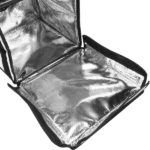
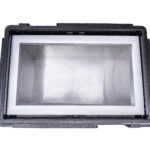
insulated pouch industrial should be treated as a controlled packaging system, not a generic bag. The best solution protects temperature-sensitive products, survives daily factory handling, supports procurement with stable specifications, and helps quality teams defend the approval decision. Em 2026, that choice is shaped by stronger expectations around temperature control, monitoramento documentado, food-contact compliance, parcel-relevant validation, e eficiência de embalagem. FDA sanitary transportation rules, WHO and CDC temperature-monitoring guidance, EU food-contact rules, Expectativas do PIB, ISTA 7E thermal testing, and the EU’s packaging regulation all point in the same direction: buyers now need evidence, não promessas. (NÓS. Food and Drug Administration)
Este guia irá ajudá-lo a responder
- How to define a stronger insulated pouch industrial requirement
- How to choose structure, refrigerante, and pack-out logic
- How to balance performance, custo, and daily usability
- How to prepare a compliance-ready document file
- How to respond to 2026 sustainability and market pressure
Why does insulated pouch industrial matter more now?
Because the market expects proof. Buyers want to know that the pouch fits the actual route, not that it merely looks thick or premium. Industrial teams also need a pack that tolerates repeated handling, carregamento escalonado, and real operator variation.
For many industrial programs, the strongest design is the one that combines thermal stability with rugged daily use. You want a pack that survives benches, carts, dock traffic, and repeated manual handling without turning every shipment into a special exception.
Etapa 1: define the requirement before you ask for quotes
- Start with five points:
- faixa de temperatura alvo
- duração da rota
- payload starting temperature
- tamanho da caixa externa
- método de embalagem
Sem isso, most pricing comparisons are weak. You should also decide whether the requirement is a short shuttle, a parcel-exposed route, or a higher-risk lane that needs stronger mechanical protection.
Industrial decision table
Etapa 2: choose materials by system behavior
Choose by tested outcome, not by thickness alone. Bubble laminates can work for short, lower-risk lanes. Foam laminates are often a better industrial default. Premium thin-wall systems become useful when payload space is limited and performance pressure is higher.
DOE resources help explain why high-R-per-inch materials keep attracting attention, but packaging still has to convert, selo, and survive daily use. (Energy.gov do Departamento de Energia)
Material matrix
Etapa 3: control coolant and pack-out
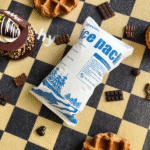
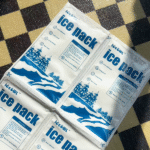
A pouch manages heat flow, but the coolant carries the thermal burden. Standardize conditioning time, coolant location, e Headspace. That matters more than many buyers expect.
WHO and CDC guidance continue to reinforce recorded temperature control and data logging rather than assumption-based cold-chain handling. (CDC)
Regras de embalagem
- use fixed coolant placement
- reduce empty air
- train closure steps in one order
- record early-launch temperatures
- Etapa 4: validate the route
Validation should match the real route. Ask for payload temperature, perfil ambiente, tipo de refrigerante, duração, and pass/fail rule. For parcel-style exposure, ISTA 7E remains a strong comparison framework because it uses real-world seasonal thermal profiles for parcel systems. (Associação Internacional de Trânsito Seguro)
Also request:
- seal review
- tolerância dimensional
- lot consistency
- change-control process
- Etapa 5: review compliance early
Para programas alimentares, FDA transportation expectations and EU food-contact rules matter. For healthcare-adjacent programs, GDP-style monitoring discipline matters too, including regular calibration of transport monitoring equipment. (NÓS. Food and Drug Administration)
Lista de verificação de conformidade
- application statement
- food-contact support where needed
- thermal test summary
- change-control language
- rastreabilidade de lote
- 2026 desenvolvimentos e tendências
The strongest trend is efficiency with proof. Buyers want lighter, mais inteligente, better-documented systems. The EU PPWR keeps pushing material efficiency and better packaging design, while FAO continues to connect packaging and temperature management to lower food loss and lower cold-chain impact. (Ambiente)
Perguntas frequentes
- What is the best first move?
- Define the route and pass/fail limit before requesting samples.
- Should I use one pouch for every lane?
- Geralmente não. Two or three approved route bands work better.
What makes a supplier strong in 2026?
Clean specs, route-based evidence, controle de mudanças, and realistic technical support.
Resumo e recomendação
The best insulated pouch industrial program is built on route definition, tested material choice, pacote repetível, and controlled documentation. That combination reduces risk, simplifies buying, and improves reorders.
Sobre Tempk
Tempk helps customers compare industrial cold-chain packaging by route, estrutura, document quality, and daily operating fit. We focus on practical validation, stable specifications, and packaging choices that hold up in real work.