A embalagem em saco refrigerado é uma das ferramentas mais práticas para rotas de cadeia de frio curta e média, mas só quando a bolsa, refrigerante, rota, e método de carregamento são projetados juntos. Se você comprar embalagens de sacos refrigerados apenas por espessura ou preço, você pode acabar pagando mais por deterioração, excesso de refrigerante, embalagem lenta, ou reclamações de clientes.
Neste artigo, você aprenderá:
- What refrigerated bag packaging does best
- How to choose size, isolamento, and coolant without guesswork
- Which compliance and validation questions matter most
- How sustainability is changing refrigerated bag packaging in 2026
- A practical buying framework you can use right away
What is refrigerated bag packaging best used for?
A embalagem em saco refrigerado é melhor para produtos refrigerados que precisam de proteção térmica portátil sem o peso e a carga de armazenamento de recipientes rígidos. Isso inclui compras no mesmo dia, laticínio, frutos do mar, kits de refeições, sobremesas, amostras, transporte de mão hospitalar, e coleta controlada no varejo.
A vantagem é a flexibilidade. Uma boa bolsa com isolamento macio é mais fácil de guardar, easier to carry, and often faster to pack. The limitation is that performance depends heavily on route control, consistência de embalagem, and bag fit. That is why refrigerated bag packaging works best when you define the real route before you select the bag.
Fast decision guide
How do you size refrigerated bag packaging correctly?
Comece com o produto, não a bolsa. Define the product temperature range, tamanho da carga útil, tempo de rota, and worst-case ambient condition. Then add a safety margin. This matters because average routes do not cause the hardest failures. Atrasos, transferências, and staging time do.
Correct sizing is one of the simplest ways to improve performance. A bag that is too large creates empty air space, makes coolant placement less effective, and slows packing because operators must improvise. A bag that is too small creates closure stress and damaged seams. The right refrigerated bag packaging should fit the payload closely while still leaving space for the planned coolant map.
Practical sizing rules
- Build around your most common payload, not the rare exception
- Use multiple SKUs if product sizes vary widely
- Add just enough space for coolant and safe loading
- Test full bags, half-filled bags, and delayed dispatch conditions
- Train packers on one repeatable layout
Which materials and structures matter most?
A well-designed refrigerated bag packaging system usually has four critical parts: the outer shell, the insulation core, the inner liner, and the closure. The outer shell handles abrasion and branding. The insulation slows heat gain. The inner liner controls cleanliness and leakage. The closure protects the weakest thermal zone: the opening.
Foam-based structures remain popular because they balance price, flexibilidade, e capacidade de fabricação. Reflective layers help when bags sit in warm vehicles or near sunlight, but reflective film alone is not enough. Alças reforçadas, strong stitching, and a reliable base panel matter just as much because broken structure quickly becomes broken thermal control.
Comparação de materiais
How should you think about coolant and pack-out?
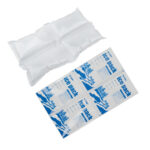
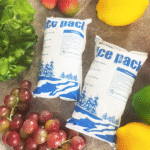
Refrigerated bag packaging does not perform alone. The bag slows heat gain, but the coolant absorbs the incoming heat. That is why the same bag can perform well in one program and badly in another. Gel packs may be enough for short chilled routes. Phase change materials can make sense when you need a tighter temperature window.
The key is consistency. Pre-condition coolant the same way, place it the same way, and avoid direct product contact where freezing is a risk. EU GDP guidance specifically notes that cool packs in insulated boxes should not directly contact product if freezing is a concern. Even if your application is food rather than pharma, that is smart design logic. (Saúde pública)
What proof should a serious buyer request?
Ask for evidence tied to a defined pack-out. ISTA says Standard 20 provides a design and qualification path for insulated shipping containers, and Standard 7E uses thermal profiles derived from real transport data. You may not need full formal certification for every food-delivery bag, but you do need discipline: defined payload, defined coolant mass, defined ambient exposure, and recorded results. (Associação Internacional de Transporte Seguro)
If food can touch the inside surface, request food-contact information early. FDA explains that packaging and its components can be food contact substances, while EU plastic food-contact rules set migration limits for relevant materials. That means the inner layer, adhesive system, and print placement should be reviewed before purchase, not after launch. (NÓS. Food and Drug Administration)
For temperature-controlled food transport, NÓS. sanitary transport rules also require that refrigerated compartments be adequately prepared and pre-cooled when needed. So refrigerated bag packaging should be part of a full cold-chain process, not a substitute for weak vehicle discipline. (regulamentos federais eletrônicos)
How is the market changing in 2026?
The cold-chain packaging market is growing quickly. Grand View Research estimated it at USD 33.73 bilhão em 2025 and projected continued strong growth through 2033, while other market sources also show significant expansion. This growth is one reason buyers now expect more from refrigerated bag packaging: peso mais leve, stronger proof, easier reuse, and better operational control. (Grand View Research)
Ao mesmo tempo, sustainability pressure is becoming real procurement pressure. Regulamento (UE) 2025/40 entered into force in February 2025 and aims to reduce unnecessary packaging while promoting reuse, refill, and recycling across the packaging life cycle. For refrigerated bag packaging, that means leaner sizing, clearer material logic, and reusable designs only where the return model truly works. (EUR-Lex)
A practical buying checklist for refrigerated bag packaging
- Define product temperature limits.
- Map the worst realistic route.
- Choose two or three candidate sizes.
- Match coolant type and mass to route exposure.
- Review seam strength, handle load, and closure design.
- Request route-based thermal testing.
- Check food-contact or regulated-use documentation where needed.
- Pilot with real operators before scaling.
- Decide whether reuse is operationally realistic.
- Measure performance after launch and improve the pack-out.
Perguntas frequentes
What is the biggest buying mistake in refrigerated bag packaging?
Choosing by price only. A cheap bag that fails on route can cost far more in product loss and complaints.
Should I use one universal bag size?
Geralmente não. Two or three route-fit sizes are often better than one oversized design.
Is reusable refrigerated bag packaging always the right choice?
Não. It works only when return, limpeza, inspeção, and ownership are controlled.
How do I improve performance without changing materials?
Tighten sizing, reduzir o espaço vazio, standardize coolant placement, and train packers on one pack-out method.
Resumo e conselhos
The best refrigerated bag packaging is not the thickest or the cheapest. It is the design that protects your product, fits your route, packs quickly, and scales with consistent quality. Start with route data, then choose the simplest structure that still gives you the thermal margin you need.
Sobre Tempk
E tempk, we focus on practical cold-chain packaging decisions that hold up in daily operations. We help buyers connect route risk, escolha de materiais, testing logic, and sourcing quality so refrigerated bag packaging performs in the field, not only in a sample room.