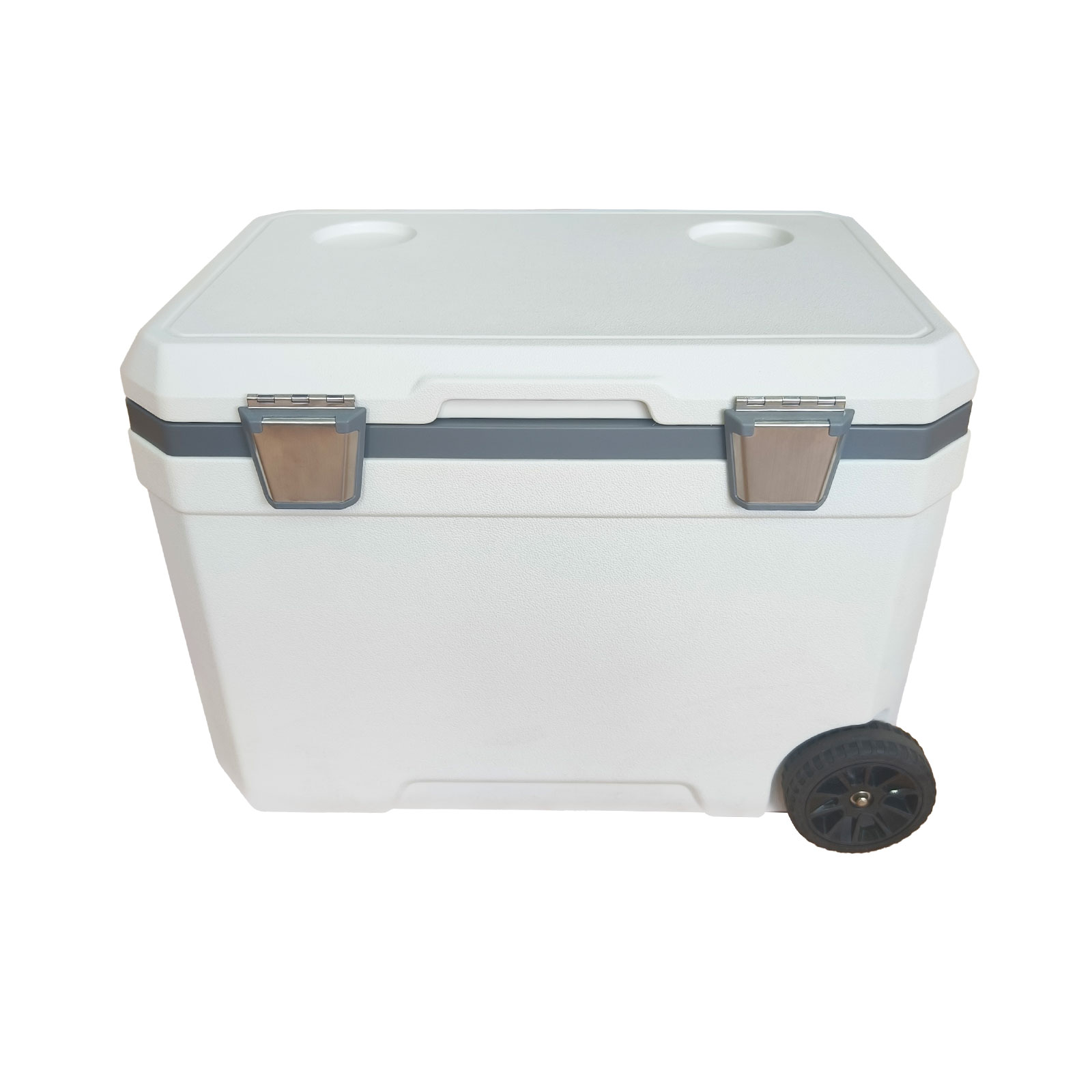
EPP Foam Box Food Delivery matters most when you need one pack to protect product, keep handling simple, and stay practical over repeated turns. Em abril 2026, buyers compare far more than piece price. They look at route fit, eficiência de retorno, esforço de limpeza, and whether the pack keeps working after real handling. Polipropileno expandido, or EPP, works because the foam is light yet springy. You get insulation and shock absorption from the material itself instead of relying only on outer mass. That combination is especially useful across meal dispatch, short urban routes, and rider handoff, where small handling problems quickly become recurring cost.
O que este guia irá ajudá-lo a resolver
- Why EPP Foam Box Food Delivery is winning more reusable cold chain projects in 2026
- Which design choices protect product, simplificar o manuseio, and improve empty-return efficiency
- How to validate temperature, impacto, higiene, conformidade, and supplier reliability before launch
- What a practical buying roadmap looks like when you balance cost, desempenho, and repeat-use value
Why Is EPP Foam Box Food Delivery Winning More Reusable Cold Chain Projects?
EPP Foam Box Food Delivery is winning more projects because buyers now expect one pack to do several jobs well: protect product, stay easy to handle, and create a credible reuse model. Em 2026, teams are much less impressed by packaging that looks technical but creates extra labor. They want a solution that keeps temperature-sensitive goods secure, moves smoothly through daily work, and comes back for the next turn without becoming a burden.
EPP fits that demand because the foam is light, resiliente, and naturally insulating. It can support product care, operator comfort, and cleaner return logistics in one format when the design is chosen carefully. The strongest buying decisions happen when procurement, operações, and technical teams all evaluate the same route instead of reviewing the box from separate disconnected angles.
What is the real value beyond the product photo?
The real value is operating smoothness. A good box reduces awkward lifting, stacks with less drama, and keeps its closure and shape more predictably over repeated use. Those quiet gains matter because they show up every day. When a box supports meal dispatch, short urban routes, and rider handoff without adding new friction, it becomes easier to justify, mais fácil de escalar, and easier for staff to keep using correctly.
| <forte>Project driver</forte> | <forte>What buyers want</forte> | <forte>Why EPP can help</forte> | <forte>What you should verify</forte> |
| Project driver | What buyers want | Why EPP can help | What you should verify |
| Proteção | stable thermal and shock control | cushioning plus insulation in one material | validação baseada em rota |
| Trabalho | simple carrying and closure | low tare weight and ergonomic design | operator trial feedback |
| Reutilizar | credible return value | durable molded structure | recovery and replacement plan |
Practical project-start tips
- Traga compras, operações, and quality into the same sample review so the decision reflects the real route.
- Judge the box by the hardest repeated moment of the route, not by the easiest warehouse condition.
- Ask whether the box still feels easy after repeated use, because long-term adoption matters as much as first impression.
Caso em questão: A company comparing reusable thermal formats found that the winning option was not the most complex design. It was the one that delivered the best combination of product protection, manuseio limpo, and empty-return discipline during the pilot.
The best reusable packaging decision usually feels practical from several angles at once.
Which Design Details Separate a Good EPP Foam Box Food Delivery from a Costly Mistake?
The design details that separate a strong choice from a costly mistake are usually the details buyers cannot afford to ignore: wall balance, corner support, ajuste da tampa, ergonomic grip, and how the pack recovers from routine abuse. These points decide whether the box remains helpful after weeks of real use or gradually becomes frustrating.
If your keyword highlights features such as support stable food quality from packout to doorstep, make sure those selling points survive contact with reality. A collapsible body should still feel solid when open. A premium high-density part should not become needlessly heavy. A portable or handled design should feel natural in one-person use. Good design turns features into repeatable performance rather than into new failure points.
How should you compare competing samples?
Compare them under the same payload, same packout, same route exposure, and same user tasks. Watch what happens at the lid seat, at the corners, and in the hands of the operator. A sample that looks excellent on a bench but awkward on a live route rarely becomes a better box later. That is why practical comparison beats catalog comparison every time.
| <forte>Design detail</forte> | <forte>Por que isso importa</forte> | <forte>Bom sinal</forte> | <forte>What goes wrong when it is weak</forte> |
| Design detail | Por que isso importa | Bom sinal | What goes wrong when it is weak |
| Wall and ribs | control load path | stable stacking feel | wobble and early deformation |
| Tampa e fecho | protect thermal consistency | repetível, confident shut | gaps and user hesitation |
| Ergonomia | shape daily adoption | easy carry and opening motion | lento, awkward handling |
Practical design-comparison tips
- Review used samples, not only fresh samples, because wear exposes which details are truly doing the work.
- Ask operators to rank ease of carrying, abertura, empilhamento, and empty return separately rather than giving one vague opinion.
- Do not let a single headline feature distract you from the overall balance of the design.
Caso em questão: During one pilot, the team initially preferred the flashier concept with more visible features. After repeated loading and unloading, a simpler design with better closure behavior and cleaner stacking became the clear winner.
A feature only adds value when it still feels useful on the tenth day, not only on the first viewing.
How Should You Validate Temperature, Manuseio, e Conformidade?
The strongest validation plan combines route definition, handling simulation, and market-relevant documentation. Where food-contact rules matter, buyers often ask for support aligned with FDA 21 Cfr 177.1520 nos EUA. and EU 10/2011 na Europa. For transport and thermal performance, teams frequently organize testing logic around ASTM D4169, ISTA 7E, and their own actual route profile.
Start by defining the real route: duração, exposição ambiental, contagem de transferências, padrão de empilhamento, filled mass, and the full packout system including inserts or coolants. WHO guidance on time- and temperature-sensitive transport is useful here because it reinforces a basic truth: you qualify a distribution solution against the conditions it will actually see. That principle keeps testing focused and keeps paperwork tied to the intended use.
What does a practical validation checklist look like?
A practical checklist covers three things. Primeiro, the intended market and whether food-contact declarations or migration support are needed. Segundo, the route abuse profile, including drops, compressão, vibração, and thermal exposure. Terceiro, the adoption profile: limpeza, return handling, and whether users can follow the standard work without confusion. When these three layers are aligned, validation becomes both more rigorous and more useful.
| <forte>Validation layer</forte> | <forte>O que definir</forte> | <forte>Useful references</forte> | <forte>Decision benefit</forte> |
| Validation layer | O que definir | Useful references | Decision benefit |
| Conformidade | market and contact condition | FDA 21 Cfr 177.1520 / UE 10/2011 | cleaner approval path |
| Transport abuse | derrubar, pilha, vibração | ASTM D4169 | more realistic durability review |
| Thermal exposure | hot/cold profile and packout | ISTA 7E / route mapping | stronger temperature confidence |
Dicas práticas de validação
- Write pass/fail rules before the pilot begins so the evaluation stays objective.
- Test the complete packaging system, not only the empty shell, because payload arrangement often changes the result.
- Keep the document request tied to the intended market and use case so the project does not drown in irrelevant paperwork.
Caso em questão: A project team avoided unnecessary delays by building one route-based validation plan instead of separate disconnected tests for handling, temperatura, e conformidade. The combined plan gave faster answers and a clearer approval decision.
Validation works best when every test answers a real route question.
How Do You Build a Reliable Supplier and Reuse Program?
A reliable program depends on both the box and the partner behind it. You need a supplier that can hold dimensions, communicate design changes, replace damaged units sensibly, and keep repeat orders aligned with the approved sample. You also need your own operation to manage return, limpeza, inspeção, and redeployment with discipline.
Many reusable programs stumble because each side assumes the other will solve the operational detail later. The supplier expects the customer to manage recovery. The customer expects the supplier to solve every field issue. The stronger model is to define the handoff clearly: who controls drawings, who signs off changes, how damaged units are handled, and how the box returns to service.
Which supplier questions matter most before launch?
Ask about molding repeatability, pontos de inspeção, Tempos de entrega, controle de revisão, spare-part or replacement policy, and whether the supplier can support both pilot and scale-up. If your program crosses markets, ask how documentation is maintained when regulations or declarations change. And always ask how the supplier would respond if the pilot shows a small design issue, because that answer often reveals the real quality of the partnership.
| <forte>Program element</forte> | <forte>Por que isso importa</forte> | <forte>Bom sinal</forte> | <forte>What weakens the program</forte> |
| Program element | Por que isso importa | Bom sinal | What weakens the program |
| Controle de revisão | protects approved design | documented change process | informal updates |
| Service support | keeps reuse loop stable | clear response path | unclear responsibility |
| Scale-up discipline | aligns pilot and production | controlled repeatability | sample-to-production drift |
Practical rollout tips
- Treat rollout as a joint operating system, not only a purchase order.
- Document return, inspeção, and replacement rules before the first large shipment leaves the site.
- Choose suppliers who explain process clearly, because clarity usually predicts smoother scale-up.
Caso em questão: One reusable program launched smoothly because the buyer and supplier defined responsibilities early, including sample sign-off, replacement logic, and how feedback from the route would trigger changes. That simple discipline prevented confusion later.
Reusable packaging works best when the supplier process is almost as reliable as the box itself.
O que 2026 Trends Should Guide Your Next Purchase Decision?
O maior 2026 trend is that buyers want packaging programs with evidence behind them. They want route-fit proof, linguagem de sustentabilidade mais limpa, and documentation that matches the market they sell into. They also want solutions that support staff productivity, because labor and service quality are now part of the packaging decision.
This trend is reinforced by regulation and by market pressure. A PPWR da UE entrou em vigor em fevereiro 2025 e geralmente se aplica a partir de agosto 2026, pushing more attention toward reuse and packaging data. Ao mesmo tempo, food and cold-chain operators are under pressure to reduce waste without slowing delivery. Para você, the practical result is clear: buy the box that best fits the route, as pessoas, and the reuse system, then prove that fit with sensible validation.
How should you turn these trends into action?
Use a buying scorecard built around route fit, operator adoption, testing evidence, e confiabilidade do fornecedor. That simple framework is usually enough to cut through marketing language and show which option truly fits your project. When market expectations rise, disciplined buying becomes a competitive advantage.
| <forte>2026 tendência</forte> | <forte>O que isso significa</forte> | <forte>Opportunity for you</forte> | <forte>Ação agora</forte> |
| 2026 tendência | O que isso significa | Opportunity for you | Ação agora |
| More proof-based buying | claims need support | better supplier comparisons | use a route-based scorecard |
| More focus on reuse | turns and recovery matter | stronger long-term value | define return rules early |
| More compliance attention | documents travel with product | fewer approval surprises | request market-relevant files |
Practical next-step tips
- Refresh your approval criteria before the next RFQ so new suppliers are compared on the same basis.
- Tie sustainability claims to measurable program design, such as return control and expected service life.
- Keep the final choice simple: select the option that most reliably solves the route you actually run.
Caso em questão: A buyer shortened selection time by replacing a long feature checklist with a short 2026 scorecard covering route fit, modelo de reutilização, suporte de conformidade, and operator feedback. The new method made the final decision faster and easier to defend.
O 2026 market rewards packaging that can explain itself in practical terms.
2026 Latest Developments and Buying Signals
The latest development in 2026 is not a single new material trick. It is a tougher, more practical buying mindset. Teams are connecting performance, trabalho, conformidade, and sustainability into one decision. That shift is reinforced by Google-style people-first content expectations for product communication, by route-based testing expectations in packaging projects, and by packaging regulation pressure such as the EU PPWR timeline.
Últimos desenvolvimentos de vista
- The best-performing suppliers explain where a design fits best instead of making one-size-fits-all claims.
- Buyers are increasingly using short scorecards tied to route fit, validação, and repeatability of supply.
- Reusable packaging decisions are moving closer to total operating value and documented proof.
Do ponto de vista do mercado, clarity is becoming a competitive edge. Buyers value packaging that is easy to compare, easy to validate, and easy to deploy at scale. That favors solutions with disciplined design, honest positioning, and practical support after purchase.
Perguntas frequentes
Is EPP foam box food delivery good for reusable cold chain transport?
Sim, when the design matches your payload, rota, e padrão de manuseio. A good EPP foam box food delivery can combine insulation, amortecimento, and repeat-use value, but you should still validate it with the actual packout and route conditions you plan to run.
What should I compare first when buying EPP foam box food delivery?
Start with route fit, loaded handling, lid repeatability, e suporte ao fornecedor. Those basics tell you more than a catalog photo because they show whether the box will stay practical after repeated turns.
Does every EPP foam box food delivery automatically meet food-contact rules?
Não. If food contact matters, ask for market-relevant documentation and confirm the intended use. Em muitos projetos, buyers request support aligned with FDA 21 Cfr 177.1520 nos EUA. or EU 10/2011 in Europe where applicable.
How do I know whether a reusable EPP box is worth the extra upfront cost?
Look at the full program, not only the purchase price. Count turns, replacement risk, tempo de trabalho, eficiência de retorno vazio, and how often the box prevents damage or service disruption. Reusables pay off when the route and recovery loop are controlled.
Is EPP foam box food delivery suitable for food delivery routes?
Muitas vezes sim, especially when the route needs temperature stability, quick handoff, and a presentable reusable format. You still need to confirm cleaning logic, ajuste de carga útil, and the real exposure time between packout and delivery.
How often should I replace or review EPP foam box food delivery units?
There is no universal number because service life depends on density, manuseio, limpeza, e abuso de rota. Review condition regularly, track common damage points, and set simple removal rules so worn boxes do not stay in service too long.
Resumo e conselhos
EPP Foam Box Food Delivery is most valuable when it balances protection, facilidade de manuseio, and repeat-use discipline. The best choice comes from matching the design to your route, produto, and people; checking the right technical and compliance evidence; and selecting a supplier that can keep the program stable after launch. Em 2026, that practical buying approach matters more than ever.
Comece com uma rota, one real payload, and one clear approval checklist. Compare samples under the same conditions, document what users notice, and then scale only after the box proves itself in daily work. If you want a faster decision, build a short scorecard around route fit, validação, lógica de reutilização, e confiabilidade do fornecedor.
Sobre Tempk
E tempk, we focus on cold chain packaging that is built for real movement, not only for catalog specifications. Our reusable EPP solutions are designed around route fit, conforto de manuseio, desempenho de isolamento, and repeat-use value so you can move from sample review to pilot and scale-up with fewer surprises. We work from the practical questions buyers care about most: what needs protection, how the box will be handled, how the return loop will function, and which proof points are needed before launch. We aim to keep the conversation factual, prático, and centered on what your operation truly needs.
Talk with Tempk about your route, carga útil, rotina de limpeza, and reuse targets so the next sample you test is closer to the right answer and easier to approve with confidence.