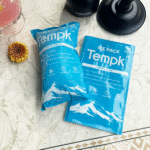
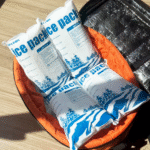
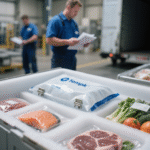
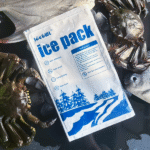
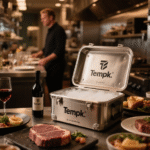
insulated bag B2B Thailand can solve more than one problem at once when you specify it well. It can protect temperature, improve handling speed, support your brand, e ajuste 2026 expectations around cleaner documentation and smarter waste reduction. The strongest version is not the cheapest, thickest, or most heavily marketed one. It is the one aligned with your route, carga útil, user behavior, capacidade do fornecedor, and compliance market.
O que este artigo irá ajudá-lo a responder
• how to define a high-performing insulated bag B2B Thailand for your exact lane and audience
• which material, encerramento, tamanho, and branding choices create the best balance of performance and cost
• how to compare supplier quality, compliance records, and claim credibility with less guesswork
• qual 2026 market and sustainability shifts should change the way you write your next RFQ
What defines a high-performing Insulated Bag B2B Thailand in 2026?
A high-performing insulated bag B2B Thailand is one that works under your real operating conditions and can still be explained clearly to procurement, qualidade, e equipes comerciais. That means the product must protect temperature, stay usable in daily handling, and support credible claims around materials and sustainability. Performance in 2026 is operational, técnico, and commercial at the same time.
Start with the three questions that matter most. What are you moving? How long is the route or holding window? Who actually uses the bag? Once those answers are clear, you can translate them into size, isolamento, forro, encerramento, marca, and document requirements. Tailândia's ETDA reported the country's e-commerce value reaching 5.96 trillion baht in 2023, while B2C represented more than half of total e-commerce value, showing how important reliable last-mile packaging has become. Tailândia's BOI continues to promote smart and sustainable industry upgrades and highlights bioplastics and broader BCG investment opportunities, which matters if you want local manufacturing with a stronger sustainability story. That gives insulated bag B2B Thailand a stronger business case in Thailand, especially for buyers who want regional supply, private-label control, and more sustainable material options. When the product brief answers those realities early, sampling improves and internal approval gets much easier.
Quick self-check before you write the RFQ
If the route is short but visibility matters, prioritize shape, print finish, e facilidade de uso. If the route is long or variable, prioritize thermal validation, closure discipline, and payload fit. If the bag is reused daily, cleaning and durability move to the front of the spec. If export or food-contact rules matter, documentation must be planned from the start. This simple self-check prevents vague briefs and expensive revisions.
| If Your Priority Is | You Should Focus On | Erro comum | O que isso significa para você |
| Thermal consistency | Route-fit insulation, qualidade de fechamento, and realistic validation | Buying on wall thickness alone | You protect product quality with fewer assumptions |
| Operações rápidas | Opening size, estabilidade, loading flow, e fácil limpeza | Ignoring how staff actually handle the bag | You save labor and reduce misuse |
| Brand impact | Print method, colocação do painel, and surface durability | Oversized graphics on unstable materials | Your branding stays cleaner and more premium |
| Sustainability credibility | Reuse logic, simpler structure, or validated recycled content | Making claims the user cannot actually follow | You build a story buyers can trust |
Dicas práticas
• Turn one real operating lane into the reference scenario for supplier comparison.
• Write the approval questions before you request the quotation.
• Use the first brief to align procurement, qualidade, and marketing rather than fixing disagreements after sampling.
Exemplo prático: The projects that move fastest are usually the ones where the buyer defines the operating reality first and lets the product specification follow that reality.
Which material and structure choices matter most?
A escolha do material é importante, but structure matters just as much. The outer layer, tipo de isolamento, forro, encerramento, and base all interact. A strong material stack can underperform if the bag is the wrong size, the closure leaks, or the bag collapses in normal use. That is why the best specification looks at the full build rather than one hero material.
For most projects, laminated nonwoven PP or polyester outer fabric, EPE or XPE foam insulation, a wipe-clean foil or PEVA lining, alças reforçadas, and a closure that matches route time is a workable starting point. De lá, adjust the structure based on route length, reuse rate, and presentation goals. Closed-cell insulation often helps because it resists moisture and recovers shape better. A cleaner liner helps daily hygiene and odor control. A stronger base reduces sagging, which improves carrying comfort and helps the bag keep its intended internal air pattern. These details are easy to overlook and very expensive to fix later.
How do you balance performance, imprimir, and everyday handling?
The best balance comes from choosing the fewest features that reliably solve the job. Even in operational buying, branding still matters. Clear logos, route labels, or store identity can improve handoff confidence and reuse visibility when they are built into the spec from the start. If you need logos, route codes, or private-label marks, confirm the print method, color system, and carton labeling before you release the order. If the product is meant to be reused, the surface should still look acceptable after moisture, rubbing, and repeated carrying. In practical buying, durable presentation is part of value, not just decoration.
| Part | Common Options | O que isso muda | O que isso significa para você |
| Tecido externo | Nonwoven PP, poliéster, or RPET | Durabilidade, look, and print quality | Your outer layer should match how often the bag is reused |
| Núcleo de isolamento | EPE, XPE, PPE, or fiber layers | Tempo de espera, bag stiffness, e custo | Insulation type matters more than thickness alone |
| Forro interno | Frustrar, HOJE, or easy-clean film | Cleaning ease and moisture handling | A better liner reduces odor and service friction |
| Closure and base | Zíper, aba, hard base, or fold top | Heat leakage and carry stability | A poor closure can waste a good insulation budget |
Dicas práticas
• Choose a bag size around the most common order, not the most extreme one.
• Validate the chosen print method on the exact surface finish you plan to mass produce.
• Review closure feel with gloved hands or wet hands if that matches the use environment.
Exemplo prático: Um mais apertado, more disciplined build often outperforms a feature-heavy design because the user can operate it correctly every single time.
How do you compare supplier quality, conformidade, e marca?
A good supplier does three things well: they explain the structure clearly, they support claims with evidence, and they keep production repeatable. That combination matters more than a perfect first sample without a stable system behind it. Em 2026, supplier quality is judged by communication discipline as much as by the finished item.
Quando você compara fornecedores, ask for one common quotation structure, one common sample brief, and one common document list. Updated European food-contact guidance in 2026 repeats a simple rule: packaging must not release substances that endanger health or change the food's taste, cheiro, or composition. BRCGS Packaging Materials is now in Issue 7 and remains a widely recognized benchmark for quality assurance and legal compliance across the packaging supply chain. ASTM D3103 remains a useful reference point because it evaluates thermal insulation performance under changing ambient conditions rather than relying on a single static claim. Tomados em conjunto, these signals push buyers toward evidence-based specifications instead of vague marketing language. Then check how each supplier handles questions about lead time risk, production tolerance, print control, carton packing, and revision history. A future-safe supplier is not just manufacturing a bag; they are managing repeatability across orders.
What should your approval package contain?
Your approval package should include the specification sheet, artwork record, sample approval notes, test references, and the key declarations that match the intended market and use. If the product supports a branded program, add print placement standards and acceptable appearance notes. If the product supports daily operations, include durability checkpoints and cleaning expectations. This package becomes the memory of the project and the safeguard for future reorders.
| Document or Standard | Por que isso importa | When to Ask For It | O que isso significa para você |
| Declaração de contato com alimentos | Confirms material suitability for the intended food-side use | Any time the liner may touch unpackaged food or food-contact surfaces | You reduce regulatory and brand risk |
| BRCGS or equivalent packaging controls | Shows organized quality and legal compliance systems | When you need stronger supplier governance | You get more confidence in recurring orders |
| Test method reference | Connects claims to a recognized procedure | When a supplier talks about thermal or transport performance | You compare like with like |
| Chemical compliance statement | Covers market-specific restricted substance expectations | When exporting into stricter markets | You avoid late-stage approval problems |
Dicas práticas
• Do not approve mass production from a hand-made look sample if the construction will change on the line.
• Store approved color references, medições, and critical quality notes in one version-controlled file.
• Treat supplier transparency during revisions as a buying advantage, not an inconvenience.
Exemplo prático: Strong approval files reduce friction later because everyone can return to one agreed standard when questions appear during reorder or scale-up.
How can you lower total cost without cutting performance?
The biggest cost wins usually come from smarter design and fewer mistakes, not from the smallest unit price. You lower total cost by rightsizing the product, preventing failures, simplifying pack-out, and making reorders easier to repeat. That is a better savings path than stripping the spec until the bag starts creating complaints.
Rightsizing reduces unused air space, improves payload stability, and often cuts material use. Better closure control reduces temperature loss and user error. A cleaner RFQ shortens sample loops and avoids expensive last-minute changes. If the bag is reused, stronger seam and handle performance can lower replacement frequency enough to outweigh a slightly higher first cost. If the product is branded, better print durability can protect campaign value and reduce reject rates.
Which cost leaks are easiest to miss?
The easiest leaks to miss are slow packing, excess carton volume, weak closure quality, and poor reorder consistency. These problems rarely stand out on the first quote, but they show up later as labor drag, custo de reposição, shipping inefficiency, and quality disputes. A mature buying process tries to remove these hidden costs early. That is why mid-spec products with better process control often win commercially.
| Cost Lever | Como melhorá-lo | Hidden Risk if Ignored | O que isso significa para você |
| Tamanho da bolsa | Match the common payload more closely | Oversized bag wastes material and weakens thermal behavior | Better value and easier packing |
| Closure and opening | Escolha mais rápido, more repeatable access | Slow or incomplete closure causes heat loss and operator shortcuts | Fewer complaints and smoother training |
| Durabilidade | Strengthen known stress points | Cheap components drive replacement cost | Lower lifecycle spend |
| Documentação | Standardize artwork, teste, and carton records | Reorders drift away from the approved version | More stable supply at scale |
Dicas práticas
• Evaluate cost over the expected life or reorder cycle, not only at the first purchase moment.
• Ask how the bag will be packed into export cartons because carton efficiency changes freight cost quickly.
• Link any cost-down exercise to a fresh validation sample so savings do not quietly damage performance.
Exemplo prático: Many buyers find that one clean redesign of size, encerramento, and packing pattern creates more savings than repeated unit-price pressure on a weak specification.
Qual 2026 trends should change your next RFQ?
Your next RFQ should reflect the fact that the market now values proof, usabilidade, and claim discipline more than vague feature language. That means route-like testing, clearer food-contact thinking, better reuse logic, and more honest sustainability positioning. These trends are not abstract. They directly affect approval speed and buyer confidence.
O Regulamento de Embalagens e Resíduos de Embalagens da UE entrou em vigor em fevereiro 11, 2025 e geralmente se aplica a partir de agosto 12, 2026, pushing buyers toward lower waste, better recyclability, and cleaner material declarations. Tailândia's BOI continues to promote smart and sustainable industry upgrades and highlights bioplastics and broader BCG investment opportunities, which matters if you want local manufacturing with a stronger sustainability story. For Thai production, this creates room for RPET, biobased blends, and better waste-reduction design, but only when performance and export compliance still hold up. Ao mesmo tempo, buyers are paying closer attention to supplier governance and recognized packaging standards, because documentation quality now influences commercial trust. Route-fit proof is also becoming more common. Em vez de perguntar 'how many hours does it last,' stronger RFQs ask 'under which exact conditions does it pass?' That one change makes supplier comparison much stronger.
How should you update the RFQ for 2026?
Add four things if they are missing: a defined operating scenario, a named thermal or handling validation method, a short compliance checklist, and a primary sustainability story that matches reality. Se o projeto for de marca, add print durability expectations too. These updates make the RFQ feel more demanding, but they usually reduce confusion, improve samples, and shorten the path to a repeatable product.
| 2026 RFQ Upgrade | Why It Matters Now | What to Include | O que isso significa para você |
| Scenario definition | Generic briefs are failing more often | Carga útil, tempo de rota, faixa ambiente, and user pattern | Sharper supplier comparison |
| Validation logic | Os compradores querem provas, não slogans | Named thermal and handling checks | Claims become easier to trust |
| Compliance scope | Market expectations are tightening | Contato com alimentos, material, and claim documents | Fewer late approvals issues |
| Sustainability path | Policy and buyer pressure are increasing | Reutilizar, conteúdo reciclado, or disposal logic | More credible positioning |
Dicas práticas
• Use one primary operating scenario as the base case and keep edge cases separate.
• Let compliance and quality teams review the brief before sampling begins.
• Choose a sustainability story that your end user can actually follow in practice.
Exemplo prático: When teams modernize the RFQ itself, the whole development cycle often gets calmer because fewer assumptions survive into sampling and production.
2026 desenvolvimentos e tendências
O mais forte 2026 products sit where technical fit, buyer trust, and operational simplicity overlap. That is the standard your optimized insulated bag B2B Thailand brief should now target.
• Proof-based thermal claims are replacing broad, unqualified insulation language.
• Cleaner material stories and realistic reuse logic are becoming more commercially valuable than overloaded green messaging.
• Supplier repeatability, documentation discipline, and speed of correction are now major buying criteria.
If you build your next order around those three shifts, you will usually get a product that is easier to approve, mais fácil de operar, and easier to reorder.
Perguntas frequentes
What is the first thing to define for insulated bag B2B Thailand? Define the dominant operating scenario first: carga útil, tempo de rota, faixa ambiente, and who uses the product. Most later decisions depend on that one frame.
How should I choose between supplier quotes? Compare them against the same brief, sample logic, and document list. The quote becomes meaningful only when the assumptions are the same.
What makes a sustainability claim credible in 2026? A credible claim matches the real product structure and the real disposal or reuse path available to the user. Simpler and provable usually wins.
When does branding become a technical issue? As soon as decoration affects appearance after moisture, abrasão, dobrável, or repeated use. In real projects, print durability is part of quality.
What is the smartest next step before a bulk order? Approve a production-like sample using the real loading method and check it against the full brief: desempenho, usabilidade, imprimir, e documentação.
Resumo e recomendação
The optimized approach to insulated bag B2B Thailand is to align product design, lógica material, validação, supplier process, and market claims around one clear operating reality. That gives you a product that performs better, costs less over time, and stands up more confidently in 2026 buying conversations.
Turn your next brief into a working document with route data, material priorities, etapas de validação, compliance scope, and brand expectations. Ask for a Thailand-ready specification review, sample plan, and export documentation checklist.
Sobre Tempk
Tempk develops insulated packaging and carrying solutions with an emphasis on practical cold-chain performance, easier specification control, and more repeatable sourcing. We focus on the details that help buyers move from a generic product request to a commercial specification that works in the field.
Ask for a Thailand-ready specification review, sample plan, and export documentation checklist.