


VIP container for recyclable materials: o completo 2026 guia
VIP container for recyclable materials: o completo 2026 guia
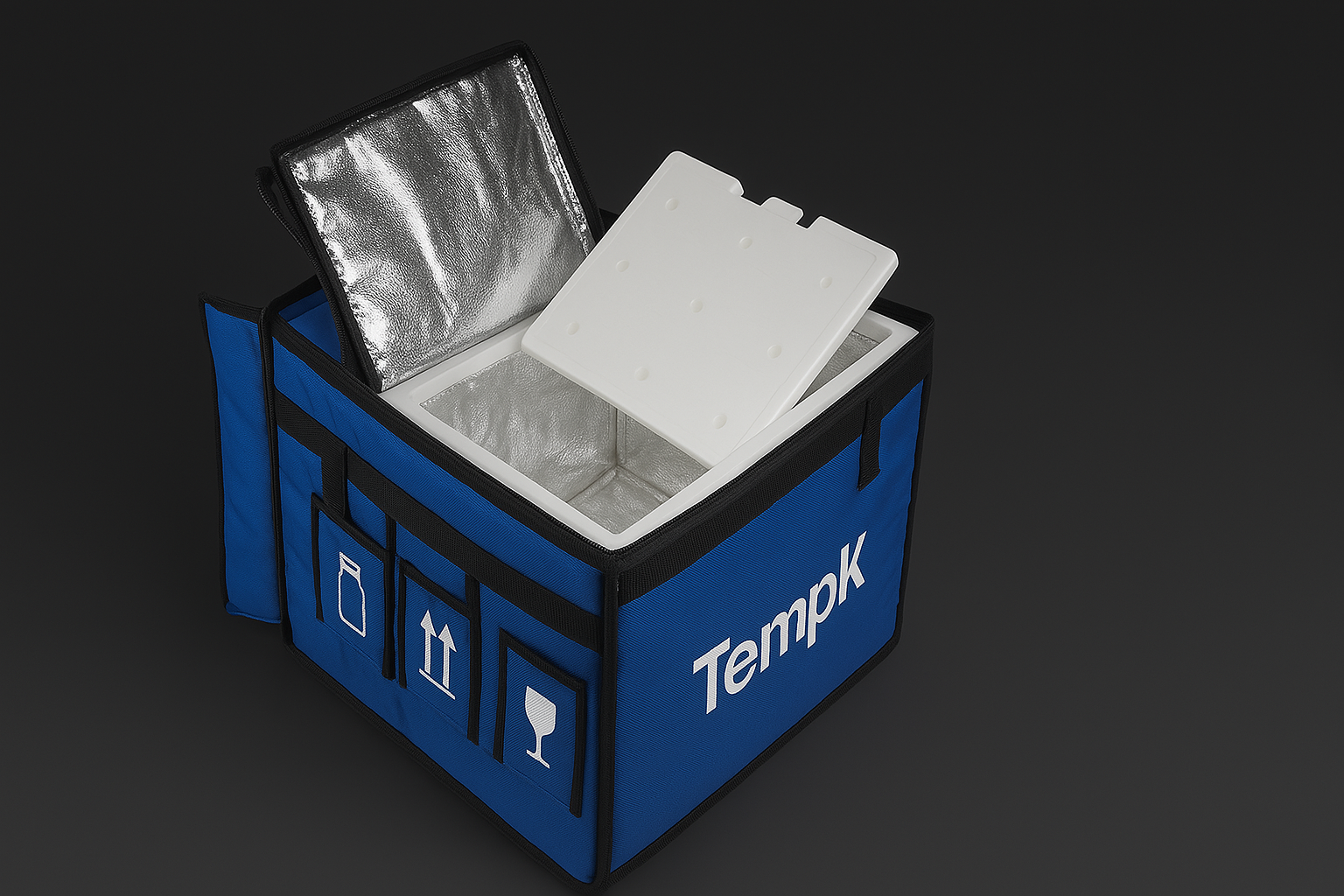
Vacuum panel container for recyclable materials is most useful when you treat it as a complete control system rather than a premium carton. Em abril 2026, the best-performing cold-chain teams use VIP insulation because it can create meaningful thermal margin in a compact format, but they only approve a design after it proves itself against product stability, variabilidade de rota, operator behavior, and receiving reality. That is the standard you should use as well.
This guide fuses buyer logic, engineering detail, and current market direction so you can decide when this packaging approach is worth it, how to qualify it, what evidence to request, and where reuse, returnability, Reciclabalidade, and digital visibility change the economics. O objetivo é simples: help you reduce product risk without paying for complexity that your lane does not need.
O que este guia o ajudará a responder
- How to decide whether vacuum panel container for recyclable materials is the right packaging strategy for your lane
- How to engineer a qualified packout using real stability limits and route data
- Which records, padrões, and logger evidence you should require before approval
- How to lower total landed cost while preserving product protection
- What current trends in traceability, reutilizar, and recyclability mean for your next packaging decision
What makes VIP container for recyclable materials the right fit for your lane?
The right reason to choose vacuum panel container for recyclable materials is not that it sounds advanced. The right reason is that your shipment needs more controllable thermal margin than ordinary insulation can provide, and you want that margin in a format your operators can actually pack, enviar, receber, and review consistently. When those conditions are true, a VIP-based design can protect temperature-sensitive food, life-science products, premium consumer goods, and mixed parcel programs with better resilience and less wasted space than many generic alternatives.
The wrong reason is simple branding logic. Premium insulation does not rescue a weak route map, vague work instructions, or poor receiving discipline. The shipper has to fit the product, a pista, the packaging form factor, and the quality process at the same time. This format is a panel-based container that balances stronger insulation with a more modular, systems-oriented packaging design. It usually wins when you need efficient insulation, cleaner modular upgrades, and a good platform for sustainability redesign. The main trade-off is that component separation and panel protection must be planned early. Na prática, it fits best for programs that need both performance and a pathway toward more circular packaging systems. Your first task is therefore to judge fit, not to assume superiority.
Product category changes the decision logic. Fresh produce cares about appearance and shelf life. Regulated healthcare cares about labeled temperature control and documented review. Reagents and biotech materials care about activity retention, cadeia de custódia, and rapid receiving decisions. Reusable and returnable programs care about inspection, recuperação, and total trips per asset. The best packaging choice reflects those priorities clearly.
Quick fit scorecard
Use the scorecard below to decide whether you truly need premium passive protection, what level of evidence you should require, and whether lifecycle features such as reuse or recyclability are likely to help your operation.
Scorecard for deciding whether the packaging strategy fits
| <forte>Lente de decisão</forte> | <forte>What strong fit looks like</forte> | <forte>What good teams do next</forte> | <forte>Por que isso importa para você</forte> |
| Risco do produto | The shipment contains high-value or quality-sensitive product | Use premium passive protection only where failure consequences justify it | You spend more where it matters and less where it does not |
| Lane severity | The route includes hand-offs, risco de atraso, or seasonal extremes | Qualify by real route family, not by average transit time | You buy performance that matches reality |
| Ajuste operacional | Operators can assemble and receivers can interpret the shipment consistently | Simplify packout, rótulos, and logger review rules | You reduce avoidable human error |
| Evidence quality | The supplier can show thermal, processo, and change-control records | Approve the system, not just the materials | You protect audits, desvios, and scaling |
| Lifecycle logic | Reutilizar, retornar, or recycling can be executed in normal operations | Model cost per trip and end-of-use before launch | You improve economics and sustainability together |
Practical actions before you request a quote
- Measure cost per completed trip, not cost per shipped unit. Recovery and refurbishment decide the real economics.
- Write inspection rules for shell damage, latch condition, panel edge protection, and coolant reset before you scale.
- Make return or disposal instructions obvious. Sustainability fails quickly when the receiver does not know the next step.
A sustainability-led redesign kept the thermal core but replaced mixed disposable accessories with more easily separated materials and clearer return instructions. Customers complained less about disposal, and procurement gained a better story without weakening delivery performance.
How do you engineer temperature protection that survives the real lane?
Engineering a shipment that survives the lane starts with a disciplined thermal model. Define the allowed product range, the realistic delay profile, a massa da carga útil, the weak points inside the pack, and the exact condition of the coolant at assembly. Then design the cavity so the product sits in a controlled thermal zone rather than in direct contact with the hottest or coldest surfaces. That is where real performance comes from.
The insulation layer is only one part of the answer. Recent literature still places healthy VIP conductivity in the super-insulation range, roughly around 0.003 para 0.006 S/m·K, but panel performance can drift if barrier films are damaged or if edges are not protected. In field conditions, your result is governed by the combination of panel health, layout do refrigerante, espaço vazio, operator consistency, and receiving speed.
For most non-food cold chains, the design objective is repeatable control. That means the packout should work in ordinary hands under ordinary time pressure. A slightly less aggressive design that is easier to execute can outperform a laboratory-optimized design that operators assemble inconsistently.
How should coolant, payload spacing, and hold time be sized?
Size them against the true worst-case route, not a convenient average. Keep the payload in the most stable internal zone, control direct contact with cold sources, and use seasonal logic when the route changes materially across the year. If your lane is highly variable, add margin through design rather than through last-minute improvisation.
What compliance evidence should you require before approving VIP container for recyclable materials?
Before approving vacuum panel container for recyclable materials, require evidence in three layers. Primeiro, require thermal evidence: test results or qualification summaries that resemble your lane and payload. Segundo, require process evidence: packout drawings, work instructions, coolant conditioning rules, and logger placement logic. Terceiro, require governance evidence: controle de mudanças, component traceability, and a clear rule for how live results are reviewed and dispositioned.
For broader cold-chain categories, the same principle holds. Evidence must link product needs, suposições de rota, and operator steps into one defensible file. If the supplier cannot explain how the design was challenged, assembled, monitorado, and revised when components change, the package is not ready for serious deployment.
Standards help give that evidence structure. ISTA now points buyers toward Standard 7E as the newer thermal transport framework for insulated shippers. WHO continues to emphasize temperature monitoring devices for international health-product shipping. GS1 sensor-event standards now make it easier to connect package condition with shipment history. None of these references replaces your product-specific logic, but together they raise the quality of the conversation.
Which records separate qualified suppliers from hopeful ones?
Qualified suppliers can show what was tested, como foi embalado, which components were used, what happens when those components change, and how receiving teams should review results. Hopeful suppliers usually return to generic hold-time language and vague marketing claims once you ask about change control or live-lane assumptions.
How do you reduce total cost without increasing deviation risk?
The fastest way to lower cost without raising risk is to remove wasteful mismatch. Oversized packs waste freight cube. Excess coolant adds weight and can increase freezing risk. Too many custom variants create training burden. Too few variants can push weak packouts onto difficult lanes. The commercial sweet spot is a small family of qualified solutions sized to real route families.
Use total landed cost rather than purchase price. Count product loss, deviation labor, reclamações de clientes, logística reversa, and operator time. Quando você faz isso, a better shipper often pays for itself not by being cheaper to buy, but by being cheaper to operate and easier to defend. That logic matters especially when shipment failures trigger regulatory review or service breakdown.
For reusable, retornável, or recyclable programs, choose the lifecycle model your network can actually run. Reuse wins when inspection and recovery are disciplined. Returnable assets win when cycle count and return speed are visible. Recyclable designs win when recipients are diverse and unlikely to send assets back. Sustainability becomes credible only when the operating model is credible.
When do reusable, retornável, or recyclable models win?
They win when the operating model supports them. Reuse needs predictable turns and inspections. Returnable assets need visibility and strong recovery. Recyclable designs need easy separation and clear instructions. Pick the lifecycle strategy that reduces waste without creating new quality or logistics problems.
O que 2026 trends should shape your next VIP container for recyclable materials decision?
Diversos 2026 trends should shape your next decision. Digital traceability is expanding, which means packaging needs to work with event data and not just with temperature chambers. Sensor support in GS1 EPCIS makes it easier to align location, atraso, and temperature information. FDA’s recent DSCSA guidance reinforces the value of package-level electronic information in eligible drug distribution. Ao mesmo tempo, WHO and IATA continue to keep temperature monitoring and disciplined air-cargo handling in focus.
Standards and policy are also pulling cold-chain packaging toward more transparent lifecycle choices. The EU Packaging and Packaging Waste Regulation entered into force in 2025 e geralmente se aplica a partir de agosto 2026, which raises the pressure for transport packaging that is more recyclable, mais reutilizável, or at least easier to explain. Buyers increasingly ask not only whether the shipper works, but also how it will be returned, reparado, or separated at end of use.
The main market insight is that packaging is becoming more accountable. Buyers want fewer claims and more evidence, fewer variants and better training, stronger protection and less waste. The cold-chain solutions that will stand out are the ones that make those trade-offs easier, não é mais difícil.
Últimos desenvolvimentos de vista
- Route-specific qualification is replacing generic performance claims.
- Digital visibility is moving from simple logging toward connected event interpretation.
- Policy pressure is raising the value of recyclable, reutilizável, and easier-to-explain packaging systems.
- Training simplicity is becoming a major competitive advantage in cold-chain execution.
Perguntas frequentes
How do I know whether vacuum panel container for recyclable materials is the right fit for my shipment?
Check product consequence, gravidade da rota, operator capability, and the evidence your quality team will require. If failure is expensive and the route is variable, premium passive protection often makes sense. If the route is easy, simpler packaging may be sufficient.
What should I ask a supplier before approving a packout?
Ask for the qualification summary, packout drawing, instruções de condicionamento de refrigerante, plano de registrador, component specification, and change-control policy. If the design is reusable, also ask for inspection and retirement criteria.
How many packaging variants should a network usually keep?
As few as practical, but enough to match clearly different lane families. Too many variants create training problems. Too few force poor route fit. A small controlled family of approved packouts is usually the strongest model.
Is the newest standard or sensor technology enough to guarantee performance?
Não. Standards and sensors improve structure and visibility, but they do not replace route-specific design, disciplined assembly, or clear receiving rules. Strong execution still decides field success.
What is the biggest hidden reason cold-chain packages fail?
Em muitos programas, the hidden reason is operator variation rather than raw insulation weakness. The packout may look strong in the lab but fail in the field because assembly, encenação, or receipt behavior changes the thermal reality.
How should I think about reuse or recyclability for this packaging approach?
Treat lifecycle choice as an operating-model decision. Reuse needs recovery and inspection discipline. Recyclability needs simple material separation and clear instructions. Choose the model your network can actually support.
Resumo e recomendações
The best way to evaluate vacuum panel container for recyclable materials is to ask one question: does it make your real shipment easier to protect, mais fácil de operar, and easier to defend? When the answer is yes, VIP packaging can deliver strong value by adding thermal margin, improving evidence, and supporting smarter lifecycle choices. When the answer is no, premium insulation may only add cost.
Start with a lane-specific qualification plan, request evidence that matches your product and route, and build a small family of controlled packouts that your operators can execute consistently. Then choose reuse, returnability, or recyclability based on what your network can genuinely support. That is how you get the strongest result from cold-chain packaging in 2026.
Sobre Tempk
E tempk, we build cold-chain packaging around real operating conditions rather than generic catalog claims. Our focus is to combine strong thermal engineering with clear packout discipline, practical qualification support, and packaging options that are easier to deploy in daily operations. We work with teams that need dependable control for regulated, frágil, or high-value shipments without unnecessary complexity.
Talk with our team if you want help comparing routes, packout concepts, or reusable versus single-use options for your next cold-chain program.
VIP box for pharma cold chain: o completo 2026 guia

Vacuum insulation panel box for pharmaceutical cold chain solutions is most useful when you treat it as a complete control system rather than a premium carton. Em abril 2026, the best-performing cold-chain teams use VIP insulation because it can create meaningful thermal margin in a compact format, but they only approve a design after it proves itself against product stability, variabilidade de rota, operator behavior, and receiving reality. That is the standard you should use as well.
This guide fuses buyer logic, engineering detail, and current market direction so you can decide when this packaging approach is worth it, how to qualify it, what evidence to request, and where reuse, returnability, Reciclabalidade, and digital visibility change the economics. O objetivo é simples: help you reduce product risk without paying for complexity that your lane does not need.
O que este guia o ajudará a responder
- How to decide whether vacuum insulation panel box for pharmaceutical cold chain solutions is the right packaging strategy for your lane
- How to engineer a qualified packout using real stability limits and route data
- Which records, padrões, and logger evidence you should require before approval
- How to lower total landed cost while preserving product protection
- What current trends in traceability, reutilizar, and recyclability mean for your next packaging decision
What makes VIP box for pharma cold chain the right fit for your lane?
The right reason to choose vacuum insulation panel box for pharmaceutical cold chain solutions is not that it sounds advanced. The right reason is that your shipment needs more controllable thermal margin than ordinary insulation can provide, and you want that margin in a format your operators can actually pack, enviar, receber, and review consistently. When those conditions are true, a VIP-based design can protect vaccines, injetáveis, Biologics, trial kits, and temperature-sensitive finished dose products with better resilience and less wasted space than many generic alternatives.
The wrong reason is simple branding logic. Premium insulation does not rescue a weak route map, vague work instructions, or poor receiving discipline. The shipper has to fit the product, a pista, the packaging form factor, and the quality process at the same time. This format is a carton-based design that uses vacuum insulation panels to raise performance without making the packout overly bulky. It usually wins when you need good thermal performance in a familiar box format and efficient use of parcel cube. The main trade-off is that panel protection and edge durability need attention if operators handle the box roughly. Na prática, it fits best for qualified pharma or diagnostics shipments where size and performance both matter. Your first task is therefore to judge fit, not to assume superiority.
Product category changes the decision logic. Fresh produce cares about appearance and shelf life. Regulated healthcare cares about labeled temperature control and documented review. Reagents and biotech materials care about activity retention, cadeia de custódia, and rapid receiving decisions. Reusable and returnable programs care about inspection, recuperação, and total trips per asset. The best packaging choice reflects those priorities clearly.
Quick fit scorecard
Use the scorecard below to decide whether you truly need premium passive protection, what level of evidence you should require, and whether lifecycle features such as reuse or recyclability are likely to help your operation.
Scorecard for deciding whether the packaging strategy fits
| <forte>Lente de decisão</forte> | <forte>What strong fit looks like</forte> | <forte>What good teams do next</forte> | <forte>Por que isso importa para você</forte> |
| Risco do produto | The shipment contains high-value or quality-sensitive product | Use premium passive protection only where failure consequences justify it | You spend more where it matters and less where it does not |
| Lane severity | The route includes hand-offs, risco de atraso, or seasonal extremes | Qualify by real route family, not by average transit time | You buy performance that matches reality |
| Ajuste operacional | Operators can assemble and receivers can interpret the shipment consistently | Simplify packout, rótulos, and logger review rules | You reduce avoidable human error |
| Evidence quality | The supplier can show thermal, processo, and change-control records | Approve the system, not just the materials | You protect audits, desvios, and scaling |
| Lifecycle logic | Reutilizar, retornar, or recycling can be executed in normal operations | Model cost per trip and end-of-use before launch | You improve economics and sustainability together |
Practical actions before you request a quote
- Approve the packout against the product label, dados de estabilidade, and a realistic lane profile rather than against a brochure claim.
- Treat logger placement as part of qualification. A poorly placed logger can hide freezing or exaggerate warm exposure.
- Train operators on conditioning, assembly order, and release rules, then lock the configuration under change control.
A regional pharmaceutical network standardized one VIP design for qualified 2-8°C lanes and one for CRT lanes. That simplification reduced packing errors, sped up training, and made excursion investigations easier because every lane had a clear evidence package.
How do you engineer temperature protection that survives the real lane?
Engineering a shipment that survives the lane starts with a disciplined thermal model. Define the allowed product range, the realistic delay profile, a massa da carga útil, the weak points inside the pack, and the exact condition of the coolant at assembly. Then design the cavity so the product sits in a controlled thermal zone rather than in direct contact with the hottest or coldest surfaces. That is where real performance comes from.
The insulation layer is only one part of the answer. Recent literature still places healthy VIP conductivity in the super-insulation range, roughly around 0.003 para 0.006 S/m·K, but panel performance can drift if barrier films are damaged or if edges are not protected. In field conditions, your result is governed by the combination of panel health, layout do refrigerante, espaço vazio, operator consistency, and receiving speed.
For most non-food cold chains, the design objective is repeatable control. That means the packout should work in ordinary hands under ordinary time pressure. A slightly less aggressive design that is easier to execute can outperform a laboratory-optimized design that operators assemble inconsistently.
How should coolant, payload spacing, and hold time be sized?
Size them against the true worst-case route, not a convenient average. Keep the payload in the most stable internal zone, control direct contact with cold sources, and use seasonal logic when the route changes materially across the year. If your lane is highly variable, add margin through design rather than through last-minute improvisation.
What compliance evidence should you require before approving VIP box for pharma cold chain?
Before approving vacuum insulation panel box for pharmaceutical cold chain solutions, require evidence in three layers. Primeiro, require thermal evidence: test results or qualification summaries that resemble your lane and payload. Segundo, require process evidence: packout drawings, work instructions, coolant conditioning rules, and logger placement logic. Terceiro, require governance evidence: controle de mudanças, component traceability, and a clear rule for how live results are reviewed and dispositioned.
For regulated pharmaceutical work, those layers should align with storage and distribution expectations under 21 Parte cfr 211, the route discipline expected under GDP, and air-freight temperature-control rules under IATA TCR where relevant. DSCSA’s push toward electronic tracing has also raised the value of packaging systems that create cleaner package-level evidence. Compliance is no longer just about a stable temperature. It is also about traceable execution.
Standards help give that evidence structure. ISTA now points buyers toward Standard 7E as the newer thermal transport framework for insulated shippers. WHO continues to emphasize temperature monitoring devices for international health-product shipping. GS1 sensor-event standards now make it easier to connect package condition with shipment history. None of these references replaces your product-specific logic, but together they raise the quality of the conversation.
Which records separate qualified suppliers from hopeful ones?
Qualified suppliers can show what was tested, como foi embalado, which components were used, what happens when those components change, and how receiving teams should review results. Hopeful suppliers usually return to generic hold-time language and vague marketing claims once you ask about change control or live-lane assumptions.
How do you reduce total cost without increasing deviation risk?
The fastest way to lower cost without raising risk is to remove wasteful mismatch. Oversized packs waste freight cube. Excess coolant adds weight and can increase freezing risk. Too many custom variants create training burden. Too few variants can push weak packouts onto difficult lanes. The commercial sweet spot is a small family of qualified solutions sized to real route families.
Use total landed cost rather than purchase price. Count product loss, deviation labor, reclamações de clientes, logística reversa, and operator time. Quando você faz isso, a better shipper often pays for itself not by being cheaper to buy, but by being cheaper to operate and easier to defend. That logic matters especially when shipment failures trigger regulatory review or service breakdown.
For most other cold-chain categories, the right balance is to right-size first, then decide whether reuse or improved recyclability adds value on top. EU policy pressure toward more recyclable and reusable packaging is real, but the best business result still comes from choosing a model that operations can execute without confusion.
When do reusable, retornável, or recyclable models win?
They win when the operating model supports them. Reuse needs predictable turns and inspections. Returnable assets need visibility and strong recovery. Recyclable designs need easy separation and clear instructions. Pick the lifecycle strategy that reduces waste without creating new quality or logistics problems.
O que 2026 trends should shape your next VIP box for pharma cold chain decision?
Diversos 2026 trends should shape your next decision. Digital traceability is expanding, which means packaging needs to work with event data and not just with temperature chambers. Sensor support in GS1 EPCIS makes it easier to align location, atraso, and temperature information. FDA’s recent DSCSA guidance reinforces the value of package-level electronic information in eligible drug distribution. Ao mesmo tempo, WHO and IATA continue to keep temperature monitoring and disciplined air-cargo handling in focus.
Standards and policy are also pulling cold-chain packaging toward more transparent lifecycle choices. The EU Packaging and Packaging Waste Regulation entered into force in 2025 e geralmente se aplica a partir de agosto 2026, which raises the pressure for transport packaging that is more recyclable, mais reutilizável, or at least easier to explain. Buyers increasingly ask not only whether the shipper works, but also how it will be returned, reparado, or separated at end of use.
The main market insight is that packaging is becoming more accountable. Buyers want fewer claims and more evidence, fewer variants and better training, stronger protection and less waste. The cold-chain solutions that will stand out are the ones that make those trade-offs easier, não é mais difícil.
Últimos desenvolvimentos de vista
- Route-specific qualification is replacing generic performance claims.
- Digital visibility is moving from simple logging toward connected event interpretation.
- Policy pressure is raising the value of recyclable, reutilizável, and easier-to-explain packaging systems.
- Training simplicity is becoming a major competitive advantage in cold-chain execution.
- Package-level traceability expectations are making clean documentation more valuable at the packaging level.
Perguntas frequentes
How do I know whether vacuum insulation panel box for pharmaceutical cold chain solutions is the right fit for my shipment?
Check product consequence, gravidade da rota, operator capability, and the evidence your quality team will require. If failure is expensive and the route is variable, premium passive protection often makes sense. If the route is easy, simpler packaging may be sufficient.
What should I ask a supplier before approving a packout?
Ask for the qualification summary, packout drawing, instruções de condicionamento de refrigerante, plano de registrador, component specification, and change-control policy. If the design is reusable, also ask for inspection and retirement criteria.
How many packaging variants should a network usually keep?
As few as practical, but enough to match clearly different lane families. Too many variants create training problems. Too few force poor route fit. A small controlled family of approved packouts is usually the strongest model.
Is the newest standard or sensor technology enough to guarantee performance?
Não. Standards and sensors improve structure and visibility, but they do not replace route-specific design, disciplined assembly, or clear receiving rules. Strong execution still decides field success.
What is the biggest hidden reason cold-chain packages fail?
Em muitos programas, the hidden reason is operator variation rather than raw insulation weakness. The packout may look strong in the lab but fail in the field because assembly, encenação, or receipt behavior changes the thermal reality.
How should I think about reuse or recyclability for this packaging approach?
Treat lifecycle choice as an operating-model decision. Reuse needs recovery and inspection discipline. Recyclability needs simple material separation and clear instructions. Choose the model your network can actually support.
Resumo e recomendações
The best way to evaluate vacuum insulation panel box for pharmaceutical cold chain solutions is to ask one question: does it make your real shipment easier to protect, mais fácil de operar, and easier to defend? When the answer is yes, VIP packaging can deliver strong value by adding thermal margin, improving evidence, and supporting smarter lifecycle choices. When the answer is no, premium insulation may only add cost.
Start with a lane-specific qualification plan, request evidence that matches your product and route, and build a small family of controlled packouts that your operators can execute consistently. Then choose reuse, returnability, or recyclability based on what your network can genuinely support. That is how you get the strongest result from cold-chain packaging in 2026.
Sobre Tempk
E tempk, we build cold-chain packaging around real operating conditions rather than generic catalog claims. Our focus is to combine strong thermal engineering with clear packout discipline, practical qualification support, and packaging options that are easier to deploy in daily operations. We work with teams that need dependable control for regulated, frágil, or high-value shipments without unnecessary complexity.
Talk with our team if you want help comparing routes, packout concepts, or reusable versus single-use options for your next cold-chain program.
Vacuum Insulated Panel Container for Sustainable Cold Chain Packaging: O 2026 Guia prático
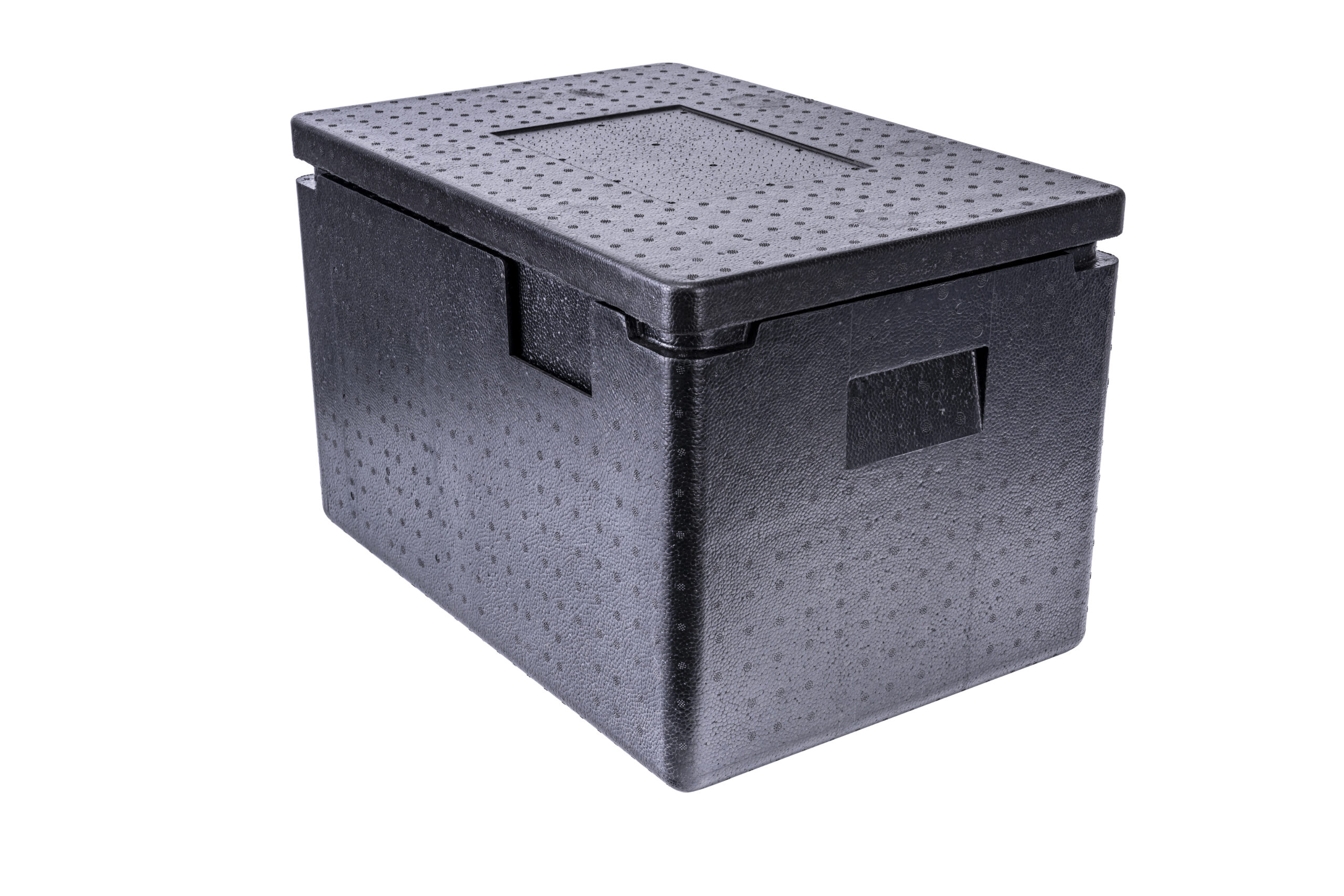
vacuum insulated panel container for sustainable cold chain packaging is the right choice when you need a passive shipper that combines high insulation, controle prático de embalagem, and documentation-friendly performance. Em 2026, essa combinação é mais importante do que nunca. Cold-chain networks are moving more biologics, Diagnóstico, and specialty products through smaller parcels, more outsourced routes, and more final-mile handoffs. Buyers therefore need packaging that protects the product and simplifies decision making at the same time.
A strong VIP-based design can do exactly that. Fresh vacuum insulated panels can deliver thermal conductivity in the low 0.002 para 0.004 W/m-K range, while many common foams are roughly an order of magnitude higher. That insulation density can translate into smaller outer dimensions, better payload space, and more controlled thermal performance when the route is demanding. But the best result comes only when insulation, refrigerante, payload configuration, monitoramento, and route qualification are treated as one system. That is the mindset behind this optimized guide.
Este guia irá ajudá-lo a responder
- Why VIP Panel Container for Sustainable Cold Chain matters in sustainable cold chain packaging and when it clearly outperforms simpler formats
- How VIP insulation, escolha de refrigerante, and payload mass work together
- How to choose the right hold time, load range, and logger strategy
- Which standards and quality rules matter most for qualification and scale-up
- O que 2026 trends in market growth, sustentabilidade, and digital monitoring mean for your purchase
Why does Vacuum Insulated Panel Container for Sustainable Cold Chain Packaging matter to your shipment?
The purpose of the package is not to look advanced. It is to protect the product zone through the real shipment journey. In sustainable cold chain packaging, the shipment may encounter ambient swings, lidar com abuso, tempo de espera, or receiving delays. the greenest-looking box is not sustainable if it causes product loss or needs excessive refrigerant; single-use waste, peso dimensional, and reverse logistics all affect the real footprint; and many teams discuss circularity before they standardize cleaning, retornar, and refurbishment steps. A package that manages those stresses well protects product quality, reduz o desperdício, and shortens the time quality teams spend explaining avoidable deviations.
This is why buyers increasingly choose VIP Panel Container for Sustainable Cold Chain when the route becomes more critical. They are often looking for very high insulation can reduce box size and refrigerant mass, VIP-based reusable shells can spread embodied impact over many trips, and right-sized designs can lower freight cube and disposal volume at the same time. Those gains can improve both technical performance and business performance. Less outer cube can help freight efficiency. More payload room can help shipping economics. Better thermal control can reduce the chance that one delayed shipment becomes a product complaint or a write-off.
How does Vacuum Insulated Panel Container for Sustainable Cold Chain Packaging work, and when does it beat conventional foam?
The core advantage is thermal efficiency per unit of wall thickness. Fresh vacuum insulated panels can deliver thermal conductivity in the low 0.002 para 0.004 W/m-K range, while many common foams are roughly an order of magnitude higher. That means a VIP-based shipper can often deliver the same or better protection in a smaller geometry than a basic foam design. The practical outcome is not just better insulation on paper. It is more freedom to design a package that fits real parcel, correio, or depot workflows without becoming oversized and awkward to use.
Mesmo assim, VIP does not eliminate the need for good design. Performance still depends on panel protection, seam management, fechamento da tampa, colocação de refrigerante, and the thermal mass of the payload. Buyers should therefore compare complete systems, not only insulation materials. Ask how the package behaves when partly full, when the route is delayed, when ambient conditions change, and when the box is opened at the receiving site. Those are the moments that separate a credible packaging system from a simple specification sheet.
A practical comparison table for VIP Panel Container for Sustainable Cold Chain
| <forte>Ponto de decisão</forte> | <forte>O que verificar</forte> | <forte>Boa resposta</forte> | <forte>Por que isso importa</forte> |
| Alvo de temperatura | label range and stability limit | qualified around the real product zone | wrong target means the best insulation still fails |
| Perfil de rota | exposição ambiental, risco de atraso, e transferências | summer and winter logic defined | route reality drives hold-time need |
| Tamanho da carga útil | minimum and maximum thermal mass | qualified for both small and full loads | payload changes package behavior |
| Plano de monitoramento | logger type and location | calibrated device in the product zone | data becomes useful during release and CAPA |
| Modelo de reutilização | return and cleaning control | clear inspection and records | reuse only works when the process is controlled |
How should you select hold time, tamanho da carga útil, and coolant for Vacuum Insulated Panel Container for Sustainable Cold Chain Packaging?
Begin with the labeled product range. Then define the real shipment profile: normal transit time, likely delay time, minimum payload, maximum payload, and destination readiness. A package should be qualified for the conditions you will actually face, not just for an ideal shipping window. WHO guidance is explicit on this point: Anexo da OMS 9 says insulated passive containers should be qualified with full assembly details, thermal conditioning rules, and minimum and maximum shipping volume, peso, and thermal mass. That is a reminder that route profile and payload range belong inside the package decision from the beginning.
Coolant selection comes next. Reusable pcm packs can be good for simpler chilled lanes, single-use gel packs are usually stronger when you need a defined temperature plateau, and dry ice only makes sense when the product truly needs that deeper level of cold. Good engineering avoids overcooling just as carefully as overheating. The best packout maintains the product zone predictably instead of simply creating the coldest internal environment possible.
| <forte>Refrigerante</forte> | <forte>Onde cabe</forte> | <forte>Atenção principal</forte> | <forte>O que isso significa para você</forte> |
| pacotes PCM reutilizáveis | repeat chilled lanes | good circular potential if conditioning and return are controlled | Choose tighter control |
| single-use gel packs | simpler outbound programs | fácil de implantar, but often weaker on waste reduction | Choose only when product really needs deeper freezing |
| gelo seco | frozen/ULT niche lanes | eficaz, but less aligned with simple circularity goals | Choose only when product really needs deeper freezing |
How do you qualify Vacuum Insulated Panel Container for Sustainable Cold Chain Packaging for compliant, repeatable shipping?
Qualification should be treated as a system exercise. EU GDP says temperature conditions must be maintained within acceptable limits during transport, the route should be risk assessed, and transport monitoring equipment should be maintained and calibrated at regular intervals at least once a year. EU GDP also expects initial temperature mapping before use and placement of monitors where the greatest fluctuations occur. WHO also says transport routes should be profiled and qualified against the anticipated ambient conditions over the journey. Junto, those expectations tell you what regulators and quality teams care about: correct temperature, documented route thinking, monitored evidence, and clear response if an excursion occurs. A good package helps because it supports all those needs with a repeatable assembly process and a defensible monitoring plan.
Em termos práticos, the qualification package should define preload conditions, assembly sequence, condicionamento de refrigerante, faixa de carga útil, localização do registrador, suposições de rota, Critérios de aceitação, and seasonal variants if they exist. It should also be easy for operators to follow. Many packaging failures are not caused by bad materials. They are caused by small but repeatable errors in assembly, such as wrong coolant conditioning, the wrong payload fill, or a logger pushed into the wrong position. A controlled SOP is therefore part of package performance.
A repeatable qualification workflow
- Lock the product-zone target and the acceptable excursion logic.
- Profile or simulate the route, including delays and seasonal exposure.
- Test minimum and maximum loads with the real payload packaging format.
- Fix coolant conditioning, assembly order, and logger placement in writing.
- Review results against the product zone and investigate any edge-zone anomalies.
- Requalify after major changes in route, carga útil, component, or supplier.
What does the ideal packout look like for sustainable cold chain packaging?
The ideal packout is not the most elaborate one. It is the one that operators can build correctly every time and that recipients can understand immediately. In sustainable cold chain packaging, that usually means the package clearly separates the product zone from the coolant, protects the most temperature-sensitive items from direct contact with extreme cold, reserves a defined space for the logger, and includes simple handling instructions for the receiving side. If a package is hard to build, hard to inspect, or hard to receive, it becomes harder to trust at scale.
A good packout also reflects the specific application. Sustainable cold chain packaging starts with product protection, then moves to system design. A vacuum insulated panel container can help because high insulation often means less refrigerant, less outer volume, and more room for durable reuse models. But the sustainability win only becomes real when you also control return rate, limpeza, e tratamento em fim de vida. That application lens matters because the same package architecture is not ideal for every lane. A direct-to-patient box, a GDP wholesale shipper, a diagnostic kit shipper, and a cryogenic transport system all need different trade-offs. The best suppliers will talk through those trade-offs openly and show why a certain configuration fits your use case instead of pushing one generic design for everything.
| <em>Exemplo aplicado: A healthcare distributor moved one high-volume regional lane to a reusable VIP shipper program with return inspection and pack refurbishment. Waste at the destination dropped sharply, while freight efficiency improved because the qualified package carried the same payload in a more compact footprint than the earlier foam design.</em> |
O que fazer 2026 mercado, sustentabilidade, and monitoring trends mean for Vacuum Insulated Panel Container for Sustainable Cold Chain Packaging?
The broader market continues to support higher-performance cold-chain packaging. Public market research in 2025 e 2026 continues to show strong growth in pharmaceutical cold chain packaging as biologics, vacinas, and specialty medicines expand. The broader temperature-controlled packaging sector is also expanding, helped by direct-to-patient delivery, healthcare e-commerce, e pressão de sustentabilidade. That growth is being shaped by more complex therapies, greater reliance on small shipments, and stronger expectations for documented performance. Buyers increasingly want packaging that can stand up to both operational stress and quality review. In this environment, higher insulation is valuable because it creates flexibility without immediately forcing a move to active systems.
Sustainability is adding another layer to the decision. O Regulamento de Embalagens e Resíduos de Embalagens da UE entrou em vigor em 11 Fevereiro 2025, generally applies from 12 Agosto 2026, and pushes the market toward recyclability and circular design. A strong VIP package can contribute because it often reduces freight cube and can support durable reuse models. But the 2026 standard is higher than a recycled-content claim. Buyers now ask how the packaging will be recovered, limpo, inspecionado, and eventually recycled or refurbished. Digital monitoring is also becoming more central. A package that makes logger use easy and consistent can reduce investigation time and improve release confidence.
2026 instantâneo de tendência
- EU PPWR readiness and recyclability pressure.
- More LCA-driven packaging comparisons instead of material-only claims.
- Greater interest in modular VIP systems with refurbishable outer shells.
Perguntas frequentes
How long can a vacuum insulated panel container hold temperature in sustainable cold chain packaging?
It depends on the qualified design, o refrigerante, the payload thermal mass, and the actual route profile. Treat hold time as a validated system result, not a catalog headline. Para pistas regulamentadas, qualify summer and winter packouts separately and define minimum and maximum payload sizes before commercial use.
Is VIP Panel Container for Sustainable Cold Chain better than a conventional foam shipper?
For many lanes, yes-especially when you need strong thermal performance in a smaller footprint. Fresh vacuum insulated panels can deliver thermal conductivity in the low 0.002 para 0.004 W/m-K range, while many common foams are roughly an order of magnitude higher. The practical benefit is that you can often gain payload room, reduce refrigerant, or extend hold time. But the advantage only counts if the complete packout is qualified for your shipment.
When should you use PCM instead of dry ice with VIP Panel Container for Sustainable Cold Chain?
Use PCM when you need a defined target range such as 2 to 8°C or controlled room temperature and want steadier product-zone conditions. Use dry ice only when the product stability profile truly calls for deep-frozen or ultra-cold transport. For freeze-sensitive payloads, PCM is usually the safer and more precise choice.
Do you need a data logger in every sustainable cold chain packaging shipment?
Not every lane has the same risk, but monitored shipments are strongly recommended whenever the payload is high value, the route is new, or compliance evidence matters. CDC recommends digital data loggers for vaccine storage and handling, set to record at least every 30 minutos. For GDP and validation work, a calibrated logger turns a package from a promise into documented proof.
Can VIP Panel Container for Sustainable Cold Chain be reused?
Muitas vezes sim, if the design is built for repeat trips and you can control inspection, limpeza, reforma, e logística de retorno. WHO guidance also expects reusable shipping containers to be cleaned and records maintained. Reuse is only a real advantage when the operating process is as disciplined as the packaging design.
How do you qualify VIP Panel Container for Sustainable Cold Chain before launch?
Start with the product’s allowed temperature range and stability limits. Then qualify the packout against the real route, perfil ambiente, minimum and maximum payload, and likely handling pattern. Anexo da OMS 9 says insulated passive containers should be qualified with full assembly details, thermal conditioning rules, and minimum and maximum shipping volume, peso, and thermal mass. Finalmente, lock the winning configuration into a written SOP so operators build it the same way every time.
Resumo e recomendação
The strongest reason to choose VIP Panel Container for Sustainable Cold Chain is that it can deliver concentrated thermal performance in a package format that still supports operational simplicity. That matters because modern cold-chain shipping is no longer defined by temperature alone. You also need lane realism, repeatable packout logic, usable monitoring data, and a package that fits your receiving workflow. When those factors align, a VIP-based system can protect product value while improving the overall shipping process.
The best next step is to compare candidate systems using your real route, your actual payload range, and your chosen logger method. Look at temperature results, operator usability, receiving-site ease, peso dimensional, and documentation quality together. The winner should not only keep the shipment safe. It should also make your cold chain easier to run, mais fácil de escalar, and easier to defend.
Sobre Tempk
Tempk develops passive cold-chain packaging with a focus on high-efficiency insulation, practical packout design, and real-world qualification logic. We aim to connect materials, monitoramento, and route reality in one clear system so customers can choose packaging with confidence instead of guesswork. That approach is especially useful when shipment value, quality requirements, and service complexity are all high.
If you want a package decision that holds up in operations and in quality review, comece com a rota, the product zone, and the packout discipline. Uma vez que isso esteja claro, the right thermal packaging format becomes much easier to identify and much easier to justify.
Caixa isolada a vácuo para entrega na última milha: O 2026 Guia prático
vacuum insulated box for last mile delivery is the right choice when you need a passive shipper that combines high insulation, controle prático de embalagem, and documentation-friendly performance. Em 2026, essa combinação é mais importante do que nunca. Cold-chain networks are moving more biologics, Diagnóstico, and specialty products through smaller parcels, more outsourced routes, and more final-mile handoffs. Buyers therefore need packaging that protects the product and simplifies decision making at the same time.
A strong VIP-based design can do exactly that. Fresh vacuum insulated panels can deliver thermal conductivity in the low 0.002 para 0.004 W/m-K range, while many common foams are roughly an order of magnitude higher. That insulation density can translate into smaller outer dimensions, better payload space, and more controlled thermal performance when the route is demanding. But the best result comes only when insulation, refrigerante, payload configuration, monitoramento, and route qualification are treated as one system. That is the mindset behind this optimized guide.
Este guia irá ajudá-lo a responder
- Why Vacuum Insulated Box for Last-Mile Delivery matters in last mile delivery and when it clearly outperforms simpler formats
- How VIP insulation, escolha de refrigerante, and payload mass work together
- How to choose the right hold time, load range, and logger strategy
- Which standards and quality rules matter most for qualification and scale-up
- O que 2026 trends in market growth, sustentabilidade, and digital monitoring mean for your purchase
Why does Vacuum Insulated Box for Last Mile Delivery matter to your shipment?
The purpose of the package is not to look advanced. It is to protect the product zone through the real shipment journey. In last mile delivery, the shipment may encounter ambient swings, lidar com abuso, tempo de espera, or receiving delays. failed deliveries and apartment access delays extend exposure beyond the planned route; small payloads can be overwhelmed by oversized boxes and heavy coolant; and the final handoff often happens without a trained cold-chain technician on site. A package that manages those stresses well protects product quality, reduz o desperdício, and shortens the time quality teams spend explaining avoidable deviations.
This is why buyers increasingly choose Vacuum Insulated Box for Last-Mile Delivery when the route becomes more critical. They are often looking for compact thermal protection that suits urban parcel handling, better payload-to-box ratio for home delivery, and passive operation with less complexity than powered last-mile assets. Those gains can improve both technical performance and business performance. Less outer cube can help freight efficiency. More payload room can help shipping economics. Better thermal control can reduce the chance that one delayed shipment becomes a product complaint or a write-off.
How does Vacuum Insulated Box for Last Mile Delivery work, and when does it beat conventional foam?
The core advantage is thermal efficiency per unit of wall thickness. Fresh vacuum insulated panels can deliver thermal conductivity in the low 0.002 para 0.004 W/m-K range, while many common foams are roughly an order of magnitude higher. That means a VIP-based shipper can often deliver the same or better protection in a smaller geometry than a basic foam design. The practical outcome is not just better insulation on paper. It is more freedom to design a package that fits real parcel, correio, or depot workflows without becoming oversized and awkward to use.
Mesmo assim, VIP does not eliminate the need for good design. Performance still depends on panel protection, seam management, fechamento da tampa, colocação de refrigerante, and the thermal mass of the payload. Buyers should therefore compare complete systems, not only insulation materials. Ask how the package behaves when partly full, when the route is delayed, when ambient conditions change, and when the box is opened at the receiving site. Those are the moments that separate a credible packaging system from a simple specification sheet.
A practical comparison table for Vacuum Insulated Box for Last-Mile Delivery
| <forte>Ponto de decisão</forte> | <forte>O que verificar</forte> | <forte>Boa resposta</forte> | <forte>Por que isso importa</forte> |
| Alvo de temperatura | label range and stability limit | qualified around the real product zone | wrong target means the best insulation still fails |
| Perfil de rota | exposição ambiental, risco de atraso, e transferências | summer and winter logic defined | route reality drives hold-time need |
| Tamanho da carga útil | minimum and maximum thermal mass | qualified for both small and full loads | payload changes package behavior |
| Plano de monitoramento | logger type and location | calibrated device in the product zone | data becomes useful during release and CAPA |
How should you select hold time, tamanho da carga útil, and coolant for Vacuum Insulated Box for Last Mile Delivery?
Begin with the labeled product range. Then define the real shipment profile: normal transit time, likely delay time, minimum payload, maximum payload, and destination readiness. A package should be qualified for the conditions you will actually face, not just for an ideal shipping window. WHO guidance is explicit on this point: Anexo da OMS 9 says insulated passive containers should be qualified with full assembly details, thermal conditioning rules, and minimum and maximum shipping volume, peso, and thermal mass. That is a reminder that route profile and payload range belong inside the package decision from the beginning.
Coolant selection comes next. Gel packs can be good for simpler chilled lanes, PCM packs are usually stronger when you need a defined temperature plateau, and dry ice only makes sense when the product truly needs that deeper level of cold. Good engineering avoids overcooling just as carefully as overheating. The best packout maintains the product zone predictably instead of simply creating the coldest internal environment possible.
| <forte>Refrigerante</forte> | <forte>Onde cabe</forte> | <forte>Atenção principal</forte> | <forte>O que isso significa para você</forte> |
| pacotes de gel | short chilled home-delivery routes | fácil de obter, but can underperform in porch dwell | Choose simplicity |
| Pacotes PCM | mais preciso 2 to 8°C or CRT delivery | better target control, but need strict conditioning | Choose tighter control |
| gelo seco | special frozen payloads | usually too complex for routine last-mile unless product truly needs it | Choose only when product really needs deeper freezing |
How do you qualify Vacuum Insulated Box for Last Mile Delivery for compliant, repeatable shipping?
Qualification should be treated as a system exercise. EU GDP says temperature conditions must be maintained within acceptable limits during transport, the route should be risk assessed, and transport monitoring equipment should be maintained and calibrated at regular intervals at least once a year. EU GDP also expects initial temperature mapping before use and placement of monitors where the greatest fluctuations occur. WHO also says transport routes should be profiled and qualified against the anticipated ambient conditions over the journey. Junto, those expectations tell you what regulators and quality teams care about: correct temperature, documented route thinking, monitored evidence, and clear response if an excursion occurs. A good package helps because it supports all those needs with a repeatable assembly process and a defensible monitoring plan.
Em termos práticos, the qualification package should define preload conditions, assembly sequence, condicionamento de refrigerante, faixa de carga útil, localização do registrador, suposições de rota, Critérios de aceitação, and seasonal variants if they exist. It should also be easy for operators to follow. Many packaging failures are not caused by bad materials. They are caused by small but repeatable errors in assembly, such as wrong coolant conditioning, the wrong payload fill, or a logger pushed into the wrong position. A controlled SOP is therefore part of package performance.
A repeatable qualification workflow
- Lock the product-zone target and the acceptable excursion logic.
- Profile or simulate the route, including delays and seasonal exposure.
- Test minimum and maximum loads with the real payload packaging format.
- Fix coolant conditioning, assembly order, and logger placement in writing.
- Review results against the product zone and investigate any edge-zone anomalies.
- Requalify after major changes in route, carga útil, component, or supplier.
What does the ideal packout look like for last mile delivery?
The ideal packout is not the most elaborate one. It is the one that operators can build correctly every time and that recipients can understand immediately. In last mile delivery, that usually means the package clearly separates the product zone from the coolant, protects the most temperature-sensitive items from direct contact with extreme cold, reserves a defined space for the logger, and includes simple handling instructions for the receiving side. If a package is hard to build, hard to inspect, or hard to receive, it becomes harder to trust at scale.
A good packout also reflects the specific application. Last mile is less about theoretical hold time and more about how the package behaves when a courier waits at a building entrance, a parcel sits in a van, or a recipient misses the first attempt. Compactar, route-matched VIP packaging is often a better answer than simply adding more coolant. That application lens matters because the same package architecture is not ideal for every lane. A direct-to-patient box, a GDP wholesale shipper, a diagnostic kit shipper, and a cryogenic transport system all need different trade-offs. The best suppliers will talk through those trade-offs openly and show why a certain configuration fits your use case instead of pushing one generic design for everything.
| <em>Exemplo aplicado: A specialty pharmacy serving urban patients moved from bulky foam shippers to a lighter vacuum insulated box built around the real delivery window. Couriers handled the packs more easily, doorstep dwell risk dropped, and patients found the instructions clearer because the packout was simpler and the logger pouch was easier to read.</em> |
O que fazer 2026 mercado, sustentabilidade, and monitoring trends mean for Vacuum Insulated Box for Last Mile Delivery?
The broader market continues to support higher-performance cold-chain packaging. Public market research in 2025 e 2026 continues to show strong growth in pharmaceutical cold chain packaging as biologics, vacinas, and specialty medicines expand. The broader temperature-controlled packaging sector is also expanding, helped by direct-to-patient delivery, healthcare e-commerce, e pressão de sustentabilidade. That growth is being shaped by more complex therapies, greater reliance on small shipments, and stronger expectations for documented performance. Buyers increasingly want packaging that can stand up to both operational stress and quality review. In this environment, higher insulation is valuable because it creates flexibility without immediately forcing a move to active systems.
Sustainability is adding another layer to the decision. O Regulamento de Embalagens e Resíduos de Embalagens da UE entrou em vigor em 11 Fevereiro 2025, generally applies from 12 Agosto 2026, and pushes the market toward recyclability and circular design. A strong VIP package can contribute because it often reduces freight cube and can support durable reuse models. But the 2026 standard is higher than a recycled-content claim. Buyers now ask how the packaging will be recovered, limpo, inspecionado, and eventually recycled or refurbished. Digital monitoring is also becoming more central. A package that makes logger use easy and consistent can reduce investigation time and improve release confidence.
2026 instantâneo de tendência
- Growth in direct-to-patient distribution.
- Greater use of parcel-profile thermal qualification.
- Stronger interest in reusable urban shipper programs with reverse logistics.
Perguntas frequentes
How long can a vacuum insulated box hold temperature in last mile delivery?
It depends on the qualified design, o refrigerante, the payload thermal mass, and the actual route profile. Treat hold time as a validated system result, not a catalog headline. Para pistas regulamentadas, qualify summer and winter packouts separately and define minimum and maximum payload sizes before commercial use.
Is Vacuum Insulated Box for Last-Mile Delivery better than a conventional foam shipper?
For many lanes, yes-especially when you need strong thermal performance in a smaller footprint. Fresh vacuum insulated panels can deliver thermal conductivity in the low 0.002 para 0.004 W/m-K range, while many common foams are roughly an order of magnitude higher. The practical benefit is that you can often gain payload room, reduce refrigerant, or extend hold time. But the advantage only counts if the complete packout is qualified for your shipment.
When should you use PCM instead of dry ice with Vacuum Insulated Box for Last-Mile Delivery?
Use PCM when you need a defined target range such as 2 to 8°C or controlled room temperature and want steadier product-zone conditions. Use dry ice only when the product stability profile truly calls for deep-frozen or ultra-cold transport. For freeze-sensitive payloads, PCM is usually the safer and more precise choice.
Do you need a data logger in every last mile delivery shipment?
Not every lane has the same risk, but monitored shipments are strongly recommended whenever the payload is high value, the route is new, or compliance evidence matters. CDC recommends digital data loggers for vaccine storage and handling, set to record at least every 30 minutos. For GDP and validation work, a calibrated logger turns a package from a promise into documented proof.
Can Vacuum Insulated Box for Last-Mile Delivery be reused?
Muitas vezes sim, if the design is built for repeat trips and you can control inspection, limpeza, reforma, e logística de retorno. WHO guidance also expects reusable shipping containers to be cleaned and records maintained. Reuse is only a real advantage when the operating process is as disciplined as the packaging design.
How do you qualify Vacuum Insulated Box for Last-Mile Delivery before launch?
Start with the product’s allowed temperature range and stability limits. Then qualify the packout against the real route, perfil ambiente, minimum and maximum payload, and likely handling pattern. Anexo da OMS 9 says insulated passive containers should be qualified with full assembly details, thermal conditioning rules, and minimum and maximum shipping volume, peso, and thermal mass. Finalmente, lock the winning configuration into a written SOP so operators build it the same way every time.
Resumo e recomendação
The strongest reason to choose Vacuum Insulated Box for Last-Mile Delivery is that it can deliver concentrated thermal performance in a package format that still supports operational simplicity. That matters because modern cold-chain shipping is no longer defined by temperature alone. You also need lane realism, repeatable packout logic, usable monitoring data, and a package that fits your receiving workflow. When those factors align, a VIP-based system can protect product value while improving the overall shipping process.
The best next step is to compare candidate systems using your real route, your actual payload range, and your chosen logger method. Look at temperature results, operator usability, receiving-site ease, peso dimensional, and documentation quality together. The winner should not only keep the shipment safe. It should also make your cold chain easier to run, mais fácil de escalar, and easier to defend.
Sobre Tempk
Tempk develops passive cold-chain packaging with a focus on high-efficiency insulation, practical packout design, and real-world qualification logic. We aim to connect materials, monitoramento, and route reality in one clear system so customers can choose packaging with confidence instead of guesswork. That approach is especially useful when shipment value, quality requirements, and service complexity are all high.
If you want a package decision that holds up in operations and in quality review, comece com a rota, the product zone, and the packout discipline. Uma vez que isso esteja claro, the right thermal packaging format becomes much easier to identify and much easier to justify.
Caixa isolada a vácuo para remessa compatível com GDP: O 2026 Guia prático
vacuum insulated box for GDP compliant shipping is the right choice when you need a passive shipper that combines high insulation, controle prático de embalagem, and documentation-friendly performance. Em 2026, essa combinação é mais importante do que nunca. Cold-chain networks are moving more biologics, Diagnóstico, and specialty products through smaller parcels, more outsourced routes, and more final-mile handoffs. Buyers therefore need packaging that protects the product and simplifies decision making at the same time.
A strong VIP-based design can do exactly that. Fresh vacuum insulated panels can deliver thermal conductivity in the low 0.002 para 0.004 W/m-K range, while many common foams are roughly an order of magnitude higher. That insulation density can translate into smaller outer dimensions, better payload space, and more controlled thermal performance when the route is demanding. But the best result comes only when insulation, refrigerante, payload configuration, monitoramento, and route qualification are treated as one system. That is the mindset behind this optimized guide.
Este guia irá ajudá-lo a responder
- Why Vacuum Insulated Box for GDP-Compliant Shipping matters in GDP compliant shipping and when it clearly outperforms simpler formats
- How VIP insulation, escolha de refrigerante, and payload mass work together
- How to choose the right hold time, load range, and logger strategy
- Which standards and quality rules matter most for qualification and scale-up
- O que 2026 trends in market growth, sustentabilidade, and digital monitoring mean for your purchase
Why does Vacuum Insulated Box for GDP Compliant Shipping matter to your shipment?
The purpose of the package is not to look advanced. It is to protect the product zone through the real shipment journey. In GDP compliant shipping, the shipment may encounter ambient swings, lidar com abuso, tempo de espera, or receiving delays. many shipments fail because the route changed, the season changed, or the payload size changed while the packout did not; GDP requires evidence that conditions stayed within limits, not just a supplier promise; and teams need packaging that fits SOPs, tratamento de desvios, and annual calibration programs. A package that manages those stresses well protects product quality, reduz o desperdício, and shortens the time quality teams spend explaining avoidable deviations.
This is why buyers increasingly choose Vacuum Insulated Box for GDP-Compliant Shipping when the route becomes more critical. They are often looking for strong passive protection that works with route-based risk assessment, clear packout configurations for seasonal control, and better support for reusable and monitored distribution systems. Those gains can improve both technical performance and business performance. Less outer cube can help freight efficiency. More payload room can help shipping economics. Better thermal control can reduce the chance that one delayed shipment becomes a product complaint or a write-off.
How does Vacuum Insulated Box for GDP Compliant Shipping work, and when does it beat conventional foam?
The core advantage is thermal efficiency per unit of wall thickness. Fresh vacuum insulated panels can deliver thermal conductivity in the low 0.002 para 0.004 W/m-K range, while many common foams are roughly an order of magnitude higher. That means a VIP-based shipper can often deliver the same or better protection in a smaller geometry than a basic foam design. The practical outcome is not just better insulation on paper. It is more freedom to design a package that fits real parcel, correio, or depot workflows without becoming oversized and awkward to use.
Mesmo assim, VIP does not eliminate the need for good design. Performance still depends on panel protection, seam management, fechamento da tampa, colocação de refrigerante, and the thermal mass of the payload. Buyers should therefore compare complete systems, not only insulation materials. Ask how the package behaves when partly full, when the route is delayed, when ambient conditions change, and when the box is opened at the receiving site. Those are the moments that separate a credible packaging system from a simple specification sheet.
A practical comparison table for Vacuum Insulated Box for GDP-Compliant Shipping
| <forte>Ponto de decisão</forte> | <forte>O que verificar</forte> | <forte>Boa resposta</forte> | <forte>Por que isso importa</forte> |
| Alvo de temperatura | label range and stability limit | qualified around the real product zone | wrong target means the best insulation still fails |
| Perfil de rota | exposição ambiental, risco de atraso, e transferências | summer and winter logic defined | route reality drives hold-time need |
| Tamanho da carga útil | minimum and maximum thermal mass | qualified for both small and full loads | payload changes package behavior |
| Plano de monitoramento | logger type and location | calibrated device in the product zone | data becomes useful during release and CAPA |
| Modelo de reutilização | return and cleaning control | clear inspection and records | reuse only works when the process is controlled |
How should you select hold time, tamanho da carga útil, and coolant for Vacuum Insulated Box for GDP Compliant Shipping?
Begin with the labeled product range. Then define the real shipment profile: normal transit time, likely delay time, minimum payload, maximum payload, and destination readiness. A package should be qualified for the conditions you will actually face, not just for an ideal shipping window. WHO guidance is explicit on this point: Anexo da OMS 9 says insulated passive containers should be qualified with full assembly details, thermal conditioning rules, and minimum and maximum shipping volume, peso, and thermal mass. That is a reminder that route profile and payload range belong inside the package decision from the beginning.
Coolant selection comes next. Gel packs can be good for simpler chilled lanes, PCM packs are usually stronger when you need a defined temperature plateau, and dry ice only makes sense when the product truly needs that deeper level of cold. Good engineering avoids overcooling just as carefully as overheating. The best packout maintains the product zone predictably instead of simply creating the coldest internal environment possible.
| <forte>Refrigerante</forte> | <forte>Onde cabe</forte> | <forte>Atenção principal</forte> | <forte>O que isso significa para você</forte> |
| pacotes de gel | basic chilled lanes | acceptable when route and freeze risk are well understood | Choose simplicity |
| Pacotes PCM | tighter GDP control | best for defined ranges and seasonal repeatability | Choose tighter control |
| gelo seco | frozen or ultra-cold GDP lanes | strong performance, but greater regulatory and handling burden | Choose only when product really needs deeper freezing |
How do you qualify Vacuum Insulated Box for GDP Compliant Shipping for compliant, repeatable shipping?
Qualification should be treated as a system exercise. EU GDP says temperature conditions must be maintained within acceptable limits during transport, the route should be risk assessed, and transport monitoring equipment should be maintained and calibrated at regular intervals at least once a year. EU GDP also expects initial temperature mapping before use and placement of monitors where the greatest fluctuations occur. WHO also says transport routes should be profiled and qualified against the anticipated ambient conditions over the journey. Junto, those expectations tell you what regulators and quality teams care about: correct temperature, documented route thinking, monitored evidence, and clear response if an excursion occurs. A good package helps because it supports all those needs with a repeatable assembly process and a defensible monitoring plan.
Em termos práticos, the qualification package should define preload conditions, assembly sequence, condicionamento de refrigerante, faixa de carga útil, localização do registrador, suposições de rota, Critérios de aceitação, and seasonal variants if they exist. It should also be easy for operators to follow. Many packaging failures are not caused by bad materials. They are caused by small but repeatable errors in assembly, such as wrong coolant conditioning, the wrong payload fill, or a logger pushed into the wrong position. A controlled SOP is therefore part of package performance.
A repeatable qualification workflow
- Lock the product-zone target and the acceptable excursion logic.
- Profile or simulate the route, including delays and seasonal exposure.
- Test minimum and maximum loads with the real payload packaging format.
- Fix coolant conditioning, assembly order, and logger placement in writing.
- Review results against the product zone and investigate any edge-zone anomalies.
- Requalify after major changes in route, carga útil, component, or supplier.
What does the ideal packout look like for GDP compliant shipping?
The ideal packout is not the most elaborate one. It is the one that operators can build correctly every time and that recipients can understand immediately. In GDP compliant shipping, that usually means the package clearly separates the product zone from the coolant, protects the most temperature-sensitive items from direct contact with extreme cold, reserves a defined space for the logger, and includes simple handling instructions for the receiving side. If a package is hard to build, hard to inspect, or hard to receive, it becomes harder to trust at scale.
A good packout also reflects the specific application. GDP-compliant shipping is built on three layers working together: a qualified package, a qualified route, and a controlled operating process. A vacuum insulated box helps with the first layer, but the full system must also cover mapping, logger control, carrier instructions, and excursion response. That application lens matters because the same package architecture is not ideal for every lane. A direct-to-patient box, a GDP wholesale shipper, a diagnostic kit shipper, and a cryogenic transport system all need different trade-offs. The best suppliers will talk through those trade-offs openly and show why a certain configuration fits your use case instead of pushing one generic design for everything.
| <em>Exemplo aplicado: A regional pharmaceutical distributor qualified one vacuum insulated box family for summer and winter lanes, then linked each packout to a route code in its SOP. The result was not only better shipment consistency but also faster review during deviations because QA knew exactly which configuration had been used.</em> |
O que fazer 2026 mercado, sustentabilidade, and monitoring trends mean for Vacuum Insulated Box for GDP Compliant Shipping?
The broader market continues to support higher-performance cold-chain packaging. Public market research in 2025 e 2026 continues to show strong growth in pharmaceutical cold chain packaging as biologics, vacinas, and specialty medicines expand. The broader temperature-controlled packaging sector is also expanding, helped by direct-to-patient delivery, healthcare e-commerce, e pressão de sustentabilidade. That growth is being shaped by more complex therapies, greater reliance on small shipments, and stronger expectations for documented performance. Buyers increasingly want packaging that can stand up to both operational stress and quality review. In this environment, higher insulation is valuable because it creates flexibility without immediately forcing a move to active systems.
Sustainability is adding another layer to the decision. O Regulamento de Embalagens e Resíduos de Embalagens da UE entrou em vigor em 11 Fevereiro 2025, generally applies from 12 Agosto 2026, and pushes the market toward recyclability and circular design. A strong VIP package can contribute because it often reduces freight cube and can support durable reuse models. But the 2026 standard is higher than a recycled-content claim. Buyers now ask how the packaging will be recovered, limpo, inspecionado, and eventually recycled or refurbished. Digital monitoring is also becoming more central. A package that makes logger use easy and consistent can reduce investigation time and improve release confidence.
2026 instantâneo de tendência
- More route-specific qualification rather than one-size-fits-all packouts.
- Growing use of reusable passive containers with cleaning records.
- More integrated logger data in deviation investigations and product release decisions.
Perguntas frequentes
How long can a vacuum insulated box hold temperature in GDP compliant shipping?
It depends on the qualified design, o refrigerante, the payload thermal mass, and the actual route profile. Treat hold time as a validated system result, not a catalog headline. Para pistas regulamentadas, qualify summer and winter packouts separately and define minimum and maximum payload sizes before commercial use.
Is Vacuum Insulated Box for GDP-Compliant Shipping better than a conventional foam shipper?
For many lanes, yes-especially when you need strong thermal performance in a smaller footprint. Fresh vacuum insulated panels can deliver thermal conductivity in the low 0.002 para 0.004 W/m-K range, while many common foams are roughly an order of magnitude higher. The practical benefit is that you can often gain payload room, reduce refrigerant, or extend hold time. But the advantage only counts if the complete packout is qualified for your shipment.
When should you use PCM instead of dry ice with Vacuum Insulated Box for GDP-Compliant Shipping?
Use PCM when you need a defined target range such as 2 to 8°C or controlled room temperature and want steadier product-zone conditions. Use dry ice only when the product stability profile truly calls for deep-frozen or ultra-cold transport. For freeze-sensitive payloads, PCM is usually the safer and more precise choice.
Do you need a data logger in every GDP compliant shipping shipment?
Not every lane has the same risk, but monitored shipments are strongly recommended whenever the payload is high value, the route is new, or compliance evidence matters. CDC recommends digital data loggers for vaccine storage and handling, set to record at least every 30 minutos. For GDP and validation work, a calibrated logger turns a package from a promise into documented proof.
Can Vacuum Insulated Box for GDP-Compliant Shipping be reused?
Muitas vezes sim, if the design is built for repeat trips and you can control inspection, limpeza, reforma, e logística de retorno. WHO guidance also expects reusable shipping containers to be cleaned and records maintained. Reuse is only a real advantage when the operating process is as disciplined as the packaging design.
How do you qualify Vacuum Insulated Box for GDP-Compliant Shipping before launch?
Start with the product’s allowed temperature range and stability limits. Then qualify the packout against the real route, perfil ambiente, minimum and maximum payload, and likely handling pattern. Anexo da OMS 9 says insulated passive containers should be qualified with full assembly details, thermal conditioning rules, and minimum and maximum shipping volume, peso, and thermal mass. Finalmente, lock the winning configuration into a written SOP so operators build it the same way every time.
Resumo e recomendação
The strongest reason to choose Vacuum Insulated Box for GDP-Compliant Shipping is that it can deliver concentrated thermal performance in a package format that still supports operational simplicity. That matters because modern cold-chain shipping is no longer defined by temperature alone. You also need lane realism, repeatable packout logic, usable monitoring data, and a package that fits your receiving workflow. When those factors align, a VIP-based system can protect product value while improving the overall shipping process.
The best next step is to compare candidate systems using your real route, your actual payload range, and your chosen logger method. Look at temperature results, operator usability, receiving-site ease, peso dimensional, and documentation quality together. The winner should not only keep the shipment safe. It should also make your cold chain easier to run, mais fácil de escalar, and easier to defend.
Sobre Tempk
Tempk develops passive cold-chain packaging with a focus on high-efficiency insulation, practical packout design, and real-world qualification logic. We aim to connect materials, monitoramento, and route reality in one clear system so customers can choose packaging with confidence instead of guesswork. That approach is especially useful when shipment value, quality requirements, and service complexity are all high.
If you want a package decision that holds up in operations and in quality review, comece com a rota, the product zone, and the packout discipline. Uma vez que isso esteja claro, the right thermal packaging format becomes much easier to identify and much easier to justify.
VIP box for enzyme shipping: o completo 2026 guia
Vacuum insulated box for enzyme shipping is most useful when you treat it as a complete control system rather than a premium carton. Em abril 2026, the best-performing cold-chain teams use VIP insulation because it can create meaningful thermal margin in a compact format, but they only approve a design after it proves itself against product stability, variabilidade de rota, operator behavior, and receiving reality. That is the standard you should use as well.
This guide fuses buyer logic, engineering detail, and current market direction so you can decide when this packaging approach is worth it, how to qualify it, what evidence to request, and where reuse, returnability, Reciclabalidade, and digital visibility change the economics. O objetivo é simples: help you reduce product risk without paying for complexity that your lane does not need.
O que este guia o ajudará a responder
- How to decide whether vacuum insulated box for enzyme shipping is the right packaging strategy for your lane
- How to engineer a qualified packout using real stability limits and route data
- Which records, padrões, and logger evidence you should require before approval
- How to lower total landed cost while preserving product protection
- What current trends in traceability, reutilizar, and recyclability mean for your next packaging decision
What makes VIP box for enzyme shipping the right fit for your lane?
The right reason to choose vacuum insulated box for enzyme shipping is not that it sounds advanced. The right reason is that your shipment needs more controllable thermal margin than ordinary insulation can provide, and you want that margin in a format your operators can actually pack, enviar, receber, and review consistently. When those conditions are true, a VIP-based design can protect enzymes, proteínas, master mixes, controles, and catalytic reagents sensitive to heat or repeated thaw cycles with better resilience and less wasted space than many generic alternatives.
The wrong reason is simple branding logic. Premium insulation does not rescue a weak route map, vague work instructions, or poor receiving discipline. The shipper has to fit the product, a pista, the packaging form factor, and the quality process at the same time. This format is a practical insulated box that keeps packout simple while still giving you better thermal control than generic foam-only approaches. It usually wins when you need easy to deploy, simpler operator training, and efficient performance for small life-science payloads. The main trade-off is that limited capacity for complex partitions or very long dwell without careful design. Na prática, it fits best for enzyme or reagent shipments where compact performance matters. Your first task is therefore to judge fit, not to assume superiority.
Product category changes the decision logic. Fresh produce cares about appearance and shelf life. Regulated healthcare cares about labeled temperature control and documented review. Reagents and biotech materials care about activity retention, cadeia de custódia, and rapid receiving decisions. Reusable and returnable programs care about inspection, recuperação, and total trips per asset. The best packaging choice reflects those priorities clearly.
Quick fit scorecard
Use the scorecard below to decide whether you truly need premium passive protection, what level of evidence you should require, and whether lifecycle features such as reuse or recyclability are likely to help your operation.
Scorecard for deciding whether the packaging strategy fits
| <forte>Lente de decisão</forte> | <forte>What strong fit looks like</forte> | <forte>What good teams do next</forte> | <forte>Por que isso importa para você</forte> |
| Risco do produto | The shipment contains high-value or quality-sensitive product | Use premium passive protection only where failure consequences justify it | You spend more where it matters and less where it does not |
| Lane severity | The route includes hand-offs, risco de atraso, or seasonal extremes | Qualify by real route family, not by average transit time | You buy performance that matches reality |
| Ajuste operacional | Operators can assemble and receivers can interpret the shipment consistently | Simplify packout, rótulos, and logger review rules | You reduce avoidable human error |
| Evidence quality | The supplier can show thermal, processo, and change-control records | Approve the system, not just the materials | You protect audits, desvios, and scaling |
| Lifecycle logic | Reutilizar, retornar, or recycling can be executed in normal operations | Model cost per trip and end-of-use before launch | You improve economics and sustainability together |
Practical actions before you request a quote
- Start with the true stability window. Some biologics fear freezing as much as they fear warming.
- Keep the payload cavity tight. Pequeno, high-value lab products are easy to overbox and hard to protect if they rattle inside a large void.
- Define what the receiver should do with the logger report before the first live shipment leaves the site.
A molecular diagnostics supplier switched its enzyme shipments from a generic frozen pack to a qualified VIP insulated format matched to summer and winter profiles. Activity retention became more consistent and the receiving lab stopped rejecting cartons based on outside appearance alone.
How do you engineer temperature protection that survives the real lane?
Engineering a shipment that survives the lane starts with a disciplined thermal model. Define the allowed product range, the realistic delay profile, a massa da carga útil, the weak points inside the pack, and the exact condition of the coolant at assembly. Then design the cavity so the product sits in a controlled thermal zone rather than in direct contact with the hottest or coldest surfaces. That is where real performance comes from.
The insulation layer is only one part of the answer. Recent literature still places healthy VIP conductivity in the super-insulation range, roughly around 0.003 para 0.006 S/m·K, but panel performance can drift if barrier films are damaged or if edges are not protected. In field conditions, your result is governed by the combination of panel health, layout do refrigerante, espaço vazio, operator consistency, and receiving speed.
For most non-food cold chains, the design objective is repeatable control. That means the packout should work in ordinary hands under ordinary time pressure. A slightly less aggressive design that is easier to execute can outperform a laboratory-optimized design that operators assemble inconsistently.
How should coolant, payload spacing, and hold time be sized?
Size them against the true worst-case route, not a convenient average. Keep the payload in the most stable internal zone, control direct contact with cold sources, and use seasonal logic when the route changes materially across the year. If your lane is highly variable, add margin through design rather than through last-minute improvisation.
What compliance evidence should you require before approving VIP box for enzyme shipping?
Before approving vacuum insulated box for enzyme shipping, require evidence in three layers. Primeiro, require thermal evidence: test results or qualification summaries that resemble your lane and payload. Segundo, require process evidence: packout drawings, work instructions, coolant conditioning rules, and logger placement logic. Terceiro, require governance evidence: controle de mudanças, component traceability, and a clear rule for how live results are reviewed and dispositioned.
For broader cold-chain categories, the same principle holds. Evidence must link product needs, suposições de rota, and operator steps into one defensible file. If the supplier cannot explain how the design was challenged, assembled, monitorado, and revised when components change, the package is not ready for serious deployment.
Standards help give that evidence structure. ISTA now points buyers toward Standard 7E as the newer thermal transport framework for insulated shippers. WHO continues to emphasize temperature monitoring devices for international health-product shipping. GS1 sensor-event standards now make it easier to connect package condition with shipment history. None of these references replaces your product-specific logic, but together they raise the quality of the conversation.
Which records separate qualified suppliers from hopeful ones?
Qualified suppliers can show what was tested, como foi embalado, which components were used, what happens when those components change, and how receiving teams should review results. Hopeful suppliers usually return to generic hold-time language and vague marketing claims once you ask about change control or live-lane assumptions.
How do you reduce total cost without increasing deviation risk?
The fastest way to lower cost without raising risk is to remove wasteful mismatch. Oversized packs waste freight cube. Excess coolant adds weight and can increase freezing risk. Too many custom variants create training burden. Too few variants can push weak packouts onto difficult lanes. The commercial sweet spot is a small family of qualified solutions sized to real route families.
Use total landed cost rather than purchase price. Count product loss, deviation labor, reclamações de clientes, logística reversa, and operator time. Quando você faz isso, a better shipper often pays for itself not by being cheaper to buy, but by being cheaper to operate and easier to defend. That logic matters especially when shipment failures trigger regulatory review or service breakdown.
For most other cold-chain categories, the right balance is to right-size first, then decide whether reuse or improved recyclability adds value on top. EU policy pressure toward more recyclable and reusable packaging is real, but the best business result still comes from choosing a model that operations can execute without confusion.
When do reusable, retornável, or recyclable models win?
They win when the operating model supports them. Reuse needs predictable turns and inspections. Returnable assets need visibility and strong recovery. Recyclable designs need easy separation and clear instructions. Pick the lifecycle strategy that reduces waste without creating new quality or logistics problems.
O que 2026 trends should shape your next VIP box for enzyme shipping decision?
Diversos 2026 trends should shape your next decision. Digital traceability is expanding, which means packaging needs to work with event data and not just with temperature chambers. Sensor support in GS1 EPCIS makes it easier to align location, atraso, and temperature information. FDA’s recent DSCSA guidance reinforces the value of package-level electronic information in eligible drug distribution. Ao mesmo tempo, WHO and IATA continue to keep temperature monitoring and disciplined air-cargo handling in focus.
Standards and policy are also pulling cold-chain packaging toward more transparent lifecycle choices. The EU Packaging and Packaging Waste Regulation entered into force in 2025 e geralmente se aplica a partir de agosto 2026, which raises the pressure for transport packaging that is more recyclable, mais reutilizável, or at least easier to explain. Buyers increasingly ask not only whether the shipper works, but also how it will be returned, reparado, or separated at end of use.
The main market insight is that packaging is becoming more accountable. Buyers want fewer claims and more evidence, fewer variants and better training, stronger protection and less waste. The cold-chain solutions that will stand out are the ones that make those trade-offs easier, não é mais difícil.
Últimos desenvolvimentos de vista
- Route-specific qualification is replacing generic performance claims.
- Digital visibility is moving from simple logging toward connected event interpretation.
- Policy pressure is raising the value of recyclable, reutilizável, and easier-to-explain packaging systems.
- Training simplicity is becoming a major competitive advantage in cold-chain execution.
Perguntas frequentes
How do I know whether vacuum insulated box for enzyme shipping is the right fit for my shipment?
Check product consequence, gravidade da rota, operator capability, and the evidence your quality team will require. If failure is expensive and the route is variable, premium passive protection often makes sense. If the route is easy, simpler packaging may be sufficient.
What should I ask a supplier before approving a packout?
Ask for the qualification summary, packout drawing, instruções de condicionamento de refrigerante, plano de registrador, component specification, and change-control policy. If the design is reusable, also ask for inspection and retirement criteria.
How many packaging variants should a network usually keep?
As few as practical, but enough to match clearly different lane families. Too many variants create training problems. Too few force poor route fit. A small controlled family of approved packouts is usually the strongest model.
Is the newest standard or sensor technology enough to guarantee performance?
Não. Standards and sensors improve structure and visibility, but they do not replace route-specific design, disciplined assembly, or clear receiving rules. Strong execution still decides field success.
What is the biggest hidden reason cold-chain packages fail?
Em muitos programas, the hidden reason is operator variation rather than raw insulation weakness. The packout may look strong in the lab but fail in the field because assembly, encenação, or receipt behavior changes the thermal reality.
How should I think about reuse or recyclability for this packaging approach?
Treat lifecycle choice as an operating-model decision. Reuse needs recovery and inspection discipline. Recyclability needs simple material separation and clear instructions. Choose the model your network can actually support.
Resumo e recomendações
The best way to evaluate vacuum insulated box for enzyme shipping is to ask one question: does it make your real shipment easier to protect, mais fácil de operar, and easier to defend? When the answer is yes, VIP packaging can deliver strong value by adding thermal margin, improving evidence, and supporting smarter lifecycle choices. When the answer is no, premium insulation may only add cost.
Start with a lane-specific qualification plan, request evidence that matches your product and route, and build a small family of controlled packouts that your operators can execute consistently. Then choose reuse, returnability, or recyclability based on what your network can genuinely support. That is how you get the strongest result from cold-chain packaging in 2026.
Sobre Tempk
E tempk, we build cold-chain packaging around real operating conditions rather than generic catalog claims. Our focus is to combine strong thermal engineering with clear packout discipline, practical qualification support, and packaging options that are easier to deploy in daily operations. We work with teams that need dependable control for regulated, frágil, or high-value shipments without unnecessary complexity.
Talk with our team if you want help comparing routes, packout concepts, or reusable versus single-use options for your next cold-chain program.
Como você escolhe a melhor caixa de espuma EPP dobrável ultraleve em 2026?
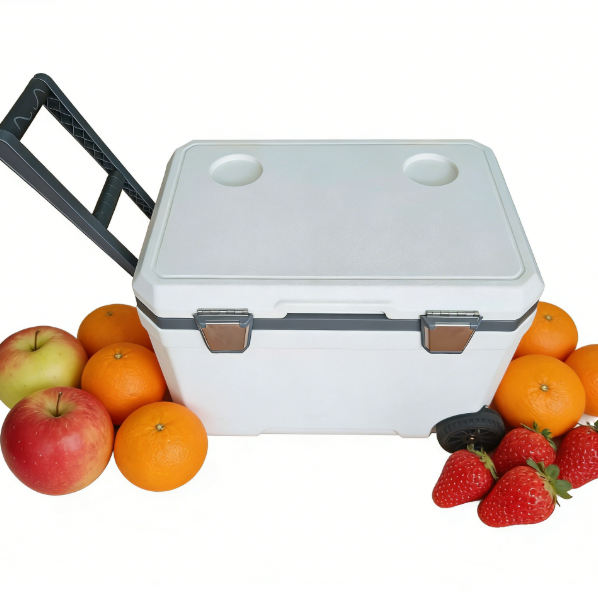
ultra-light collapsible EPP foam box is worth serious attention in 2026 when you need a box that protects temperature-sensitive product, survives real handling, and supports a cleaner sourcing story than fragile disposable packaging. The strongest solutions do not win because of one buzzword. They win because material science, projeto de rota, conformidade, and workflow all line up in one usable package.
If you are choosing between options now, focus on the complete system. Look at density and wall design, but also study packout fit, layout do refrigerante, estabilidade de fechamento, limpeza, eficiência de retorno, and the proof behind the intended use. That integrated view is what separates a good-looking insulated box from a box that actually performs in the field.
What you will learn
- why ultra-light collapsible EPP foam box is receiving more serious buyer attention in 2026
- how material data and route design should be combined in one decision
- how to write a buying specification that survives real operations
- how to connect compliance, validação, and sustainability without greenwashing
- what step-by-step buying plan gives the safest result
Why is ultra-light collapsible EPP foam box getting more attention right now?
Three forces are pushing buyers toward ultra-light collapsible EPP foam box. Primeiro, cold chain volumes are growing across food, assistência médica, and direct-to-consumer delivery. Segundo, reusable packaging programs are expanding because teams want lower damage and a better waste profile. Terceiro, packaging rules and customer expectations are putting more weight on recyclability, rotulagem mais clara, and credible sustainability claims. When those forces meet, EPP becomes attractive because it can be insulated, durável, luz, and reusable at the same time.
The appeal becomes stronger when the route is hard on packaging. Empty box storage and reverse logistics inefficiency is rarely caused by a single factor. It comes from bumps, umidade, lid opening, docas quentes, rushed labor, and weak packouts all working together. A well-designed EPP system gives you more protection against that messy reality. It is not perfect by default, but it gives engineers and buyers more useful design levers than many disposable alternatives.
The best reason to buy ultra-light collapsible EPP foam box is operational balance
Some packages are cheap but fragile. Others are strong but heavy. Others look sustainable but are hard to recover in practice. EPP often earns its place because it balances those competing needs better than most options. You can tune density, geometria, inserções, and handling features to the route instead of accepting one blunt compromise. That flexibility is a major reason the category keeps moving up procurement shortlists.
| <forte>Current pressure</forte> | <forte>What it means for packaging</forte> | <forte>How EPP can respond</forte> | <forte>Por que isso importa para você</forte> |
| Crescimento da cadeia de frio | More routes and more temperature-sensitive product | Reusable insulated box designs scale across several lane types | You need packaging decisions that stay workable as volume grows |
| Higher quality expectations | Damage and temperature failures are more visible | Better impact recovery and route tuning | You protect margin and customer trust |
| Pressão de sustentabilidade | Waste and recyclability are under closer review | Reuse plus recyclable material pathways | Your sourcing story becomes easier to defend |
| Stricter buying scrutiny | Procurement wants proof, não reivindicações | Dados, amostras, and validation can be built into the decision | Approval becomes faster and less risky |
Dicas práticas para você
- Use the business problem to define the box, não o contrário.
- Use route segmentation if one package clearly does not suit every lane in your network.
- Use real product value and service expectations when deciding how much durability is justified.
Exemplo de caso: a mixed chilled-food network moved away from a single disposable format after repeated complaints about damage and waste. An EPP-based design did not solve every route in the same way, but it gave the team a stronger reusable base to tune by lane.
How do material science and route design work together in ultra-light collapsible EPP foam box?
The material properties of ultra-light collapsible EPP foam box matter most when they are translated into route outcomes. Standard molded EPP grades often sit around 20 para 60 g/L, and common technical data shows compressive strength at 10 percent deflection rising from roughly 9 psi to 40 psi across that range. Water absorption is commonly listed below 5 percent by volume, which helps the box stay predictable after condensation or wet handling. Those numbers are useful because they explain why EPP can stay light, insulate well, and still tolerate repeated abuse.
But route design finishes the job. The same material can work beautifully in one packout and poorly in another. Espessura da parede, vedação da tampa, Headspace, coolant position, frequência de abertura, and stacking pattern all shape the final temperature result. That is why smart teams test the whole system instead of worshipping one data point. Material science gives you the tool. Route design tells you whether the tool is being used correctly.
Turn the science behind ultra-light collapsible EPP foam box into simple buying logic
If the route is short and light, you may prioritize empty-box weight and packing speed. If the route is rough or stacked high, you may move toward denser walls or stronger geometry. If the product is regulated or premium, validation depth becomes non-negotiable. That sequence lets you use technical data in a practical way instead of treating it as background noise.
| <forte>Technical lever</forte> | <forte>O que isso muda</forte> | <forte>Quando é mais importante</forte> | <forte>Buying takeaway</forte> |
| Densidade | Rigidez, peso vazio, e durabilidade | Empilhamento, manuseio repetido, heavy payloads | Choose it based on route stress, not prestige |
| Wall geometry | Strength and insulation distribution | Impact zones, ajuste da tampa, and cavity stability | Smart design often beats brute-force material use |
| Estrutura de célula fechada | Moisture behavior and cleaning ease | Wet docks, frutos do mar, lavagem, condensação | Useful for maintaining repeat-use consistency |
| Layout do pacote | Thermal performance in the real shipment | Long routes and varied ambient exposure | Validate the full system, não a caixa sozinha |
Dicas práticas para você
- Use logger data and physical box inspection together during testing.
- Use the same loading method in validation that the warehouse will use in production.
- Use the lightest design that still meets the structural and thermal target.
Exemplo de caso: a buyer improved route performance without changing the material grade by tightening the cavity layout and rebalancing coolant placement. A lição foi clara: system design can unlock material value.
How do you build a buying specification for ultra-light collapsible EPP foam box that survives real operations?
A strong specification for ultra-light collapsible EPP foam box covers more than outer size and color. It should define payload type, faixa de temperatura alvo, duração da rota, perfil ambiente, formato de refrigerante, acceptable stack load, método de limpeza, expected reuse model, e os documentos necessários para aprovação. When those items are vague, suppliers fill in the blanks differently and price comparisons stop being fair. A clear spec protects both quality and procurement.
You should also write the specification in operator language, not only engineer language. How fast must the box be packed? Can one person lift it safely? Does it need barcode space, tamper seals, or partition options? Is the return flow nested, rígido, or fold-flat? These questions matter because operational friction quietly becomes cost. A box that looks correct on paper but annoys the team every day is not a good purchase.
A practical decision tool for ultra-light collapsible EPP foam box buyers
When you review samples, ask four simple questions. Does the box fit the product? Does it hold temperature in the real lane? Can the team use and clean it easily? Can the supplier prove what they claim? If any answer is weak, the project is not ready for scale. This framework sounds basic, but it catches most expensive mistakes before they spread across the network.
| <forte>Item de especificação</forte> | <forte>Pergunta a fazer</forte> | <forte>Boa resposta</forte> | <forte>Risk if it is unclear</forte> |
| Definição de rota | What is the worst credible lane? | Perfil ambiente, duração, and handling events are named | Validation becomes generic and misleading |
| Packout logic | How is the product loaded and cooled? | Carga útil, refrigerante, and headspace are defined | Thermal results vary trip to trip |
| Ajuste operacional | How will staff pack, limpar, and return it? | Workflow is simple and tested | Labor cost and user error rise |
| Approval documents | What proof is required for release? | Material, validação, and traceability are listed | Projects stall during review |
Dicas práticas para você
- Use the same template for every supplier quote so the comparison stays controlled.
- Use cross-functional review with operations, qualidade, and procurement before approving tooling or volume.
- Use pilot runs to test the specification under real staffing and timing pressure.
Exemplo de caso: a buyer avoided an expensive redesign by catching an operator issue during sample trials. The box met thermal targets, but the label area failed after condensation and fast relabeling. Updating the spec early prevented a bigger rollout problem.
Como funciona a conformidade, validação, and sustainability fit together for ultra-light collapsible EPP foam box?
The best projects treat compliance, validação, and sustainability as one conversation. For food-contact uses, buyers often review intended-use support under 21 Cfr 177.1520 in the United States or the EU framework under Regulation (CE) Não 1935/2004 and GMP under Regulation (CE) Não 2023/2006. Para transporte de alimentos, sanitary transportation expectations around equipment, operações, registros, and training also shape how the box is approved and used. These are not side issues. They are part of what makes the packaging trustworthy.
Sustainability becomes more credible when validation is strong. If you want to claim a reusable or lower-waste solution, you need realistic reuse cycles, workable returns, and an end-of-life path that exists in the target market. Na Europa, packaging policy is reinforcing this direction by keeping attention on recyclable design and clearer labeling. EPP fits well when the program can support reuse and recovery, but the claim must be operationally true, not only theoretically true.
Credible proof makes ultra-light collapsible EPP foam box easier to approve and easier to defend
Think of documentation as a bridge between departments. Quality teams want evidence. Procurement wants comparability. Sustainability teams want a claim they can defend. Operations wants something that works every day. When a supplier provides clear material support, validação baseada em rota, and honest reuse logic, that bridge gets much easier to build. That is what serious buyers should reward.
| <forte>Approval pillar</forte> | <forte>Que bom parece</forte> | <forte>Por que isso importa</forte> | <forte>O que dá errado sem isso</forte> |
| Apoio regulatório | Clear intended-use documentation | Quality review moves faster | Approval becomes slow and uncertain |
| Validação térmica | Route-based testing with defined packout | Performance claims stay believable | Field results drift from lab claims |
| Modelo de reutilização | Realistic cycle and return assumptions | Sustainability claims gain substance | Green claims remain superficial |
| End-of-life path | Recovery or recycling logic in target market | Waste planning is stronger | Reusable packaging may still become waste |
Dicas práticas para você
- Use compliance and sustainability reviews early, not after tooling is fixed.
- Use pilot data to check both temperature performance and box condition after repeated cycles.
- Use honest recovery assumptions before calculating any environmental or cost benefit.
Exemplo de caso: a reusable program passed internal sustainability review only after the team added a recovery pathway and documented expected cycle life. The material was recyclable from the start, but the program needed operational proof.
Qual é o mais inteligente 2026 buying plan for ultra-light collapsible EPP foam box?
The smartest buying plan for ultra-light collapsible EPP foam box is staged, baseado em evidências, and route-specific. Start by defining the most difficult realistic lane, the product risk, and the operational model. Then shortlist only suppliers who can explain design logic, provide relevant documentation, and support testing. Depois disso, run sample trials under real workflow conditions before you commit to volume.
This process may feel slower at the beginning, but it usually speeds up the final decision because the team is arguing with better information. It also helps prevent two expensive mistakes: overbuying a premium box you do not need or underbuying a weak box that fails once volume grows. Em 2026, the best buyers are not the fastest clickers. They are the teams that connect material performance, ajuste de rota, and business logic with discipline. That is exactly the right way to buy EPP packaging.
Five-step action plan for ultra-light collapsible EPP foam box
Defina a pista. Freeze the packout. Screen supplier proof. Pilot in the real operation. Scale only after the results are clear. Those five steps sound simple because they are. Most packaging mistakes happen when one of them is skipped. If you follow them carefully, your odds of making a strong choice rise sharply.
| <forte>Etapa</forte> | <forte>O que fazer</forte> | <forte>Como é o sucesso</forte> | <forte>Why it saves time later</forte> |
| 1. Defina a pista | Map the harshest realistic route | Everyone agrees on the test target | You avoid vague design debates |
| 2. Freeze the packout | Set product, refrigerante, and load method | Samples are tested fairly | Results become comparable |
| 3. Screen suppliers | Revise os dados, documentos, e capacidade de resposta | Weak options fall out early | You focus on serious candidates |
| 4. Pilot the box | Run thermal and workflow trials | The team sees real performance | Surprises appear before scale-up |
| 5. Scale with discipline | Approve only after evidence is clear | Production follows a proven specification | Launch risk drops significantly |
Dicas práticas para você
- Use a written go or no-go checklist before volume approval.
- Use a pilot long enough to expose cleaning, rotulagem, and return issues, not only temperature behavior.
- Use post-pilot review to refine the design before the box becomes a standard item.
Exemplo de caso: a team that followed a staged approval process took slightly longer to launch, but avoided a full-season packaging failure because the pilot exposed a lid-handling issue before scale. The delay was minor. The avoided disruption was major.
2026 developments and trends for ultra-light collapsible EPP foam box
The direction of travel for ultra-light collapsible EPP foam box is becoming easier to read. Markets want stronger temperature protection, more reusable packaging, more evidence, and less wasteful design. That combination rewards EPP when it is specified honestly and validated well. It also punishes lazy claims, because buyers are getting better at asking hard questions about route fit, apoio regulatório, e lógica do ciclo de vida.
Últimos desenvolvimentos de vista
- Route-specific testing is becoming more important than generic marketing hold-time promises.
- Recyclability and lower-waste design are now part of the buying conversation, especially under European policy pressure.
- Operational fit such as packing speed, limpeza, and return efficiency is increasingly used as a final tie-breaker between similar products.
Para você, the market message is positive. A thoughtful buyer can now separate good suppliers from weak ones much faster by asking for system-level proof. That makes it easier to invest in a box that truly supports quality, controle de custos, and a more credible sustainability position.
Perguntas frequentes
How long can ultra-light collapsible EPP foam box hold temperature?
It depends on product start temperature, massa de refrigerante, projeto de parede, perfil ambiente, and how often the lid is opened. Ask for route-specific testing instead of relying on a single headline number.
Are all ultra-light collapsible EPP foam box designs truly fold-flat?
Não. Many are hybrid systems that combine EPP insulation with foldable panels or modular structures. Clarify the exact design before comparing space savings.
Can ultra-light collapsible EPP foam box be used for food applications?
It can be suitable when the resin system, aditivos, and process controls support the intended use. Request food-contact documentation and any needed declarations before approval.
How do you clean ultra-light collapsible EPP foam box properly?
Follow the supplier’s cleaning guidance, but in general a closed-cell EPP surface is easier to wipe and dry than absorbent materials. Validate your cleaning method for the real application.
Is ultra-light collapsible EPP foam box recyclable?
EPP is recyclable as a polypropylene-based foam, but real recycling depends on local collection and recovery options. Reutilize primeiro, then confirm end-of-life handling in your market.
What should I compare first when I shortlist suppliers for ultra-light collapsible EPP foam box?
Compare route-fit, documentação, qualidade da amostra, and operational ease before you compare price alone. A cheap box that fails in the lane is never the lowest-cost option.
Resumo e recomendação
The key takeaway is simple. Ultra-light collapsible EPP foam box makes sense when you need insulation, repeat durability, and a route-ready design that works in the real world. The best result comes from matching density, geometria, layout do refrigerante, and handling details to your actual use case rather than buying a box by headline claims alone.
The best path forward is to make your buying process as strong as the box. Seu próximo passo deve ser prático. Defina a pista, confirm the packout, request the right documentation, and pilot the box under real operating conditions. Clarify whether the product is a rigid nested box, a fold-flat hybrid, or a modular panel system before you compare options. A careful start usually saves far more money than a rushed purchase.
Sobre Tempk
E tempk, we focus on cold-chain packaging with an operations-first mindset. We look at insulation performance, escolha de materiais, lógica de pacote, and handling reality together so a box is not only technically sound but also workable for everyday teams. Para você, that means the conversation stays grounded in route fit, documentação, and useful design support instead of empty buzzwords.
Como você escolhe o melhor fabricante de caixa de transporte térmica EPP em 2026?

thermal EPP transport box manufacturer is worth serious attention in 2026 when you need a box that protects temperature-sensitive product, survives real handling, and supports a cleaner sourcing story than fragile disposable packaging. The strongest solutions do not win because of one buzzword. They win because material science, projeto de rota, conformidade, and workflow all line up in one usable package.
If you are choosing between options now, focus on the complete system. Look at density and wall design, but also study packout fit, layout do refrigerante, estabilidade de fechamento, limpeza, eficiência de retorno, and the proof behind the intended use. That integrated view is what separates a good-looking insulated box from a box that actually performs in the field.
What you will learn
- why thermal EPP transport box manufacturer is receiving more serious buyer attention in 2026
- how material data and route design should be combined in one decision
- how to write a buying specification that survives real operations
- how to connect compliance, validação, and sustainability without greenwashing
- what step-by-step buying plan gives the safest result
Why is thermal EPP transport box manufacturer getting more attention right now?
Three forces are pushing buyers toward thermal EPP transport box manufacturer. Primeiro, cold chain volumes are growing across food, assistência médica, and direct-to-consumer delivery. Segundo, reusable packaging programs are expanding because teams want lower damage and a better waste profile. Terceiro, packaging rules and customer expectations are putting more weight on recyclability, rotulagem mais clara, and credible sustainability claims. When those forces meet, EPP becomes attractive because it can be insulated, durável, luz, and reusable at the same time.
The appeal becomes stronger when the route is hard on packaging. Choosing a supplier that can actually manufacture, validar, and scale the design is rarely caused by a single factor. It comes from bumps, umidade, lid opening, docas quentes, rushed labor, and weak packouts all working together. A well-designed EPP system gives you more protection against that messy reality. It is not perfect by default, but it gives engineers and buyers more useful design levers than many disposable alternatives.
The best reason to buy thermal EPP transport box manufacturer is operational balance
Some packages are cheap but fragile. Others are strong but heavy. Others look sustainable but are hard to recover in practice. EPP often earns its place because it balances those competing needs better than most options. You can tune density, geometria, inserções, and handling features to the route instead of accepting one blunt compromise. That flexibility is a major reason the category keeps moving up procurement shortlists.
| <forte>Current pressure</forte> | <forte>What it means for packaging</forte> | <forte>How EPP can respond</forte> | <forte>Por que isso importa para você</forte> |
| Crescimento da cadeia de frio | More routes and more temperature-sensitive product | Reusable insulated box designs scale across several lane types | You need packaging decisions that stay workable as volume grows |
| Higher quality expectations | Damage and temperature failures are more visible | Better impact recovery and route tuning | You protect margin and customer trust |
| Pressão de sustentabilidade | Waste and recyclability are under closer review | Reuse plus recyclable material pathways | Your sourcing story becomes easier to defend |
| Stricter buying scrutiny | Procurement wants proof, não reivindicações | Dados, amostras, and validation can be built into the decision | Approval becomes faster and less risky |
Dicas práticas para você
- Use the business problem to define the box, não o contrário.
- Use route segmentation if one package clearly does not suit every lane in your network.
- Use real product value and service expectations when deciding how much durability is justified.
Exemplo de caso: a mixed chilled-food network moved away from a single disposable format after repeated complaints about damage and waste. An EPP-based design did not solve every route in the same way, but it gave the team a stronger reusable base to tune by lane.
How do material science and route design work together in thermal EPP transport box manufacturer?
The material properties of thermal EPP transport box manufacturer matter most when they are translated into route outcomes. Standard molded EPP grades often sit around 20 para 60 g/L, and common technical data shows compressive strength at 10 percent deflection rising from roughly 9 psi to 40 psi across that range. Water absorption is commonly listed below 5 percent by volume, which helps the box stay predictable after condensation or wet handling. Those numbers are useful because they explain why EPP can stay light, insulate well, and still tolerate repeated abuse.
But route design finishes the job. The same material can work beautifully in one packout and poorly in another. Espessura da parede, vedação da tampa, Headspace, coolant position, frequência de abertura, and stacking pattern all shape the final temperature result. That is why smart teams test the whole system instead of worshipping one data point. Material science gives you the tool. Route design tells you whether the tool is being used correctly.
Turn the science behind thermal EPP transport box manufacturer into simple buying logic
If the route is short and light, you may prioritize empty-box weight and packing speed. If the route is rough or stacked high, you may move toward denser walls or stronger geometry. If the product is regulated or premium, validation depth becomes non-negotiable. That sequence lets you use technical data in a practical way instead of treating it as background noise.
| <forte>Technical lever</forte> | <forte>O que isso muda</forte> | <forte>Quando é mais importante</forte> | <forte>Buying takeaway</forte> |
| Densidade | Rigidez, peso vazio, e durabilidade | Empilhamento, manuseio repetido, heavy payloads | Choose it based on route stress, not prestige |
| Wall geometry | Strength and insulation distribution | Impact zones, ajuste da tampa, and cavity stability | Smart design often beats brute-force material use |
| Estrutura de célula fechada | Moisture behavior and cleaning ease | Wet docks, frutos do mar, lavagem, condensação | Useful for maintaining repeat-use consistency |
| Layout do pacote | Thermal performance in the real shipment | Long routes and varied ambient exposure | Validate the full system, não a caixa sozinha |
Dicas práticas para você
- Use logger data and physical box inspection together during testing.
- Use the same loading method in validation that the warehouse will use in production.
- Use the lightest design that still meets the structural and thermal target.
Exemplo de caso: a buyer improved route performance without changing the material grade by tightening the cavity layout and rebalancing coolant placement. A lição foi clara: system design can unlock material value.
How do you build a buying specification for thermal EPP transport box manufacturer that survives real operations?
A strong specification for thermal EPP transport box manufacturer covers more than outer size and color. It should define payload type, faixa de temperatura alvo, duração da rota, perfil ambiente, formato de refrigerante, acceptable stack load, método de limpeza, expected reuse model, e os documentos necessários para aprovação. When those items are vague, suppliers fill in the blanks differently and price comparisons stop being fair. A clear spec protects both quality and procurement.
You should also write the specification in operator language, not only engineer language. How fast must the box be packed? Can one person lift it safely? Does it need barcode space, tamper seals, or partition options? Is the return flow nested, rígido, or fold-flat? These questions matter because operational friction quietly becomes cost. A box that looks correct on paper but annoys the team every day is not a good purchase.
A practical decision tool for thermal EPP transport box manufacturer buyers
When you review samples, ask four simple questions. Does the box fit the product? Does it hold temperature in the real lane? Can the team use and clean it easily? Can the supplier prove what they claim? If any answer is weak, the project is not ready for scale. This framework sounds basic, but it catches most expensive mistakes before they spread across the network.
| <forte>Item de especificação</forte> | <forte>Pergunta a fazer</forte> | <forte>Boa resposta</forte> | <forte>Risk if it is unclear</forte> |
| Definição de rota | What is the worst credible lane? | Perfil ambiente, duração, and handling events are named | Validation becomes generic and misleading |
| Packout logic | How is the product loaded and cooled? | Carga útil, refrigerante, and headspace are defined | Thermal results vary trip to trip |
| Ajuste operacional | How will staff pack, limpar, and return it? | Workflow is simple and tested | Labor cost and user error rise |
| Approval documents | What proof is required for release? | Material, validação, and traceability are listed | Projects stall during review |
Dicas práticas para você
- Use the same template for every supplier quote so the comparison stays controlled.
- Use cross-functional review with operations, qualidade, and procurement before approving tooling or volume.
- Use pilot runs to test the specification under real staffing and timing pressure.
Exemplo de caso: a buyer avoided an expensive redesign by catching an operator issue during sample trials. The box met thermal targets, but the label area failed after condensation and fast relabeling. Updating the spec early prevented a bigger rollout problem.
Como funciona a conformidade, validação, and sustainability fit together for thermal EPP transport box manufacturer?
The best projects treat compliance, validação, and sustainability as one conversation. For food-contact uses, buyers often review intended-use support under 21 Cfr 177.1520 in the United States or the EU framework under Regulation (CE) Não 1935/2004 and GMP under Regulation (CE) Não 2023/2006. Para transporte de alimentos, sanitary transportation expectations around equipment, operações, registros, and training also shape how the box is approved and used. These are not side issues. They are part of what makes the packaging trustworthy.
Sustainability becomes more credible when validation is strong. If you want to claim a reusable or lower-waste solution, you need realistic reuse cycles, workable returns, and an end-of-life path that exists in the target market. Na Europa, packaging policy is reinforcing this direction by keeping attention on recyclable design and clearer labeling. EPP fits well when the program can support reuse and recovery, but the claim must be operationally true, not only theoretically true.
Credible proof makes thermal EPP transport box manufacturer easier to approve and easier to defend
Think of documentation as a bridge between departments. Quality teams want evidence. Procurement wants comparability. Sustainability teams want a claim they can defend. Operations wants something that works every day. When a supplier provides clear material support, validação baseada em rota, and honest reuse logic, that bridge gets much easier to build. That is what serious buyers should reward.
| <forte>Approval pillar</forte> | <forte>Que bom parece</forte> | <forte>Por que isso importa</forte> | <forte>O que dá errado sem isso</forte> |
| Apoio regulatório | Clear intended-use documentation | Quality review moves faster | Approval becomes slow and uncertain |
| Validação térmica | Route-based testing with defined packout | Performance claims stay believable | Field results drift from lab claims |
| Modelo de reutilização | Realistic cycle and return assumptions | Sustainability claims gain substance | Green claims remain superficial |
| End-of-life path | Recovery or recycling logic in target market | Waste planning is stronger | Reusable packaging may still become waste |
Dicas práticas para você
- Use compliance and sustainability reviews early, not after tooling is fixed.
- Use pilot data to check both temperature performance and box condition after repeated cycles.
- Use honest recovery assumptions before calculating any environmental or cost benefit.
Exemplo de caso: a reusable program passed internal sustainability review only after the team added a recovery pathway and documented expected cycle life. The material was recyclable from the start, but the program needed operational proof.
Qual é o mais inteligente 2026 buying plan for thermal EPP transport box manufacturer?
The smartest buying plan for thermal EPP transport box manufacturer is staged, baseado em evidências, and route-specific. Start by defining the most difficult realistic lane, the product risk, and the operational model. Then shortlist only suppliers who can explain design logic, provide relevant documentation, and support testing. Depois disso, run sample trials under real workflow conditions before you commit to volume.
This process may feel slower at the beginning, but it usually speeds up the final decision because the team is arguing with better information. It also helps prevent two expensive mistakes: overbuying a premium box you do not need or underbuying a weak box that fails once volume grows. Em 2026, the best buyers are not the fastest clickers. They are the teams that connect material performance, ajuste de rota, and business logic with discipline. That is exactly the right way to buy EPP packaging.
Five-step action plan for thermal EPP transport box manufacturer
Defina a pista. Freeze the packout. Screen supplier proof. Pilot in the real operation. Scale only after the results are clear. Those five steps sound simple because they are. Most packaging mistakes happen when one of them is skipped. If you follow them carefully, your odds of making a strong choice rise sharply.
| <forte>Etapa</forte> | <forte>O que fazer</forte> | <forte>Como é o sucesso</forte> | <forte>Why it saves time later</forte> |
| 1. Defina a pista | Map the harshest realistic route | Everyone agrees on the test target | You avoid vague design debates |
| 2. Freeze the packout | Set product, refrigerante, and load method | Samples are tested fairly | Results become comparable |
| 3. Screen suppliers | Revise os dados, documentos, e capacidade de resposta | Weak options fall out early | You focus on serious candidates |
| 4. Pilot the box | Run thermal and workflow trials | The team sees real performance | Surprises appear before scale-up |
| 5. Scale with discipline | Approve only after evidence is clear | Production follows a proven specification | Launch risk drops significantly |
Dicas práticas para você
- Use a written go or no-go checklist before volume approval.
- Use a pilot long enough to expose cleaning, rotulagem, and return issues, not only temperature behavior.
- Use post-pilot review to refine the design before the box becomes a standard item.
Exemplo de caso: a team that followed a staged approval process took slightly longer to launch, but avoided a full-season packaging failure because the pilot exposed a lid-handling issue before scale. The delay was minor. The avoided disruption was major.
2026 developments and trends for thermal EPP transport box manufacturer
The direction of travel for thermal EPP transport box manufacturer is becoming easier to read. Markets want stronger temperature protection, more reusable packaging, more evidence, and less wasteful design. That combination rewards EPP when it is specified honestly and validated well. It also punishes lazy claims, because buyers are getting better at asking hard questions about route fit, apoio regulatório, e lógica do ciclo de vida.
Últimos desenvolvimentos de vista
- Route-specific testing is becoming more important than generic marketing hold-time promises.
- Recyclability and lower-waste design are now part of the buying conversation, especially under European policy pressure.
- Operational fit such as packing speed, limpeza, and return efficiency is increasingly used as a final tie-breaker between similar products.
Para você, the market message is positive. A thoughtful buyer can now separate good suppliers from weak ones much faster by asking for system-level proof. That makes it easier to invest in a box that truly supports quality, controle de custos, and a more credible sustainability position.
Perguntas frequentes
How long can thermal EPP transport box manufacturer hold temperature?
It depends on product start temperature, massa de refrigerante, projeto de parede, perfil ambiente, and how often the lid is opened. Ask for route-specific testing instead of relying on a single headline number.
Is thermal EPP transport box manufacturer better than EPS for repeat use?
In many reusable flows, sim. EPP is usually tougher under repeated impact and easier to keep in service, while EPS is often chosen for low-cost one-way use.
Can thermal EPP transport box manufacturer be used for food applications?
It can be suitable when the resin system, aditivos, and process controls support the intended use. Request food-contact documentation and any needed declarations before approval.
How do you clean thermal EPP transport box manufacturer properly?
Follow the supplier’s cleaning guidance, but in general a closed-cell EPP surface is easier to wipe and dry than absorbent materials. Validate your cleaning method for the real application.
Is thermal EPP transport box manufacturer recyclable?
EPP is recyclable as a polypropylene-based foam, but real recycling depends on local collection and recovery options. Reutilize primeiro, then confirm end-of-life handling in your market.
What should a strong thermal EPP transport box manufacturer provide beyond a catalog?
Tooling support, disciplina de amostra, opções de densidade, ajuda de validação, and production planning matter more than a polished brochure. Ask to see how they manage variation.
Resumo e recomendação
The key takeaway is simple. Thermal EPP transport box manufacturer makes sense when you need insulation, repeat durability, and a route-ready design that works in the real world. The best result comes from matching density, geometria, layout do refrigerante, and handling details to your actual use case rather than buying a box by headline claims alone.
The best path forward is to make your buying process as strong as the box. Seu próximo passo deve ser prático. Defina a pista, confirm the packout, request the right documentation, and pilot the box under real operating conditions. Choose a manufacturer that can show samples, dados, e disciplina de processo, not just a glossy catalog. A careful start usually saves far more money than a rushed purchase.
Sobre Tempk
E tempk, we focus on cold-chain packaging with an operations-first mindset. We look at insulation performance, escolha de materiais, lógica de pacote, and handling reality together so a box is not only technically sound but also workable for everyday teams. Para você, that means the conversation stays grounded in route fit, documentação, and useful design support instead of empty buzzwords.
Por que escolher uma caixa EPP isolada com absorção de choque?
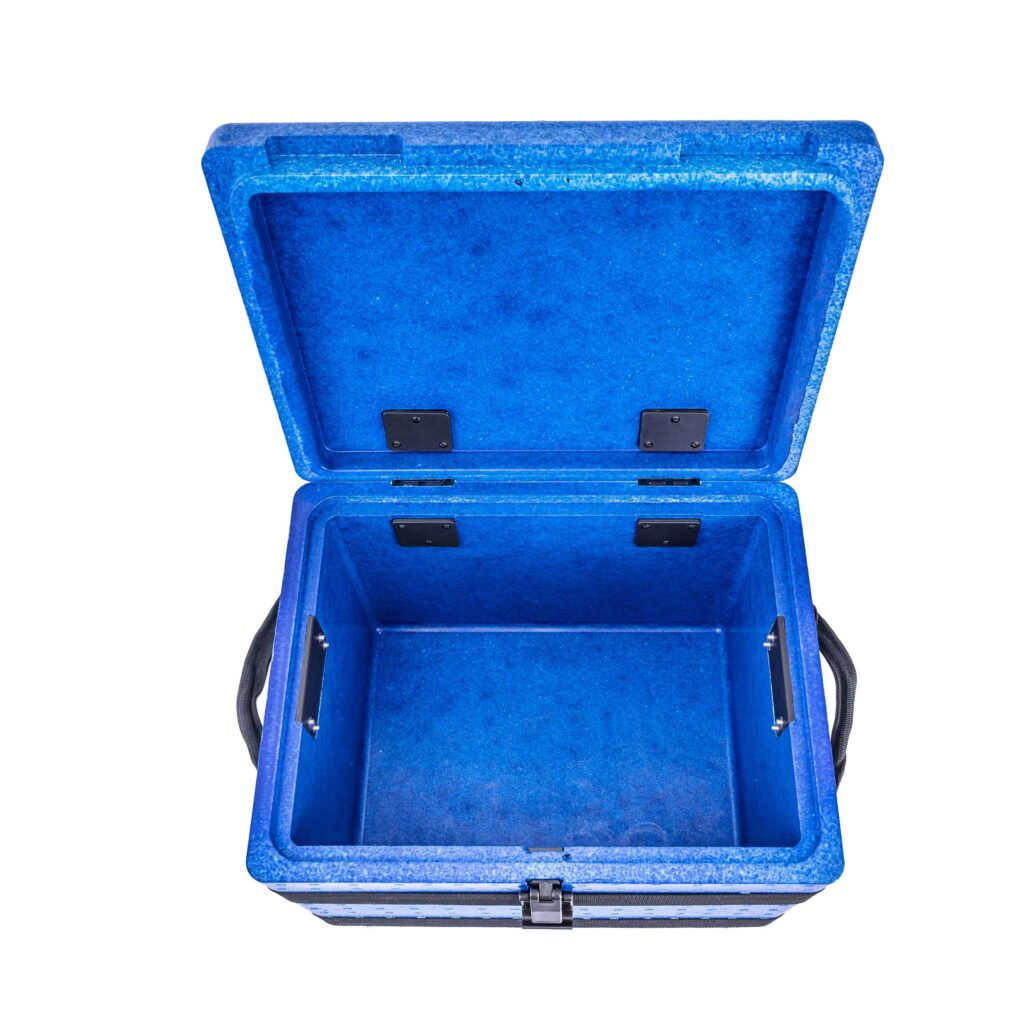
A strong shock-absorbing insulated EPP box combines the best points of buyer logic, material performance, and real operating needs. You need the box to protect product quality, hold temperature with less guesswork, and make daily work easier for packers, motoristas, kitchen staff, or warehouse teams. Em 2026, the best-performing options are the ones designed around real routes, realistic wash routines, and measurable handling risks rather than generic claims.
Before you compare quotes, decide what success looks like in your own operation. For one buyer it may mean lower damage. For another it may mean cleaner delivery presentation, better thermal consistency, or faster daily packing. When the target is clear, it becomes much easier to judge whether a shock-absorbing insulated EPP box is genuinely stronger or simply described more confidently.
Este artigo irá ajudá-lo a responder:
- how shock-absorbing insulated EPP box fits glass bottles and other B2B shipping needs
- which design details matter most for drop resilience, corner protection, inserir geometria, and repeated-use cushioning
- how to compare reusable EPP packaging against one-way formats
- o que 2026 buying trends mean for your next packaging decision
- which checklist helps you qualify a supplier faster
What makes a shock-absorbing insulated EPP box worth buying in 2026?
A shock-absorbing insulated EPP box is worth buying when it improves delivered condition, packing consistency, and operational repeatability at the same time. Na prática, that means the box must do more than hold temperature. It should reduce unnecessary movement, fit the payload cleanly, remain easy to handle, and stay practical across repeat cycles. Quando essas peças se alinham, the box stops being a packaging expense and starts acting like a process tool.
The strongest solutions combine the core EPP advantages of low weight, resiliência, and insulation with smart application-specific design. You see this in features such as better lid paths, more accurate internal geometry, route-sized footprints, or easier cleaning surfaces. The point is not to load the box with features. It is to remove the points where the real workflow usually breaks.
What separates a good sample from a scalable solution?
Buyers should also remember that product condition is shaped by timing as much as by materials. A good box helps create a wider safety margin when dispatch is delayed, when a driver restacks loads, or when the receiver opens the pack later than planned. That wider margin is one of the most practical reasons to invest in a better design.
| <forte>Performance area</forte> | <forte>O que procurar</forte> | <forte>Bom sinal</forte> | <forte>Por que isso importa para você</forte> |
| Controle térmico | Ajuste da tampa, wall build, layout do refrigerante | Stable product condition across delays | Protege a qualidade entregue |
| Handling protection | Insert guidance and impact zones | Less internal movement | Cuts breakage and complaints |
| Usabilidade | Peso, pegada, and opening logic | Staff use it correctly without reminders | Improves workflow speed |
| Durabilidade | Surface wear and shape retention | Box stays useful across cycles | Supports total cost value |
Dicas práticas que você pode usar
- Start with one clear success target, such as fewer damages, embalagem mais rápida, or better thermal consistency.
- If staff pack in a hurry, reduzir escolhas. Fewer inserts and clearer orientation points usually improve consistency.
- Pilot the box on a bad day as well as a normal day. Atraso, restacking, and rushed handoff reveal the real weak points.
One distributor moved from corrugated boxes with loose foam to a molded EPP format with matched inserts. Breakage complaints fell because the payload stopped striking the sidewalls during van loading and doorstep handoff. The lesson was that better fit and better handling logic often create a larger benefit than simply adding more packing material.
How should you design and specify a shock-absorbing insulated EPP box?
The right specification for a shock-absorbing insulated EPP box starts with route and product logic, then moves into material and geometry choices. You should define what you ship, how fragile it is, the expected temperature band, the longest dwell time, the likely shock points, and the cleaning or return routine. Once those variables are clear, decisions about density, wall build, inserções, and branding become far easier.
A development program should ask three simple questions. Primeiro, where does the product fail now? Segundo, which design lever can remove that failure? Terceiro, how will we prove it under realistic conditions? This sounds obvious, but many projects skip directly to pricing or tooling and then spend weeks correcting avoidable mistakes. The better path is disciplined specification before optimization.
Which details most often get missed during development?
The most commonly missed details are lid fit, internal movement allowance, instruções de embalagem, and wash or return handling. Those are not minor details. They are the places where a technically good box can still create operational confusion. When suppliers address these points early, qualification is faster and the final box is easier for teams to adopt.
| <forte>Specification area</forte> | <forte>Question to answer</forte> | <forte>Useful output</forte> | <forte>Por que isso importa para você</forte> |
| Carga útil | What exactly must fit inside? | Cavity map and insert logic | Stops oversizing |
| Rota | What is the longest realistic dwell? | Thermal test target | Prevents false assumptions |
| Manuseio | Where are the roughest touchpoints? | Drop and stack conditions | Links design to risk |
| Manutenção | How will the box be cleaned or returned? | Operating SOP | Makes reuse practical |
Dicas práticas que você pode usar
- Write route temperature, Horário de permanência, and staging conditions into the project brief before you ask for pricing.
- Keep the specification sheet simple enough that both operations and procurement can use it.
- Validate cleaning and cosmetic wear early if the box will be reused in front of customers or branch staff.
One distributor moved from corrugated boxes with loose foam to a molded EPP format with matched inserts. Breakage complaints fell because the payload stopped striking the sidewalls during van loading and doorstep handoff. The lesson was that a reusable container only performs well when the maintenance routine is as clear as the transport routine.
Which real-world use cases fit a shock-absorbing insulated EPP box best?
Real-world fit determines whether a shock-absorbing insulated EPP box becomes a scalable packaging standard or just a promising sample. The best use cases are the ones where product value is meaningful, handling risk is real, and route repetition is frequent enough to reward a disciplined format. That is why EPP boxes are often strongest in food delivery, chilled B2B transport, fragile item handling, internal shuttle loops, and premium presentation-sensitive programs.
Launch planning matters too. A new box should be introduced with a clear packing guide, a defined cleaning routine where relevant, and a simple return rule if the system is reusable. Without those basics, staff create workarounds and buyers end up blaming the box for problems caused by process drift. A strong rollout makes the packaging feel obvious to use from the first week.
How do you launch the box without adding friction?
Once the box is in use, the fastest learning comes from watching real handling. Look at how it is picked up, how it is stacked, what gets dirty first, and where product movement still appears. Those observations often reveal the next design improvement faster than another long debate about theoretical specs.
| <forte>Caso de uso</forte> | <forte>Why EPP can fit</forte> | <forte>O que assistir</forte> | <forte>Por que isso importa para você</forte> |
| Entrega de alimentos | Fast pack-out and light handling | Route variation and hygiene | Keeps service quality stable |
| Cold chain shuttle | Repeat use and thermal buffer | Disciplina de retorno | Supports operational consistency |
| Fragile premium goods | Impact control plus presentation | Cavity accuracy | Protege a margem e a marca |
| Wet or outdoor routes | Moisture tolerance and easy wipe-down | Lid cleanliness and grip | Improves daily usability |
Dicas práticas que você pode usar
- Compare labor time, redução de danos, and presentation gains together instead of judging only the piece price.
- Use a simple return or collection rule from day one if the box is reusable.
- Review live handling videos or photos after launch to spot the next improvement quickly.
One distributor moved from corrugated boxes with loose foam to a molded EPP format with matched inserts. Breakage complaints fell because the payload stopped striking the sidewalls during van loading and doorstep handoff. The lesson was that standardization creates hidden value because every team member starts handling the box in the same way.
2026 developments and trends for shock-absorbing insulated EPP box
Em 2026, the discussion around the shock-absorbing insulated EPP box is broader than material choice alone. Buyers are connecting insulation, handling quality, sanitary workflow, reuse economics, and end-of-life planning into one decision. Current FDA transport guidance keeps attention on clean equipment, procedimentos, registros, and trained handling for food loads, while recent reusable packaging guidance keeps reminding teams that return distance, esforço de limpeza, and loop efficiency decide whether a reuse model works in practice. For EPP specifically, current industry references still emphasize the combination of low weight, repeated impact resilience, isolamento, and recyclability in the PP stream.
Últimos desenvolvimentos de vista
- Route-based design: Buyers want packaging sized for real dwell time, loading style, and handoff conditions rather than generic volume targets.
- Smarter reuse programs: More teams are pairing reusable boxes with simple cleaning, retornar, and identification rules so the container stays operationally easy.
- Better fit over more filler: Development is shifting toward cavity accuracy, qualidade da tampa, and pack-out discipline instead of solving every problem with extra coolant.
The market direction is practical rather than theoretical. Buyers are rewarding packaging that lowers daily friction, protects delivered quality, and scales without constant workarounds. That is why suppliers who can connect design advice with live operating logic are gaining ground. Para você, this means a better buying process: focus on route truth, payload behavior, limpando a realidade, and return discipline, and the right shock-absorbing insulated EPP box becomes much easier to identify.
Perguntas frequentes
Is a shock-absorbing insulated EPP box only useful for cold chain shipping?
Não. Many buyers choose it for hot-hold, ambient protection, fragile item control, or internal shuttle use. The key is whether you need light weight, repeatable handling protection, and a more controlled pack-out method.
How long can a shock-absorbing insulated EPP box hold temperature?
Não existe uma resposta única e honesta. Hold time depends on wall design, ajuste da tampa, massa de carga útil, layout do refrigerante, temperatura inicial, e condições da rota. Always test with your real pack-out and actual dwell profile.
Can a shock-absorbing insulated EPP box be reused many times?
Geralmente sim, if the design matches the route and the operating team uses a clear cleaning and return routine. Reuse performance is shaped as much by process discipline as by the material itself.
What should you ask a supplier before ordering a shock-absorbing insulated EPP box?
Ask how the design matches your route, carga útil, shock risk, método de limpeza, and expected cycle count. A supplier that only discusses size and price is usually not giving you enough decision support.
When does a shock-absorbing insulated EPP box make financial sense?
It makes sense when reduced damage, embalagem mais rápida, better delivered condition, or repeat-use efficiency outweigh the higher starting price. Compare total operating value, não apenas custo unitário.
Resumo e recomendações
A well-chosen shock-absorbing insulated EPP box helps you in practical ways: it improves temperature stability, reduces handling risk, makes pack-out more repeatable, and creates a stronger base for reuse when the workflow is defined clearly. The best design is not the one with the loudest claim. It is the one that fits your product, rota, método de limpeza, and team behavior with the least daily friction.
Se você está comparando opções agora, start with a simple three-step plan. Primeiro, define the real route and pack-out. Segundo, identify the main failure point you want to remove. Terceiro, pilot the shock-absorbing insulated EPP box under ordinary operating conditions instead of ideal ones. That approach will help you choose faster and with fewer revisions.
Sobre Tempk
E tempk, we work on temperature-control packaging with a practical B2B mindset. We focus on insulated boxes, bolsas de gelo, and related cold chain packaging solutions that must perform in real transport environments, não apenas em um folheto. We can support development around fit, durabilidade, manuseio, and repeat-use logic so your packaging decision is easier to scale. Our goal is to help you move from sample approval to dependable daily use with less trial and error.
Por que usar uma caixa de polipropileno expandido resistente a choques?
A strong shock resistant expanded polypropylene box combines the best points of buyer logic, material performance, and real operating needs. You need the box to protect product quality, hold temperature with less guesswork, and make daily work easier for packers, motoristas, kitchen staff, or warehouse teams. Em 2026, the best-performing options are the ones designed around real routes, realistic wash routines, and measurable handling risks rather than generic claims.
Before you compare quotes, decide what success looks like in your own operation. For one buyer it may mean lower damage. For another it may mean cleaner delivery presentation, better thermal consistency, or faster daily packing. When the target is clear, it becomes much easier to judge whether a shock resistant expanded polypropylene box is genuinely stronger or simply described more confidently.
Este artigo irá ajudá-lo a responder:
- how shock resistant expanded polypropylene box fits industrial components and other B2B shipping needs
- which design details matter most for impact management, wall density, desenho de costela, and repeated handling cycles
- how to compare reusable EPP packaging against one-way formats
- o que 2026 buying trends mean for your next packaging decision
- which checklist helps you qualify a supplier faster
What makes a shock resistant expanded polypropylene box worth buying in 2026?
A shock resistant expanded polypropylene box is worth buying when it improves delivered condition, packing consistency, and operational repeatability at the same time. Na prática, that means the box must do more than hold temperature. It should reduce unnecessary movement, fit the payload cleanly, remain easy to handle, and stay practical across repeat cycles. Quando essas peças se alinham, the box stops being a packaging expense and starts acting like a process tool.
The strongest solutions combine the core EPP advantages of low weight, resiliência, and insulation with smart application-specific design. You see this in features such as better lid paths, more accurate internal geometry, route-sized footprints, or easier cleaning surfaces. The point is not to load the box with features. It is to remove the points where the real workflow usually breaks.
What separates a good sample from a scalable solution?
Buyers should also remember that product condition is shaped by timing as much as by materials. A good box helps create a wider safety margin when dispatch is delayed, when a driver restacks loads, or when the receiver opens the pack later than planned. That wider margin is one of the most practical reasons to invest in a better design.
| <forte>Performance area</forte> | <forte>O que procurar</forte> | <forte>Bom sinal</forte> | <forte>Por que isso importa para você</forte> |
| Controle térmico | Ajuste da tampa, wall build, layout do refrigerante | Stable product condition across delays | Protege a qualidade entregue |
| Handling protection | Insert guidance and impact zones | Less internal movement | Cuts breakage and complaints |
| Usabilidade | Peso, pegada, and opening logic | Staff use it correctly without reminders | Improves workflow speed |
| Durabilidade | Surface wear and shape retention | Box stays useful across cycles | Supports total cost value |
Dicas práticas que você pode usar
- Start with one clear success target, such as fewer damages, embalagem mais rápida, or better thermal consistency.
- If staff pack in a hurry, reduzir escolhas. Fewer inserts and clearer orientation points usually improve consistency.
- Pilot the box on a bad day as well as a normal day. Atraso, restacking, and rushed handoff reveal the real weak points.
A B2B shipper sending fragile packs between plants selected a shock resistant expanded polypropylene box after repeated edge-drop issues with one-way foam. The reusable design handled repeated loading better and reduced repacking time. The lesson was that better fit and better handling logic often create a larger benefit than simply adding more packing material.
How should you design and specify a shock resistant expanded polypropylene box?
The right specification for a shock resistant expanded polypropylene box starts with route and product logic, then moves into material and geometry choices. You should define what you ship, how fragile it is, the expected temperature band, the longest dwell time, the likely shock points, and the cleaning or return routine. Once those variables are clear, decisions about density, wall build, inserções, and branding become far easier.
A development program should ask three simple questions. Primeiro, where does the product fail now? Segundo, which design lever can remove that failure? Terceiro, how will we prove it under realistic conditions? This sounds obvious, but many projects skip directly to pricing or tooling and then spend weeks correcting avoidable mistakes. The better path is disciplined specification before optimization.
Which details most often get missed during development?
The most commonly missed details are lid fit, internal movement allowance, instruções de embalagem, and wash or return handling. Those are not minor details. They are the places where a technically good box can still create operational confusion. When suppliers address these points early, qualification is faster and the final box is easier for teams to adopt.
| <forte>Specification area</forte> | <forte>Question to answer</forte> | <forte>Useful output</forte> | <forte>Por que isso importa para você</forte> |
| Carga útil | What exactly must fit inside? | Cavity map and insert logic | Stops oversizing |
| Rota | What is the longest realistic dwell? | Thermal test target | Prevents false assumptions |
| Manuseio | Where are the roughest touchpoints? | Drop and stack conditions | Links design to risk |
| Manutenção | How will the box be cleaned or returned? | Operating SOP | Makes reuse practical |
Dicas práticas que você pode usar
- Write route temperature, Horário de permanência, and staging conditions into the project brief before you ask for pricing.
- Keep the specification sheet simple enough that both operations and procurement can use it.
- Validate cleaning and cosmetic wear early if the box will be reused in front of customers or branch staff.
A B2B shipper sending fragile packs between plants selected a shock resistant expanded polypropylene box after repeated edge-drop issues with one-way foam. The reusable design handled repeated loading better and reduced repacking time. The lesson was that a reusable container only performs well when the maintenance routine is as clear as the transport routine.
Which real-world use cases fit a shock resistant expanded polypropylene box best?
Real-world fit determines whether a shock resistant expanded polypropylene box becomes a scalable packaging standard or just a promising sample. The best use cases are the ones where product value is meaningful, handling risk is real, and route repetition is frequent enough to reward a disciplined format. That is why EPP boxes are often strongest in food delivery, chilled B2B transport, fragile item handling, internal shuttle loops, and premium presentation-sensitive programs.
Launch planning matters too. A new box should be introduced with a clear packing guide, a defined cleaning routine where relevant, and a simple return rule if the system is reusable. Without those basics, staff create workarounds and buyers end up blaming the box for problems caused by process drift. A strong rollout makes the packaging feel obvious to use from the first week.
How do you launch the box without adding friction?
Once the box is in use, the fastest learning comes from watching real handling. Look at how it is picked up, how it is stacked, what gets dirty first, and where product movement still appears. Those observations often reveal the next design improvement faster than another long debate about theoretical specs.
| <forte>Caso de uso</forte> | <forte>Why EPP can fit</forte> | <forte>O que assistir</forte> | <forte>Por que isso importa para você</forte> |
| Entrega de alimentos | Fast pack-out and light handling | Route variation and hygiene | Keeps service quality stable |
| Cold chain shuttle | Repeat use and thermal buffer | Disciplina de retorno | Supports operational consistency |
| Fragile premium goods | Impact control plus presentation | Cavity accuracy | Protege a margem e a marca |
| Wet or outdoor routes | Moisture tolerance and easy wipe-down | Lid cleanliness and grip | Improves daily usability |
Dicas práticas que você pode usar
- Compare labor time, redução de danos, and presentation gains together instead of judging only the piece price.
- Use a simple return or collection rule from day one if the box is reusable.
- Review live handling videos or photos after launch to spot the next improvement quickly.
A B2B shipper sending fragile packs between plants selected a shock resistant expanded polypropylene box after repeated edge-drop issues with one-way foam. The reusable design handled repeated loading better and reduced repacking time. The lesson was that standardization creates hidden value because every team member starts handling the box in the same way.
2026 developments and trends for shock resistant expanded polypropylene box
Em 2026, the discussion around the shock resistant expanded polypropylene box is broader than material choice alone. Buyers are connecting insulation, handling quality, sanitary workflow, reuse economics, and end-of-life planning into one decision. Current FDA transport guidance keeps attention on clean equipment, procedimentos, registros, and trained handling for food loads, while recent reusable packaging guidance keeps reminding teams that return distance, esforço de limpeza, and loop efficiency decide whether a reuse model works in practice. For EPP specifically, current industry references still emphasize the combination of low weight, repeated impact resilience, isolamento, and recyclability in the PP stream.
Últimos desenvolvimentos de vista
- Route-based design: Buyers want packaging sized for real dwell time, loading style, and handoff conditions rather than generic volume targets.
- Smarter reuse programs: More teams are pairing reusable boxes with simple cleaning, retornar, and identification rules so the container stays operationally easy.
- Better fit over more filler: Development is shifting toward cavity accuracy, qualidade da tampa, and pack-out discipline instead of solving every problem with extra coolant.
The market direction is practical rather than theoretical. Buyers are rewarding packaging that lowers daily friction, protects delivered quality, and scales without constant workarounds. That is why suppliers who can connect design advice with live operating logic are gaining ground. Para você, this means a better buying process: focus on route truth, payload behavior, limpando a realidade, and return discipline, and the right shock resistant expanded polypropylene box becomes much easier to identify.
Perguntas frequentes
Is a shock resistant expanded polypropylene box only useful for cold chain shipping?
Não. Many buyers choose it for hot-hold, ambient protection, fragile item control, or internal shuttle use. The key is whether you need light weight, repeatable handling protection, and a more controlled pack-out method.
How long can a shock resistant expanded polypropylene box hold temperature?
Não existe uma resposta única e honesta. Hold time depends on wall design, ajuste da tampa, massa de carga útil, layout do refrigerante, temperatura inicial, e condições da rota. Always test with your real pack-out and actual dwell profile.
Can a shock resistant expanded polypropylene box be reused many times?
Geralmente sim, if the design matches the route and the operating team uses a clear cleaning and return routine. Reuse performance is shaped as much by process discipline as by the material itself.
What should you ask a supplier before ordering a shock resistant expanded polypropylene box?
Ask how the design matches your route, carga útil, shock risk, método de limpeza, and expected cycle count. A supplier that only discusses size and price is usually not giving you enough decision support.
When does a shock resistant expanded polypropylene box make financial sense?
It makes sense when reduced damage, embalagem mais rápida, better delivered condition, or repeat-use efficiency outweigh the higher starting price. Compare total operating value, não apenas custo unitário.
Resumo e recomendações
A well-chosen shock resistant expanded polypropylene box helps you in practical ways: it improves temperature stability, reduces handling risk, makes pack-out more repeatable, and creates a stronger base for reuse when the workflow is defined clearly. The best design is not the one with the loudest claim. It is the one that fits your product, rota, método de limpeza, and team behavior with the least daily friction.
Se você está comparando opções agora, start with a simple three-step plan. Primeiro, define the real route and pack-out. Segundo, identify the main failure point you want to remove. Terceiro, pilot the shock resistant expanded polypropylene box under ordinary operating conditions instead of ideal ones. That approach will help you choose faster and with fewer revisions.
Sobre Tempk
E tempk, we work on temperature-control packaging with a practical B2B mindset. We focus on insulated boxes, bolsas de gelo, and related cold chain packaging solutions that must perform in real transport environments, não apenas em um folheto. We can support development around fit, durabilidade, manuseio, and repeat-use logic so your packaging decision is easier to scale. Our goal is to help you move from sample approval to dependable daily use with less trial and error.
















