Entrega de sorvete refrigerado na Europa: Como funciona?
You can absolutely scale refrigerated ice cream delivery Europe—but only if you treat it like a system, not “a box with ice.” In 2024, the EU produced 3.3 billion litres of ice cream, and demand keeps pushing frozen products into faster, riskier last-mile routes. Enquanto isso, 77% of EU internet users bought online in 2024, which means customers now expect “perfectly frozen” at the doorstep.
Este artigo irá ajudá-lo a responder:
-
Como refrigerated ice cream delivery Europe should target -18°C (and why many shippers aim colder)
-
How to ship ice cream across Europe without melting—even with depot delays and heat waves
-
What packaging works best for refrigerated ice cream delivery Europe (pacotes de gel, PCM, VIP, and when dry ice makes sense)
-
Which courier model fits refrigerated ice cream delivery Europe melhor (van, rede, or parcel + refrigerante)
-
How to monitor temperature without drowning in data—and still have proof when claims happen
-
How to cut refunds, custo, and packaging waste in 2025 while staying reliable
What temperature should refrigerated ice cream delivery Europe maintain?
Para refrigerated ice cream delivery Europe, your practical baseline is -18°C ou mais frio—because that’s the commonly enforced “fully frozen” expectation in quick-frozen controls. One official definition of quick-frozen foods is that the product temperature (after stabilization) is continuously maintained at -18°C or lower at all points. Food Safety Authority of Ireland
Ideia central: Customers don’t complain when you are “legally close.” They complain when texture turns grainy.
Why -18°C is the “quality floor” (not your comfort zone)
Ice cream can fail without fully melting. Small warm-ups + refreezing can create icy crystals and soft edges. So many operators dispatch colder (exemplo: -20°C a -25 °C) to build buffer.
| Faixa de temperatura | What happens to ice cream | Nível de risco | O que isso significa para você |
|---|---|---|---|
| Abaixo de -18°C | Fully stable | Baixo | Best chance of “perfect scoop” on arrival |
| -18°C a -12 °C | Softening can start | Médio | Texture complaints rise, more refunds |
| Above -12°C | Melt/refreeze likely | Alto | Product rejection and brand damage |
Dicas práticas que você pode usar hoje
-
Set a dispatch target colder than -18°C so delays don’t push you into the risk zone.
-
Time-box pack-out (exemplo: “product out of freezer ≤ 6–8 minutes”).
-
Design for missed delivery, not only “normal delivery.”
Exemplo real: One draft case showed a gelato brand cut complaints after switching to thicker insulation and adding ~12 hours of cold retention.
refrigerated ice cream delivery…
How do you ship ice cream across Europe without melting?
To win at refrigerated ice cream delivery Europe, you need three layers working together:
-
Produto frio (starts frozen hard)
-
Embalagem correta (isolamento + coolant matched to lane time)
-
Disciplined process (embalagem rápida + clear exception rules)
A simple 7-step pack-out workflow you can copy (Howto)
-
Pre-freeze product until it is fully hardened (don’t “cool in transit”). Food Safety Authority of Ireland
-
Pre-freeze coolant (gel/pcm) to the correct spec (not “half frozen”).
-
Stage orders in a freezer until the carrier is physically ready.
-
Faça as malas rápido: labels printed, box open time minimized.
-
Right-size the shipper (less air = less heat gain).
-
Selo + moisture barrier (condensation can collapse cartons).
-
Add a simple customer instruction: “Unbox immediately and place in freezer.”
| Etapa | Seu alvo | Por que isso importa |
|---|---|---|
| Product staging | Until pickup | Prevents “warm soak” before shipping |
| Hora de fazer as malas | Curto + repetível | Consistency beats “heroic packing” |
| Dimensionamento da caixa | 2–3 standard sizes | Reduces cost and failure variance |
Dicas práticas para você
-
Plan for the worst normal day (aquecer + atrasos), não é um dia normal.
-
Create “no-ship rules” for lanes you can’t defend (O fim de semana segura, remote zones).
-
Move decisions upstream: lane design is cheaper than refunds.
What packaging works best for refrigerated ice cream delivery Europe?
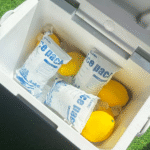
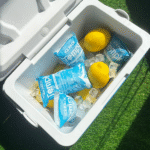
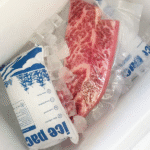
Packaging is your “portable freezer.” In refrigerated ice cream delivery Europe, insulation slows heat entry, while coolant absorbs the heat that still gets in.
Regra em que você pode confiar: Your packaging doesn’t need to be the strongest—it needs to be strong enough for your worst normal lane.
Opções de embalagem (in plain English)
| Tipo de embalagem | Typical hold-time potential | Cost impact | Melhor caso de uso |
|---|---|---|---|
| Standard foam insulation (EPS/EPP) | 24–36h | Baixo | Local / predictable lanes |
| High-density insulation | 48-72h | Médio | Regional EU delivery |
| Isolamento VIP (prêmio) | 72h+ | Mais alto | Pistas longas, premium D2C |
| Forros reflexivos (add-on) | Lane-dependent | Baixo | Boost against radiant heat |
Dry ice vs gel packs for refrigerated ice cream delivery Europe: que vence?
Gel packs are simpler and widely accepted. Dry ice is powerful but often restricted by carriers and requires more safety handling.
-
Pacotes de gel: easier operations, fewer restrictions, best for predictable lanes.
-
Gelo seco: stronger deep-freeze capability, best for long/hot lanes if your carrier allows it.
-
Exemplo: Royal Mail explicitly says don’t use dry ice in their parcels. 皇家邮政
-
| Opção de refrigerante | Força | Weak spot | Best use in Europe |
|---|---|---|---|
| Pacotes de gel | Simples + escalável | Can struggle on long/hot lanes | Metrô + rotas curtas |
| Gelo seco | Very strong freeze | Restrições da operadora + treinamento | Pistas longas, extreme heat (carrier-dependent) 皇家邮政 |
| Placas PCM | Tunable “temperature plateau” | Must spec correctly | Consistent lanes with validation |
| VIP + gel/pcm | Big hold-time boost | Custo unitário mais alto | Premium reliability where refunds are expensive |
Dicas e conselhos práticos
-
Right-size the box: extra air is extra heat (and extra coolant spend).
-
Standardize two configurations: one for summer, one for winter.
-
Add a moisture plan: forros, selos, and strong outer cartons reduce failures.
Exemplo real: One draft highlighted that “bigger box = safer” often backfires; right-sizing reduced melted corners while using less coolant.
refrigerated ice cream delivery…
Which courier model fits refrigerated ice cream delivery Europe best?
Courier choice is not just price—it’s temperature time. Para refrigerated ice cream delivery Europe, you usually choose one of these:
| Delivery model | Melhor para | Risco típico | O que você ganha |
|---|---|---|---|
| Dedicated refrigerated van | Same-city, premium orders | Higher cost per stop | Controle rígido, fewer handoffs |
| Refrigerated network (hub-and-spoke) | Regional B2B | Transfer delays | Predictability + scale |
| Insulated parcel + refrigerante | D2C reach | Atrasos + regras da operadora | Easy scaling, wider coverage |
A fast decision tool (60 segundos)
Answer these and follow the highest match:
-
Majoritariamente same-day under ~50 km? → Dedicated refrigerated van
-
10+ orders/day per region? → Micro-fulfillment + van routes
-
Precisar transfronteiriça alcançar? → Validated parcel lanes + stronger packaging
-
Missed deliveries are common? → Avoid doorstep risk (janelas de entrega / pickup points)
-
Need proof for audits/partners? → Monitoramento + written controls (veja a próxima seção)
Which EU rules matter for refrigerated ice cream delivery Europe in 2025?
You don’t need to memorize law. You do need a system that can answer one question:
“Can you show what happened to temperature?”
1) Quick-frozen baseline and packaging protection
Quick-frozen frameworks define products maintained at -18°C ou inferior (after stabilization) and emphasize packaging protection against contamination and drying. Food Safety Authority of Ireland
2) Temperature monitoring expectation (transporte + armazenar)
The EU has a specific regulation for monitoring temperatures in transporte, armazenamento, e armazenamento of quick-frozen foods: Commission Regulation (CE) Não 37/2005. EUR-Lex
3) HACCP-based controls (your “hazard plan”)
EU food hygiene rules require food business operators to implement procedures based on HACCP principles (Análise de perigos e pontos críticos de controle). 立法英国
The “proof file” you can keep in one folder
-
Lane spec sheet (tempo máximo de trânsito, summer/winter config)
-
Packing SOP with photos
-
Registros de temperatura (lane tests + verificações pontuais)
-
Manual de exceção (“If delay > X, do Y”)
-
Complaint handling checklist (refund/replace rules tied to evidence)
| Ponto de controle | Simple proof to keep | Why it protects you |
|---|---|---|
| Armazenamento no freezer | Setpoint logs + alarmes | Prevents hidden failures |
| Pacote | Bench-time rule + verificações pontuais | Reduces softness at arrival |
| Transporte | Logger reports on key lanes | Defesa de reivindicação mais forte EUR-Lex |
| Exceções | Written “if/then” SOP | Faster team response |
How do you monitor refrigerated ice cream delivery Europe without drowning in data?
Monitoring should feel like a seatbelt: always on, not a special event. One practical approach is representative monitoring: test your top lanes, then spot-check.
refrigerated ice cream delivery…
A monitoring plan you can actually run
-
Lane qualification: 3–5 tests per lane (mild vs hot days)
-
Ongoing spot checks: weekly or per batch
-
Exception capture: log delays and link to complaints
-
Quarterly updates: adjust summer/winter configurations
Use ISO 23412 as a vendor checklist (if you use parcel networks)
ISO 23412:2020 covers indirect, temperature-controlled refrigerated parcel delivery with intermediate transfers—and it was reviewed and confirmed as current in 2025. 国际标准化组织
| What to ask a provider | Por que isso importa | What you should request |
|---|---|---|
| How do you manage transfers? | Transfers are melt risk | Limites de tempo + lidar com POP |
| What happens during delays? | Delays create drift | Escalation plan + redirecionar |
| How do you communicate exceptions? | Fast action saves product | Alertas + proof exports |
Dicas práticas para você
-
Put the logger in the warmest spot, not the coldest spot.
-
Medir tempo + temperatura (both decide texture).
-
Use monitoring to improve process—teams hide issues when punishment is the goal.
How do you cut cost and packaging waste in refrigerated ice cream delivery Europe?
Cost leaks usually come from two places: over-packaging e failed deliveries.
Europe is also pushing harder on packaging efficiency. The European Commission highlights that 40% of plastics used in the EU are in packaging, and EU packaging waste reached 186.5 kg per person in 2022. Ambiente O Regulamento de Embalagens e Resíduos de Embalagens (PP) entrou em vigor em 11 Fevereiro 2025, with general application from 12 Agosto 2026. Ambiente
The key trade-off (don’t miss this)
A “greener” change that increases spoilage is not greener overall. One failed frozen shipment wastes product, energia, e embalagem.
| Gerador de custos | O que você vê | The fix that usually works |
|---|---|---|
| Oversized boxes | High coolant spend | 2–3 box sizes + pack standards |
| Entrega perdida | Soft product + reembolsos | Delivery windows + pickup points |
| Packing variance | Inconsistent outcomes | Visual SOP + treinamento |
| Summer spikes | Heatwave failures | Summer/winter configurations |
Mini ROI calculator (interativo)
Use this quick check before upgrading packaging:
Exemplo: Se você enviar 2,000 orders/month, refunds are 4%, AOV is €35, and you add €0.60 packaging cost:
-
Refund cost ≈ 2,000 × 0.04 × 35 = €2,800
-
Upgrade cost ≈ 2,000 × 0.60 = €1,200
-
Net ≈ +€1,600/month (before operational benefits)
2025 trends shaping refrigerated ice cream delivery Europe
Here’s what’s changing now—and what it means for you:
-
More demand pressure: EU ice cream production hit 3.3 billion litres in 2024. Comissão Europeia
-
More last-mile exposure: 77% of EU internet users bought online in 2024, pushing frozen delivery expectations higher. Comissão Europeia
-
More packaging scrutiny: PPWR timelines are forcing redesign and waste reduction planning. Ambiente
-
More operational standardization: ISO 23412 is a practical benchmark when parcel transfers are involved. 国际标准化组织
-
More “proof workflows”: monitoramento + simple records are becoming table stakes. EUR-Lex+1
Perguntas frequentes
Q1: What temperature should refrigerated ice cream delivery Europe maintain?
Objetivo para -18°C ou mais frio at all times, and dispatch colder to build buffer against real delays.
Q2: How long can ice cream stay frozen during delivery in Europe?
With matched insulation + refrigerante, many lanes can hold 24–72 horas, but you must validate with lane tests.
Q3: Is dry ice allowed for refrigerated ice cream delivery Europe?
Sometimes—but carrier rules vary. Por exemplo, Royal Mail does not allow dry ice em parcelas. Always confirm lane rules first. 皇家邮政
Q4: What EU regulation relates to temperature monitoring for quick-frozen foods?
Commission Regulation (CE) Não 37/2005 addresses monitoring temperatures in transport, armazenar, and warehousing of quick-frozen foods. EUR-Lex
Q5: Do I need HACCP procedures for frozen delivery operations?
If you’re a food business operator, EU hygiene rules require HACCP-based procedures to identify and control risks. 立法英国
Q6: How can ISO 23412 help me choose a refrigerated parcel provider?
It describes operational requirements for indirect refrigerated parcel delivery with intermediate transfers—and it remains current (confirmed in 2025). 国际标准化组织
Resumo e recomendações
Refrigerated ice cream delivery Europe works when you control three things: metas de temperatura, exposição temporal, and process consistency. Usar -18°C ou mais frio as your practical frozen baseline, dispatch colder for buffer, and match packaging to your lane reality—not your hopes. Build simple proof with monitoring expectations in mind, especially for transport and storage. EUR-Lex
Seus próximos passos (simple action plan)
-
Map your lanes and set a max transit time per lane.
-
Escolha one summer e one winter packing configuration.
-
Validate top lanes with representative temperature logging.
-
Add clear “unbox immediately” customer instructions.
-
Review refunds monthly and fix lanes/process before buying “better boxes.”
Sobre Tempk
E tempk, we focus on practical cold chain packaging and temperature-control solutions for frozen and refrigerated delivery. We help you match isolamento, coolant strategy, e monitoramento to your real lanes—so refrigerated ice cream delivery Europe becomes repeatable, escalável, and less refund-prone.
refrigerated ice cream delivery…
Próximo passo: Share your target countries, delivery promise (no mesmo dia / 24h / 48h), and order size range. We’ll recommend a lane strategy and packing configuration you can standardize.